- According to EU-wide studies, technical defects are the main cause of less than 1 to 2 percent of motorcycle accidents.
- Organizations such as the Federation of European Motorcyclists’ Associations see no measurable safety benefits from mandatory PTI.
- Calls for an extension of mandatory testing are based primarily on assumptions, not on proven causes of accidents.
The debate about mandatory periodic technical inspections (PTI) for motorcycles flares up regularly in the EU. Proponents argue that more inspections automatically lead to greater road safety. Critics disagree and point to extensive accident analyses that paint a different picture.
Causes of accidents according to EU statistics
Evaluations from various EU member states show a consistent pattern. Technical defects play only a very minor role in motorcycle accidents. In less than 1 to 2 percent of recorded cases are they considered the main cause. Human error, poor perception by other road users, and infrastructure problems are cited much more frequently.
According to Wim Taal, representative of FEMA, this does not indicate that mandatory technical inspections would lead to any relevant safety gains. The condition of a vehicle during an inspection says little about whether this aspect actually contributed to an accident.
What defects are found during inspections
During technical inspections, the most common complaints are about lighting, brakes, and tires. These components are undoubtedly important for safety. Nevertheless, accident researchers point out that a detected defect does not automatically mean that it was the cause of an accident in practice.
According to motorcyclist associations, statistics from several EU countries confirm that mechanical failure is extremely rarely the cause of serious accidents.
Arguments of proponents and their classification
One key argument in favor of extending the inspection requirement comes from the European Economic and Social Committee, among others. It points out that roadside checks in individual countries have allegedly found serious defects in more than 20 percent of the motorcycles inspected.
However, this figure must be put into perspective. The Swedish Motorcycle Association (SMC) points out that such checks are very rare and usually only take place when there is already a specific suspicion of a defect, such as an unauthorized exhaust system. The selection of vehicles checked is therefore not random, which inevitably leads to higher rejection rates.
Critics argue that these results are not a suitable basis for mandatory periodic inspections across the EU.
No evidence of a decline in accident figures
In countries where motorcycles are already subject to regular inspections, there is no measurable decline in motorcycle accidents or fatalities. Despite repeated requests, no reliable evidence has yet been presented to show a direct link between PTI and improved motorcycle safety.
Motorcycle organizations from several EU countries have submitted technical statements on this issue. Their common key point is that the known main causes of motorcycle accidents are not addressed by mandatory technical inspections.
Alternative approaches to increasing safety
Instead of additional bureaucracy, the associations are calling for a stronger focus on measures with a proven effect. These include improved driver training with an emphasis on hazard perception, braking and evasive maneuvers, and defensive driving. Infrastructure is also considered a decisive factor. According to accident analyses, road surfaces, guard rails, and intersection design have a significant impact on the risk for motorcyclists.
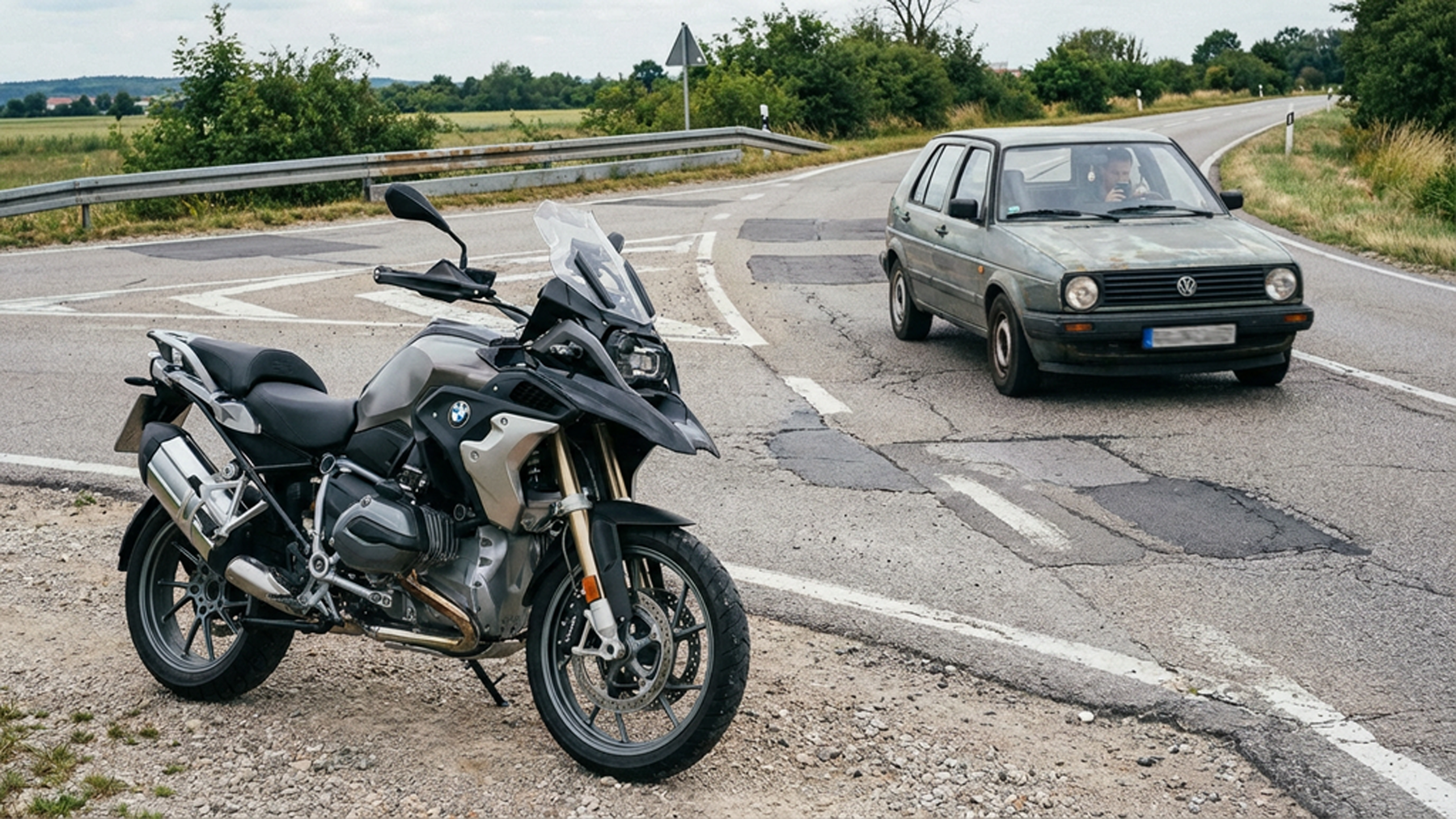
Another starting point is awareness campaigns for all road users. The majority of accidents involving motorcycles occur in multi-vehicle situations where other drivers overlook the motorcyclist.
Conclusion of the critics
From the point of view of opponents of mandatory periodic technical inspections for all motorcycles, this is a measure that ignores the actual causes of accidents. Existing EU data shows that technical defects are almost never the decisive factor. Road safety can therefore be improved more effectively through targeted, data-based measures than through a blanket extension of inspection requirements.
What does this mean for me as a motorcyclist?
For motorcyclists, the current debate primarily means uncertainty about whether additional obligations will arise in the future without a measurable increase in their own safety. Mandatory periodic technical inspections would mean more effort (already mandatory in several countries), time, and costs, even though accident statistics show that technical defects are rarely the cause of accidents. Regardless of political decisions, it still makes sense to maintain your motorcycle regularly on your own responsibility, as brakes, tires, and lighting are safety-relevant. At the same time, a large part of the personal safety factor continues to lie in your own driving behavior, the attentiveness of other road users, and the quality of the infrastructure—in other words, precisely those areas that are not affected by additional inspections.

- HELITE MO.TX.VTD-BKBG-LHelite Airbag Jacke Vented 2.0 Sommerjacke mit Turtle Airbag


Redakteur bei Motorrad Nachrichten. Fokus auf Technik, Szene und Motorradpolitik – neutral, sachlich, verständlich.
Verantwortlich für die Seiten www.Motorcycles.News, www.Motorrad.Training und den YouTube-Kanal "Motorrad Nachrichten", sowie deren social Media-Seiten.