- 26 percent decline in sales compared to the previous year
- LiveWire sales increase by 7 percent but remain below 1,000 motorcycles
- Zero tariffs in India for models between 800 and 1,600 cubic centimeters
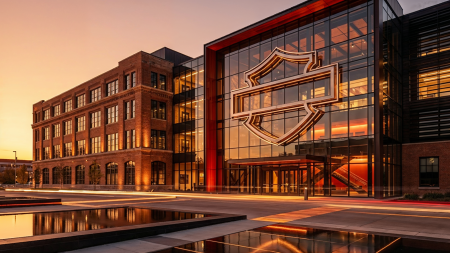
The year 2025 was significantly weaker than expected for Harley-Davidson in economic terms. In the fourth quarter report, new CEO Artie Starrs had to announce a 26 percent decline in sales compared to the previous year. This continues a long-term trend, as the financial performance of the traditional manufacturer has been predominantly downward for around two decades, interrupted by occasional short-term recoveries.
2025 business figures and stabilization measures
Motorcycle sales increased slightly in the US domestic market. Internationally, however, deliveries and sales declined. One reason cited is the US government’s trade policy measures, which are said to have impacted global competitiveness.
The LiveWire electric brand also recorded a 7 percent increase in sales, but remained at a low level with a total of less than 1,000 motorcycles sold in 2025. In addition, the company sold parts of its financial services business and other assets.
Artie Starrs expressed confidence at the investor conference. He said, “I’m confident there’s a clear path to put Harley-Davidson back on the right trajectory,” adding, “and I now have a sharper view of what it will take to reset the business and get to a more stable operating future for 2026.”
He also emphasized the importance of the dealer structure: “Dealer health today is uneven with some dealers facing challenges. Dealer health is not optional. It is a critical foundation for our long-term growth and earnings power,” and announced that production would “run below wholesale creating operating deleverage” in the future.
Production cuts and focus on dealer health
The statement on production means that fewer motorcycles will be manufactured than are delivered to dealers in the future. The aim is to reduce existing inventories and align production more closely with actual customer demand. At the same time, sales promotions are intended to reduce older new vehicles in showrooms.
KTM recently took a similar approach after a significant inventory of unsold new vehicles had built up there. Production was temporarily scaled back significantly.
In terms of models, the current Harley Davidson range is considered to be relatively new in technical terms. Apart from the Pan America touring enduro, however, the range continues to focus heavily on cruisers, baggers, and touring models. This focus also shapes brand perception and the target group.
India as a strategic source of hope
Parallel to internal cost-cutting measures, a new opportunity is opening up for the manufacturer in India. In the wake of a trade policy rapprochement between the US and India, import duties on Harley models with a displacement of between 800 and 1600 cubic centimeters are being abolished. This will facilitate market access, which in the past was made considerably more difficult by high tariffs.
However, duty-free large motorcycles alone are unlikely to guarantee significant volume. The partnership with Hero MotoCorp is crucial. The Indian company is taking over local production, pricing, and market access for smaller and medium-sized displacement classes. This two-tier model envisages locally manufactured motorcycles increasing brand presence, while imported, now duty-free large models take on the role of image carriers.
An example of such a volume model is the jointly developed X440, which is positioned in India to appeal to new customer groups. In many Asian markets, large-volume motorcycles account for only a very small share of the total market. Accordingly, a broader model strategy is gaining in importance.
Outlook for 2026
It remains to be seen whether the combination of production adjustments, dealer strengthening, and international expansion will be enough to stop the negative trend. The CEO speaks of targeted stabilization measures and a clear path for 2026. However, no concrete details on new models or a comprehensive strategic realignment have been announced yet.
Harley Davidson is thus facing a phase of consolidation. The coming years will show whether the brand can maintain its position in a changing global motorcycle market.
What does this mean for me as a motorcyclist?
For motorcyclists, the current development means above all a phase of uncertainty, but also potential opportunities. In the short term, production cuts and sales promotions could lead to more attractive offers on stock vehicles, while in the medium term, the model range could be geared more towards new markets and smaller displacement classes. Those who prefer large touring or cruiser models are likely to continue to find a familiar portfolio, but must expect strategic decisions to be more strongly influenced by global sales markets. At the same time, a broader international focus could lead to more diversity in the range in the long term.


- Michelin 3528705991845Motorradreifen 190/50 R17 73W ZR Michelin Road 6 TL hinten