- New AI-defined vehicle architecture as a common basis for all future models
- Five vehicle segments planned, from naked bikes to electric scooters
- Product launch planned over a period of 36 to 48 months
Matter is starting 2026 with a clear strategic change of course. The Indian electric two-wheeler manufacturer is no longer positioning itself solely as a vehicle manufacturer, but as a technology company with a focus on software and AI-driven vehicle architectures. At the heart of this is the new AI-Defined Vehicle platform, or AIDV for short, which will form the basis for all model series in the future.
From vehicle to platform strategy
The new architecture was presented at Technology Day 3.0. According to Matter, AIDV is not a further development of existing systems, but a fundamentally new architecture. While classic electric or software-defined vehicles have their characteristics largely determined during development, AIDV aims to permanently anchor intelligence at the core of the vehicle.
The control of performance, efficiency, thermal management, and system protection is not static, but situation-dependent and adaptive. Vehicles on this platform are designed to evolve throughout their entire life cycle and adapt to real-world operating conditions.
AERA as the technical foundation
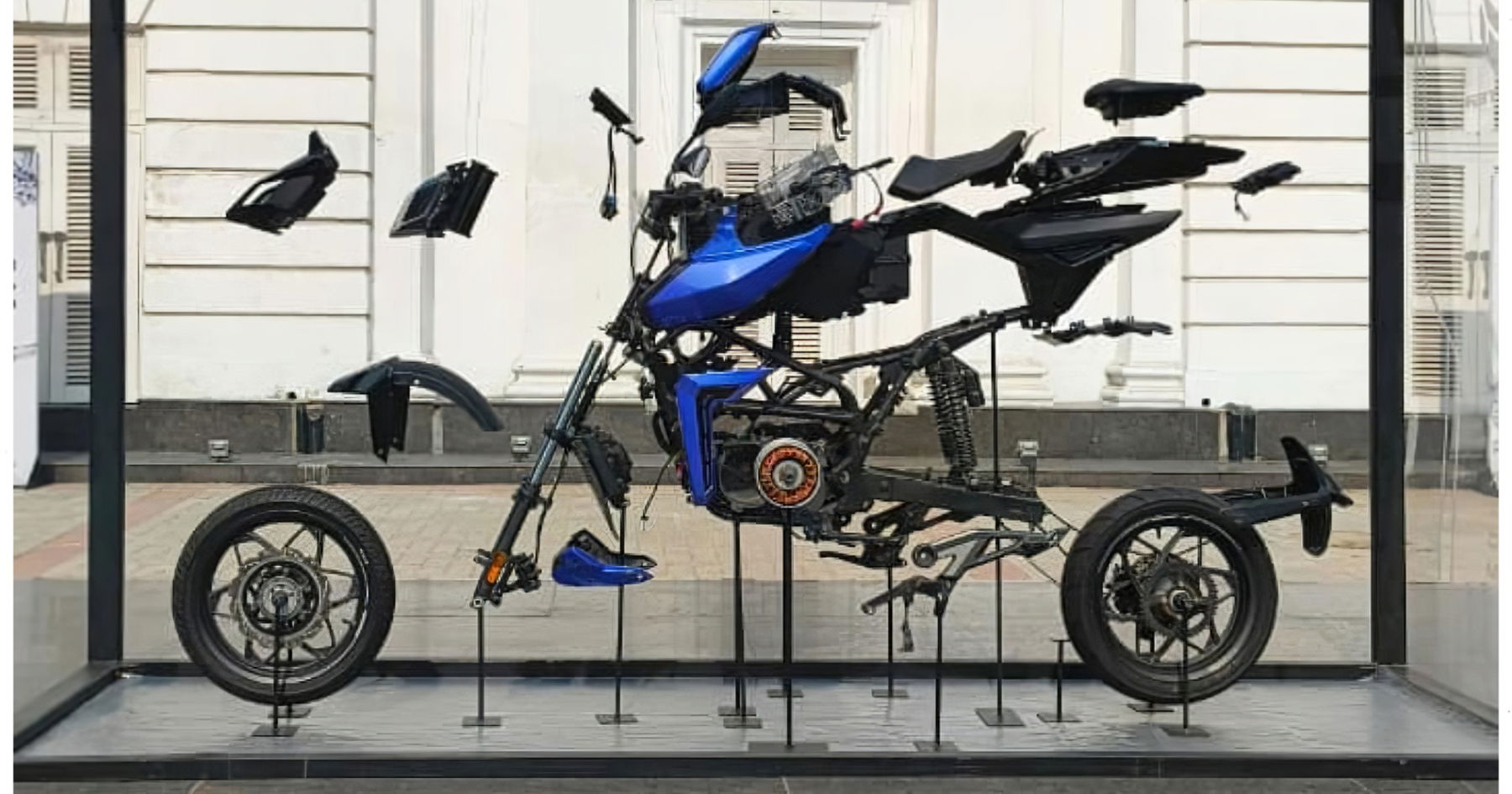
Matter cites the experience gained with its own AERA electric motorcycle as the basis for this step. The model was introduced as a first-generation software-defined vehicle and brought several technical features to the Indian market. These include the Hypershift transmission, liquid cooling for the motor and battery, and a deeply integrated control architecture.
Over-the-air updates made it possible to expand functions and features without changing the hardware. According to the company, this concept served as the starting point for the newly introduced AIDV platform, which is designed to intervene much more deeply in the vehicle’s decision-making and control levels.
What distinguishes AI-defined vehicles from SDVs
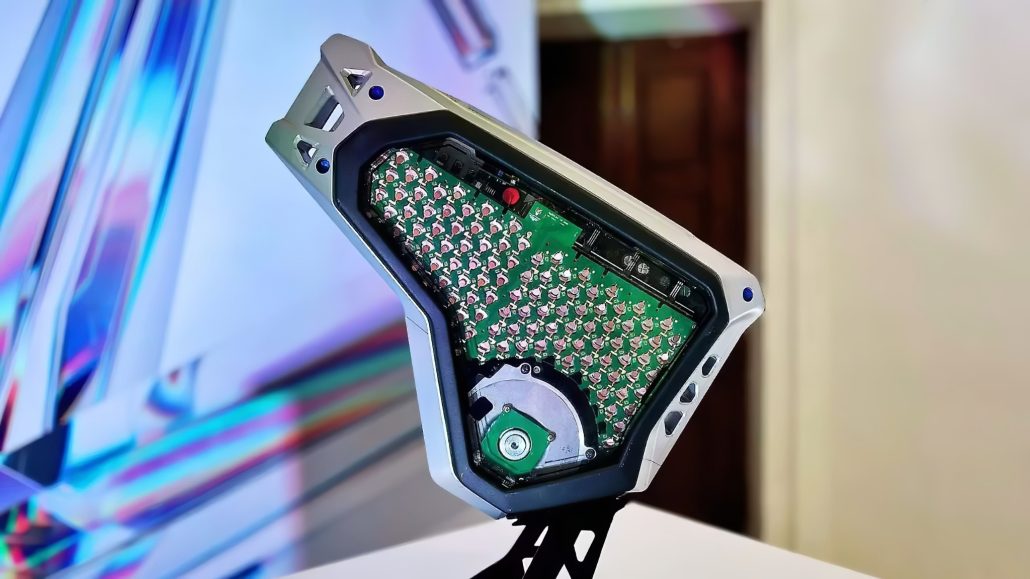
Matter clearly distinguishes AIDVs from previous software-defined vehicles. While SDVs focus primarily on connectivity and subsequent function updates, AIDVs integrate intelligence directly into the control system. This includes real-time control of torque and efficiency, predictive protection of the battery during the aging process, and adaptive thermal management that not only reduces power but also actively manages loads.
The goal is more consistent performance in everyday use, higher energy efficiency, and early fault detection. In the long term, this should also reduce operating costs over the vehicle’s lifetime.
New materials and drive concepts
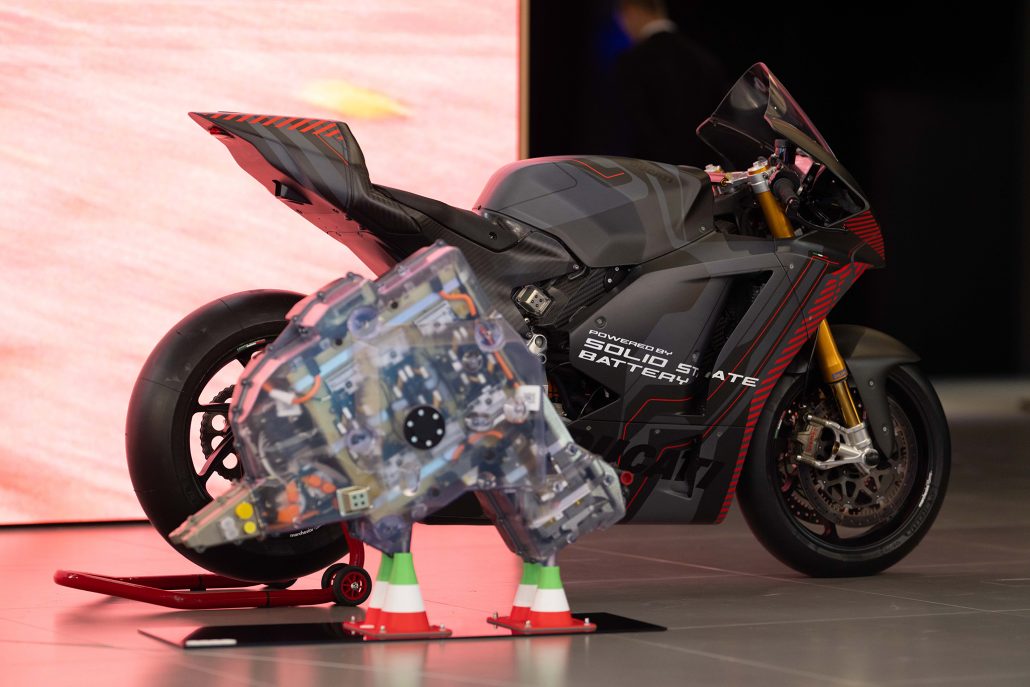
Beyond software, Matter also wants to integrate intelligence into hardware and materials. Among other things, concepts for rare earth-free electric motors with variable flux control were presented. These so-called variable flux motors are designed to do without classic permanent magnets and still be suitable for powerful electric motorcycles.
The motor currently on display is still in the prototype stage and is being tested internally. Series production is targeted for 2027 to 2028 at the earliest. The concept was developed in collaboration with Niron Magnetics, which supplies iron-nitrogen magnets. The project was already presented at CES 2026.
Matter also spoke about cell-based battery intelligence, new semiconductors and sensor systems, and a cross-domain computing architecture that combines local and cloud-based processes.
Five segments on a common basis
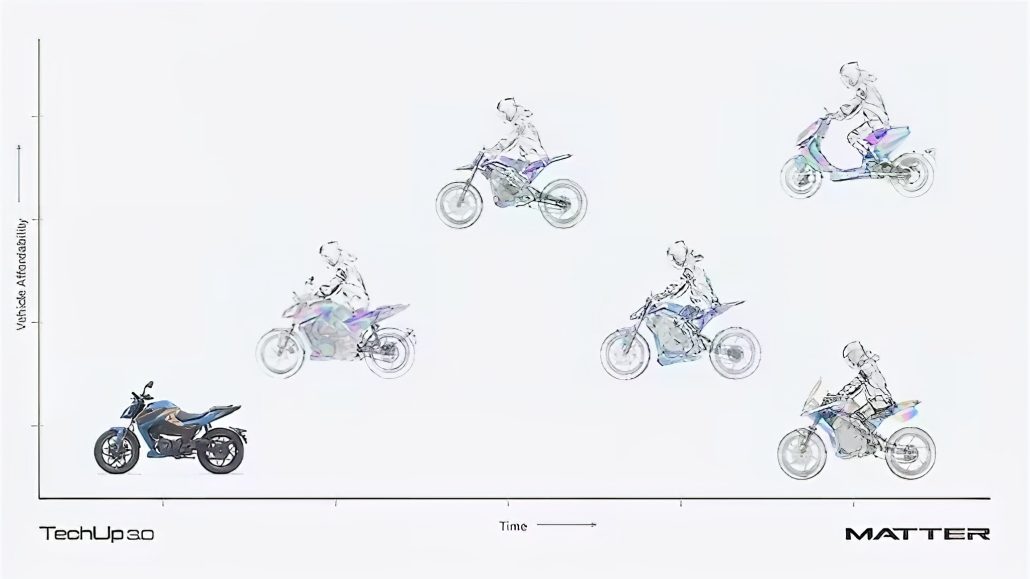
Parallel to the technology announcement, Matter presented a clearly structured product roadmap. Based on the AIDV platform, vehicles in five segments are to be developed over the next 36 to 48 months. The plans include naked street motorcycles, street fighter models, adventure motorcycles, youth-oriented commuter bikes, and electric scooters.
All models will be based on the same hardware, software, and computing platform. Matter aims to achieve economies of scale and cover different market segments with a uniform technological core. According to the company, this will address a large part of the Indian demand for two-wheelers.
Strategic change of direction
With the AIDV initiative, Matter is transforming itself from a traditional vehicle manufacturer into a technology-driven company. The approach is similar to the strategies of other Indian manufacturers such as Ather Energy, which also rely on platform-based software architectures.
Matter itself points to over 400 technological innovations and 97 patents granted, which are said to have been incorporated into the new platform. The coming years will show to what extent the AI-defined approach can be implemented in near-series products and how quickly the announced segments can be realized.
What does this mean for me as a motorcyclist?
For motorcyclists, this approach means above all that an electric motorcycle can change in everyday use over the long term without the need for new hardware. Driving behavior, power output, range management, and thermal load management are to be adapted to different operating conditions via software and learning controls. Ideally, performance will remain more consistent over the years, while the effects of battery and drive aging will be detected and taken into account earlier. However, whether these advantages will actually have a noticeable effect in practice depends on how consistently and transparently such systems are implemented in series production.

- Givi 466983Givi Easy Bein-Tasche