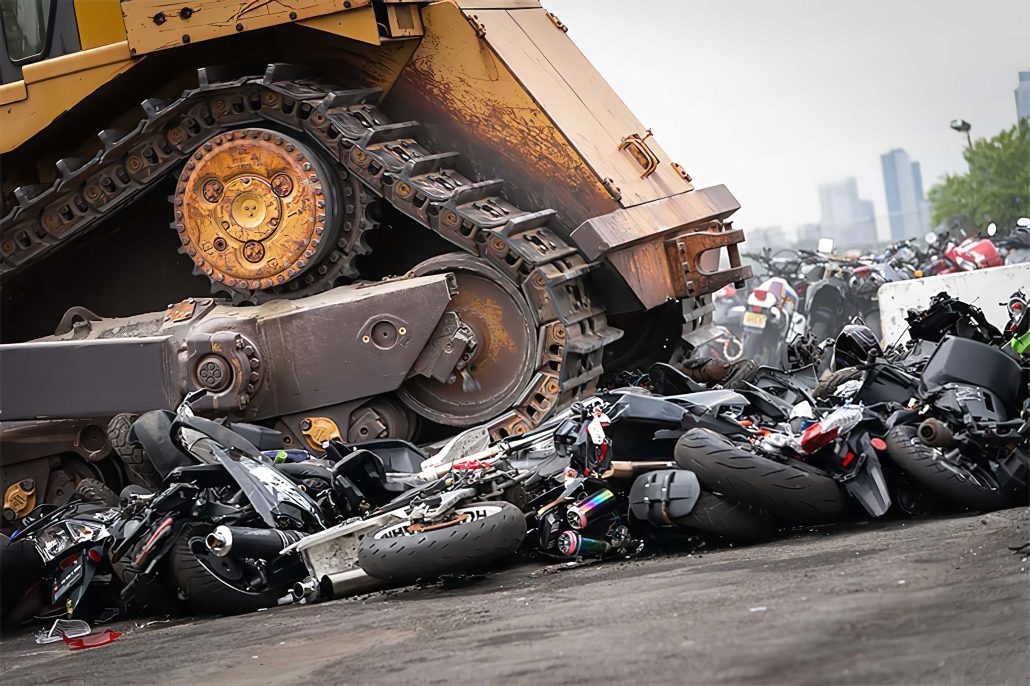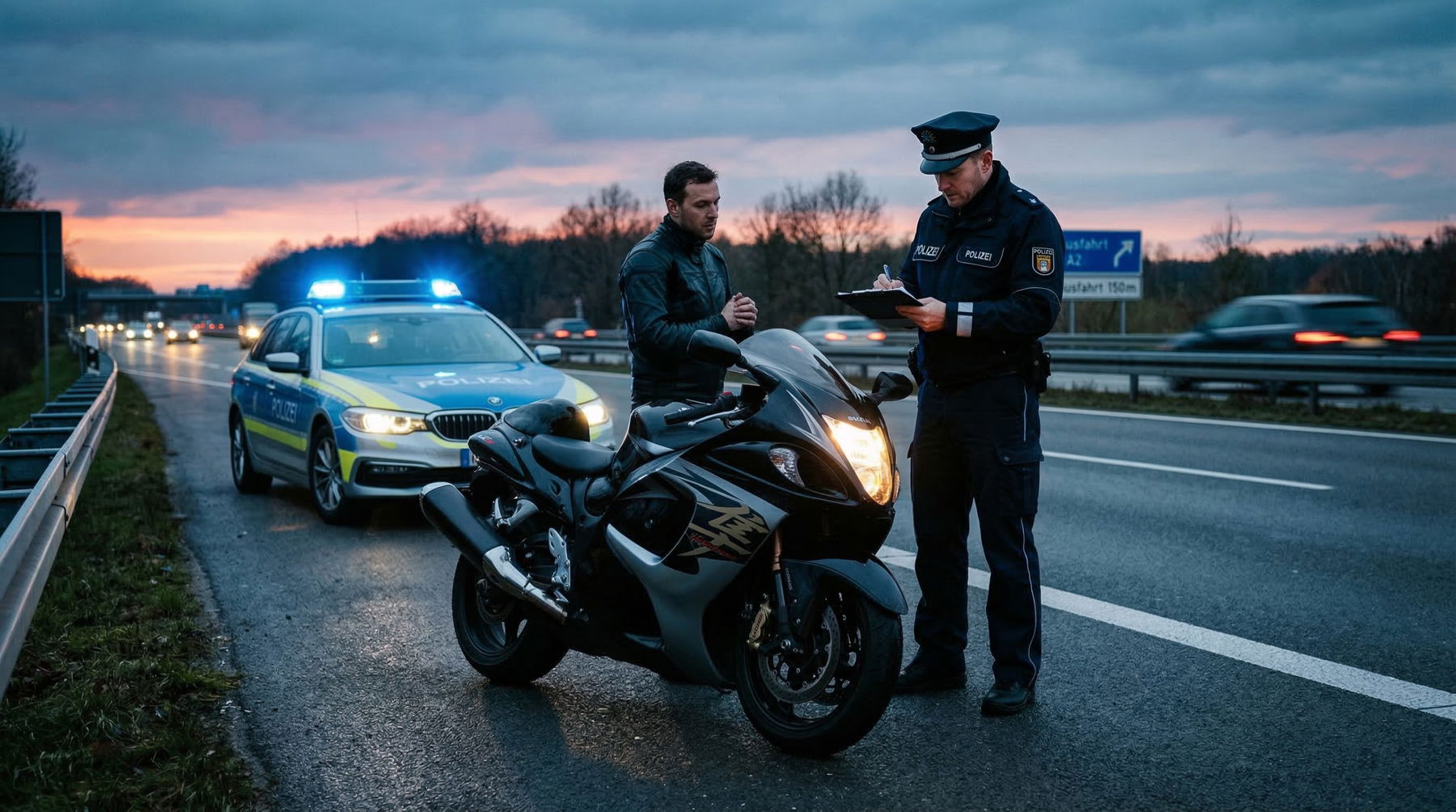
- Administrative Court of Appeal Koblenz declares motorcycle seizure unlawful
- Mere suspicion of illegal street racing insufficient for confiscation
- Court strengthens rights of motorcyclists at traffic stops
In February 2022, two police officers in Ludwigshafen were driving their patrol car when they noticed two motorcycles. The machines were traveling at an estimated 80 to 100 km/h through a zone where 50 km/h was permitted, during evening rush hour. The officers turned their car, followed both motorcyclists until a red light, and instructed them to move to a side street for a traffic stop. One of the two riders fled. The other complied with the police officers’ instructions.
Suspicion of Illegal Motor Vehicle Racing
The officers classified the observed behavior as illegal motor vehicle racing under Section 315d of the German Criminal Code (StGB). The rider, a 22-year-old man on a Yamaha RN12, was informed of his status as a suspect. A voluntary breath alcohol test came back negative—the man was sober. His motorcycle was subsequently seized for dual purposes: both for criminal prosecution and for hazard prevention. At the same time, officers confiscated his driver’s license and vehicle registration.
A check in the police information system revealed that an investigation against the rider had been conducted two years earlier on suspicion of illegal street racing and driving without a license. However, that investigation had only resulted in a conviction for driving without a license, not for street racing.
Criminal Proceedings Dismissed, Motorcycle Remains Confiscated
The criminal proceedings for the February 2022 incident were dismissed by the District Court of Ludwigshafen in April 2023 due to minor culpability. This eliminated the criminal basis for confiscation. The motorcycle, however, remained seized—this time exclusively for hazard prevention. Police argued that it could not be ruled out that the vehicle would be used again for illegal motor vehicle races.
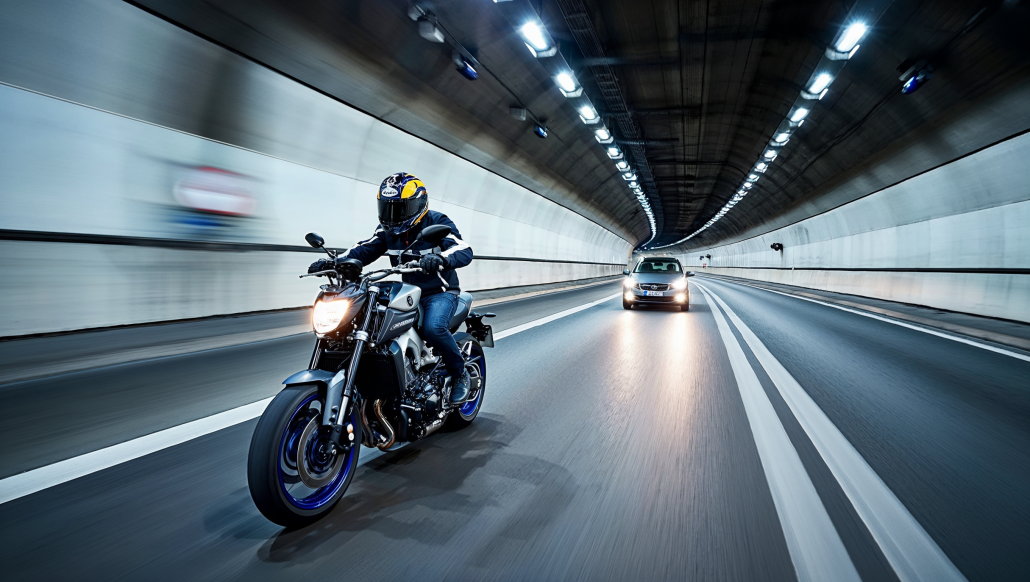
After an unsuccessful appeal, the rider filed suit with the Administrative Court of Neustadt an der Weinstraße. There, his case was rejected. The Administrative Court followed police arguments and even went a step further: the Yamaha RN12 with its 998 cubic centimeter engine and a top speed of 285 km/h was completely overpowered for normal road traffic. Such a machine practically invited the rider to commit further offenses.
Court of Appeal Lifts Seizure
On appeal before the Administrative Court of Appeal of Rhineland-Palatinate in Koblenz, the tables turned. In its ruling of April 30, 2024, the court lifted the seizure order and ordered the state of Rhineland-Palatinate to return the motorcycle to the plaintiff.
The court’s reasoning is clear: Under Section 22 of the Rhineland-Palatinate Police and Order Enforcement Act (POG), police may only seize property to avert an imminent danger. Danger is imminent when a harmful event has already begun or is about to occur with near certainty. Mere suspicions or assumptions are insufficient for this.
Once the rider was stopped during the traffic check, the alleged street racing had ended, the court ruled. No ongoing disturbance existed at the time of seizure. The confiscation was not carried out to stop the ongoing race, but to prevent future traffic offenses. This is precisely what seizure under Section 22 is not designed for.
No General Rule for Incorrigibility
The court clarified another important principle: there is no general rule of experience suggesting that a traffic violator caught by police is generally incorrigible. As a rule, it must be assumed that fines, driving bans, and particularly criminal investigations sufficiently impress the average road user to deter him from committing further immediate offenses.
Exceptions could only apply under special circumstances. The court cited examples such as situations where a driver is disinhibited by alcohol or drugs, where he expressly announces further violations, or where he is on his way to a planned race. Unusually numerous traffic violations in the past or repeated driving without a license could also indicate incorrigibility. None of this applied to the plaintiff.
Engine Power Alone No Grounds for Seizure
The court decisively rejected the Administrative Court’s argument that a highly powered motorcycle invites criminal acts. The Yamaha RN12 had regular road approval and did not deviate so significantly from other standard models in the same vehicle category that an increased risk of traffic offenses could be inferred from this alone.
The court was equally unpersuaded by the earlier investigation from 2020. The police officers had no details about that investigation at the time of the stop. They only knew that an investigation had been conducted, but not what the rider was specifically accused of or how the investigation ended. From this, one could at best infer an initial suspicion, which by far was insufficient for a prognosis with near certainty.
Additionally, the court noted that the rider’s driver’s license had been confiscated during the stop. This meant he could no longer legally operate any motor vehicle. There had been no indication that he would violate this prohibition.
What the Ruling Means for Motorcyclists
The court concluded with a sentence that summarizes the significance of the ruling: seizure under Section 22, Paragraph 1 of the Police and Order Enforcement Act is neither a means of hazard prevention nor does it authorize the repressive removal of vehicles to punish a suspect for a traffic offense.
For motorcyclists, this means concretely: a single speeding violation or suspicion of illegal street racing does not justify confiscating the motorcycle. Police must present concrete, fact-based evidence that without seizure, immediate further damage is imminent. While the ruling applies directly only to Rhineland-Palatinate, its detailed reasoning should serve as guidance in other German states as well. The case number is 7 A 10988/23.OVG.


- S100 2367S100 2367, Kettenmax Kettenreiniger – 500 ml male


Redakteur bei Motorrad Nachrichten. Fokus auf Technik, Szene und Motorradpolitik – neutral, sachlich, verständlich.
Verantwortlich für die Seiten www.Motorcycles.News, www.Motorrad.Training und den YouTube-Kanal "Motorrad Nachrichten", sowie deren social Media-Seiten.