- Extended lawsuit after forced access to files
- Indications of the district’s preconceived intention to close the road
- Less severe measures apparently not seriously considered
The dispute over the partial closure of the Sudelfeld route is increasingly developing into a fundamental dispute over administrative action and decision-making processes. While the district of Rosenheim officially justifies the measure on the grounds of traffic safety, the files that have now been disclosed paint a picture that, in the plaintiffs’ view, reveals considerable shortcomings in the procedure.
Lawsuit against the Rosenheim district significantly expanded
Back in August 2025, a motorcyclist, with the support of the BVDM, filed a lawsuit against the partial closure of the B307. From the outset, the lawsuit was directed against the Rosenheim district and the traffic regulation order issued there.
The original statement of claim was initially of a formal nature. The reason for this was the district administration’s consistent refusal to allow access to the files. Only after repeated reminders were the complete documents made available in November 2025. This delay alone is considered problematic, as it prevented a proper legal review for months.
Access to files reveals preconceived decision-making
From the plaintiffs’ point of view, the review of the administrative files provides a clear picture. Numerous internal emails and meeting minutes suggest that the closure of the route was set as a goal at an early stage. According to these, the internal discussions focused less on the question of whether a closure was necessary and more on the legal basis on which it could be implemented.
Particularly critical is the fact that considerations are apparently documented on how to specifically keep motorcyclists away from the route or reduce its attractiveness for them. In the plaintiffs’ view, the documents show only limited evidence of an open-ended deliberation process, as should be customary in administrative law.
Political influence and one-sided focus
The files show that the administration was intensively engaged in implementing the demands of CSU constituency representative Daniela Ludwig. She had suggested examining all legal options for banning motorcycle traffic.
Although the district emphasizes that political wishes had no direct influence on the decision, the documents give the impression that political pressure may have played a not insignificant role.
Milder measures largely ignored
A central point of the expanded lawsuit concerns the handling of alternative measures. The administrative file contains references to options such as rumble strips, median barriers, or increased speed controls. However, these are generally assessed as ineffective or unfeasible without any comprehensible technical justifications being documented.
In particular, the plaintiffs believe that section-based speed measurement (Section Control) would have been an obvious choice for section Q4, which has been identified as an accident blackspot. However, the documents do not indicate that this measure was seriously considered, even though it could have been particularly effective in targeting excessive speed and risky driving behavior.
Accident figures without sufficient context
The Rosenheim district essentially bases the closure on rising accident figures. Between 2018 and 2024, a total of 97 motorcycle accidents were recorded, the majority of which occurred on weekends and on a very limited section of road.
However, from the plaintiffs’ point of view, a crucial classification is missing. The accident figures were not put into relation to the exceptionally high volume of traffic. A traffic count in the summer of 2024 recorded around 159,859 vehicles within four weeks, including 63,265 motorcycles. In section Q4 alone, over 27,000 motorcycles were counted.
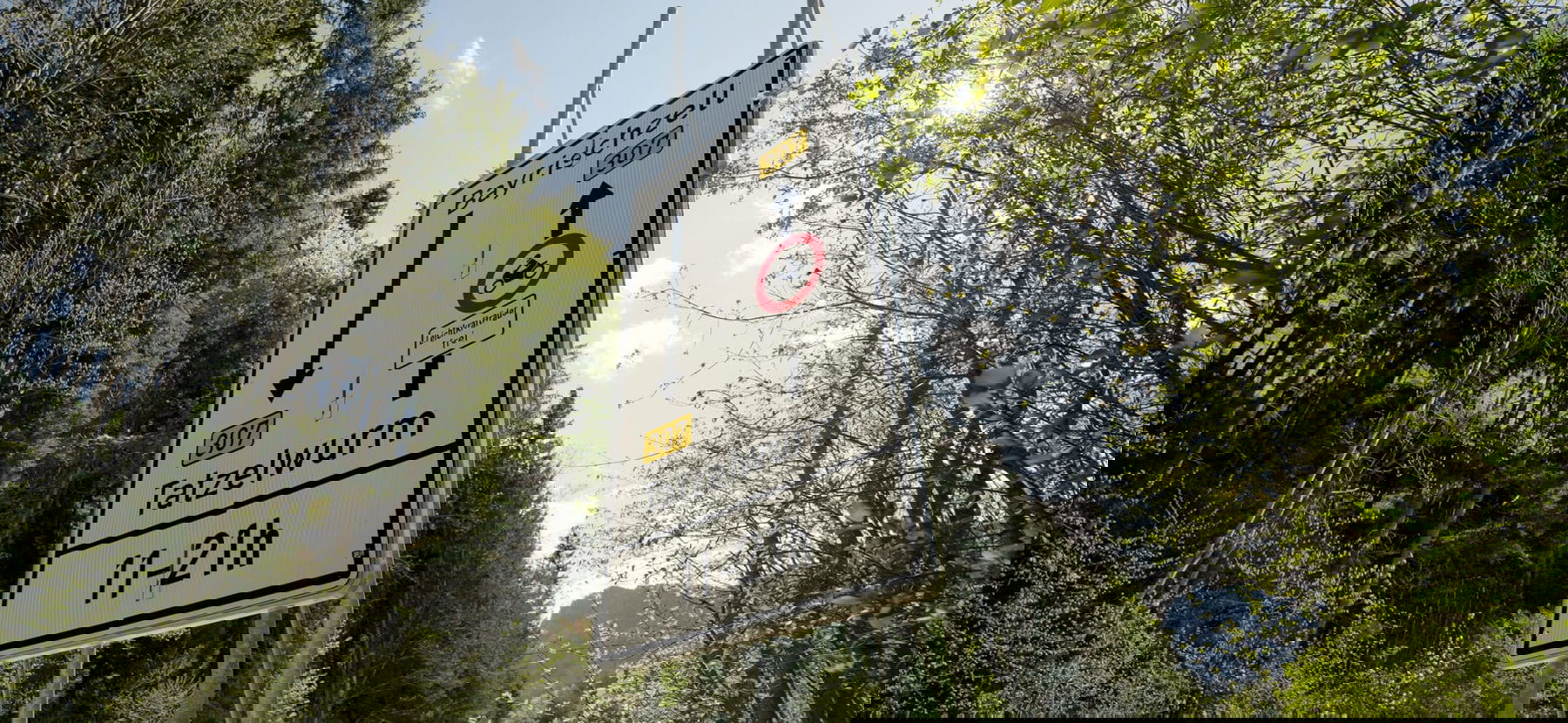
Despite these findings, the closure extends over the entire downhill section and applies daily from 11 a.m. to 9 p.m. A differentiated, section- or time-related regulation was not implemented.
Significant detours and ignored consequences
For the motorcyclist bringing the lawsuit, the closure leads to massive restrictions. The regular travel time of around 17 minutes between the Tatzelwurm car park and Bayrischzell is extended to almost an hour due to forced detours via Großbrannenberg, Bad Feilnbach, and Miesbach.
Tourist destinations and motorcycle meeting points can now only be reached via detours of up to 50 kilometers, which results in considerable financial losses for them. These burdens on road users and regional businesses are hardly reflected in the administrative files and were apparently not systematically weighed up. Discussions with restaurateurs also did not take place.
Tourist destinations and motorcycle meeting points can now only be reached via detours of up to 50 kilometers, resulting in considerable financial losses for these businesses. These burdens on road users and regional businesses are hardly reflected in the administrative files and were apparently not systematically weighed up. There were also no discussions with restaurant owners.
Demonstration increases public pressure
At the beginning of May, a demonstration organized by the BVDM made the discontent of many motorcyclists publicly visible. Although the district administrator answered the participants’ questions, the authorities stuck to their line.
It was emphasized once again that the closure was based solely on accident figures and not on complaints or political demands. It was pointed out that the measure is designed as a two-year traffic trial and will be evaluated afterwards.
Assessment and outlook
The now expanded lawsuit focuses less on the existence of individual accidents and more on the district’s overall approach. In particular, it criticizes the refusal to allow access to files, the lack of transparency, the insufficient examination of milder measures, and the impression of a predetermined decision. This is also consistent with the fact that the no-entry signs were already in place before the closure was even announced. At that point, however, they were still folded down, meaning that the closure was not yet in effect. This also suggests that the closure was to be implemented as quickly as possible and without the knowledge of the public, until it was effectively in place and could no longer be easily challenged.
Whether the closure can be maintained in the long term in light of the new findings will now depend largely on how the court assesses the proportionality of the measure and the quality of the administrative procedure. Regardless of the outcome, the Sudelfeld remains a clear example of how much trust is lost when decisions are made without apparent openness and without genuine involvement of those affected.
What does this mean for me as a motorcyclist?
For motorcyclists, the current situation means one thing above all: noticeable restrictions with no clear perspective. The unilateral closure of the Sudelfeld is not an isolated intervention, but an example of how quickly popular routes can be restricted without prior involvement of those affected. In concrete terms, this means longer travel times, forced detours of sometimes several dozen kilometers, and the loss of useful connections within a region. What is particularly problematic is not so much the individual measure as the underlying signal it sends. When accident figures are not put into perspective with traffic volumes, milder measures are hardly considered, and decisions are only explained after the fact, a precedent is set. From a motorcyclist’s point of view, this raises concerns that similar closures could also affect other routes. Not because they are objectively particularly dangerous, but because blanket measures are easier to implement administratively than differentiated solutions. The lawsuit against the district is therefore not just a legal dispute about the Sudelfeld, but fundamentally touches on the question of how fairly, transparently, and proportionately motorcycle traffic will be dealt with in the future.
- Givi 466983Givi Easy Bein-Tasche