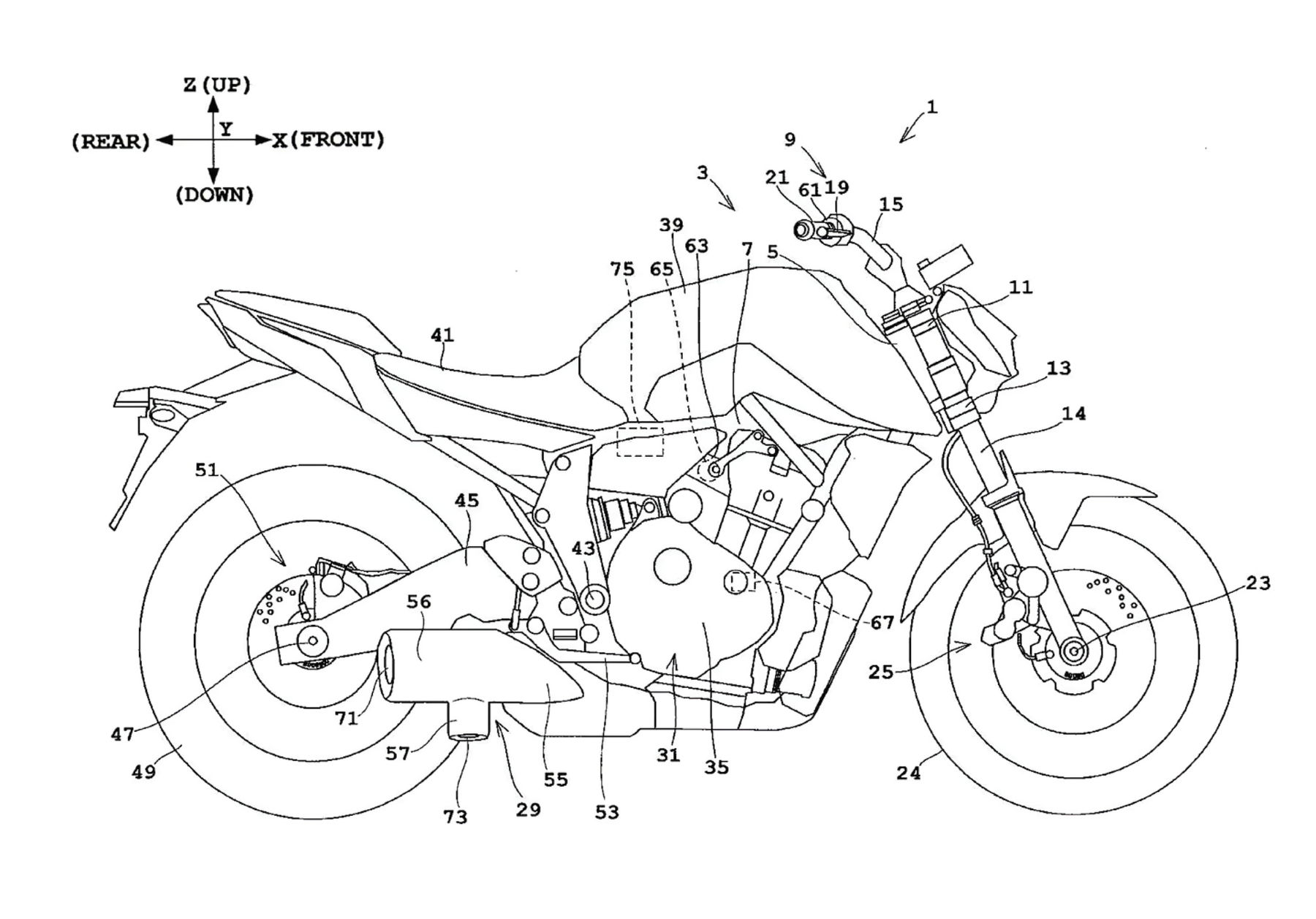
- Patents describe multiple exhaust paths with valve control
- Flow direction intended to reduce wheelies or increase cornering stability
- Combined system with multiple outlets in planning
A newly filed patent application from Japan provides insight into Yamaha’s considerations for using exhaust gas flows as an additional control mechanism for driving dynamics. Exhaust gas pressure is not only viewed as a by-product of the engine, but as a potential tool for stabilizing or supporting the motorcycle depending on the driving situation.
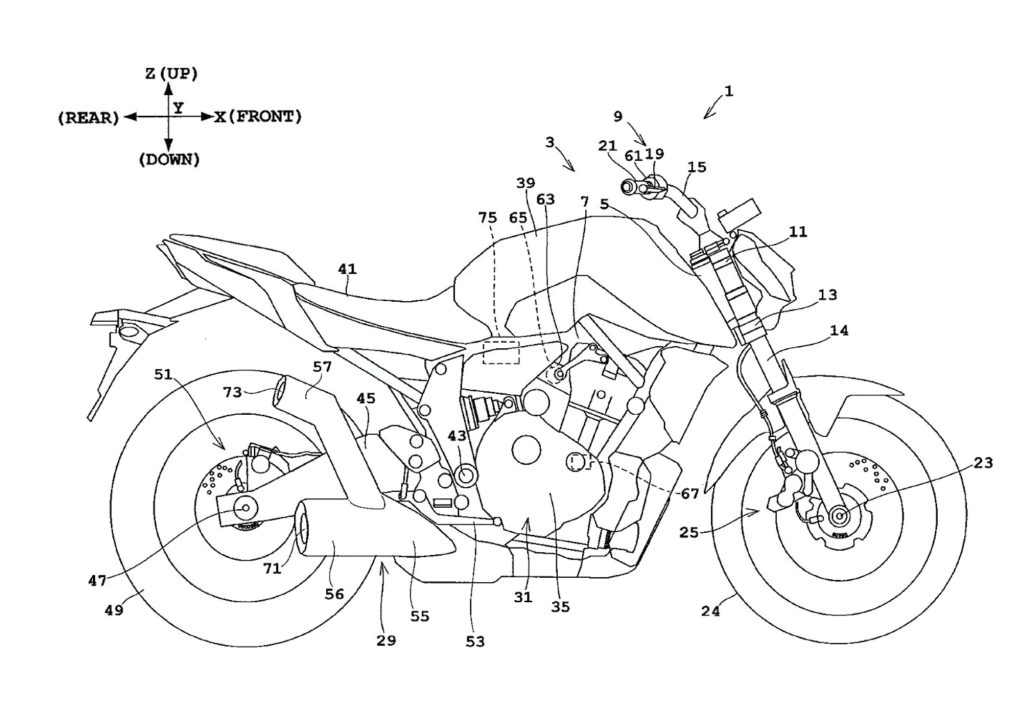
How exhaust gas control is supposed to influence driving behavior
Anti-wheelie system
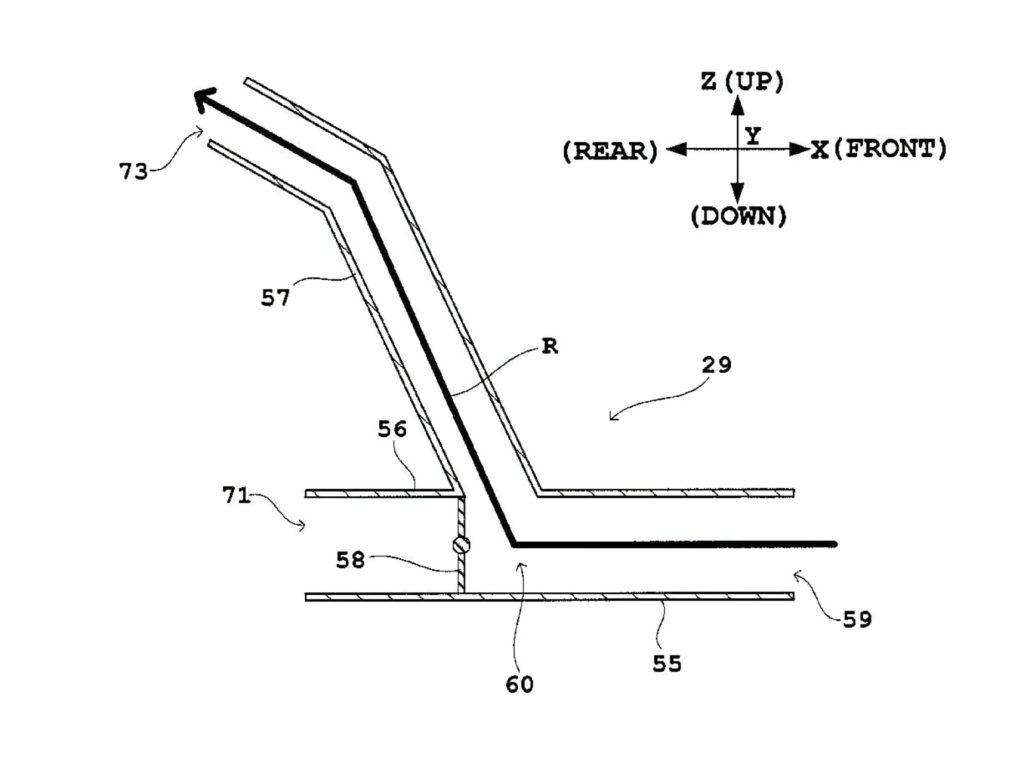
One of the patents describes an exhaust system with two tailpipes that is controlled by flaps. The first outlet is large and has as free a flow as possible so as not to throttle the engine. The second outlet is higher, narrower, and angled upward.
The smaller pipe cross-sectional area increases the exhaust jet and generates additional pressure to the rear and upward. This directed thrust is intended to press the front wheel more firmly onto the asphalt, which should reduce wheelies and improve acceleration when exiting corners.
As soon as the speed increases and wheelies are no longer a limiting factor, the flap opens again in favor of the large tailpipe with maximum flow.
Exhaust gas for cornering stability
Downward-facing outlets for additional cornering thrust
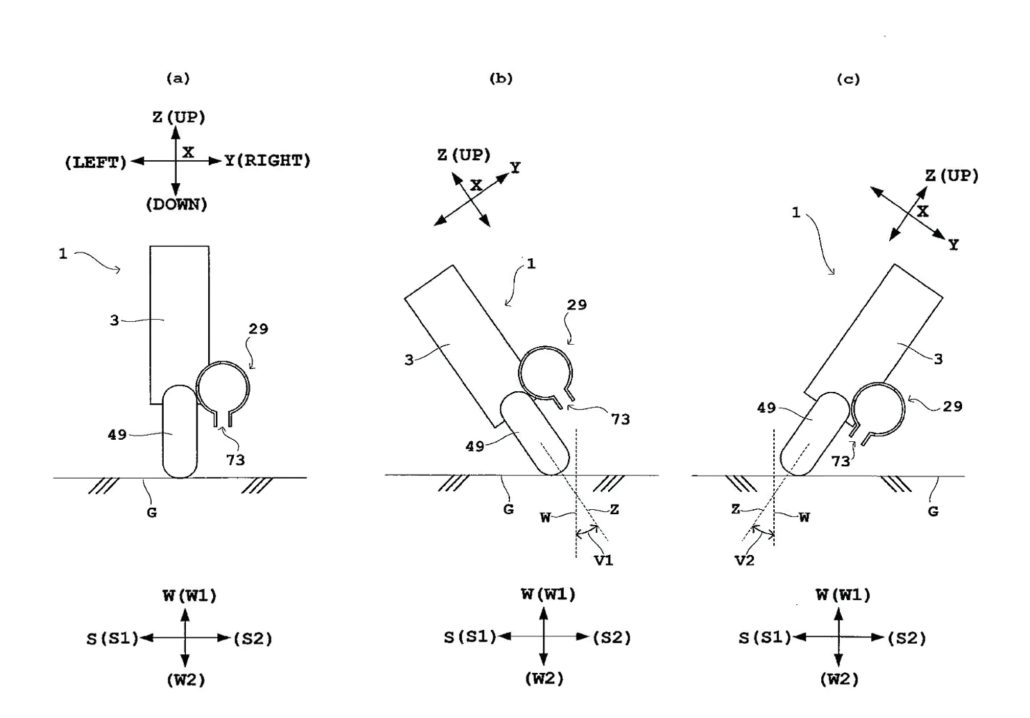
A second patent shows a system that directs exhaust gases through a narrow, downward-facing pipe when the bike is leaning. At maximum lean angle, this outlet faces sideways toward the outside of the curve. The escaping exhaust gas jet acts as an additional lateral impulse, which is intended to push the motorcycle further toward the inside of the curve.
It is interesting to consider that motorcycles cannot deliver full engine power at extreme lean angles anyway. Redirecting some of the energy into a supportive thrust effect could therefore be considered a sensible compromise.
Variable outlets on the left and right
A further developed variant describes two pipes directed downwards and diagonally outwards. This should make the effect usable regardless of how steeply the motorcycle is tilted. The system could also be effective for slower curves or lower lean angles.
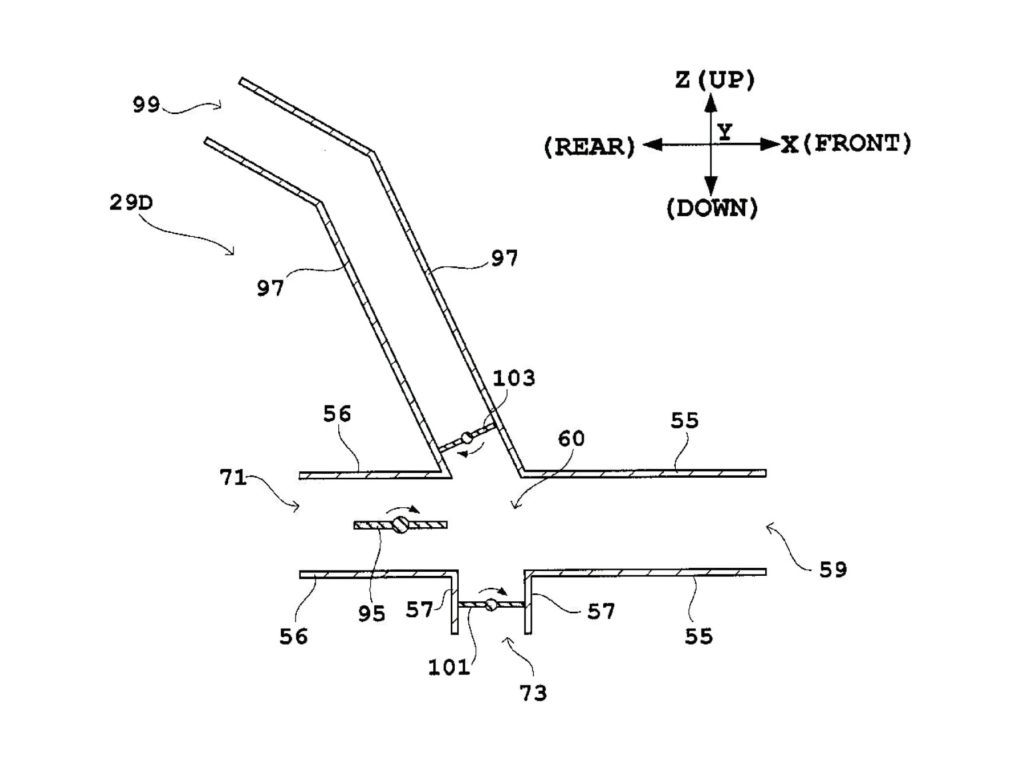
Combination system with multiple valves
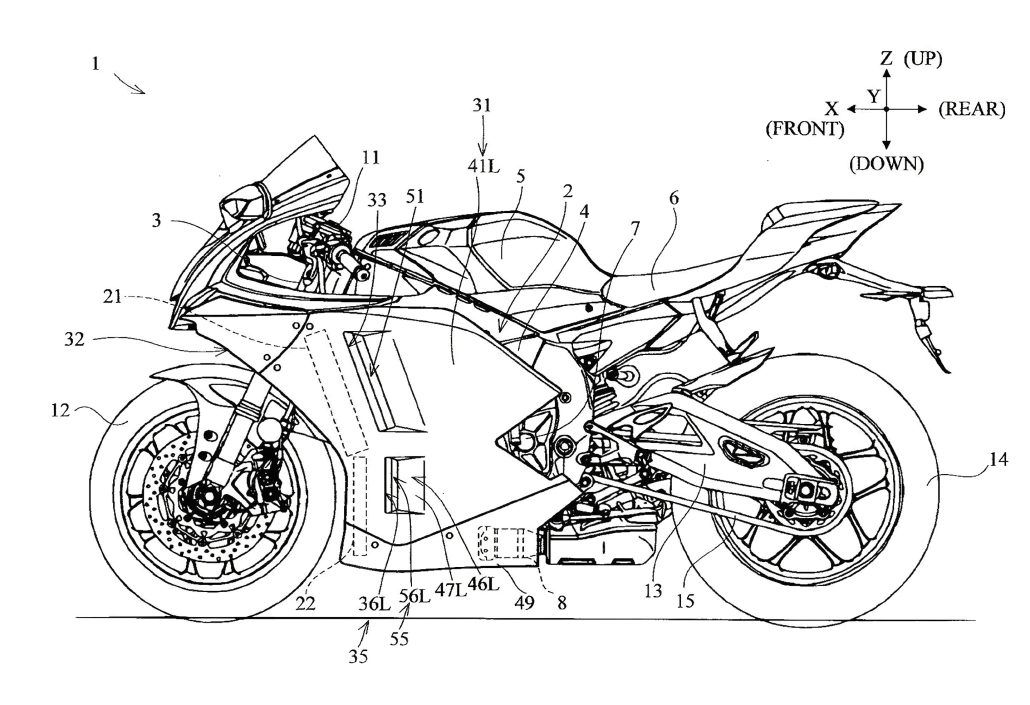
Although Yamaha has filed two separate patents, the drawings suggest that the ultimate goal is a combined design. This would feature both a large, rearward-facing pipe for maximum power and smaller pipes for anti-wheelie and cornering stability.
Multiple flaps inside could open the appropriate exhaust path depending on the riding situation. Since the valves are located inside the exhaust and no external aerodynamic elements move, such a system should not violate existing or future regulations on active aerodynamics. Many racing motorcycles already use internally controlled exhaust flaps for engine braking control, for example, which further supports the technical basis.
Outlook
Even if the potential advantages are only minor, they could be decisive in racing. With increasing restrictions on aerodynamic aids in MotoGP and WSBK, steering-active exhaust gas routing represents an alternative approach to further optimizing handling and driving stability.


- Cardo PTP00001Cardo Packtalk PRO Kommunikationssystem Einzelset Schwarz male