Variable Air Routing: An Old Approach Reimagined
The idea of using movable louvers to control airflow at the radiator is by no means new in vehicle engineering. Even before World War II, many cars had manually or automatically operated radiator shutters. At the time, however, the focus was primarily on regulating engine temperature. In aviation, adjustable cooling channels also became established to achieve aerodynamic advantages – the most famous example being the P-51 Mustang with its so-called Meredith Effect, where air routed through the radiator is used to reduce drag and even generate a slight thrust.
In modern automobiles, active radiator shutters are now standard, particularly for optimizing aerodynamics and reducing fuel consumption. For motorcycles, this technology has not been a factor in production models, although BMW filed initial patents for comparable solutions in 2023. Yamaha is now picking up the idea but pursuing a different approach.
How Yamaha’s New Aero Concept Works
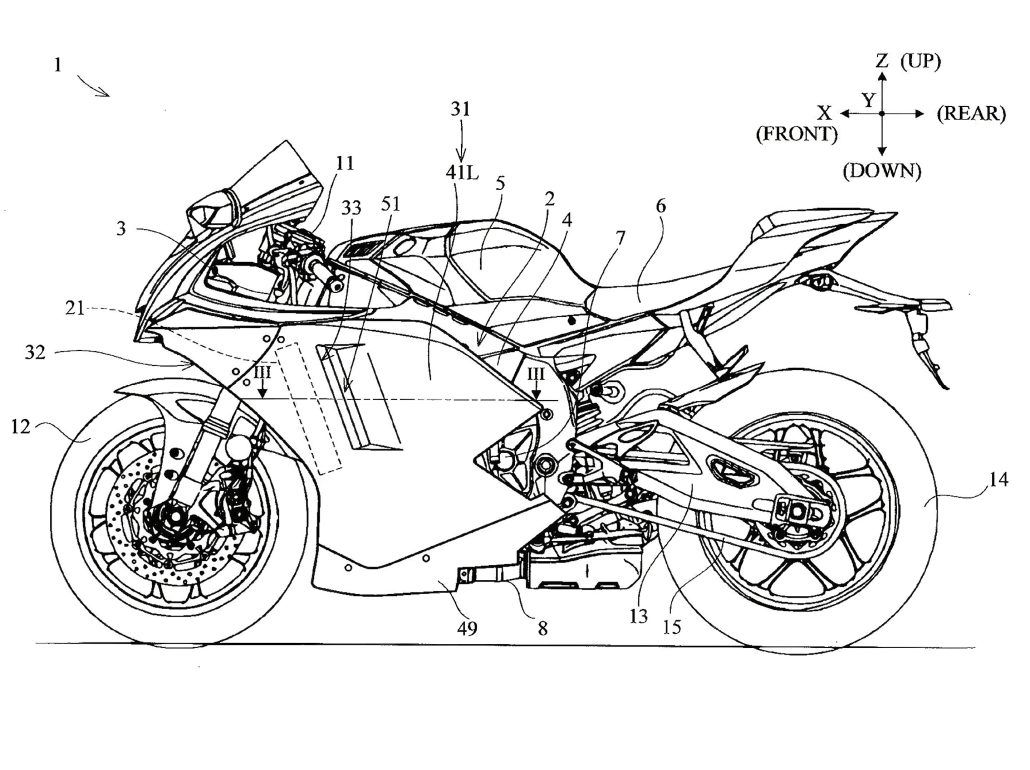
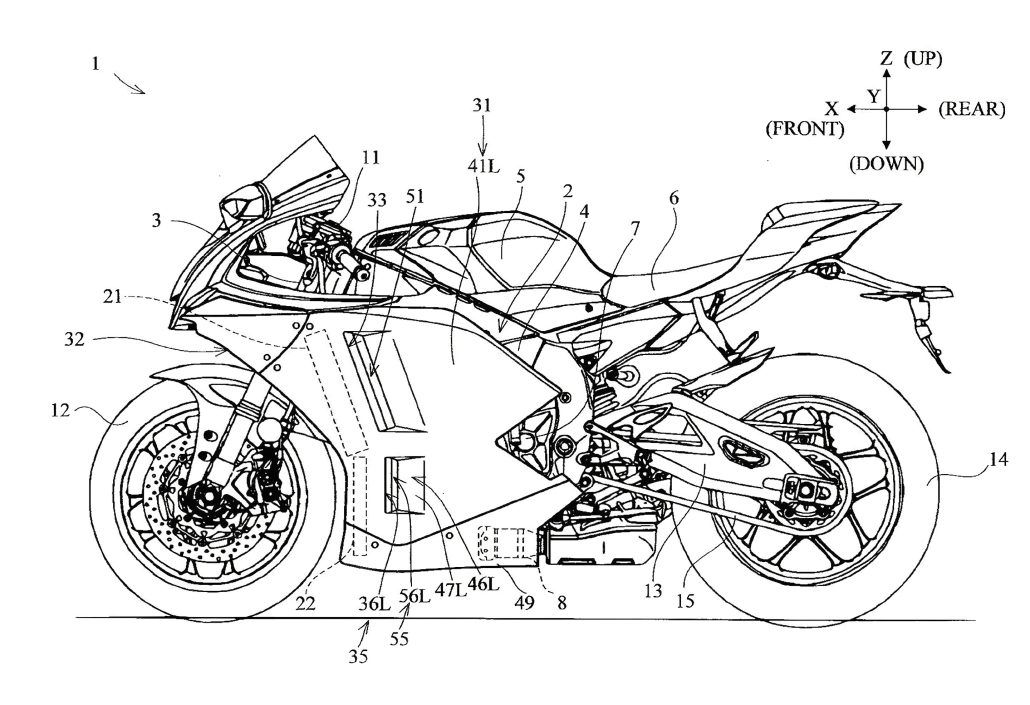
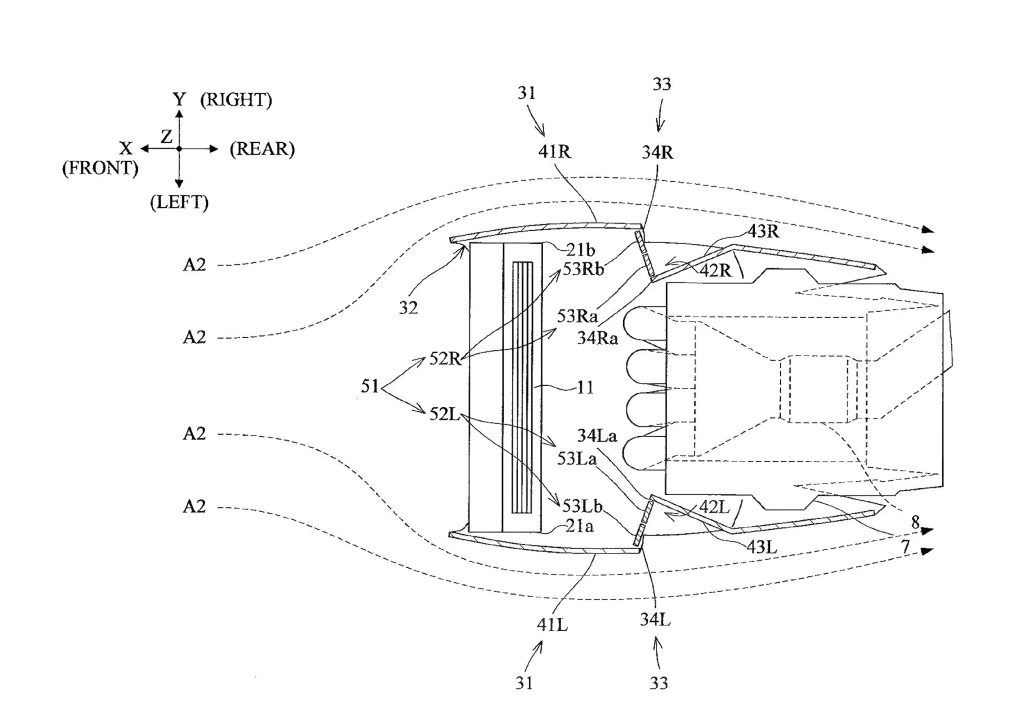
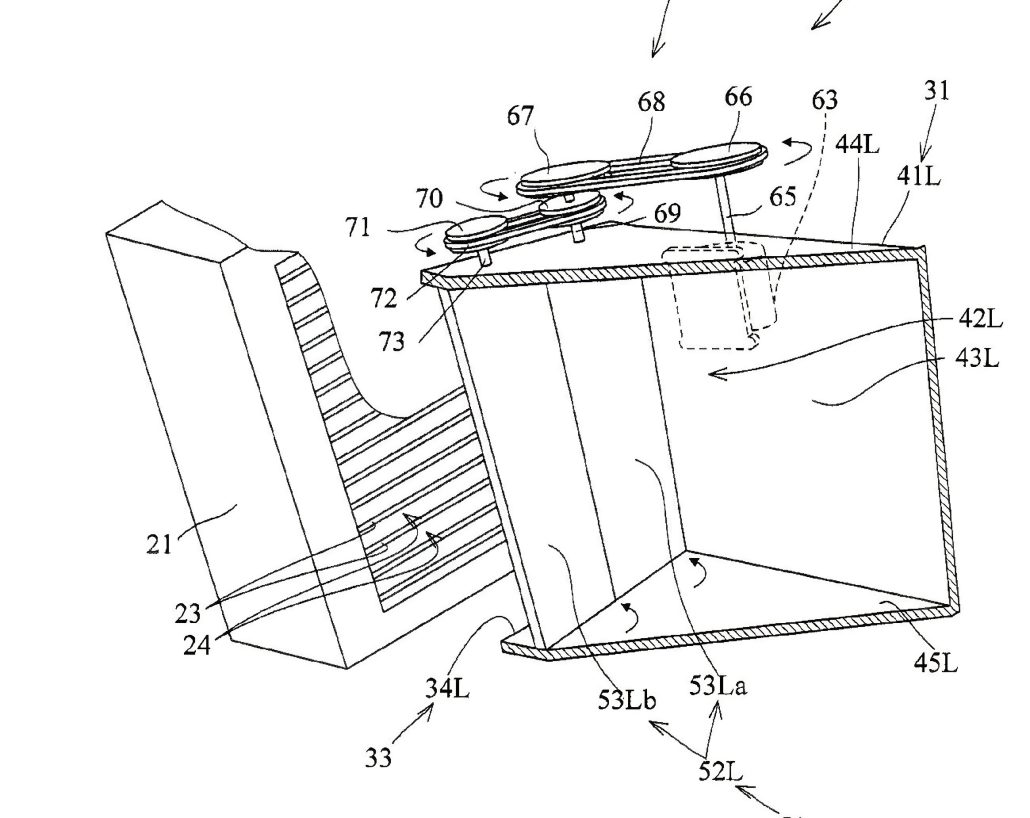
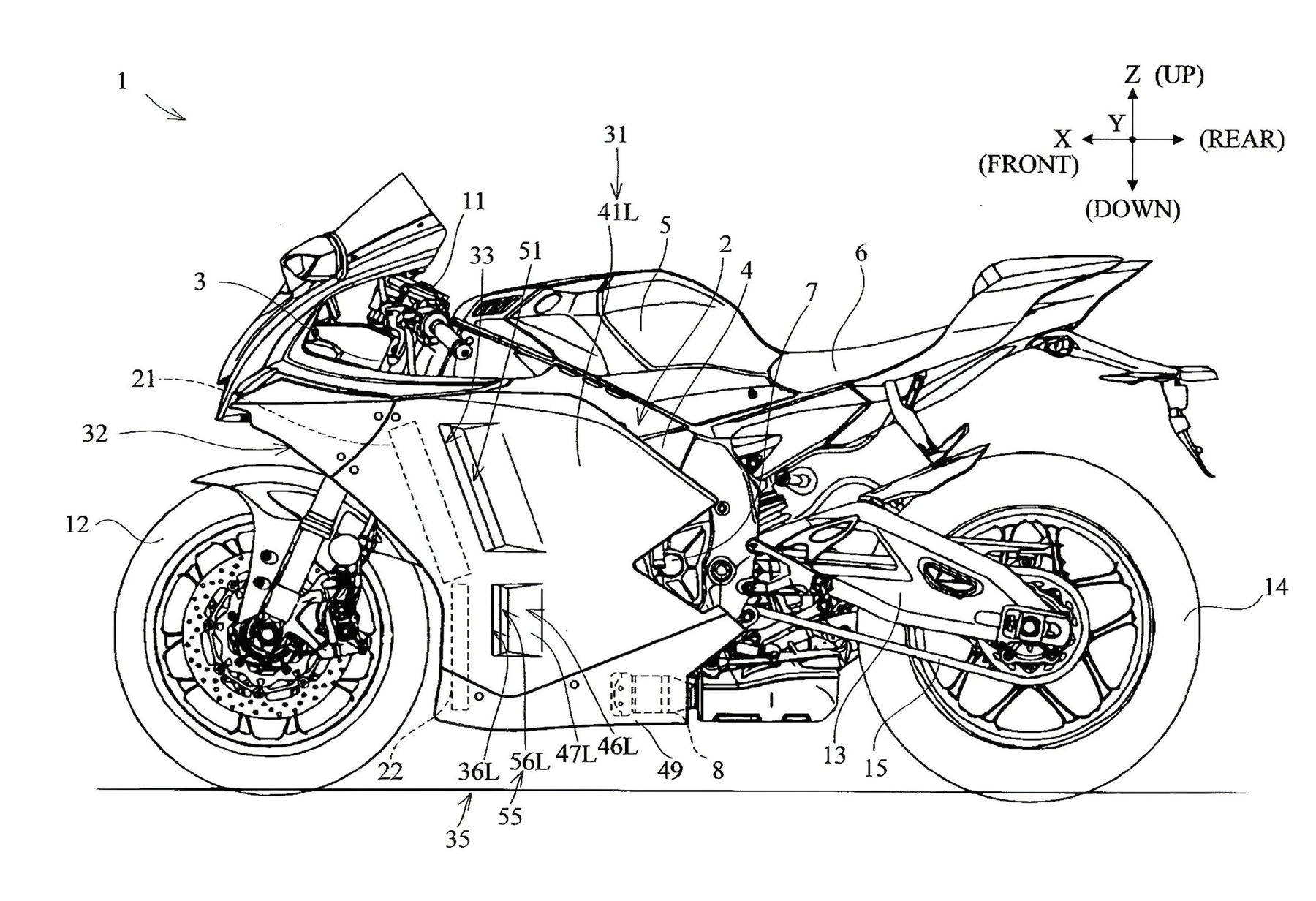
The current Yamaha R1 patent describes a comprehensively faired side section with special air outlets that automatically open or close as needed. Unlike in cars, it is not the air intake in front of the radiator that is regulated, but rather the exit of warm cooling air behind the radiator. When the outlets remain closed, air backs up inside the fairing and the airflow that would normally pass through the radiator is redirected around the side fairing.
According to the patent, this solution offers two key advantages: first, drag is reduced because less air flows through the radiator. Second, it prevents the slower, turbulent exhaust air from the radiator from directly entering the faster airstream alongside the fairing, which would create additional drag. When the outlets are closed at lower cooling demand, a significantly cleaner airflow results – which is particularly beneficial at higher speeds.
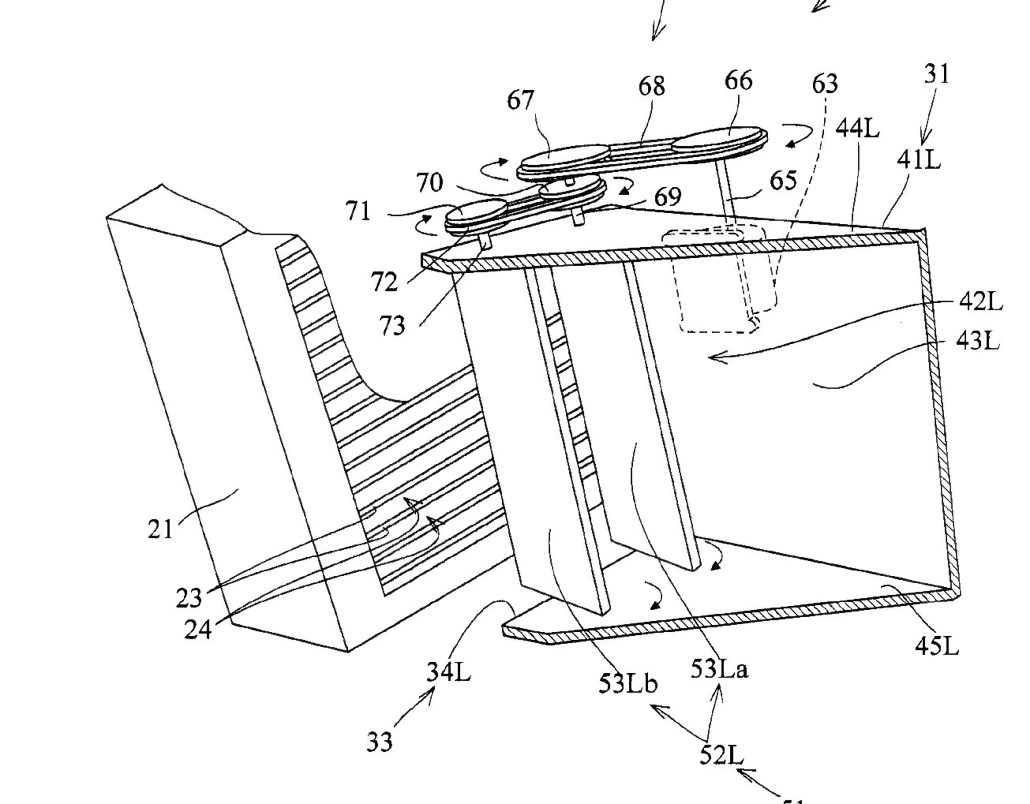
The patent shows two variants: one version with a single large variable air outlet per side, and another with two smaller, individually controllable outlets per side. The air outlets are opened by means of movable louvers driven by a small stepper motor via a belt drive. Control is handled by the onboard ECU, which incorporates numerous sensor inputs including engine temperature, ambient temperature, throttle position, speed, and catalytic converter temperature.
Intelligent Thermal Management for Engine and Catalytic Converter
According to the patent, the system offers versatile options for actively influencing the motorcycle’s thermal management. The operating temperature of the catalytic converter can be specifically raised to reduce emissions. At the same time, the system can ensure the optimal balance between cooling and aerodynamics during riding. At low speeds or high ambient temperatures, the louvers open to ensure maximum cooling. As speed increases or ambient temperature drops, the outlets progressively close to improve aerodynamics.
During phases of maximum acceleration, the system even proposes temporarily reducing cooling in favor of improved aerodynamics and thus maximum performance. However, the system ensures the engine does not overheat. As soon as conditions ease, the louvers reopen and provide adequate cooling.
An additional benefit: with reduced drag, not only fuel consumption decreases but also emission levels – a crucial point for meeting future exhaust regulations.
Background: Pressure from Emission Regulations and the Future of the R1
The Yamaha R1 is already no longer available as a road-legal production model in Europe due to tightened emission regulations, and is currently offered in the EU only as a track bike. For a return to the road, innovations such as this active cooling air control are essential to meet required values without compromising performance.
Whether and when this technology will actually enter production remains uncertain. However, the patent underscores that Yamaha continues to actively shape the supersport future. Variable cooling air outlets could become a central building block in that effort.
→ This article is part of our comprehensive overview of patents and future technologies – find all developments in our Patents and Future Motorcycle Technology overview.

- DR. O.K.WACK 2409DR. O.K.WACK Bekleidungspflege-/reparatur, Motorrad 2409 0.1l