From pure driving pleasure to the wind tunnel: the development of aerodynamic concepts
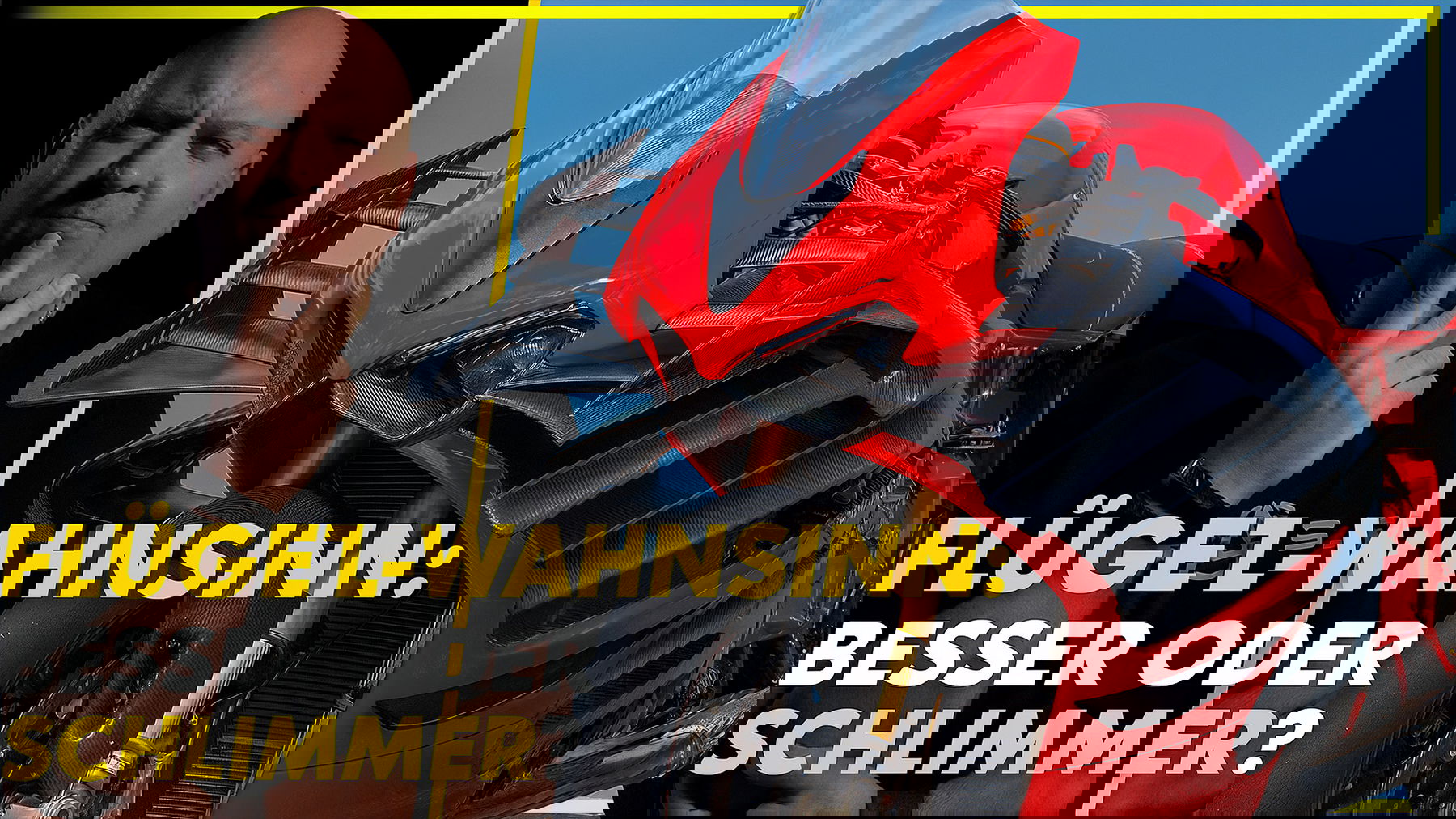
In the early years of MotoGP, aerodynamics was at best a marginal issue. The machines were optimized for agility and low weight, with fairings primarily serving as wind protection. Ducati was the first to break with this tradition: in the early 2010s, the Italian manufacturer introduced winglets for the first time—small wings at the front designed to provide additional downforce.
Initially ridiculed, these components quickly established themselves as a serious advantage. They stabilized the front wheel during acceleration and reduced the tendency to wheelie. With increasing success, other manufacturers such as Honda, Yamaha, and KTM adopted the concept and developed it further. Soon, more complex designs such as “downwash ducts” followed, which specifically reduce air turbulence and provide better stability.
Why is aerodynamics important for a motorcycle?
Modern MotoGP machines reach speeds of over 350 km/h. At such speeds, air resistance becomes a dominant factor. The aerodynamic components fulfill several functions:
- Downforce for stability: Winglets generate downward pressure that “presses” the motorcycle onto the track.
- Better braking performance: Additional downforce improves driving stability during hard braking.
- Prevention of wheelies: Especially during heavy acceleration, the front wheel remains on the ground.
- Greater cornering safety: Even though winglets are less effective when leaning, they can still provide a smoother ride through targeted airflow control.
- More efficient airflow: Air ducts direct the airflow around the bike, reducing turbulence and even improving cooling.
Ducati continues to be a pioneer in this field – the manufacturer is constantly experimenting with new solutions and is thus significantly advancing the technological race in MotoGP.
Winglets in detail: Why they work so well
Winglets work on a similar principle to aircraft wings – only in reverse. Instead of generating lift, they generate downforce at high speeds. This not only improves driving stability, but also enables later, harder braking and better traction when accelerating out of corners.
Their effect depends heavily on speed: the faster the bike, the stronger the effect. Winglets are less effective when leaning, which is why they are often designed to channel a certain amount of airflow even when tilted.
Comparison with Formula 1: Two worlds of aerodynamics
In Formula 1, aerodynamics have been essential for decades and are designed for maximum downforce in corners. In contrast, MotoGP engineers have to compromise: too much downforce costs valuable km/h on the straights, too little reduces stability.
In addition, motorcycles lack systems such as DRS (Drag Reduction System), which temporarily reduces drag in cars. This means that once aerodynamic design features are in place, they have a permanent effect – both for better and for worse.
The “dirty air” problem, familiar from Formula 1, has now also reached MotoGP: turbulence behind aerodynamically optimized motorcycles makes overtaking difficult. This has become particularly evident in recent years on narrow tracks such as Jerez.
Light and shadow: the impact on racing
Advantages of aerodynamic development:
- Improved safety thanks to more stable braking behavior
- Faster lap times thanks to higher cornering speeds
- Technology transfer to production motorcycles
- Improved cooling thanks to targeted airflow
Disadvantages:
- Fewer overtaking maneuvers due to dirty air
- Expensive development with complex tests and simulations
- Visual changes to the motorcycles
- High sensitivity in the event of a crash – a damaged winglet can have a massive impact on handling
Street-legal motorcycles with winglets: practical or just for show?
Winglets are also increasingly appearing on production bikes, such as the Ducati Panigale V4 R and the BMW M 1000 RR. However, while they offer clear advantages on the racetrack, their usefulness in everyday traffic remains limited:
Potential advantages:
- Noticeable stability at high speeds (from approx. 200 km/h)
- Improved cooling through targeted airflow to engine components
Limitations and disadvantages:
- Hardly any effect at highway speeds or in city traffic
- Increased risk of damage in the event of a fall
- Slightly higher air resistance and fuel consumption
- Polarizing appearance – not every rider likes the futuristic look
The bottom line is that the image factor currently outweighs other considerations for road bikes. However, technology transfer remains exciting – especially in the case of invisible aerodynamics such as air ducts integrated into the fairings.
Looking ahead: Where is aerodynamics headed?
Starting in the 2027 season, the FIM plans to introduce new regulations to reduce the aerodynamic influence on racing. Nevertheless, development is likely to continue – just in a more subtle way:
- Hidden aerodynamic elements: Integrated air ducts or molded fairings that function without visible winglets
- Adaptive systems: Conceivable in the series – for example, winglets that adapt depending on speed or driving mode
- Multifunctional airflow: Combined systems for cooling and aerodynamic optimization
Conclusion: Progress with side effects
MotoGP has changed as a result of aerodynamics – both technically and strategically. Winglets, spoilers, and air ducts enable faster, more stable machines, but the racing character has shifted. Fewer overtaking maneuvers and higher development costs raise questions.
Whether road riders actually benefit from these technologies remains dependent on the situation. One thing is certain: aerodynamics is here to stay – in MotoGP as well as in series production.


- Cardo PTP00001Cardo Packtalk PRO Kommunikationssystem Einzelset Schwarz male