Management crisis and production standstill
In addition to the economic crash, Damon is also experiencing profound structural problems. Within a short space of time, the company lost several members of the management team: CEO and co-founder Jay Giraud and CMO Amber Spencer resigned, as did CTO Derek Dorresteyn, who had previously worked at Alta Motors. Following this turbulence, co-founder Dominique Kwong – who had previously left the company himself – returned and took on the role of CEO. At the time, it was reported that there had been silent redundancies, which were not publicly communicated.
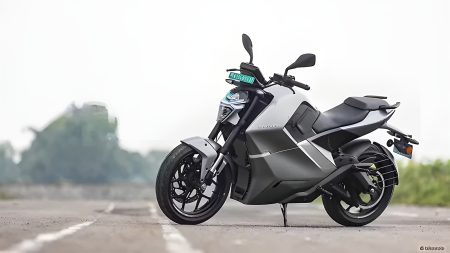
Damon has not yet delivered a single production motorcycle since it was founded in 2019. Although there are working prototypes of the “Hypersport” and “Hyperfighter”, customers are still waiting in vain for a market-ready product despite numerous pre-orders. Production has since been relocated from Vancouver to the USA. Officially, Damon is still looking for manufacturing partners for the necessary components.
Nasdaq pulls the ripcord – trading halt and hearing
In response to the dramatic fall in the share price, Nasdaq halted trading in Damon shares on April 29, 2025. According to Investing.com, the company received an official notice under Nasdaq Rule 5101 expressing concerns due to “public interest”. At the heart of the matter is a significant dilution of shareholder value from a recent securities offering that appears to have been made without significant consideration.
A hearing before the Nasdaq Hearings Panel is scheduled for May 20, 2025. There, Damon Motorcycles will present its plans to restore compliance. Whether this will succeed is currently uncertain.
Plan B: Switch to the OTCQB market?
Damon is reportedly looking at the alternative of switching to over-the-counter trading via the so-called OTCQB market, operated by OTC Markets Group Inc. This move could allow the company to remain tradable even if it is excluded from Nasdaq. Such a move is often seen as a “last resort” and is considered significantly less regulated.
Still hope for the technology?
Despite all the problems, Damon is outwardly combative. The company wants to position itself more strongly as a technology provider in the future and is open to licensing its own safety and drive technologies to other manufacturers. However, no specific licensee is known to date. Even the great promise of the “Shift” technology, which was supposed to score points with adaptive ergonomics and safety features such as 360-degree radar, has so far shown little in practice.
Conclusion
Damon Motorcycles is at a decisive turning point. Without a concrete series production product, with serious management problems and in dire economic straits, the dream of an electric motorcycle pioneer is in acute danger. It remains to be seen whether the company will find a way out at the last minute. One thing is certain: without rapid and tangible progress, it will be difficult for Damon to win back the trust of investors, partners and customers.
[amazon bestseller=”Ferngesteuertes Motorrad” items=”3″]