- The ITC rejected all five of GoPro’s technology patents
- Only one design patent for the HERO camera was confirmed as infringed
- The import ban applies exclusively to older, already discontinued Insta360 models
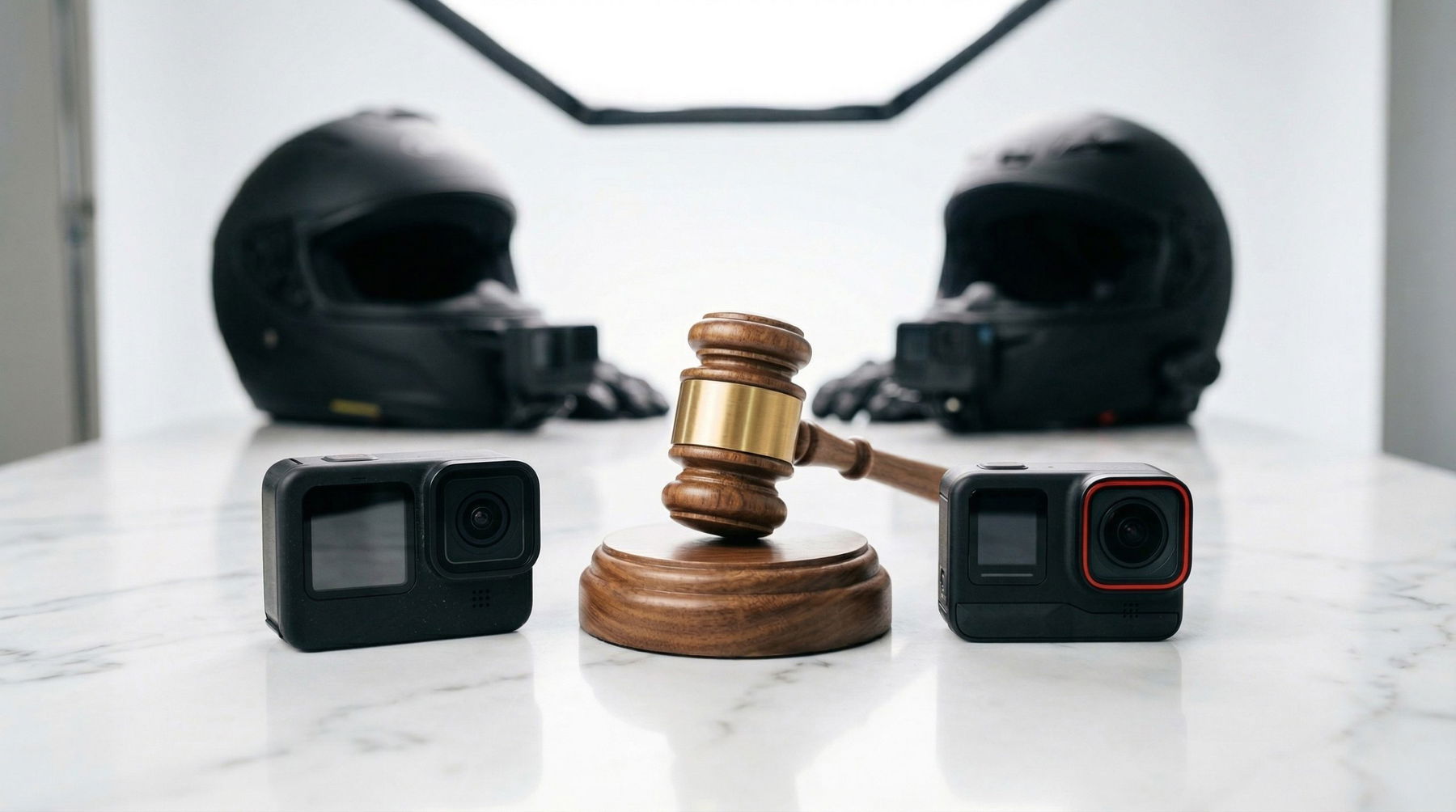
The patent dispute between action camera manufacturers GoPro and Insta360 has occupied the industry since the spring of 2024. At that time, GoPro filed a complaint with the US International Trade Commission (ITC) against Insta360’s parent company Arashi Vision, alleging multiple patent infringements. On February 26, 2026, the ITC issued its final determination in Investigation No. 337-TA-1400 — and the outcome was markedly different from what the press releases of either side would suggest.
Five Technology Patents Rejected, One Design Patent Confirmed
At its core, the case involved six patent claims by GoPro. Five of these were utility patents covering technical functions that have become standard in modern action cameras: image stabilization, horizon leveling, distortion correction, and aspect ratio conversion. In its final determination, the ITC found that these five patents were either invalid, not infringed, or both.
In doing so, the commission partially reversed even the assessment of the presiding administrative law judge from July 2025. In that preliminary determination, 8 of 12 patent claims had already been declared invalid and only 4 upheld as valid. But the commission went further: it overturned the earlier ruling on the ‘052 patent for distortion correction and additionally found that the ‘840 patent for image stabilization had not been infringed.
The sixth patent, a design patent for the external appearance of the GoPro HERO camera, was confirmed as infringed. On this basis, the ITC issued two orders: a Limited Exclusion Order directing US Customs to block further imports of certain Insta360 cameras, and a Cease and Desist order against Insta360 prohibiting the import, sale, and marketing of the affected products.
Import Ban Applies Only to Older Ace Models
Despite these orders, the practical impact on the US market is limited. The import ban applies exclusively to older models of the Insta360 Ace, Ace Pro, and Ace Pro 2, which had already been withdrawn from the US market. An updated version of the Ace Pro 2 released in 2025 is expressly not covered by the order, according to Insta360. The ITC confirmed that the revised product designs fall outside the scope of GoPro’s design patent.
For owners of affected camera models, nothing changes either. Previously purchased cameras may continue to be used without restriction. The ITC also granted a repair exception, ensuring that spare parts and service for the affected models remain available.
Other Insta360 product lines, such as the X-series 360-degree cameras or the GO models, were never part of the proceedings and are unaffected by the decision.
Both Sides Claim Victory
Immediately after the decision was announced, both companies issued press releases declaring their own victory. GoPro founder and CEO Nicholas Woodman stated that innovation is at the heart of the company’s mission. When competitors imitate rather than innovate, he argued, action must be taken to ensure that creatives benefit from original products rather than imitations.
GoPro also pointed to decisions by the Patent Trial and Appeal Board (PTAB) from the previous year. That body had upheld the validity of several GoPro patents, including three patents related to HyperSmooth technology that Insta360 had challenged. GoPro emphasized that it holds more than 1,500 US patents.
Insta360 founder JK Liu, on the other hand, characterized the decision as a validation of independent innovation. The facts spoke for themselves, Liu stated. The future of the industry should be determined by better products, not by legal tactics designed to protect market share at the expense of consumers. Too often, he argued, successful companies are attacked through patent disputes by competitors seeking to reclaim lost ground.
Insta360 described the ruling as a complete rejection of attempts to block competition through unfounded patent claims. The company has filed several inter partes review petitions with the US Patent Office to challenge the validity of GoPro patents. Some of these proceedings are reportedly still ongoing.
What the Decision Means for the Action Camera Market
For the entire action camera market, the ITC ruling carries significant implications. The finding that core technologies such as image stabilization and horizon leveling cannot be protected by GoPro’s patents strengthens competition. All manufacturers may continue to freely use these fundamental features, which should ultimately benefit consumers as well.
For GoPro, this increases the pressure to compete through technical innovation rather than litigation. Competition in the industry has intensified regardless. In addition to Insta360, which leads the 360-degree camera market, DJI has established itself as another competitor in the action camera segment. GoPro recently made strides with the Max 2 in the 360-degree camera space but faces growing competitive pressure in its core business.
The ITC orders will become enforceable following a presidential review period.

- Abus 10079270-01Abus Granit Detecto XPlus 8008 2.0, Alarm-Bremsscheibenschloss – Silber male