- KTM sells all shares in design agency Kiska, Loxone acquires majority stake with 71 percent
- A new in-house design center in Salzburg will bring the design process closer to the company in the future
- According to industry observers, truly new KTM designs are not expected until 2028 at the earliest
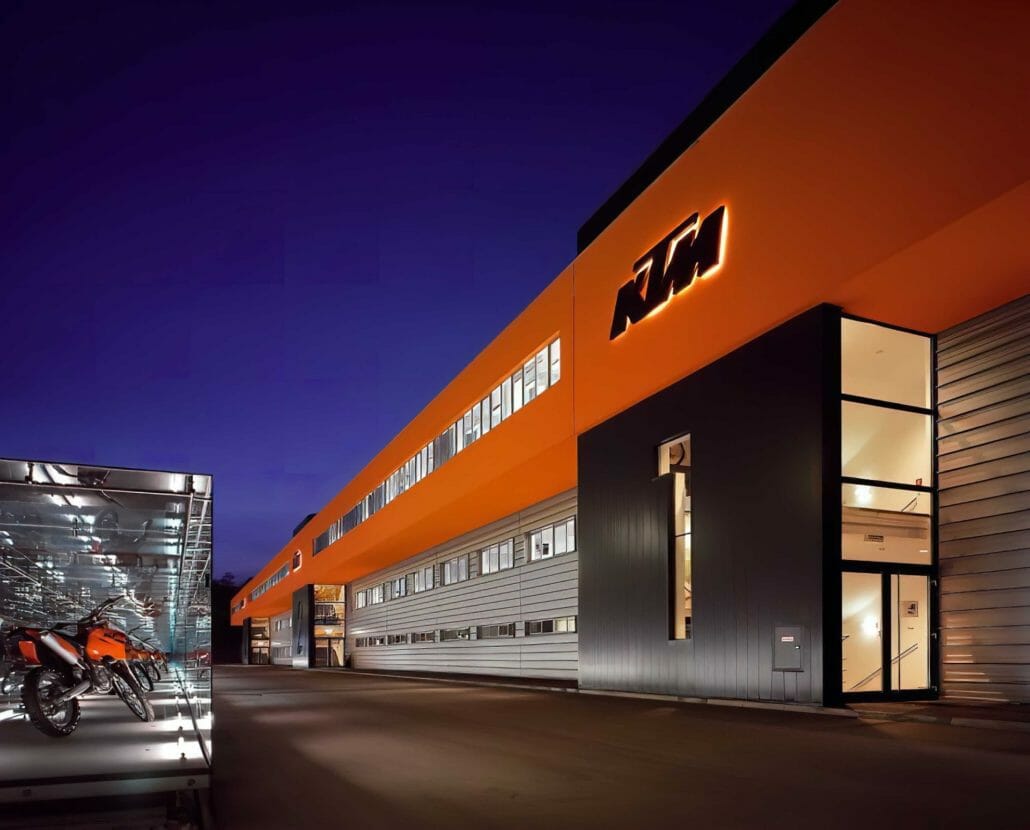
What was produced in the Innviertel region was visually created over many years in the Salzburg suburb of Anif. The design agency Kiska shaped the appearance of KTM for decades, from motorcycles and clothing to the X-Bow. This was never a normal client-service provider relationship. KTM was not only the main customer, but also a co-owner of the agency. At its peak, Pierer Mobility AG held 50 percent of the shares; according to the company register, it most recently held 20 percent, now held by the parent company, which has been renamed Bajaj Mobility AG. That is now over.
KTM sells all shares in Kiska
KTM confirmed its complete withdrawal from Kiska’s ownership structure. “As part of our focus on our core business in the motorcycle market and the streamlining of our product portfolio, we are bringing the design process for our motorcycles even closer to the company. We are establishing a new design center that will bundle our innovation expertise within the company. This center will work on product innovations in a location separate from the development center in Mattighofen,” said the motorcycle manufacturer. However, the collaboration with Kiska and other external design studios will continue for the purpose of a broad exchange of ideas.
Kiska CEO Julian Herget also confirmed the separation at the ownership level. Following the repurchase of the last remaining shares, the Anif-based company will once again operate completely independently. At the same time, Herget emphasized that the project-related collaboration will continue: “There is a multi-year agreement that secures KTM access to resources and us sales.”
Loxone acquires majority stake in Kiska
The previous KTM shares will go to the Mühlviertel-based technology company Loxone, headquartered in Kollerschlag. Loxone will hold 71 percent of Kiska in the future, with the remaining 29 percent remaining with the agency’s management.
The connection between Loxone and Kiska is not new. In the wake of KTM’s insolvency, the technology company stepped in with a capital injection of five million euros (approximately 5.25 million US dollars) when the motorcycle manufacturer’s orders for the Salzburg-based agency slumped dramatically. Without this rescue, the situation for Kiska would probably have become much more difficult.
KTM’s insolvency hit Kiska hard
Kiska’s heavy dependence on a single major customer proved problematic. Managing Director Herget put it bluntly: “Kiska’s heavy dependence on KTM was unhealthy.” In the wake of KTM’s insolvency, 42 employees had to leave the company. The agency currently employs 160 people, and some of the colleagues who were laid off at the time are said to have since returned.
The economic consequences were also reflected in the figures. The 2024/2025 financial year, which ended in March 2025, closed with a deficit of 4.6 million euros (approximately 4.83 million US dollars). Revenue amounted to €26 million (approximately $27.3 million). Around €3.5 million (approximately $3.68 million) in receivables, about 70 percent of the outstanding amounts, had to be written off due to KTM’s insolvency.
Kiska focuses on diversification and new customers
Kiska has learned from the experience of the crisis. Herget made it clear: “We will never again make ourselves dependent on one customer.” The focus will remain on the two- and four-wheel sector, but with a much more international orientation towards Asia and the US.
According to the agency, new customers include the Chinese AIMA Technology Group in the e-bike and electric scooter sector, three new suppliers in the motorcycle and premium e-scooter segment in India and China, a leading powersports supplier in the US, and a well-known customer in the agricultural sector in the United States. In addition, Kiska is responsible for the relaunch of the traditional Weck brand and the redevelopment of the Vitrea brand in the rehabilitation sector. The agency also works in the area of brand and design development for majority shareholder Loxone.
Kiska is planning growth of between 15 and 20 percent for the 2026/2027 financial year. In addition, ten new employees are to be hired, which can be seen as a commitment to the Anif location.
New design center planned in Salzburg
KTM’s new in-house design center will not be located at its headquarters in Mattighofen, but in or near Salzburg, close to its previous partner Kiska. From there, the entire design process for KTM models will be managed in the future. Behind the reorientation is the Indian Bajaj Group, which has taken over the management of KTM and is reorganizing the company’s structures.
When will a new design language emerge?
The question on many motorcyclists’ minds is obvious: With the separation from Kiska, is KTM also moving away from the striking, angular design that has characterized the brand for years? Kiska shaped the aggressive, polarizing lines that were seen by many as an expression of the Ready to Race DNA, but were perceived by others as deliberately provocative.
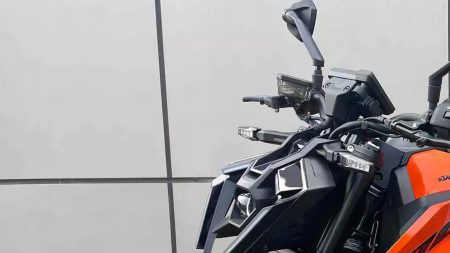
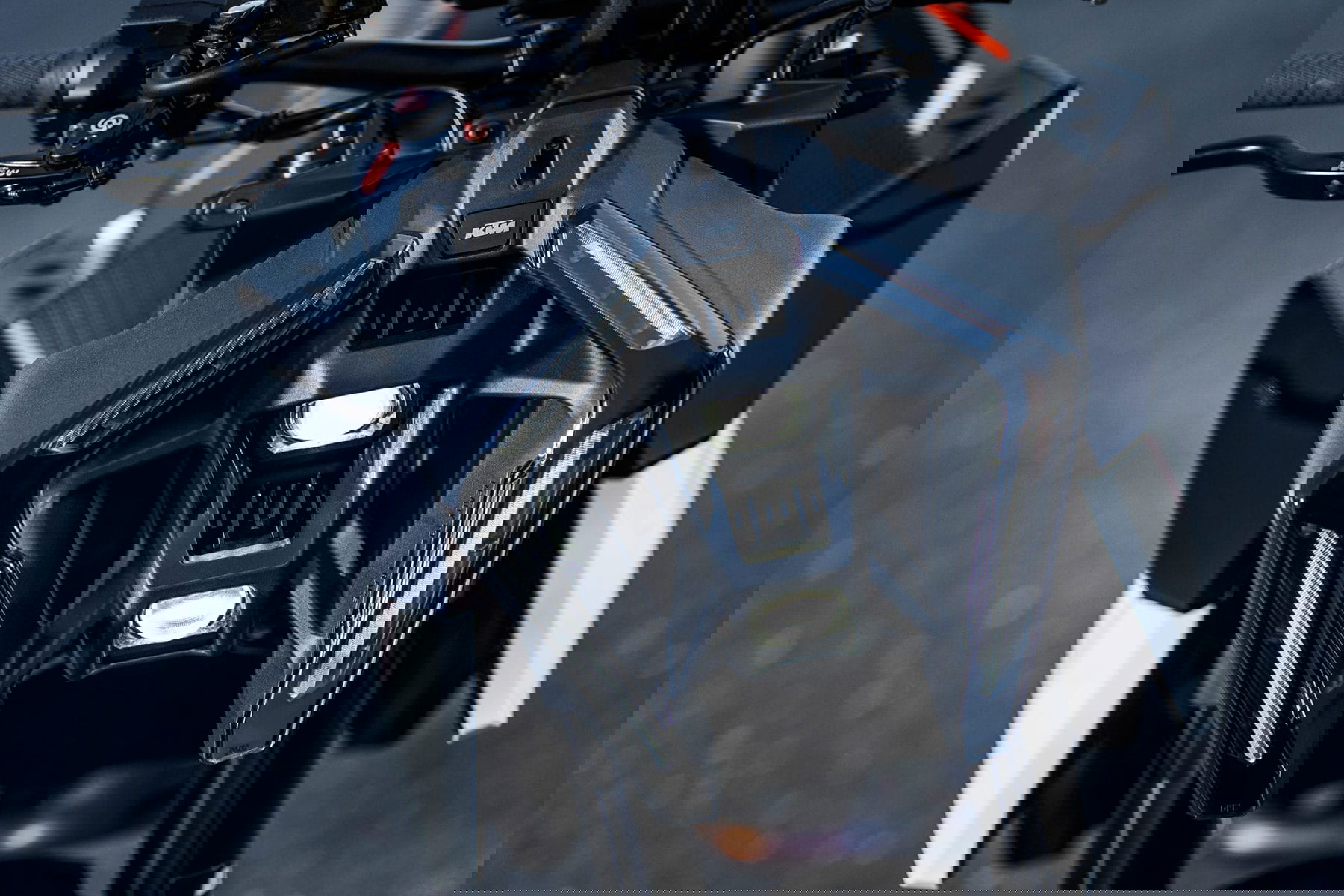
In the short term, little is likely to change visually. The development periods for new models or facelifts take several years for all vehicle manufacturers. The project-related collaboration between KTM and Kiska is also not yet fully complete. The new KTM face with open-framed LED headlights, which was still designed by Kiska designers, is to be transferred to other models in the medium term.
However, the first color changes are already visible in the current 2026 model year. Instead of the dominant orange, some models are now available in black, white, and blue. Orange will remain the lead color for the time being, but the palette will be noticeably expanded. A truly new KTM design developed entirely in-house is not expected until 2028 at the earliest. The same applies to the Husqvarna and GasGas brands, which belong to the KTM Group, assuming they continue to exist.
Structural separation completed, cooperation continues
The ownership relationship between KTM and Kiska is history. However, project-based cooperation is to continue for the time being. For Kiska, this step means more independence and the opportunity to broaden its base. For KTM, the establishment of its own design center marks the beginning of a new chapter, although the results are not likely to be visible on the road for several years.

- Abus 10079270-01Abus Granit Detecto XPlus 8008 2.0, Alarm-Bremsscheibenschloss – Silber male