- Marquez broke his rear rim when riding over a kerb at Turn 4
- Jorge Martin and Joan Mir also suffered tire problems during the weekend
- Temperatures of 35 degrees in the air and 55 degrees on the asphalt took their toll on the rim material
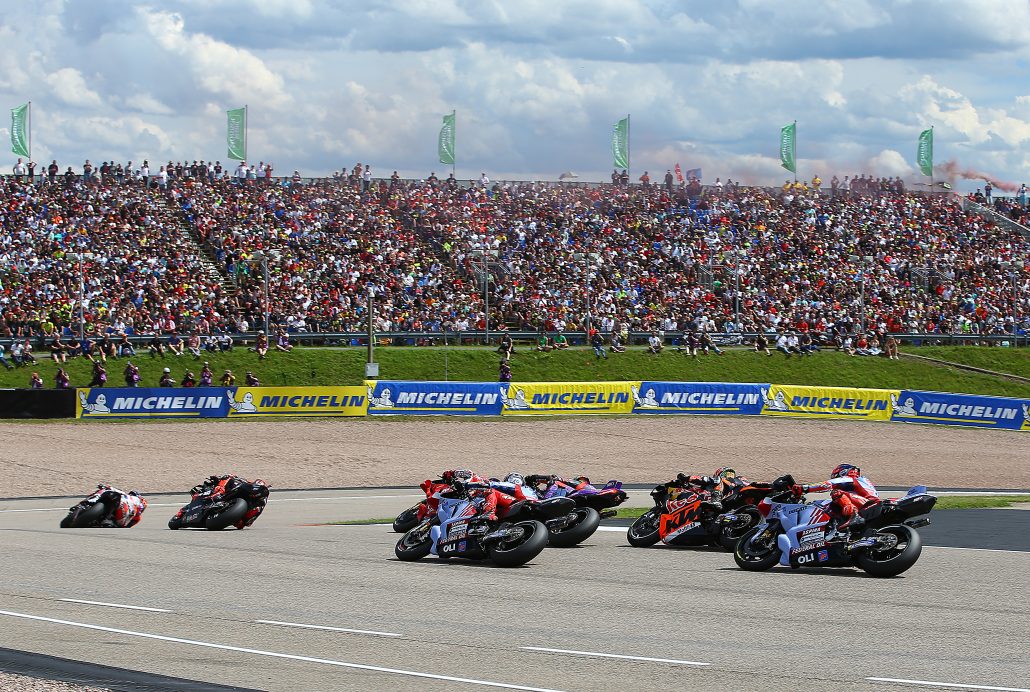
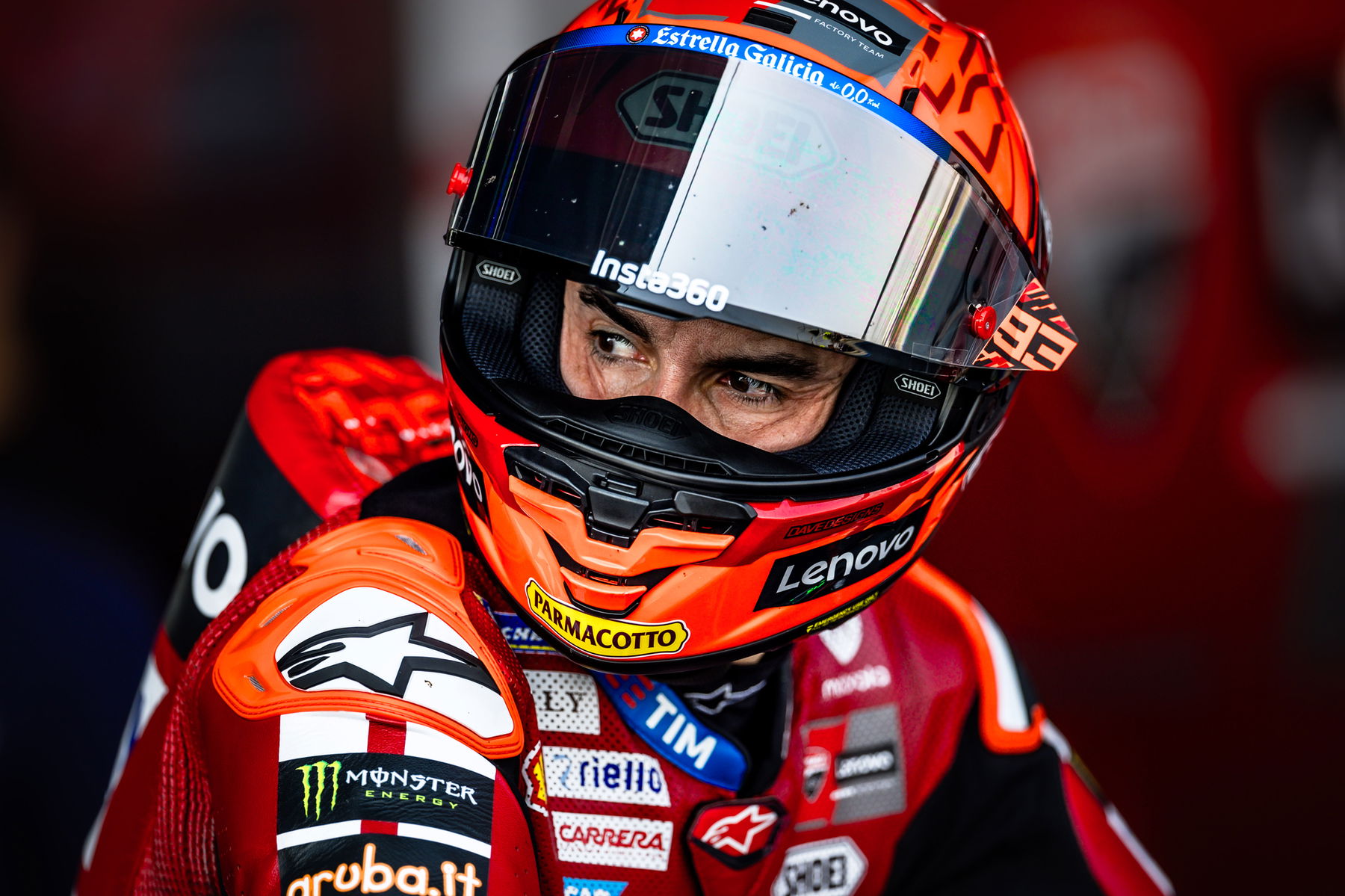
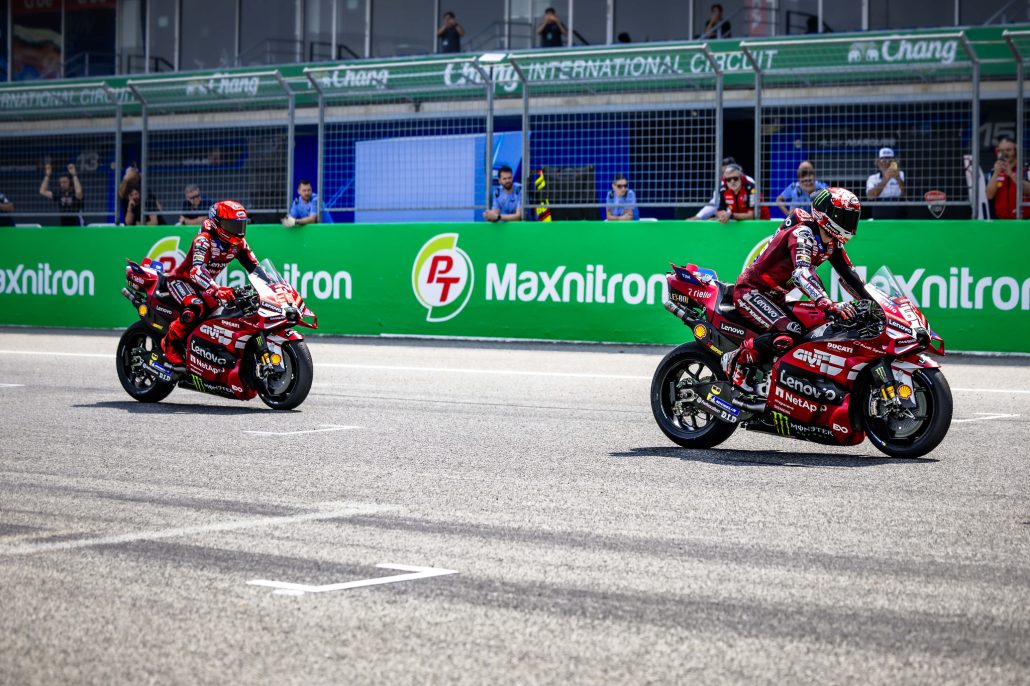
The 2026 MotoGP season opener at the Chang International Circuit in Buriram, Thailand, had actually started promisingly for Marc Marquez. The reigning world champion was running fourth on lap 21 of 26 and had just closed up to second-placed Raul Fernandez (Trackhouse-Aprilia) together with Pedro Acosta (KTM). Then the unexpected happened: In the fast left-hander at Turn 4, Marquez ran wide, rolled over the double kerb at the corner exit, and in that same moment his race was over.
Kerb Destroys Rim and Rear Tire
What was initially only visible in the TV replays was subsequently confirmed by both Marquez himself and his Ducati team. The Spaniard had ridden over the kerb at the exit of Turn 4 at high speed. The rear rim broke, the air escaped instantly, and the tire came off the rim. Ducati team manager Davide Tardozzi told British MotoGP broadcaster TNT Sports: “Unfortunately, he went to the kerb at turn four and he broke the rim. That’s why he lost air and he was forced to stop. He hit the edge of the kerb and broke the wheel.”
Tardozzi emphasized that in his more than ten years as team manager at Ducati, he had never experienced a comparable incident. He spoke of a mistake but immediately added that Marquez had simply been unlucky, as numerous other riders had also ridden over the kerb at Turn 4 without suffering such damage.
ServusTV expert Sandro Cortese also saw the incident as a mistake by Marquez, the first of the entire weekend. Marquez himself appeared puzzled. He said he had already felt during the mid-corner that the rear wheel was sliding slightly more than usual but had initially attributed it to tire wear. When the situation became more uncertain, he made the deliberate decision to take the safe route over the asphalt beside the track rather than taking a risk. I think that just the kerb was the reason, but it’s true that many riders, even in the test, jumped that kerb and nothing happened,” Marquez told TNT Sports. During the test the previous week and in practice sessions, he had ridden over that kerb about a hundred times without anything ever happening.
The fact that the rim had not merely bent but had actually shattered made the incident even more concerning for Marquez. He said he was lucky that it didn’t result in a severe highside crash. Tire supplier Michelin does not see Marquez at fault. The Spaniard made clear that neither Michelin nor the track had been the problem, but that the double kerbs of the Misano 200 type can apparently cause such damage under certain circumstances.
Heat and Braking Load as Decisive Factors
Tire supplier Michelin provided a possible explanation for why such problems occurred at this particular weekend. Motorsport manager Piero Taramasso confirmed to Canal+ that the damage to Marquez’s bike was not an isolated incident. Throughout the entire weekend, bent rims had been returned to the Michelin tent. Taramasso cited the extreme heat as a key factor. Indeed, during the main race, air temperatures of 35 degrees and asphalt temperatures of 55 degrees were recorded — the highest values of the entire weekend and significantly more than during the test the previous week.
The rim material plays a central role in this. The rims manufactured by suppliers such as OZ or Marchesini are made from a magnesium alloy. Depending on the exact composition, this material can begin to soften at around 100 degrees. The Chang International Circuit exacerbates this issue further, as its four consecutive hard braking zones make it one of the tracks on the MotoGP calendar that generates particularly high braking temperatures. The combination of extreme ambient heat and thermal stress from braking apparently made the rims more susceptible to mechanical impact from the kerbs.
Martin and Mir Also Affected
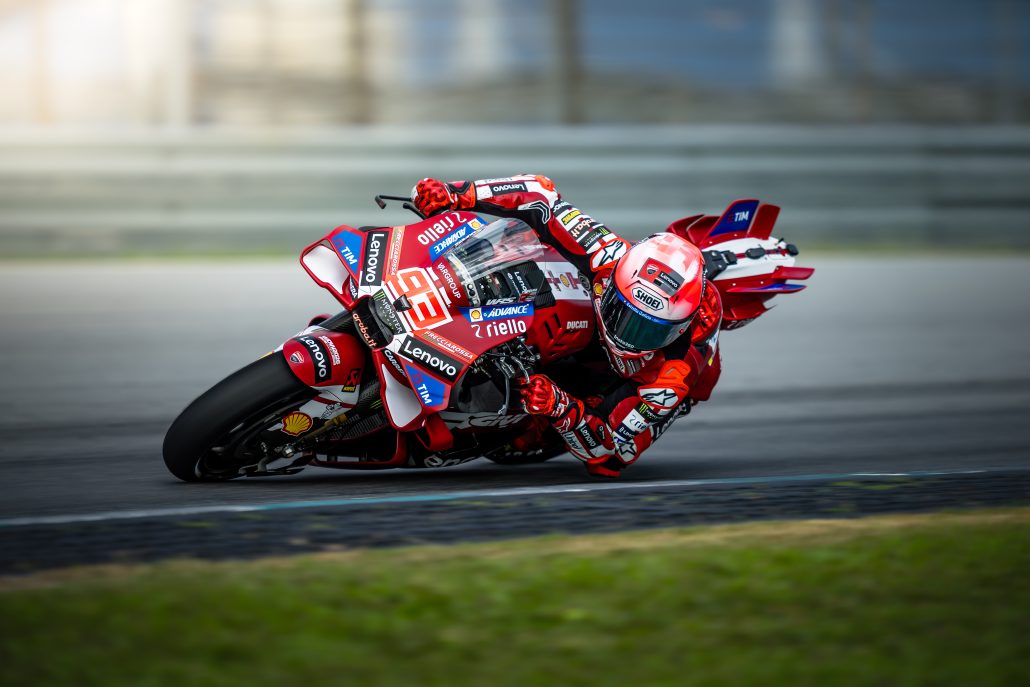
Marquez was not the only rider who suffered tire problems during the Thailand weekend. Already on Saturday in the sprint, Jorge Martin had experienced a slow pressure loss in his front tire. As Taramasso explained, a kerb was also the cause in Martin’s case. The front wheel had bent as a result and was slowly losing air. Since it was demonstrably a defect, Martin was not penalized with a time penalty despite falling below the prescribed minimum tire pressure. Martin had been luckier than initially thought, as under slightly less favorable circumstances, his sprint could also have ended with a flat tire.
In Sunday’s Grand Prix, Joan Mir was also affected. The Honda rider had to park his motorcycle with a tire problem shortly after Marquez’s retirement. In Mir’s case, however, the tire did not come off the rim, so he was able to ride slowly toward the pit lane. At that point, Mir had been running in a strong fourth place and was the top Honda rider. He described the problem as having appeared from one lap to the next and having nothing to do with normal tire degradation. He spoke of sudden vibrations and electronics that could no longer cope with the high slip on the rear wheel. Mir described the situation as dangerous.
Ducati Puzzled by Performance Loss Compared to Test
Beyond the tire damage, there was another puzzle for the Ducati factory team to solve. Tardozzi spoke openly about the motorcycle feeling completely different during the race weekend compared to the test the previous week on the same track. The team had not yet found an explanation for this at the time of the race.
Adding to the challenge was Aprilia’s strong performance. With four fast riders throughout the entire weekend, the manufacturer from Noale had made a significant step forward. Tardozzi paid respect to the competition but simultaneously acknowledged that the lack of their own performance had been the bigger problem. For the first time since the British Grand Prix in 2021, Ducati did not have a single rider on the podium.
The Bottom Line: Zero Points Despite Strong Pace
For Marquez, the season opener ended in a bitter zero-point finish in the Grand Prix. Before his retirement, he estimated he had at least the podium within reach, possibly even second place. Tardozzi confirmed that Marquez had been significantly faster than Fernandez and the podium would have been certain without the defect. The Ducati team manager also indicated that the 2026 championship would be tougher overall for Marquez than the previous year, but that the Spaniard had full confidence in technical director Gigi Dall’Igna and his engineers. Additionally, Marquez would become even stronger with a few more weeks of recovery for his right shoulder.
With nine championship points from the sprint, Marquez left Thailand as eighth in the championship standings. Whether and what consequences MotoGP officials will draw from the accumulated rim and tire damage in Buriram remained open for now.