- BMW brings so-called Physical AI to Europe for the first time with the pilot project in Leipzig
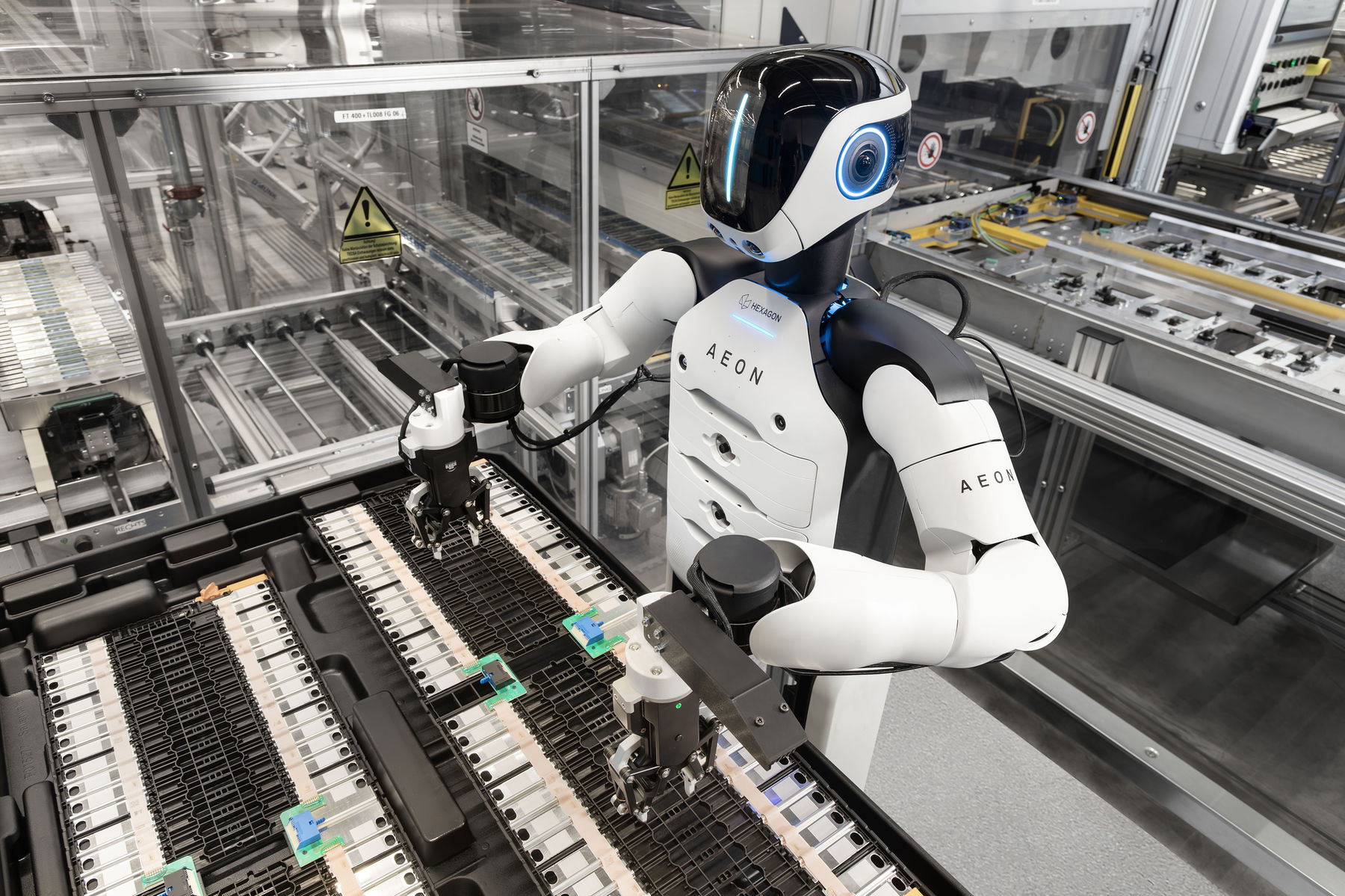
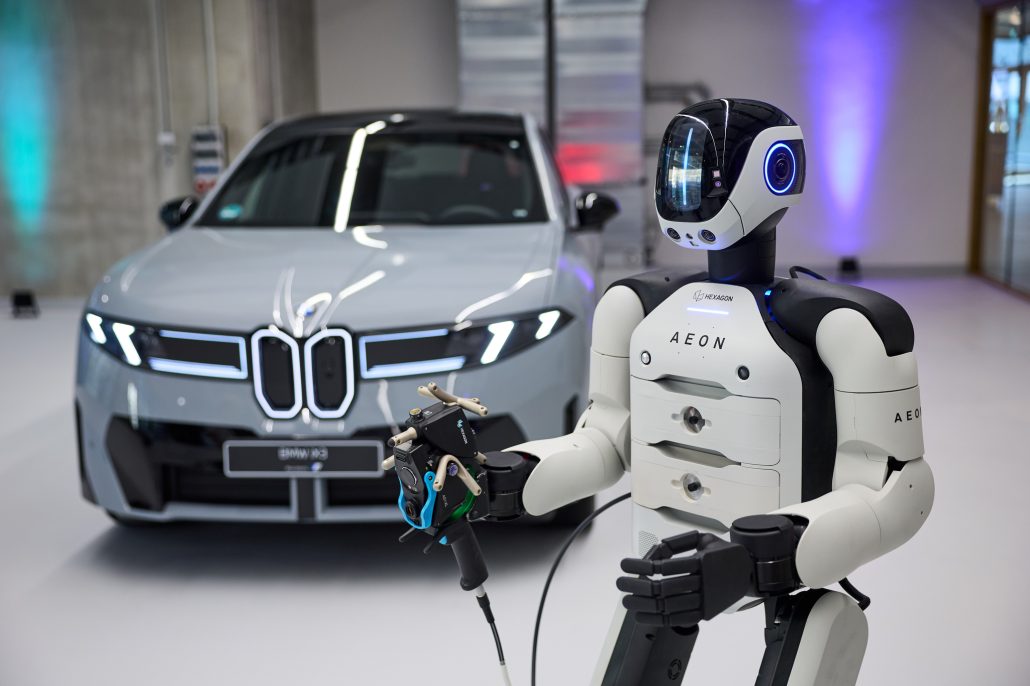
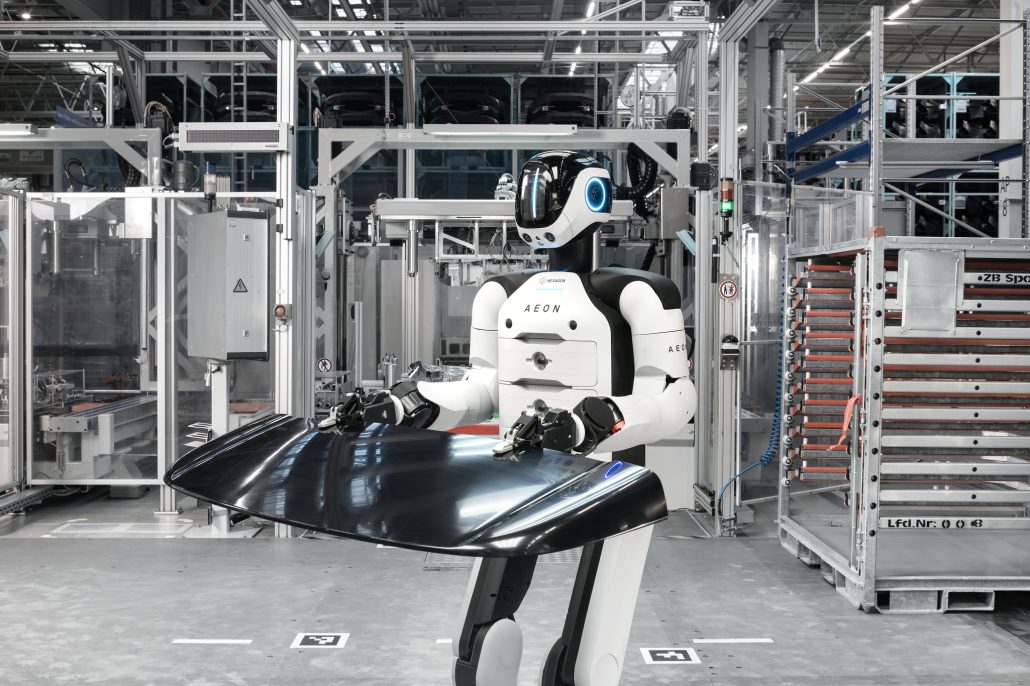
- The humanoid robot AEON from Hexagon Robotics moves on wheels and can dock various tools
- At the US plant in Spartanburg, a humanoid robot from Figure AI already supported the production of over 30,000 BMW X3 units
The BMW Group is taking the next step toward automation and digitalization of its production sites. For the first time, a humanoid robot is being deployed at a German plant. The pilot project at the Leipzig plant simultaneously marks the European premiere for the concept of so-called Physical AI, in which digital artificial intelligence merges with real machines and robots. What was previously only tested at the American plant in Spartanburg, South Carolina, is now set to gain a foothold on European soil.
Physical AI: When Artificial Intelligence Gets Hands
Behind the term Physical AI lies the fusion of digital artificial intelligence with physical machines. In concrete terms, this means humanoid robots are no longer merely remote-controlled or operated according to rigid programs, but act as learning systems that can independently adapt to their environment. The BMW Group relies on a unified IT and data model that has consolidated all data silos in production into a single platform. All data is consistent, standardized, and available at all times. On this basis, digital AI agents can take on increasingly complex tasks while continuously learning.
Milan Nedeljković, Member of the Board of Management of BMW AG responsible for Production, put the development into perspective: “Digitalization improves the competitiveness of our production – here in Europe and worldwide. The symbiosis of engineering expertise and artificial intelligence opens up entirely new possibilities in production.”
Digitalization and artificial intelligence are central building blocks of BMW iFACTORY and thus the foundation for a future-proof and flexible manufacturing operation. From the virtual factory with digital twins to AI-supported quality inspections to intralogistics with autonomous transport solutions, intelligent systems are already deployed in virtually all production steps.
AEON: A Robot on Wheels Instead of Legs
The robot at the center of the Leipzig pilot project is called AEON and comes from Hexagon Robotics, the Zurich-based robotics division of technology group Hexagon. The company is a long-standing partner of the BMW Group in the areas of sensor technology and software, with annual revenue of approximately 5.4 billion euros (around 6.4 billion US dollars). In June 2025, Hexagon Robotics unveiled its first humanoid robot.
AEON differs from many other humanoid robots by one crucial detail: instead of walking on two legs, it moves on wheels. According to Hexagon, this design decision is the result of extensive testing of various locomotion systems. On the flat floors of a factory hall, wheels are said to be by far the most efficient means of movement in terms of energy consumption and speed. AEON reaches a speed of 2.5 meters per second and can autonomously swap its battery in 23 seconds, which is intended to enable round-the-clock operation.
Arnaud Robert, President of Hexagon Robotics, made clear during a presentation that AEON was designed from the ground up for industrial work. He emphasized that they are not in the entertainment business but in the work business, deliberately distinguishing AEON from robots that primarily attract attention at tech demos with spectacular movements.
22 Sensors for All-Round Perception
AEON is equipped with 22 integrated sensors, including peripheral cameras, time-of-flight sensors, infrared sensors, SLAM cameras, and microphones. This sensor suite enables 360-degree real-time perception of the environment. This is relevant not only for navigation but also for quality inspections that conventional stationary robots cannot perform.
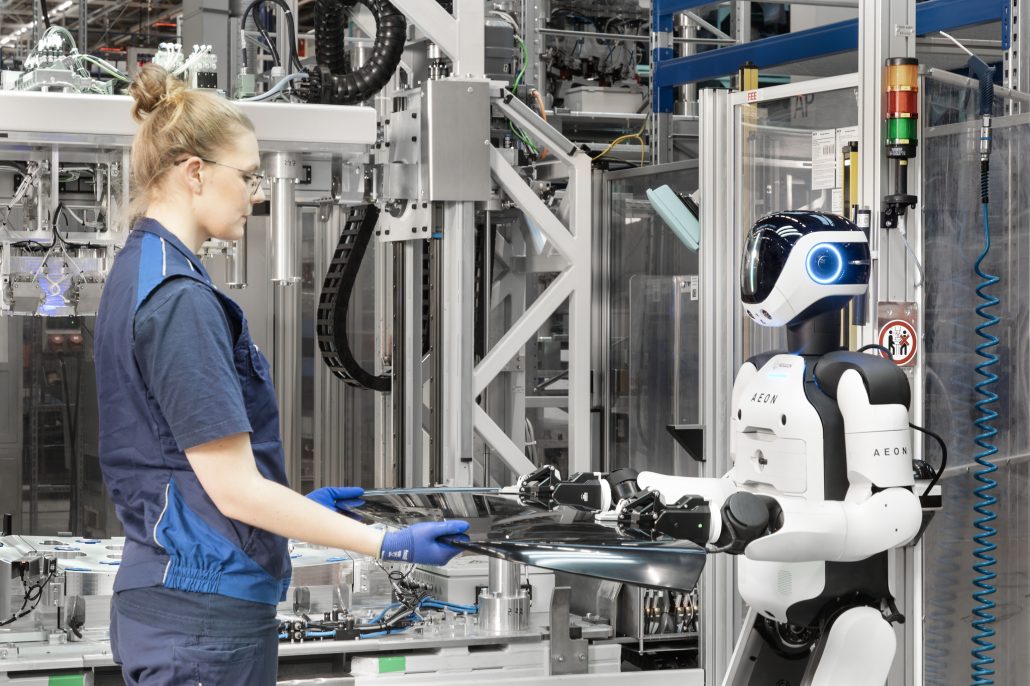
AEON’s humanoid body allows various hand and gripping elements or scanning tools to be flexibly docked. During a demonstration, Hexagon showcased two specific use cases: first, an autonomous door panel inspection in which AEON mounted a high-resolution scanner with a capture rate of one million points per second at 50-micrometer resolution, autonomously navigated to a car door, and performed a complete quality check. Second, it was shown how AEON reacts when a person enters its workspace during an ongoing task.
AEON learns across four levels. The foundation is simulation and reinforcement learning, where thousands of virtual instances run simultaneously to find optimal movement strategies. Above that is perception-based task fulfillment, where a simple command like “scan the door” is sufficient. AEON finds the target independently, positions itself, and carries out the task. The third level is imitation learning, where roughly 20 remote-controlled demonstrations are enough for the robot to independently generalize a task. The BMW competence center recorded around 2,000 demonstrations for a single gripping task and trained a model from them overnight.
The technical foundation includes NVIDIA’s Isaac platform for simulation and Jetson Orin onboard computers for real-time processing of perception data. Additionally, there is connectivity to Hexagon’s Reality Cloud Studio and integration with NVIDIA Omniverse for digital twins and 3D modeling.
Spartanburg as Blueprint: Figure 02 and 90,000 Components
The foundation for the Leipzig project was laid at the American plant in Spartanburg, South Carolina. There, in collaboration with California-based technology company Figure AI, the world’s first deployment of a humanoid robot at a BMW plant took place in 2025. The Figure 02 robot worked for ten months in 10-hour shifts from Monday to Friday, supporting the production of more than 30,000 BMW X3 during that time. Its task was the precise removal and positioning of sheet metal parts for the welding process – an activity that demands high speed and accuracy while also being physically exhausting. In total, Figure 02 handled over 90,000 components and covered approximately 1.2 million steps in around 1,250 operating hours.
Michael Nikolaides, Head of BMW Group Production Network and Logistics, sees the result as proof of practical viability: “The successful first deployment of humanoid robots at our BMW Group plant in Spartanburg in the US proves that a humanoid robot can function not only under controlled laboratory conditions but also in an existing automotive production environment.”
A key finding from the Spartanburg pilot was that the transition from the lab to the real production environment was achieved faster than expected. Movement sequences trained in the lab could be quickly transferred into stable shift operations. Integration was carried out via standardized interfaces into the BMW Smart Robotics ecosystem. The body shop area was deliberately chosen because it already had a high degree of automation and the workforce had experience integrating new technologies.
Leipzig: From Test Run to Pilot Phase in Summer 2026
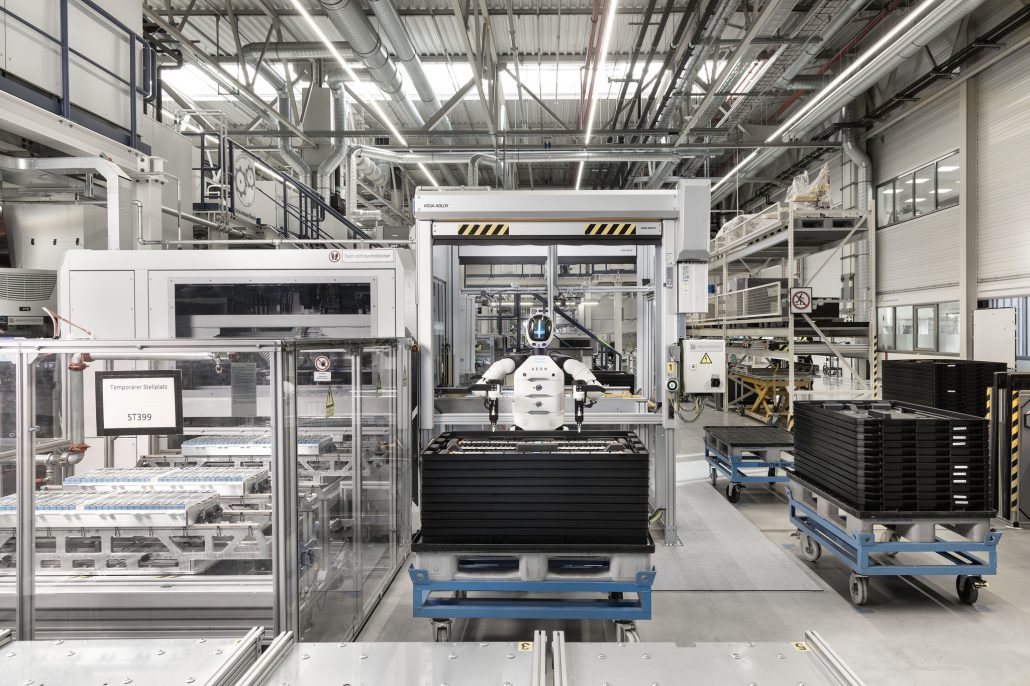
At the Leipzig plant, BMW is following a phased approach. An initial test deployment of AEON under real production conditions already took place in December 2025. A further test run is planned from April 2026, intended to ensure full integration into existing series production. The actual pilot phase is then set to begin in summer 2026. Two AEON units are to work simultaneously in two different use cases, and BMW expects both to be productively deployed by the end of the year.
The focus is on testing multifunctional applications. During the test phase and the subsequent pilot phase, AEON is to be used in the assembly of high-voltage batteries for energy modules and in component manufacturing for exterior parts. The Leipzig plant was not chosen by accident: it is considered the BMW Group’s most technologically comprehensive German site, as it combines battery production, injection molding, press shop, body shop, and final assembly under one roof. This allows a wide variety of production environments to be tested at a single location.
Michael Ströbel, Head of Process Management and Digitalization in Production at BMW, describes the outlook: “We are delighted to now deploy a humanoid robot in a pilot project at a plant in Germany for the first time. This year, we are focusing on gradual integration into our production system to test a wide range of possible applications.”
Munich Competence Center Consolidates Expertise
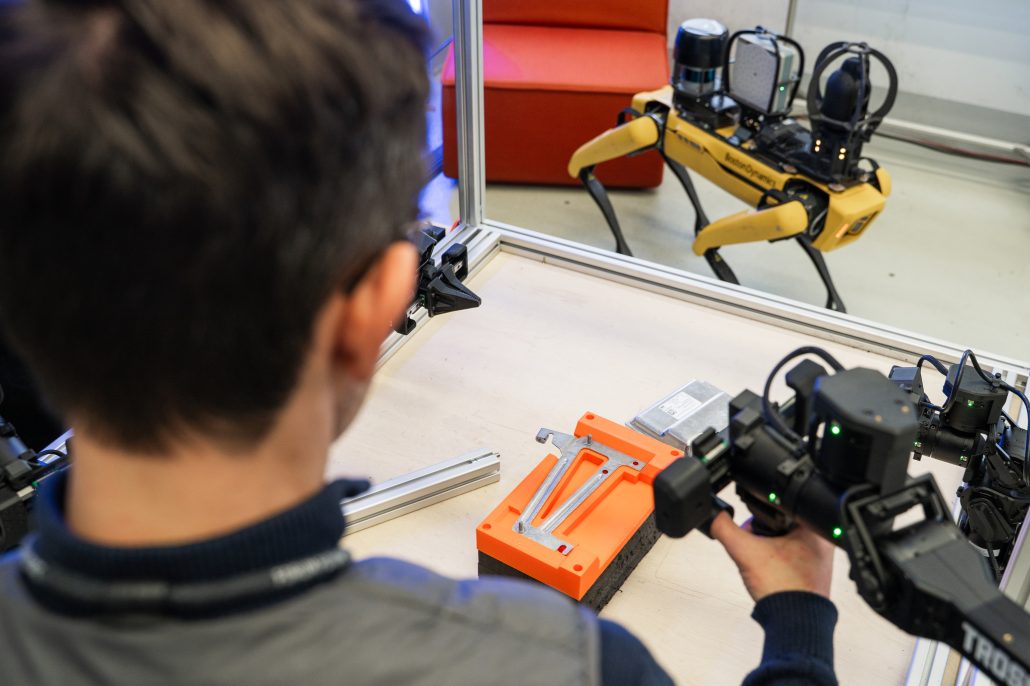
To centrally manage the insights gained and make them available to all plants, the BMW Group has established a new Center of Competence for Physical AI in Production. The competence center, based in Munich, evaluates technology partners based on defined maturity and industrialization criteria and accompanies the gradual integration into the production environment.
Felix Haeckel, Group Leader of the Competence Center, explains the approach: “In our new Center of Competence for Physical AI in Production, we consolidate our expertise to make knowledge about AI and robotics broadly usable across the company.” The international team of experts is driving forward not only in-house research but also the company’s own robotics research to set up and further develop pilot projects at the plants.
The BMW Group explicitly positions humanoid robots as a complement to existing automation, not as a replacement for human workers. The potential lies particularly in monotonous, ergonomically demanding, or safety-critical tasks. The goal is to relieve employees and further improve workplaces. At the same time, Michael Ströbel indicated that humanoid robots could enable BMW in the long term to bring work currently outsourced to suppliers back in-house.
Looking Ahead: Figure 03 and Further Applications
In parallel with the Leipzig project, BMW and Figure AI are already evaluating further use cases for the deployment of the successor model Figure 03. How the topic of humanoid robotics in the automotive industry develops overall remains to be seen. Commercial deployments are still the exception, even though activity in the industry is increasing. Hyundai plans to purchase thousands of Atlas robots from Boston Dynamics, and Toyota is already testing the Digit robot from Agility Robotics in Canada.
For the BMW Group, the decisive factor will be whether the experiences gathered in Spartanburg and Leipzig can be transferred to additional plants. With annual revenue of 142.4 billion euros (approximately 168 billion US dollars) in 2024 and around 159,100 employees worldwide, the corporation signals that it views intelligent robotics not as a gimmick but as a structural building block of future manufacturing.


- Held eVest Pro Airbag Weste schwarz/grau XS – Motorradbekleidung – Protektoren & Sicherheit