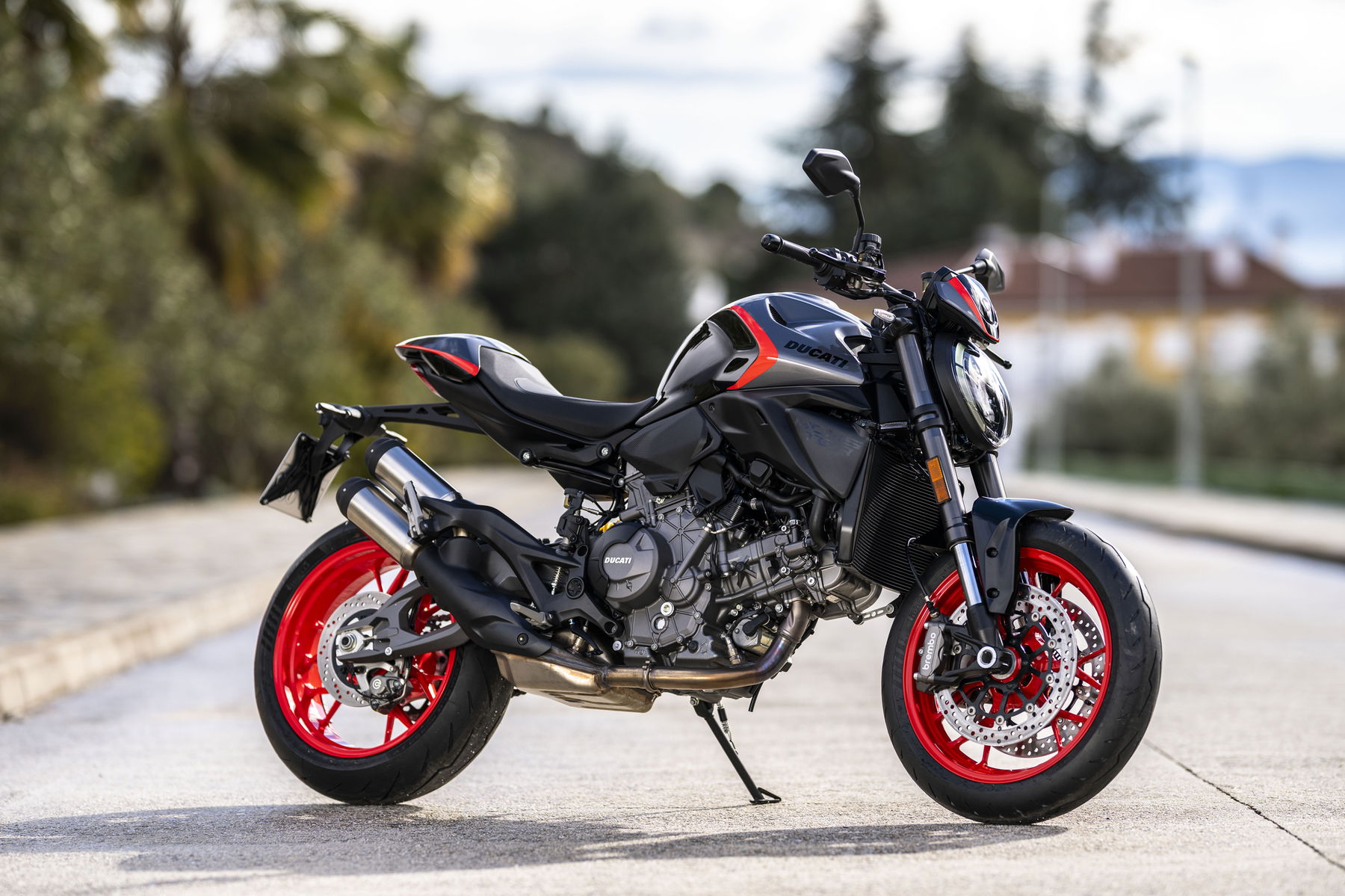
- New Sport Livery available from April 2026 at all European Ducati dealers
- Color scheme inspired by the iconic Monster S4
- Prices starting at 13,390 euros (EUR) / approximately 14,060 US dollars (USD) for the standard version
The Ducati Monster has been one of the most influential motorcycles of all time since its debut at the Cologne motorcycle show in 1992. With the fifth generation, unveiled in October 2025, Ducati completely revamped the naked bike from Borgo Panigale. Now the Italians are adding a third color option set to arrive at dealerships in April, adding yet another facet to the already comprehensive 2026 model year update.
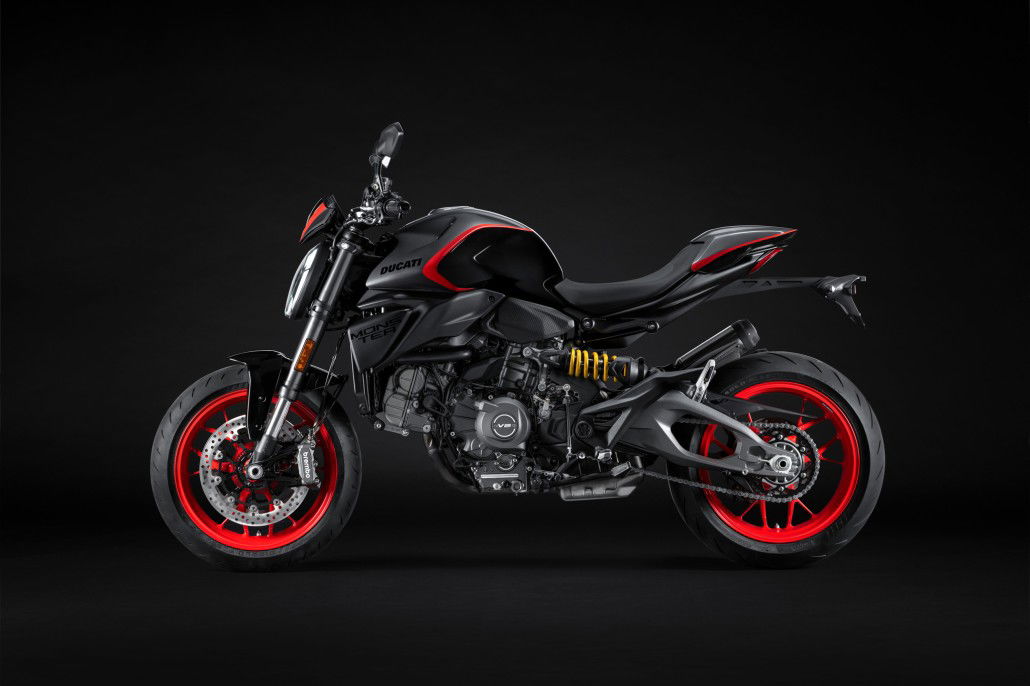
Gray Meets Racing Red: The Homage to the Monster S4
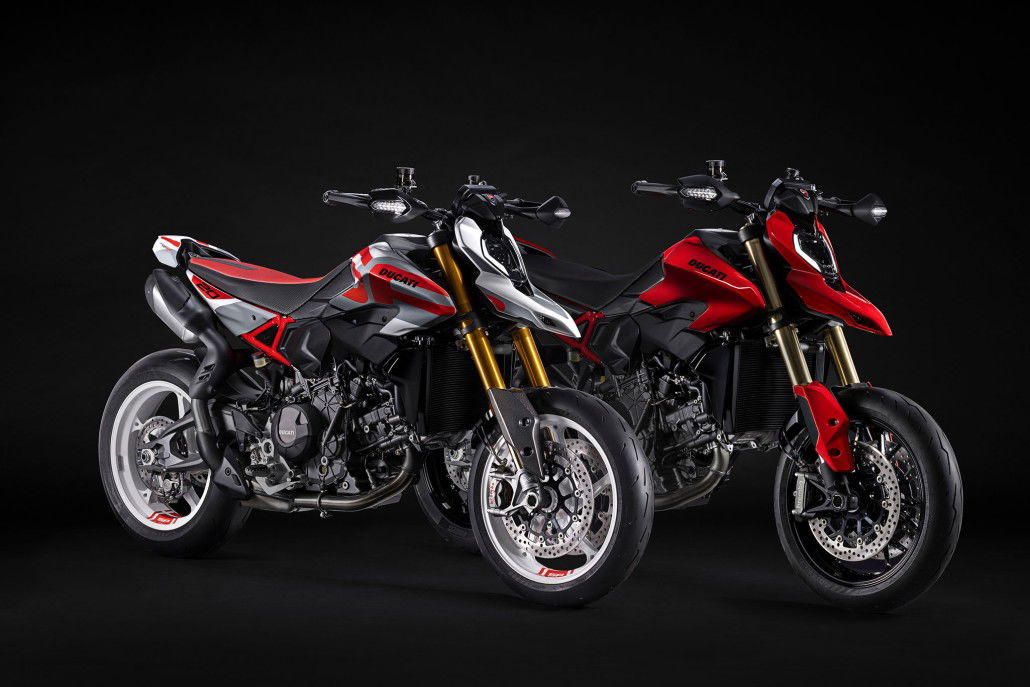
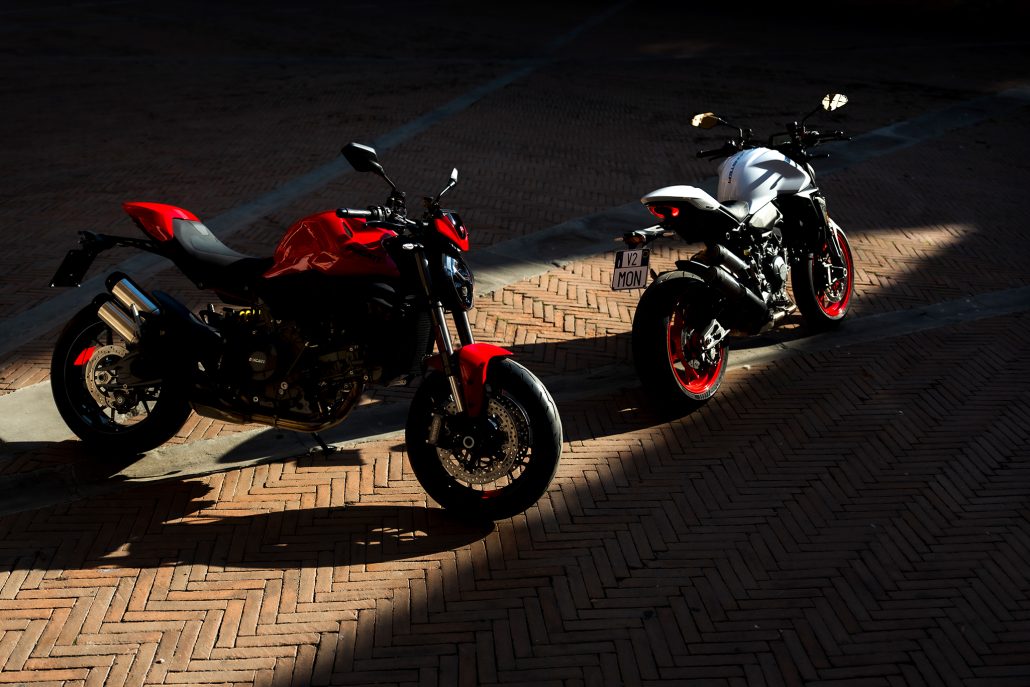
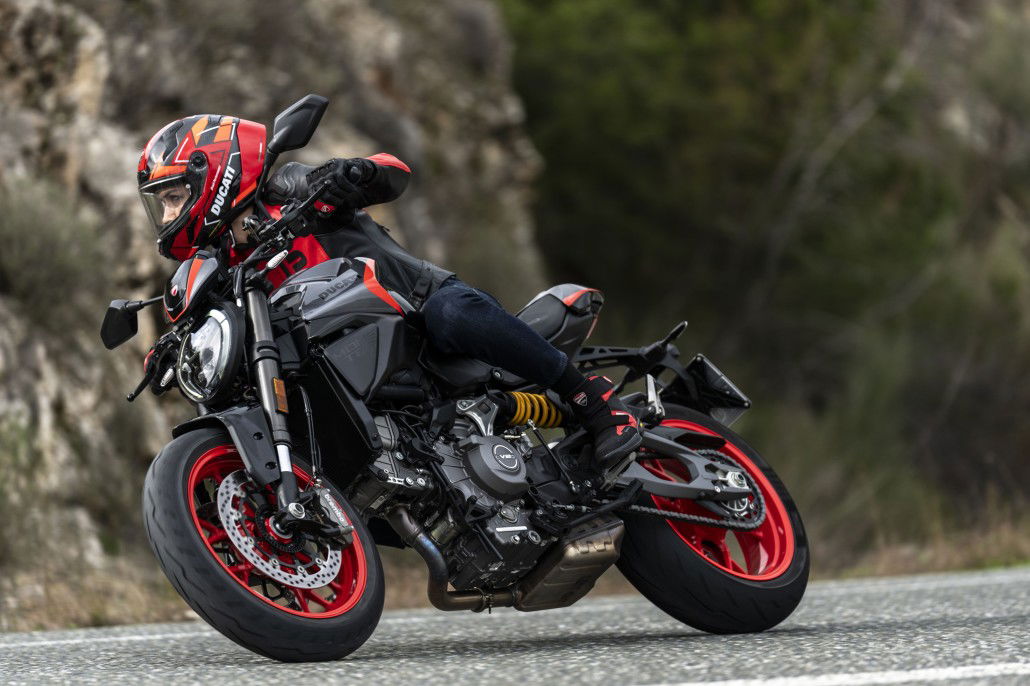
According to Ducati, the new Sport Livery is inspired by the color scheme of the S4 — the Monster that was the first to feature a four-valve engine. The combination of a gray base tone with Racing Red accents on the wheels, seat, windshield, rear fairing, and tank gives the Monster V2 a significantly more aggressive appearance than the two existing color options. The Sport Livery is available for both the base version and the Monster Plus, which comes standard with a front fairing and a pillion seat cover.
The Monster V2 in Sport Livery starts at 13,390 euros (approximately 14,060 USD). Those who prefer the Plus variant will pay 13,890 euros (approximately 14,580 USD).
Completely New V2 Engine with Variable Valve Timing
At the heart of the Monster V2 is the new 890cc 90-degree V2 engine designated Ducati V2. This engine features the IVT system (Intake Variable Timing), which continuously adjusts the intake valve timing. This is intended to resolve the classic trade-off between low-end torque and high-rpm power. Ducati quotes peak power of 111 hp (81.6 kW) at 9,000 rpm, with maximum torque of 91.1 Nm (67 lb-ft) at 7,250 rpm. More than 80 percent of maximum torque is said to be available between 4,000 and 10,000 rpm, with over 70 percent accessible from as low as 3,000 rpm. The rev limiter cuts in at 11,500 rpm.
Compared to the predecessor Testastretta Evoluzione engine, the new V2 is 5.9 kg lighter according to Ducati, with a dry weight of 54.3 kg. Bore and stroke measure 96 x 61.5 mm with a compression ratio of 13.1:1. It meets the Euro 5+ emissions standard, with stated fuel consumption of 5.2 liters per 100 kilometers. A particular selling point should be the service intervals: valve clearance checks are due only every 45,000 kilometers, with oil service every 15,000 kilometers or 24 months.
Shifting is handled by a six-speed gearbox with the Ducati Quick Shift 2.0 (DQS), derived from the new Panigale V4, which promises a more direct shift action with shorter lever travel. The hydraulically operated slipper clutch requires 15 percent less hand force than the predecessor, according to Ducati. The final drive ratio (16/42) has been tuned for optimal throttle response on country roads.
For A2 license holders, a restricted version limited to 35 kW (approximately 47.6 hp) is available, with peak power of 43.5 hp at 6,250 rpm.
Aluminum Monocoque Frame and Panigale Technology
The Monster V2 is built around a cast aluminum monocoque structure that serves as both frame and airbox. The frame itself weighs 4 kg and uses the V2 engine as a stressed member, bolted directly to the vertical cylinder head. Inside, it houses the air filter, throttle bodies, and the fuel circuit with injection nozzles. The subframe consists of a mixed construction of steel and glass-fiber reinforced polymer (GFRP) in a trellis structure.
The new cast aluminum swingarm is mounted directly to the engine and takes design cues from the Ducati Hollow Symmetrical Swingarm of the Panigale V4 with its tapered shape. The suspension consists of a 43mm Showa upside-down fork and a side-mounted Showa shock absorber with adjustable spring preload. Suspension travel is 130 mm at the front and 145 mm at the rear. Wheelbase measures 1,492 mm, with a steering head angle of 23.3 degrees and 92 mm of trail.
Ducati quotes the Monster V2 weight at 175 kg (386 lbs) dry, a reduction of 4 kg compared to the predecessor. The tank holds 14 liters.
Brembo Braking System with M4.32 Calipers
At the front, two 320mm brake discs are paired with radially mounted Brembo M4.32 four-piston monoblock calipers and a Brembo PR18/21 radial master cylinder. The brake pads feature a special compound designed to reduce initial bite and improve modulation in urban traffic. At the rear, a 245mm disc with a twin-piston floating caliper is used. Tires come from Pirelli in the form of Diablo Rosso IV in 120/70 ZR17 front and 180/55 ZR17 rear.
Panigale-Level Electronics Package
The Monster V2 electronics are based on a 6-axis inertial measurement unit (IMU 6D) and largely derived from the Panigale V2. Standard equipment includes ABS Cornering with three adjustable levels, Ducati Traction Control (DTC) with eight levels and a predictive control strategy, Ducati Wheelie Control (DWC), Engine Brake Control (EBC), and the aforementioned DQS 2.0.
Four riding modes are available: Sport delivers the full 111 hp with a sporty throttle map, Road also offers 111 hp but with more progressive response, Urban reduces power to 95 hp (70 kW) for city riding, and Wet also limits power to 95 hp with particularly gentle throttle response and increased sensitivity of the rider aids. All parameters can be individually adjusted within the modes. Optional extras include Ducati Power Launch for MotoGP-style race starts.
All information is displayed on a 5-inch TFT color display with 800 x 480 pixel resolution in 16:9 format. Two display modes (Road and Road Pro) are available and can be switched while riding using the new flower-shaped joystick on the handlebar. The display is prepared for the Ducati Multimedia System and turn-by-turn navigation. Physical indicator lights have been integrated into the display, with the exception of the red over-rev LED.
Ergonomics and Design
Seat height is 815 mm and can be reduced to as low as 775 mm with the optional lowering kit and a lower seat. The handlebar has been moved 7 mm forward and 7 mm upward compared to the predecessor, intended to recall the ergonomics of the original Monster generation. The side panels direct warm air from the radiator outward and feature a textured surface that supports the rider during braking. The Ducati crest adorns the lower part of the fairing.
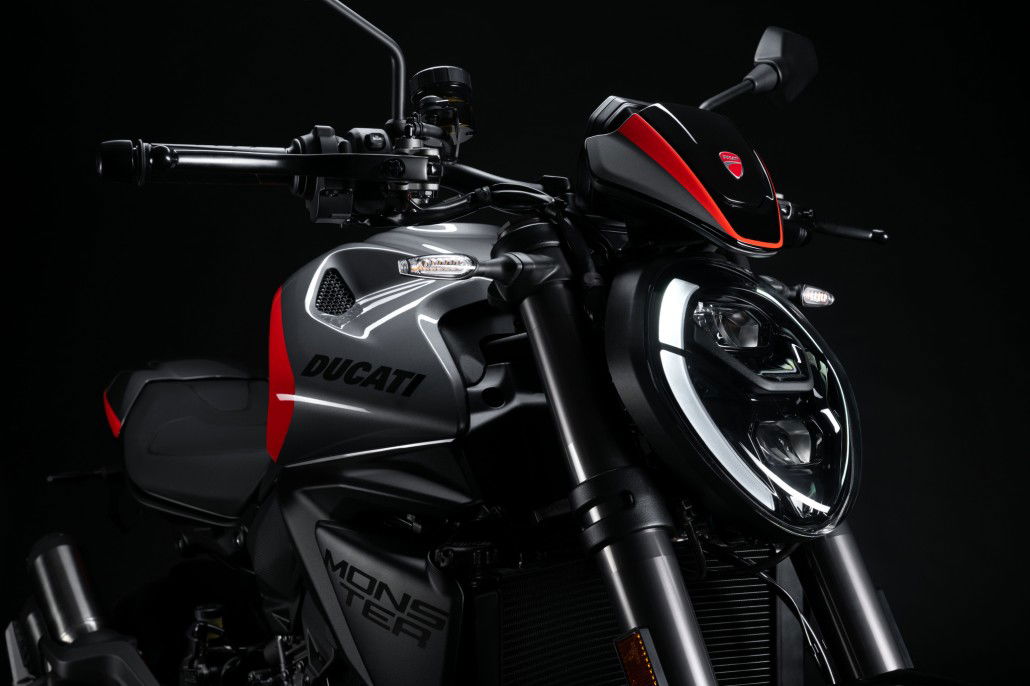
The design draws on typical Monster hallmarks: the headlight framed by the buffalo-back tank, the single-seat saddle, and the short, lightweight tail. Full-LED lighting includes daytime running lights and dynamic turn signals. The water pump sits on the front cylinder head, giving the side view a cleaner appearance.
Extensive Ducati Performance Accessories Range
Ducati Performance offers a wide range of accessories for the Monster V2. These include carbon parts for the front and rear fenders as well as clutch and alternator covers, billet aluminum components such as bar-end weights, tank cap, oil filler cap, radiator grille cover, mirrors, and footpegs. Termignoni offers homologated silencers with titanium sleeves and carbon end caps, reducing weight by 0.2 kg. Additional options include brake and clutch levers, heated grips, a USB port, cruise control, sport and comfort seats in various heights, and a pillion seat bag. At a later date, further accessories including a TPMS tire pressure sensor, the turn-by-turn navigation system, the Ducati Multimedia System, tank bags, and an Ohlins steering damper are expected to follow.
Availability and Warranty
The Monster V2 has been available in Ducati Red and Iceberg White at European dealers since February 2026. The new Sport Livery follows from April 2026. Ducati provides a 24-month warranty with no mileage limit.

- MICHELIN 091745Michelin – Pilot Power 2ct Rear – 190/50 Zr17 Tl 73(w) Rear – Sommerreifen


Dieser Artikel ist eine Gemeinschaftsarbeit der Redaktion.
Motorcycles.News berichtet tagesaktuell und unabhängig über die Motorrad- und Motorsportwelt. Von neuen Modellen über MotoGP bis hin zu Technik, Gesetzgebung und Szene-Themen — mehrfach täglich, zweisprachig auf Deutsch und Englisch. Ergänzt wird die Berichterstattung durch den YouTube-Kanal Motorrad Nachrichten mit über 80.000 Abonnenten.