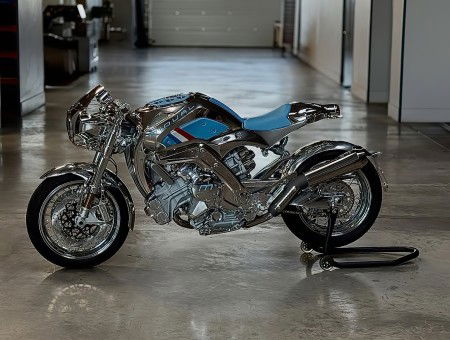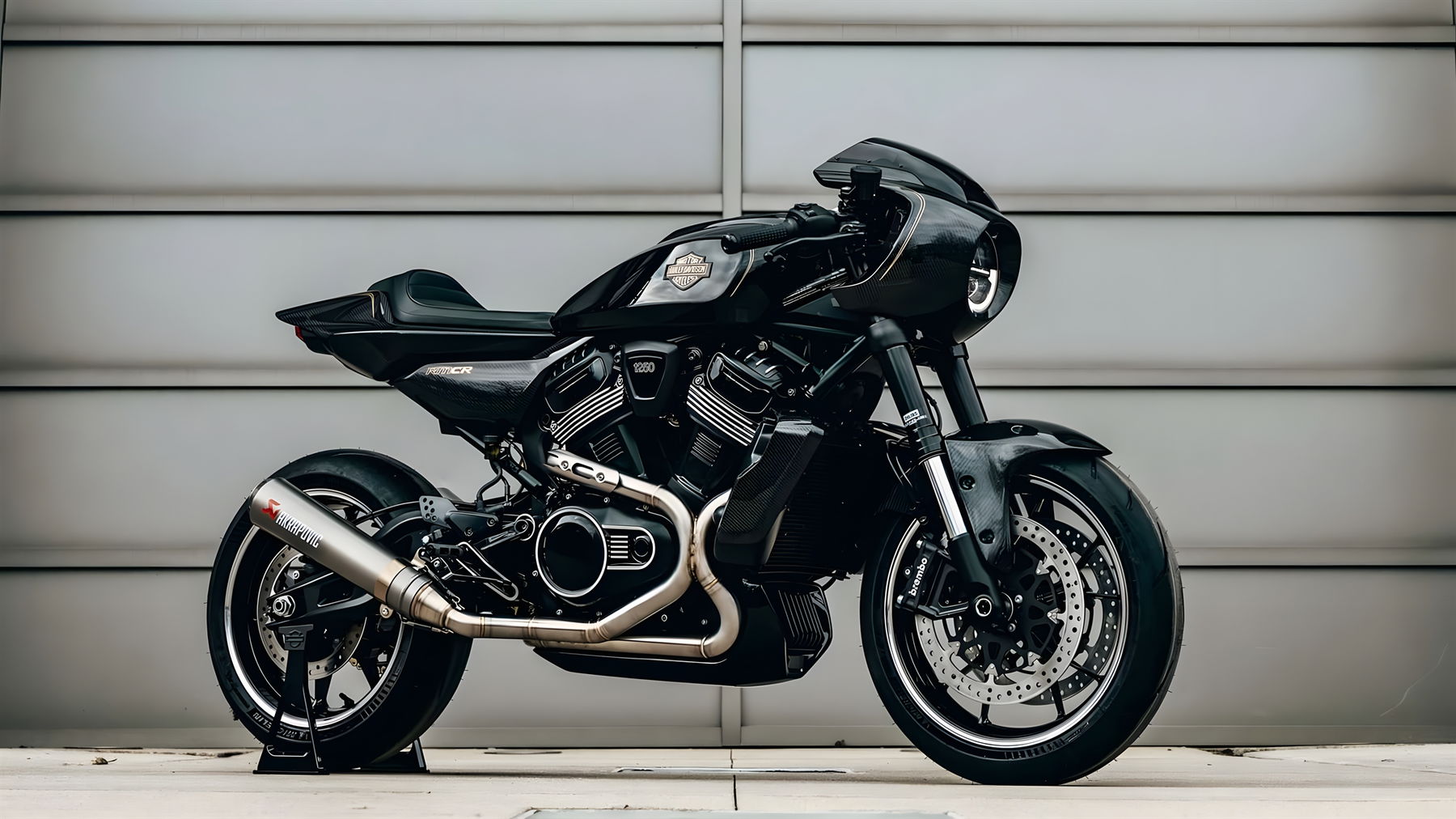
- The RMCR uses the 1,250 cc Revolution Max V-Twin producing approximately 150 hp (110 kW) and an Akrapovič 2-into-2 exhaust system
- Öhlins suspension, Brembo monoblock brake calipers, and an aluminum single-sided swingarm underscore the sporty ambitions
- Series production has not been confirmed; Harley-Davidson is actively collecting feedback from fans
Harley-Davidson unveiled a concept motorcycle at the 2026 Mama Tried Motorcycle Show in Milwaukee, Wisconsin, that is generating considerable buzz in the scene. The RMCR, short for Revolution Max Cafe Racer, combines the design language of the classic XLCR from the late 1970s with the company’s modern Revolution Max powertrain platform. Harley-Davidson has not yet issued an official press release. The concept was presented via the brand’s social media channels and directly at the show, with Harley-Davidson explicitly asking for community feedback.
Revolution Max at the Heart
The RMCR is powered by the 1,250 cc Revolution Max V-Twin. This is a liquid-cooled 60-degree V-Twin with dual overhead camshafts (DOHC) producing approximately 150 hp (110 kW). The engine originally debuted in February 2021 with the Pan America and has since been used in the Nightster and Sportster S as well. In the RMCR, the engine serves as a stressed member within a purpose-built steel tube frame. The Pan America ST served as the starting point, with its basic architecture modified for the cafe racer concept.
The Revolution Max’s sporting potential is demonstrated in the MotoAmerica Super Hooligan racing series, where a Pan America-based race motorcycle built by accessories manufacturer Saddlemen regularly finishes on the podium.
Premium Suspension and Akrapovič Exhaust
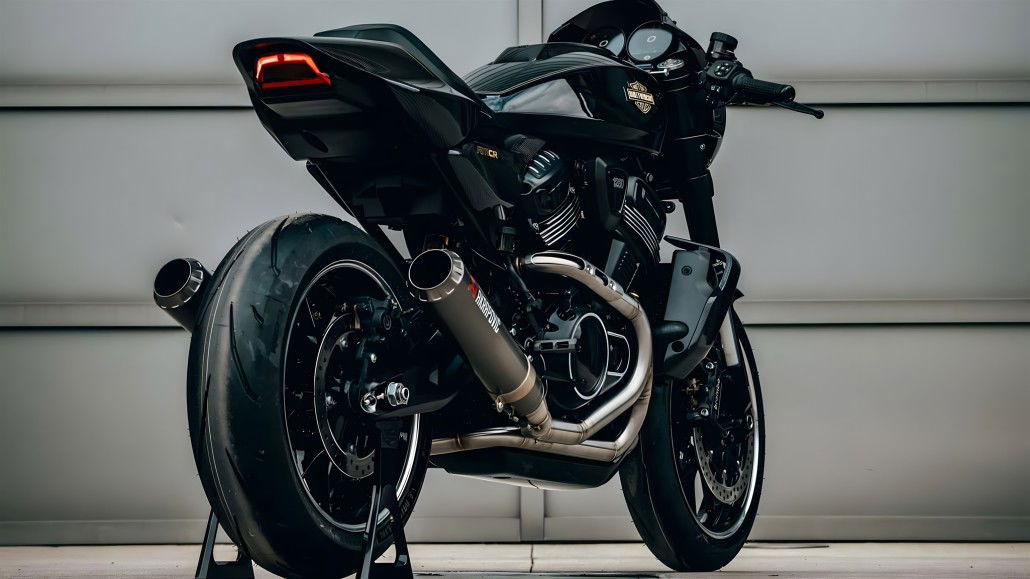
The RMCR’s chassis relies exclusively on high-end components. Up front, an Öhlins USD fork with 43 mm stanchion tubes handles the suspension duties, while Brembo monoblock brake calipers provide the stopping power. At the rear, a reinforced aluminum single-sided swingarm is paired with an Öhlins shock absorber featuring a piggyback reservoir. The exhaust system comes from Akrapovič and is configured as a 2-into-2 setup with two separate mufflers.
Carbon Bodywork and Nods to the XLCR
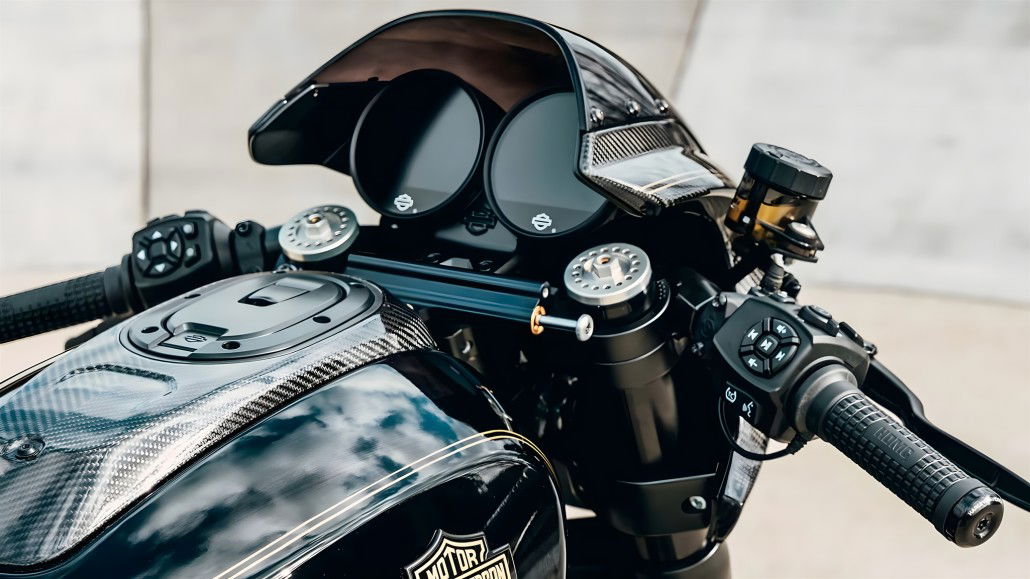
The RMCR’s entire bodywork is made from carbon fiber. The side panels, radiator shroud frame, front fender, and tank cover are all crafted from the lightweight material, with the carbon weave deliberately left visible. The design is clearly inspired by the original XLCR, which was built between 1977 and 1979. The tail section with its boat-shaped seat cowl directly references the XLCR, while the tank takes cues from the Sportster S and the Super Hooligan race bike. Up front, a round headlight sits surrounded by an aggressive fairing in classic cafe racer style.
The design was led by Bjorn Shuster, Chief Designer at Harley-Davidson. According to the company, the project was intended to explore just how far the Revolution Max platform could be pushed. Harley-Davidson described the RMCR as “a modern interpretation of a rebellious original, and a tribute to Willie G., whose influence still guides how we design today.” Willie G. Davidson had originally designed the XLCR together with Bob Modero and Jim Haubert.
The XLCR as a Historic Blueprint
The original XLCR, on which the RMCR’s design is based, was produced for just two years. From 1977 to 1979, Harley-Davidson built the cafe racer using the Ironhead Sportster engine with 1,000 cc displacement. Although the XLCR was not a commercial success in its time, it has since become a sought-after collector’s item that commands high prices at auctions.
No Series Production in Sight
Whether the RMCR will ever enter series production remains uncertain. After releasing the images, Harley-Davidson stated that it would wait and gauge public reaction. The response on social media has been overwhelmingly positive so far, with numerous commenters calling for the concept to go into production.
However, Harley-Davidson has shown promising concepts in the past that never made it into production. The Bronx naked bike, originally announced at EICMA 2019 on the Revolution Max platform, was shelved in 2020 despite positive reception, as Harley-Davidson chose to focus on its core business of large-displacement V-Twin cruisers and tourers. The Street 750 and Street 500, intended as affordable entry-level models, also failed to gain traction in the U.S. market and were discontinued after a short run.
A glimmer of hope for potential series production could come from the Sportster S’s trajectory. The model was initially considered too far removed from the classic air-cooled XL Sportster models and sold sluggishly at first. However, the Sportster S has since reportedly begun attracting a younger buyer demographic and established itself in the market. Additionally, Harley-Davidson will be present at six MotoGP rounds in 2026 with its Bagger World Cup, which is likely to increase pressure to offer sporty production models as well.


- Shoei 12060291Shoei Neotec 2 Klapphelm Blau male