- Norton is pursuing a new design philosophy guided by the principle “less is more”
- The design team brings experience from MV Agusta, Ducati, Honda, and Husqvarna
- Another, still-secret model is set to push the design language even further
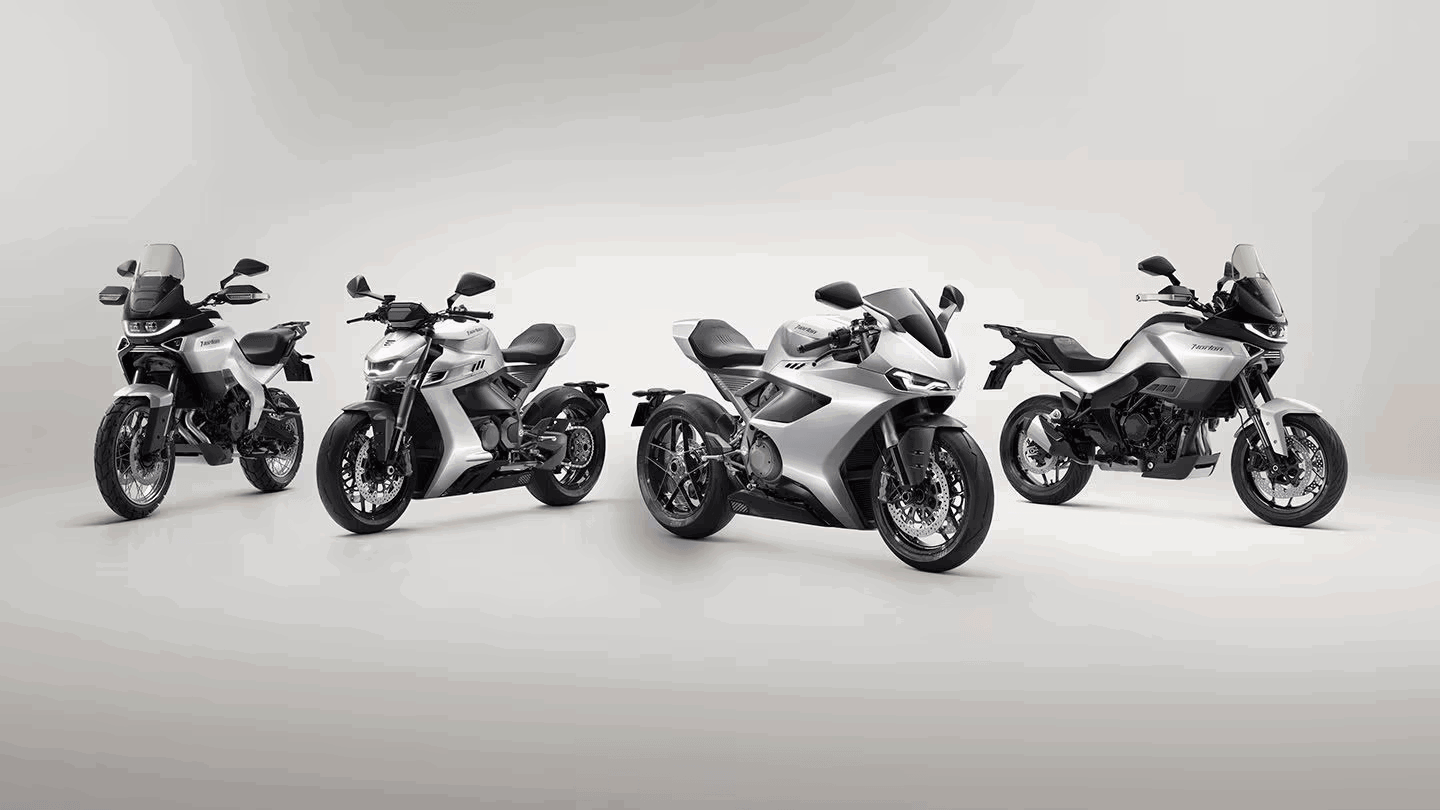
With the unveiling of the Norton Manx R, the Manx, the Atlas, and the Atlas GT at the Milan motorcycle show EICMA in November 2025, Norton Motorcycles has made a clean break. The smooth, modern lines of the new models have little in common with what was previously known from the British heritage brand. This is no coincidence but rather a deliberately developed design strategy, created under the direction of Design Chief Simon Skinner in close collaboration with renowned design consultant Professor Gerry McGovern OBE.
TVS as a Foundation for Creative Freedom
Since the takeover by Indian conglomerate TVS Motor Company in April 2020, things have fundamentally changed at Norton. Skinner describes the current phase as arguably the most decisive moment in the brand’s history.
“This is probably the most pivotal point in Norton’s history. There’s now the confidence and support to think long-term and really invest in the future.”
The financial stability provided by TVS has brought a level of creative freedom that never existed at Norton before. Skinner compares the new situation to having the creative handcuffs removed from the team.
This stability is also reflected in the composition of the team. Norton’s design and engineering departments now span two locations in Solihull and Bologna. The team includes experienced designers who previously worked at MV Agusta, Ducati, Honda, and Husqvarna, among others. Skinner speaks of an impressive mix of international talent that gives the company the confidence to make bold decisions.
Four Principles as the Foundation
The new design language is based on four core principles developed together with Professor Gerry McGovern: Modernity, Integration, Drama, and Connection.
The most striking of these principles is Modernity, which Norton interprets as reduction.
“Our interpretation of modernity is reductivity. Less is more – until the point where less is less.”
In an industry where motorcycles are becoming visually ever more complex, Norton is deliberately setting a counterpoint.
The principle of Integration describes the interplay between design and engineering. Skinner emphasizes that there are hardly any components on a motorcycle that are purely technical or purely cosmetic.
“There’s not much on a bike that’s purely engineered, and very few things that are only cosmetic. Everything is integrated.”
Neither engineering nor design should take the lead — both must work together as equals.
Drama, the third principle, is meant to trigger an emotional response with every Norton model. Every motorcycle should radiate forward motion, regardless of the vehicle category. The fourth principle, Connection, describes how the emotion of the design is translated into the riding experience — through materials, colors, touchpoints, and an intuitive human-machine interface.
Skinner emphasizes that while McGovern helped develop the overarching strategy, the daily design decisions rest entirely with the in-house team in Solihull and Bologna.
“Gerry helped develop the strategy, but the execution of it is entirely down to this building and the people working here.”
The Manx R as the Vanguard of the New Line
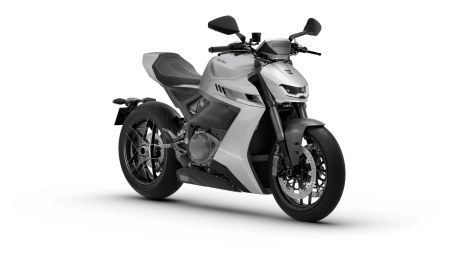
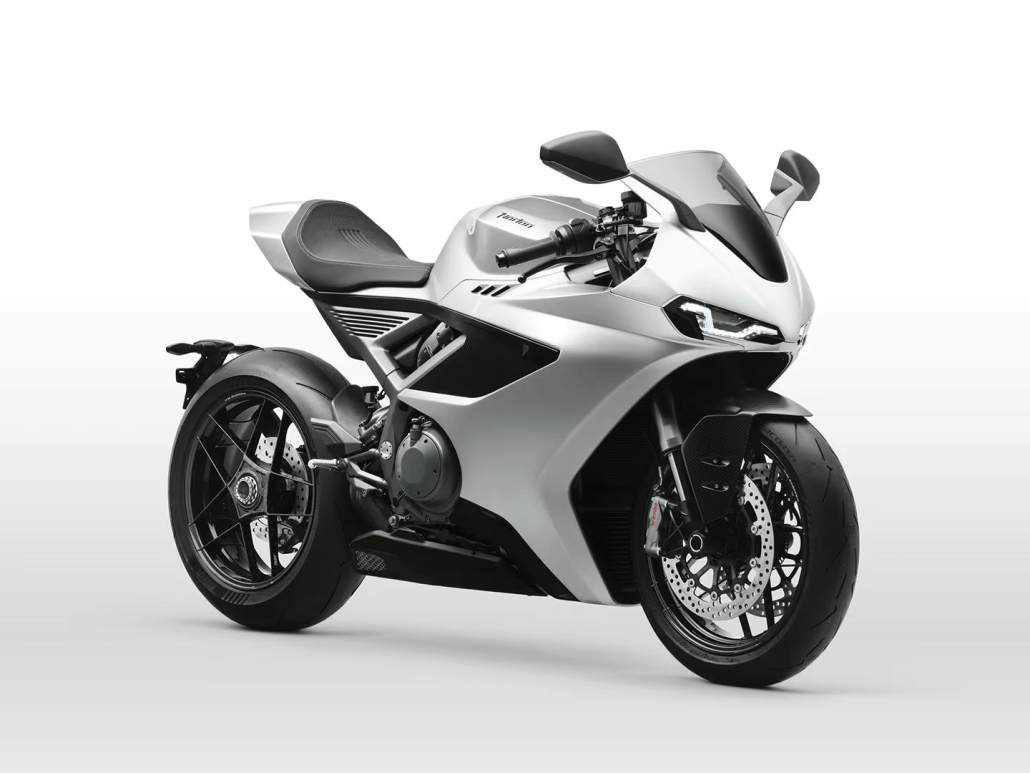
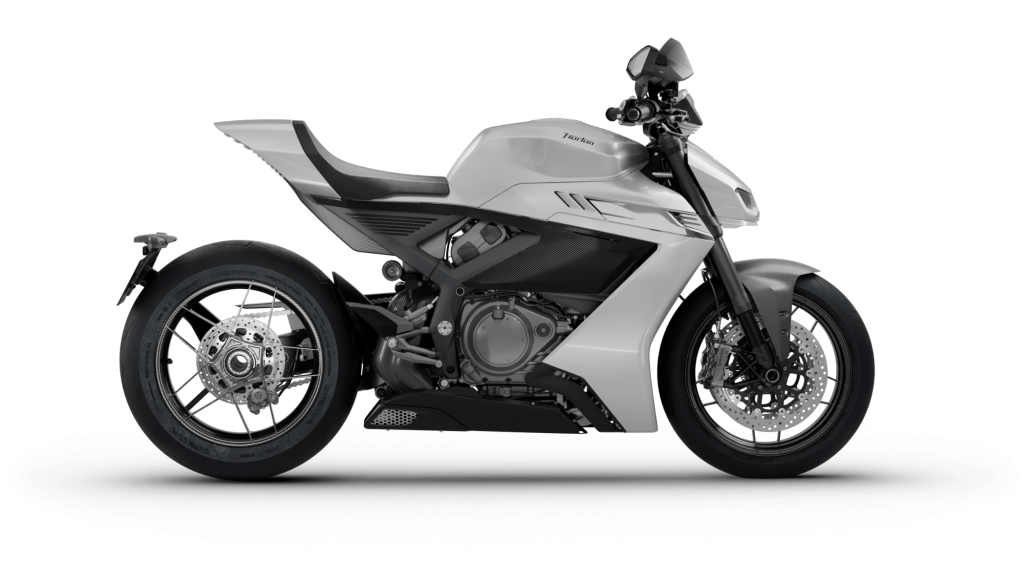
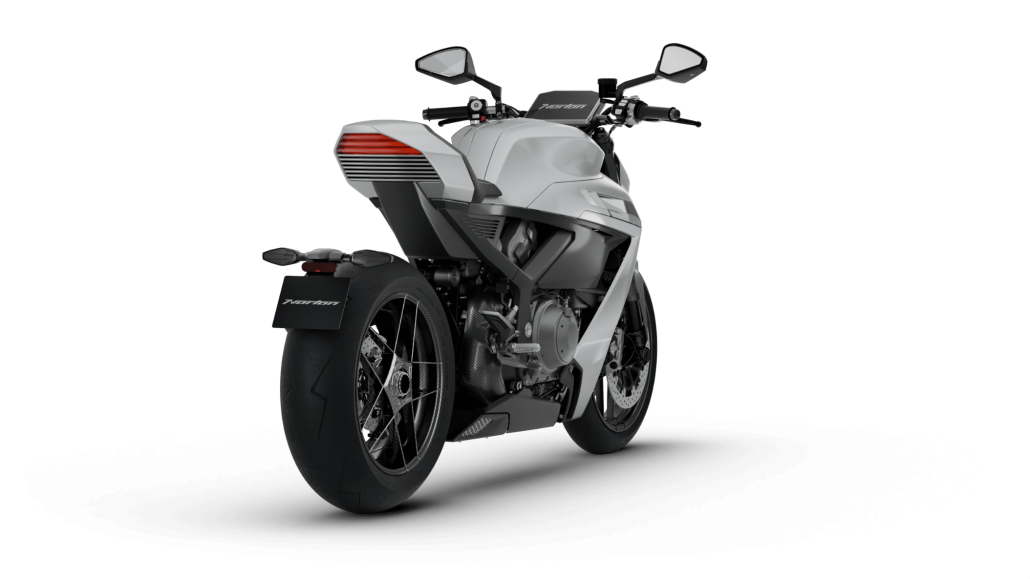
As the first model of the new generation, the Norton Manx R expresses the design philosophy most clearly. The sportbike deliberately forgoes winglets, elaborate line work, stickers, and sharp edges. Visible fasteners have been largely eliminated. Instead of visual complexity, Norton relies on clean surfaces and carefully considered details.
The inspiration for this approach comes, according to Norton, from the world of high-end skeleton watches: technical components are not meant to be hidden but rather executed to such a high standard that they become visual highlights in their own right. Norton speaks of a “technical sculpture” in which functional elements are transformed into visually appealing showpieces.
This ambition is technically underpinned by a completely new 1,200 cc V4 engine with a 72-degree cylinder angle, producing 206 hp (approximately 152 kW) at 11,500 rpm and 130 Nm at 9,000 rpm. At a weight of 204 kg (approximately 450 lbs), this results in a power-to-weight ratio of roughly 1 hp per kilogram. Norton emphasizes that engine development was based on the analysis of 30,000 kilometers of real-world riding data. The key finding: actual road performance takes place below 11,000 rpm. The engine was therefore specifically optimized for torque and usable power between 5,000 and 10,000 rpm.
Additional equipment includes semi-active suspension from Marzocchi, Brembo Hypure brakes, 17-inch carbon wheels from BST, an 8-inch touchscreen, and five riding modes. The electronics platform comes from Bosch and includes cornering-capable traction control, cornering ABS, wheelie control, and an electronic quickshifter, among other features.
Next Model Set to Advance the Design Language
Skinner hints that Norton is already working on another model that will push the new design language even further. Without revealing specific details, he describes the approach as a gradual introduction of modernity without overwhelming the customer.
“We’ve got to introduce the concept of modernity to the world, then dial it up.”
The upcoming model, set to be revealed later this year, targets a different and younger audience than the existing V4 models. Norton aims to attract a new generation of riders and further evolve expectations of what a modern Norton can be.
The reactions to the new model range so far have apparently reinforced Norton’s direction. Skinner admits that the positive feedback has given the team the confidence to be even more progressive. The signs at Norton clearly point to a fresh start, driven by an international team, a clear design strategy, and the security of a well-funded parent company.
What Does This Mean for Me as a Motorcyclist?
In recent years, Norton was primarily a name that lived off its own history without really bringing tangible products to the road. That is now changing noticeably. With TVS backing them and a design team that brings experience from some of the most renowned manufacturers in the industry, this restart appears far more solidly founded than previous attempts. The design philosophy of reduction is an interesting counterpoint at a time when superbikes are becoming visually ever more cluttered. Whether this ultimately convinces on the road remains to be proven by the Manx R. What’s particularly exciting, however, is the hint at another model targeting a younger audience. Because that is exactly where it will be decided whether Norton can become more than a niche brand for wealthy collectors. Anyone interested in British motorcycles with a distinctive character should keep an eye on Norton in the coming months.

- Milestone MotoGP 25 (Day One Edition) – Sony PlayStation 5 – Rennspiel – PEGI 3