Why Airbags on Motorcycles Are Complicated
Motorcycles differ fundamentally from cars in many safety-relevant aspects: they have no crumple zones, the rider is unsecured and sits closer to the point of impact. Accordingly, a motorcycle airbag must react significantly faster and deploy more precisely than its automotive counterpart. Moreover, the movements of a motorcycle in a crash are more complex – in addition to pure deceleration, pitch and yaw movements also play a role. The sensor system must therefore process considerably more information to ensure error-free deployment.
These technical hurdles are partly responsible for the fact that Honda’s Gold Wing has remained the only production motorcycle with an airbag to date. Its low center of gravity, stable riding characteristics, and the rider’s far-back seating position provide ideal conditions for integrating such a system.
Yamaha Patent: New Sensor Technology for More Precise Crash Detection
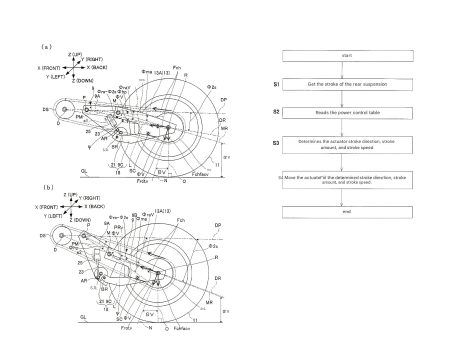
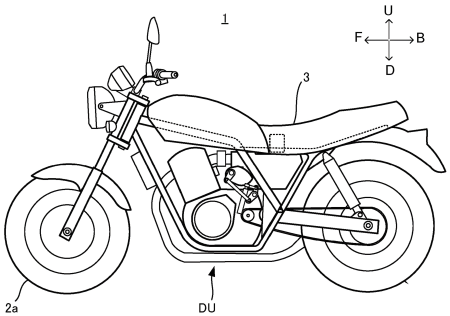
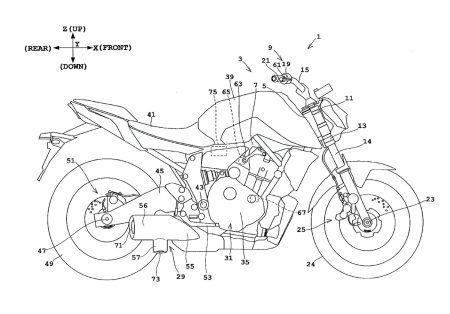
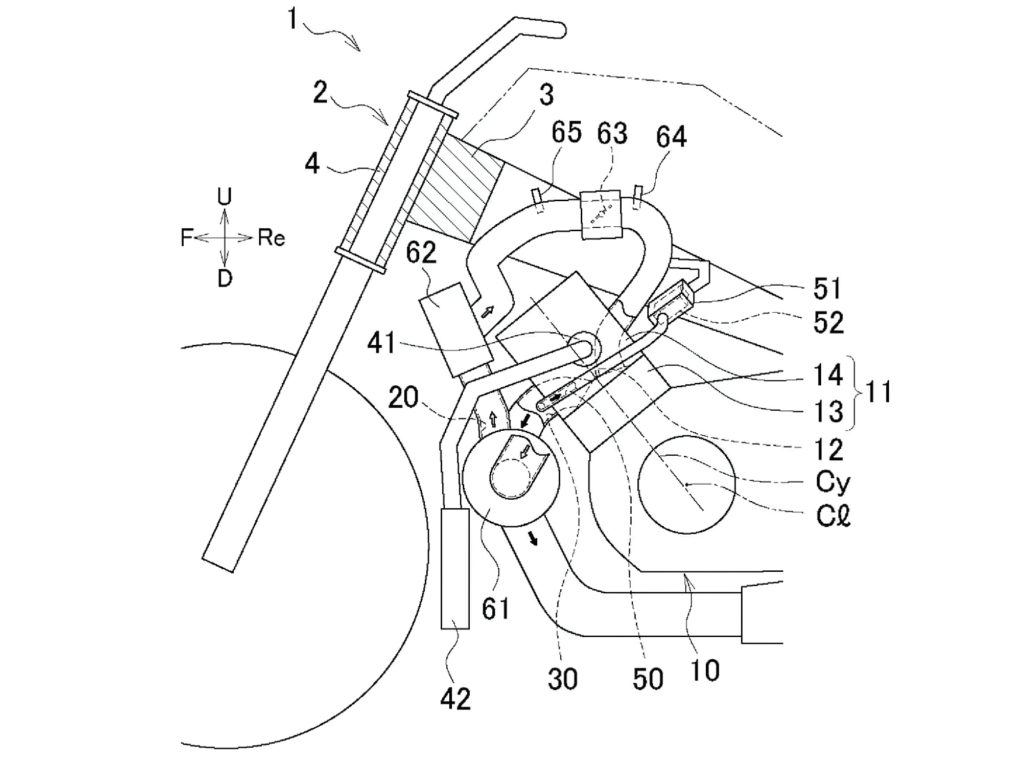
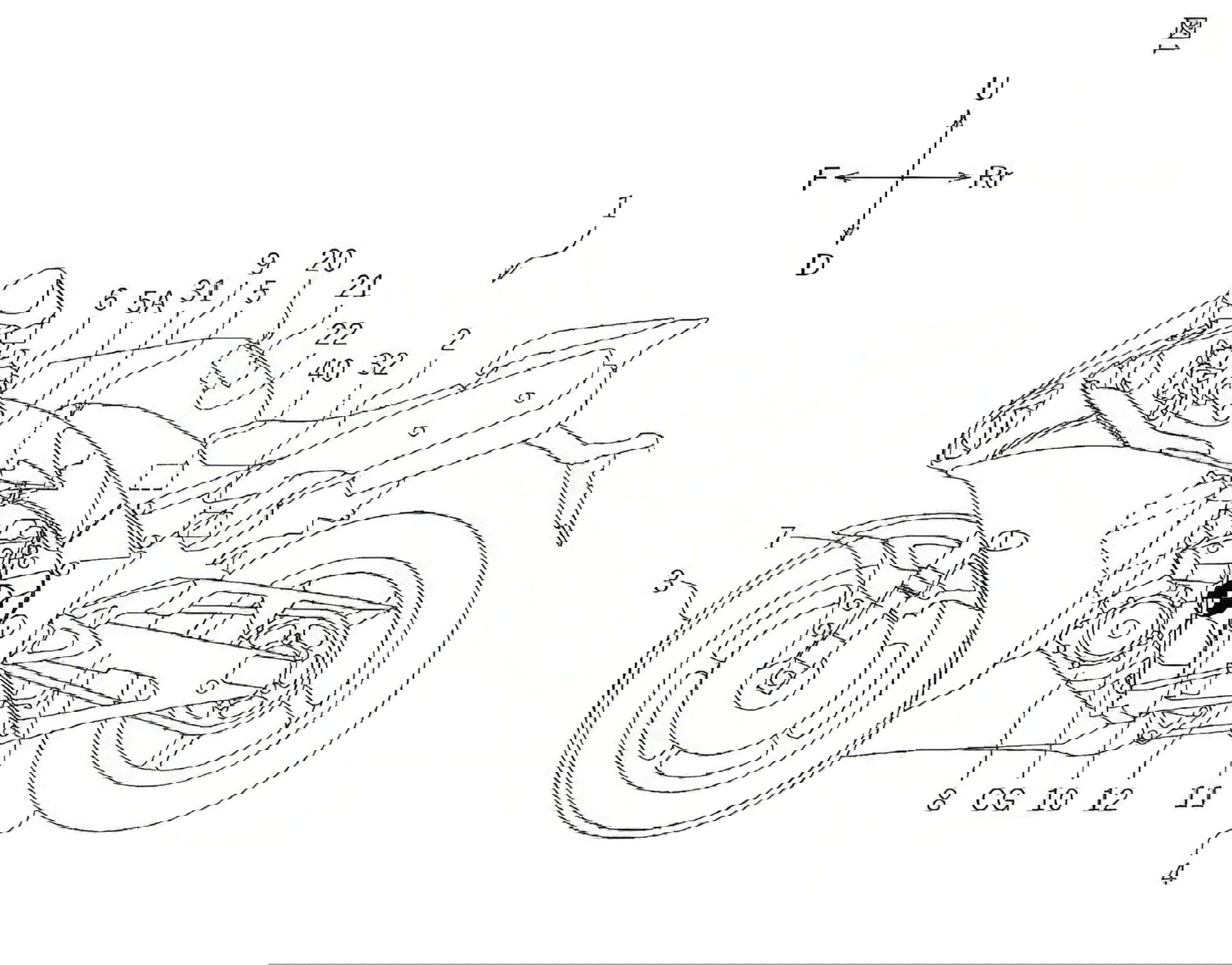
Yamaha has now filed a patent that specifically addresses improving sensor technology for motorcycle airbags. The technology envisions the use of two acceleration sensors – comparable to the inertial measurement units (IMUs) used in many current motorcycles for ride dynamics control. The key innovation: one sensor is placed in front of, and the other behind, the motorcycle’s center of gravity. This allows the system to precisely capture three-dimensional movements – horizontal, lateral, and vertical.
This arrangement enables the control unit to detect a potential collision and its direction particularly quickly and reliably. This is precisely what is needed to deploy the airbag in a fraction of a second – before the rider impacts an obstacle.
Supersport as Test Subject: Focus on the Yamaha R1
Interestingly, Yamaha uses the YZF-R1 as the reference model in the patent drawings – a supersport bike where the challenge is particularly great. The sporty, forward-leaning riding position means the rider’s head is very close to the front area of the motorcycle. This exact problem was also highlighted in 2023 by Atsushi Ishii, Head of Mobile Safety Solutions at Autoliv. According to Ishii, it is most difficult to implement airbags in so-called “Powersport motorcycles” like the Yamaha R1.
That Yamaha chose precisely this model for illustration could be an indication that the Japanese manufacturer is willing to tackle the most complex scenarios in airbag integration – and not just focus on touring or city vehicles.
Tricity with Airbag: Safety for Newcomers in Focus
In addition to the R1, the patent also shows Yamaha’s three-wheeled Tricity scooter with an airbag system. This vehicle is primarily aimed at car drivers who want to switch to a motorcycle or scooter. The additional stability provided by the third wheel is meant to reduce hesitation – an integrated airbag could reinforce this effect. Autoliv also presented an airbag prototype on a Piaggio MP3 at trade shows in 2023, a direct competitor to the Tricity. It seems manufacturers see particular potential in safety-oriented city vehicles.
Conclusion: The Second Attempt at Motorcycle Airbags?
Yamaha’s patent shows that the development of motorcycle airbags continues to progress – with a focus on intelligent sensor technology and algorithmic precision. For now, it remains unclear when the first production applications might follow. What is clear, however: if the airbag on two wheels is to have a real future, it needs exactly these kinds of approaches to overcome the technical hurdles.


[amazon bestseller=”Dainese Airbag” items=”3″]
→ This article is part of our comprehensive overview of patents and future technologies – find all developments in our Patents and Future Motorcycle Technology overview.


- S100 2018S100 2018, Felgenreiniger – 500 ml male


Redakteur bei Motorrad Nachrichten. Fokus auf Technik, Szene und Motorradpolitik – neutral, sachlich, verständlich.
Verantwortlich für die Seiten www.Motorcycles.News, www.Motorrad.Training und den YouTube-Kanal "Motorrad Nachrichten", sowie deren social Media-Seiten.