- In the Netherlands, more motorcycles were imported than sold new in 2025
- The RAI Association demands mandatory inspections for deviating BPM values
- For just one brand, the damage is said to have amounted to 1.5 million euros within a single year
The so-called BPM, the Dutch tax on the acquisition of motor vehicles, has been a contentious issue in the motorcycle industry for years. Now Tom Crooijmans, chairman of the motorcycle section of the RAI Association and simultaneously head of BMW Motorrad Netherlands, has publicly put the issue on the agenda. In a report by the daily newspaper De Telegraaf, he describes a systematic problem that has apparently reached considerable proportions. Several Dutch media outlets, including NOS and Autoblog, subsequently picked up the story.
How the Acquisition Tax Fraud Works
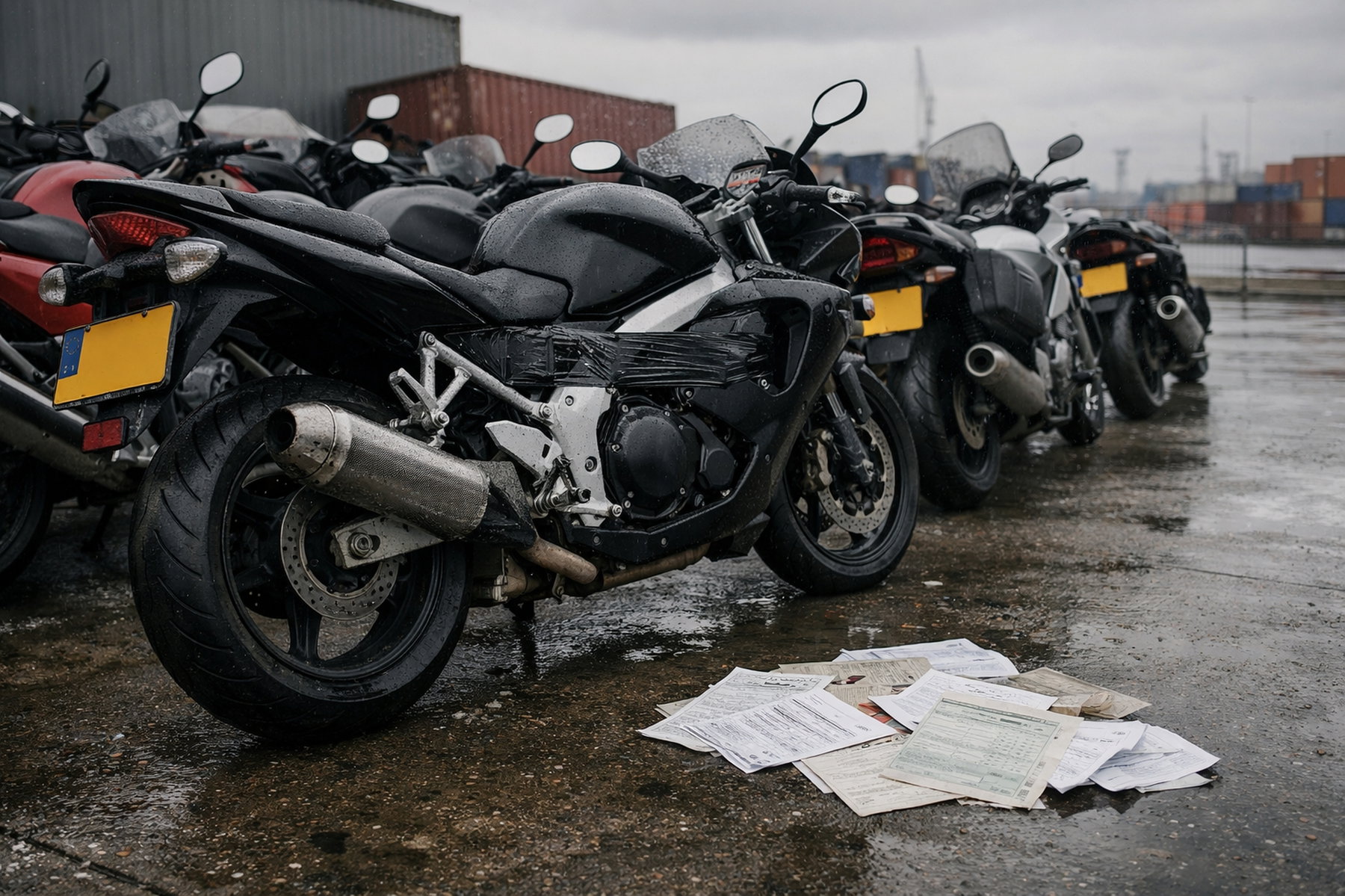
The principle behind BPM fraud is relatively simple. When importing used motorcycles from other European countries, the amount of acquisition tax to be paid is calculated based on the vehicle’s value. The lower this value, the less BPM needs to be paid. This is precisely where the fraudsters come in.
According to Crooijmans, these are predominantly young used motorcycles from abroad whose import is processed on paper. To reduce the value, non-existent or exaggerated damage is reported, false mileage figures are provided, or manipulated expert reports are submitted. In some cases, damaged parts are reportedly mounted before the valuation and then swapped back for the undamaged original parts afterward. At a motorcycle show, Crooijmans himself reportedly saw that the frame numbers on some machines had been taped over.
“Je ziet de bedrijfjes oppoppen en motoren verkocht worden tegen tarieven die helemaal niet kunnen.” (You see businesses popping up and motorcycles being sold at prices that simply cannot be right.) This is how Crooijmans describes the situation to De Telegraaf.
Who Really Loses?
The RAI Association argues that the fraud primarily harms motorcycle riders who buy such machines. A BPM value that is too low is permanently visible in the RDW register, the Dutch vehicle registration authority, and indicates an alleged damage history. Anyone wanting to trade in or return such a motorcycle to an official dealer is likely to encounter problems. The RAI warns that a recognized dealer would probably not accept a machine with a conspicuously low BPM value.
Industry experts view the situation differently, however. According to their assessments, it is not the individual buyer who loses the most, but the motorcycle industry itself. On one hand, the fraud leads to unfair competition in the used market because honestly imported vehicles cannot compete on price. On the other hand, increasing competition with new sales arises when young used motorcycles are offered at artificially low prices. The Dutch tax authority also loses substantial revenue. Crooijmans puts the damage for just a single brand at 1.5 million euros within one year and adds that this says enough about the overall extent of the fraud.
Grey Imports Overtake New Sales
A key backdrop to the debate is the rapid growth of so-called grey imports. In 2025, a total of 20,051 motorcycles were imported into the Netherlands from abroad according to RDC license plate registration data. During the same period, only 19,614 new vehicles entered the market. Imports thus grew by 10.4 percent compared to the previous year and for the first time surpassed official new sales.
The list of imported brands is led by Yamaha with 3,356 units, followed by BMW with 3,256 and Honda with 3,190 units. Particularly striking is the growth at BMW: import figures rose by 23 percent compared to the previous year. For comparison, BMW Motorrad delivered 2,620 new vehicles in the Netherlands during the same period. Additionally, 9,275 used BMW motorcycles were traded within the country. Grey imports thus clearly outpaced the brand’s new sales.
In new sales, Kawasaki maintained its position as market leader for the second consecutive year with 3,167 motorcycles sold and a market share of 16.15 percent. Yamaha followed with 2,762 units in second place, BMW ranked third with 2,620 units, just ahead of Honda with 2,609 units. The best-selling individual model range remained the BMW R 1300 GS with 1,065 units.
Demand for Binding Value Tables
In the Telegraaf report, Crooijmans advocates for new regulations. Motorcycles with conspicuously deviating BPM values should in the future be mandatorily subjected to a physical inspection. He also calls for the introduction of fixed BPM value tables for motorcycles, similar to those already in place for cars. Anyone wishing to deviate from the table values should only be allowed to do so after a genuine assessment.
Whether such tables would actually curb the fraud is debated, however. Comparable regulations already exist for cars, and yet De Telegraaf estimates the annual tax revenue loss from BPM fraud on used cars at more than 200 million euros. Just recently, the Dutch fiscal investigation service FIOD arrested seven suspects in this connection.
Who Has an Interest in the Debate?
What is remarkable about the discussion is the constellation of actors. Crooijmans speaks in his capacity as chairman of the RAI motorcycle section, representing importers and manufacturers whose members exclusively sell new motorcycles. The fraud, however, exclusively affects the used market. It would actually be more logical for the dealer association BOVAG, which represents the used vehicle trade, to speak up on this issue. In the current reporting, BOVAG is notably absent.
This circumstance suggests that the official motorcycle industry fundamentally views the growing parallel import as a threat to its new vehicle business. The fraud allegation, however justified it may be in substance, also draws attention to a phenomenon unwelcome to the industry: the steadily growing influx of young used motorcycles from neighboring countries, which puts pressure on domestic sales of new machines.
VAT Fraud Potentially Even More Severe
Industry experts point out that the BPM debate may be distracting from a larger problem. VAT (BTW) fraud is said to be even more extensive, particularly in the import of motocross bikes. Since these vehicles do not require registration plates, they can be traded across borders much more easily without any VAT being paid at all. BPM fraud, by contrast, only involves reducing the amount of an otherwise payable tax.
The BPM as a Fundamental Problem
Beyond the fraud issue, there is broad consensus in the Dutch motorcycle world: the entire industry actually wants to abolish the BPM on motorcycles altogether. The tax makes motorcycles in the Netherlands several thousand euros more expensive compared to other European countries. It is precisely this price difference that makes importing from abroad so attractive in the first place and thus provides the breeding ground for the fraud methods described.
Frequently Asked Questions
-
What is the BPM on motorcycles in the Netherlands?
The BPM is a Dutch acquisition tax that is due when purchasing or importing a motor vehicle. For motorcycles, it is based on the vehicle value, although unlike cars there are no fixed value tables. The tax can amount to several hundred to several thousand euros when importing from abroad.
-
How can you recognize BPM fraud when buying an imported motorcycle?
A conspicuously low BPM value in the RDW register indicates an alleged damage history. If a motorcycle is offered at prices significantly below the market average, caution is advised. The RAI recommends checking the BPM value before purchase and having an independent inspection carried out in case of doubt.
-
How many motorcycles are imported into the Netherlands each year?
In 2025, a total of 20,051 motorcycles were imported into the Netherlands from abroad according to the RDC, an increase of 10.4 percent over the previous year. This meant imports exceeded the 19,614 new vehicle sales for the first time. 98 percent of imported machines were used vehicles.
-
Why are motorcycles more expensive in the Netherlands than in other EU countries?
The price difference is largely due to the BPM, which is not levied on motorcycles in most other European countries. This tax can make a motorcycle several thousand euros more expensive and makes importing from abroad financially attractive.


- Schuberth 4157215360Schuberth C5, Klapphelm – Schwarz – M (56/57) male