- Dainese has been 100 percent owned by investment firms HPS Investment Partners and Arcmont Asset Management since January 2026
- The company’s financial debt was reduced by approximately 190 million euros as part of the acquisition
- The company announces three new innovations, including a helmet that reportedly significantly exceeds the current state of the art
When private equity firms acquire a brand, it rarely generates enthusiasm in the motorcycle industry. Experience has shown that such takeovers often result in job cuts, declining product quality, and in the worst cases, the end of the brand altogether. Dainese faced exactly this accusation when it became known that the Italian protective gear manufacturer was changing ownership once again. CEO Angel Sanchez, however, views the situation completely differently and has spoken extensively in an interview about the company’s future.
From Family Business Through Carlyle to Debt Reduction
The history of ownership changes at Dainese now spans more than a decade. Founder Lino Dainese sold his company to investment firm Investcorp in 2014. Under their management, revenues more than doubled to around 250 million euros. In 2022, Carlyle Group then acquired the Dainese Group for an enterprise value of 630 million euros (approximately 683 million US dollars). The company achieved revenues of around 300 million euros (approximately 314 million US dollars) that year and grew double-digit.
However, the high purchase price weighed heavily on the balance sheet. Dainese carried debt of over 300 million euros, split across secured bonds with maturities until 2028. In the summer of 2025, the company initially had to defer interest payments on its 285 million euro bonds. In July 2025, additional debt securities worth 25 million euros were issued to existing creditors to ensure financial stability.
In October 2025, the official announcement followed: HPS Investment Partners and Arcmont Asset Management, the two previous major creditors, would take majority ownership of Dainese. HPS has belonged to asset manager BlackRock since July 2025, the world’s largest of its kind. Arcmont, in turn, is a subsidiary of TIAA, the American pension fund for the education sector. Carlyle Group handed over Dainese at a symbolic price of one euro, as it was effectively a debt-equity swap in which creditors converted their claims into equity.
On January 28, 2026, the completion was officially confirmed after clearance by the European Commission. HPS and Arcmont have since held 100 percent of the shares in Dainese. As part of the transaction, financial debt was reduced by exactly 190,000,001.72 euros, leaving approximately 142 million euros in secured bonds with maturity in 2030. Additionally, the new owners provided 30 million euros in fresh equity and established a revolving credit line of 45 million euros, provided by Intesa Sanpaolo, UniCredit, and Bank of America Europe.
Sanchez: “For Dainese, It Is the Best Thing That Could Happen”
Angel Sanchez joined Dainese as new CEO in November 2023. Previously, he led Conserve Italia, one of Europe’s largest food cooperatives with brands like Cirio and Valfrutta, as well as ABM Italia and Keter. In the interview, he made no bones about his assessment of the acquisition: “For Dainese, the employees, and our riders, it is the best thing that could happen to us.”
Sanchez bases his optimism on the fact that the company now has a solid financial structure, capital on its books like never before, and partners at its side who have known the business for three to four years already. The new owners had purchased the business plan and believed in the future of the company.
When asked what protective measures exist against the typical consequences of a private equity takeover, Sanchez responded firmly. Products would not remain at the same level but would improve significantly. “There is not any intention whatsoever of splitting it, selling in pieces, closing down things, reducing quality,” he said. The only way forward is growth and product improvement.
Five-Year Plan Focused on Motorcycles, the US, and Wholesale
According to Sanchez, the company is pursuing a concrete five-year plan that calls for significant revenue growth and expansion in multiple markets. This is not just about what Dainese wants to do, but also what is deliberately not being done. The priorities are clearly defined: markets, distribution channels, brands, and products.
In distribution, Dainese is increasingly focusing on collaboration with wholesalers and distribution partners. In the past, there had been efforts to handle everything through direct distribution. This approach proved to be counterproductive. The company’s own channels, including 46 directly operated stores worldwide and its own online shop, remain important because they provide valuable information about consumer behavior. However, wholesale partners are crucial for actual growth.
Geographically, Europe remains the largest market, but the United States and the American continent as a whole are becoming increasingly important. For products, the clear focus is on motorcycles with the two core brands Dainese and AGV. The adventure touring and sport touring segment is experiencing particularly strong growth and is now the largest category, even though the sports sector continues to play an important role.
Highest R&D Budget in Company History
Sanchez emphasized that Dainese has invested the highest research and development budget in the company’s history over the past two years. That is also why new products are now in the pipeline. Without investments, such innovations would not happen.
Furthermore, a special team called “Demo Lab” was established within Dainese. It works on projects that are not expected to reach the market for five years. Sanchez acknowledged that the current investors might not live to see the results of this long-term research, but explained that the company wanted to survive long-term through innovation.
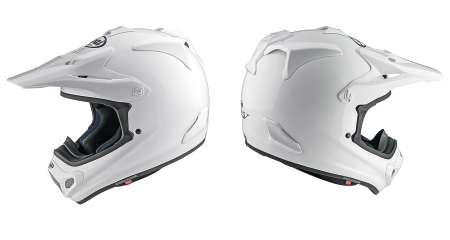
Specifically, he announced three innovations that he called “disruptive.” An AGV helmet is set to be unveiled before summer 2026, which according to Sanchez will offer a significantly higher level of protection than anything previously available. Sanchez explained that he had already carried the prototype in his backpack but was not yet allowed to show it. The helmet has already been presented to selected wholesalers and generated great enthusiasm there. Another innovation is expected to follow after summer.
The goal behind these developments is to make safety accessible to a broader audience. Professional riders understand the risk and equip themselves accordingly. But many motorcyclists ride with only a helmet and at best gloves. Dainese wants to reach exactly this group and change the entire industry.
A Difficult Phase Has Ended
The past years have been characterized by financial uncertainty for Dainese. The sales process began before the Corona pandemic, was then interrupted, and resumed after the pandemic. During this time, according to Sanchez, the company’s attention was partly diverted from the actual work and innovation dynamics slowed somewhat.
Dainese’s official press release also reflects this turning point. CEO Sanchez spoke of a “great milestone” for Dainese. HPS and Arcmont had decided to share the vision, passion for innovation, and commitment to safety and quality. At the same time, he thanked Carlyle Group for the partnership over the past years, which contributed to expanding global presence and strengthening the product portfolio.
In the interview, Sanchez summed up the situation with clear words: Dainese is back. The difficult phase is over. In recent years, they had run the company but were always looking at the bank to see if there was money for planned initiatives. Now normal conditions prevailed, and Dainese had room to maneuver again.
Whether this optimism will actually translate into product quality and market development in the coming years remains to be seen. The financial restructuring has certainly relieved Dainese significantly, but with approximately 142 million euros in remaining debt and a maturity in 2030, financial challenges are not completely eliminated. The key will be whether the announced five-year plan comes to fruition and the promised innovations can actually move the market.
It is also noteworthy that Arcmont Asset Management also controls helmet manufacturer Schuberth. How and whether this will affect the Dainese Group with its AGV helmet brand remains unclear so far.
Frequently Asked Questions
-
Who owns Dainese now?
Since January 2026, Dainese has been 100 percent owned by investment firms HPS Investment Partners and Arcmont Asset Management. HPS is a subsidiary of BlackRock, the world’s largest asset manager. The previous owner Carlyle Group handed over the company at a symbolic price of one euro.
-
How much debt does Dainese have after the acquisition?
As part of the transaction, Dainese’s financial debt was reduced by approximately 190 million euros. Approximately 142 million euros in secured bonds with maturity in 2030 remain. Additionally, Dainese received 30 million euros in fresh equity and a credit line of 45 million euros.
-
What new products is Dainese planning for 2026?
CEO Angel Sanchez has announced three innovations he describes as disruptive. A new AGV helmet with reportedly significantly higher protection levels is expected to be unveiled before summer 2026. Another innovation is planned for the second half of the year. Details on the specific technologies have not yet been released.
-
Who is Angel Sanchez, the CEO of Dainese?
Angel Sanchez became CEO of Dainese in November 2023. Previously, he was CEO of Conserve Italia, one of Europe’s largest food companies, as well as ABM Italia. He brings extensive experience in leading international consumer goods companies.

- MILESTONE Ride 6: Day One Edition – PS5