- The municipal council of Wolkenstein voted unanimously on March 19, 2026 for a traffic-calmed zone at the Grödner Joch
- The trial phase is planned from September 1, 2026 to February 1, 2027, with an expansion from mid-May to mid-October under consideration for 2027
- On peak days, up to 11,000 vehicles pass through the mountain road, with motorcycles accounting for up to 30 percent depending on the season
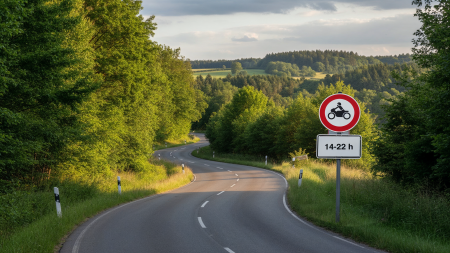
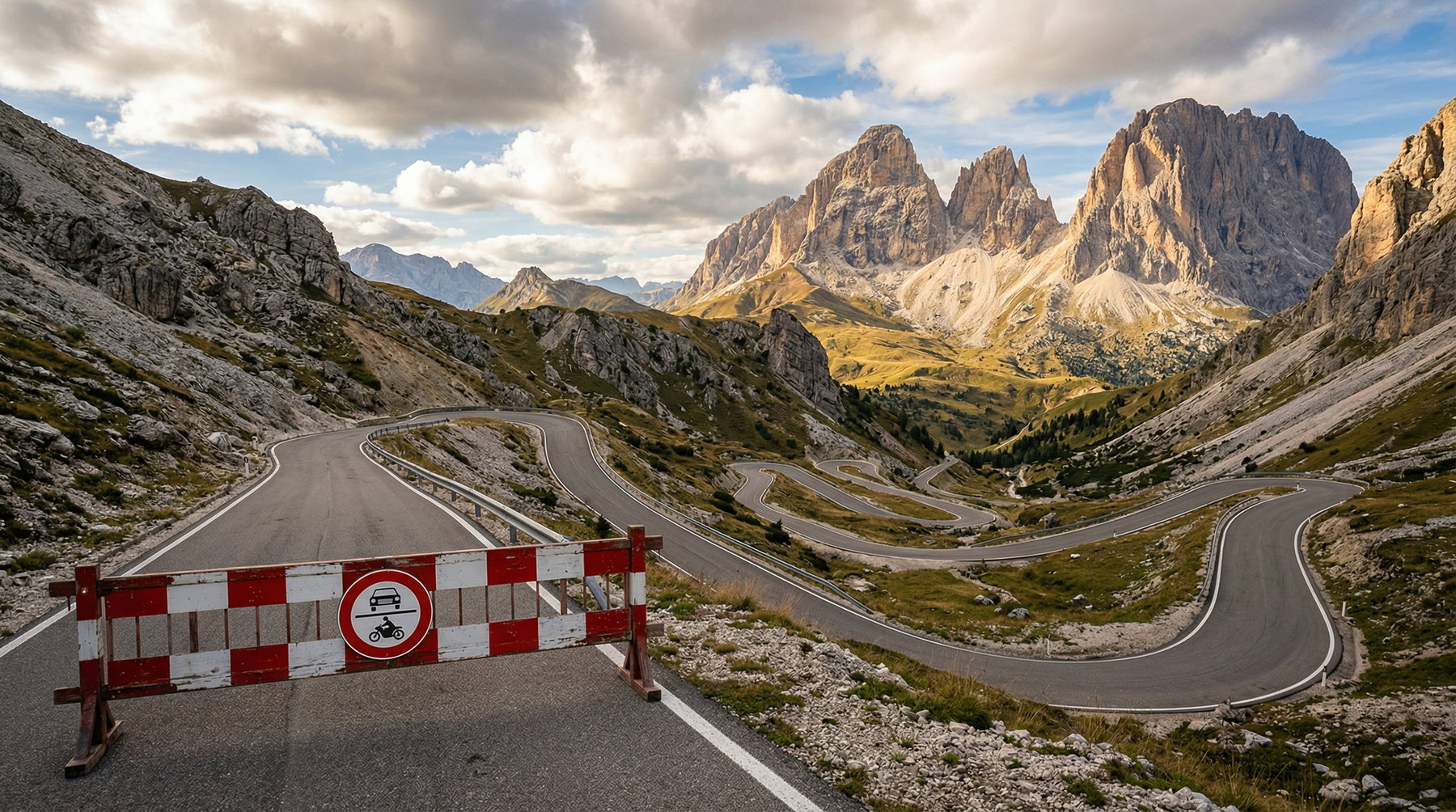
It is one of the most famous mountain passes in the Alps, part of countless motorcycle tours, and an integral component of the legendary Sella Ronda: the Grödner Joch in the South Tyrolean Dolomites. But the pass’s unbridled popularity may soon come to an end. According to consistent reports from local South Tyrolean media and the Italian state broadcaster Rai, the mountain road is set to become a traffic-calmed zone from September 1, 2026. For motorized vehicles, this would mean a complete ban on through-traffic.
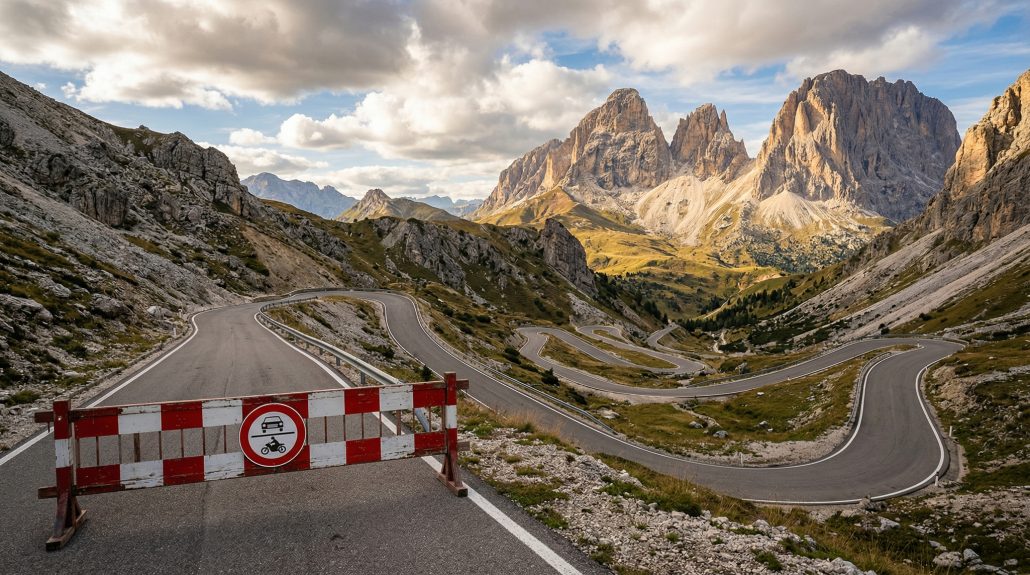
Unanimous Vote in Wolkenstein as the Starting Signal
On March 19, 2026, the municipal council of the adjacent municipality of Wolkenstein voted unanimously to establish an “extra-urban traffic-calmed zone” at the Grödner Joch. This is a resolution of principle that sets the political direction but does not yet constitute final implementation in legal terms. Other municipalities in the Grödner Valley and in the Gader Valley beyond the summit intend to join the project and have indicated their approval will follow shortly. Among the municipalities expected to follow are Corvara and St. Christina.
That the issue has come this far at all has a long history. Ernest Cuccarollo, municipal councilor of Wolkenstein, told Rai that discussions about a joint concept had been ongoing “for 30 years.” Now, for the first time, such a concept has been finalized. It was developed by a technical working group and is said to be fully detailed.
Because the Grödner Joch is a provincial road, the Strada Statale 243, implementation also requires the approval of the South Tyrolean provincial government. The Alpine Club South Tyrol explicitly points out that the traffic-calmed zone must be approved by the provincial government. A purely municipal decision is not sufficient.
Five-Month Trial Phase from September 2026
Initially, a trial run is planned starting September 1, 2026. For five months, all motorized vehicles would be banned from passing through — not just motorcycles, but also cars, sports cars, motorhomes, and other vehicles. According to current plans, exceptions would apply to residents, overnight guests at businesses on the pass, delivery services, and public transport. The trial phase is scheduled to run until February 1, 2027.
For motorcyclists wanting to ride the Sella Ronda in summer — the circular route around the Sella massif via the Grödner Joch (2,121 m), Sellajoch (2,240 m), Pordoijoch (2,239 m), and Campolongo Pass (1,875 m) — only the months of September and October in the current season would be affected. From November, the road is typically closed for winter anyway. Winter sports tourism, however, would be directly impacted.
From 2027, a Much Stricter Regulation Looms
Authorities apparently do not intend to wait for the results of the trial phase. A much more far-reaching restriction is already being discussed for 2027: motorized traffic on the mountain road would be severely restricted from mid-May to mid-October. This would affect precisely the months when the Grödner Joch sees its heaviest use as a mountain pass, excursion destination, and part of classic Dolomites circuits.
For regular motorized recreational traffic, this would effectively amount to a complete seasonal closure. The Grödner Joch would not be closed year-round, but anyone who rides the road as part of the Sella Ronda or as a classic summer destination would be locked out during exactly the relevant period. A five-month closure from May to October would be tantamount to a full ban for motorcyclists.
Traffic Pressure in the Dolomites at Its Limit for Years
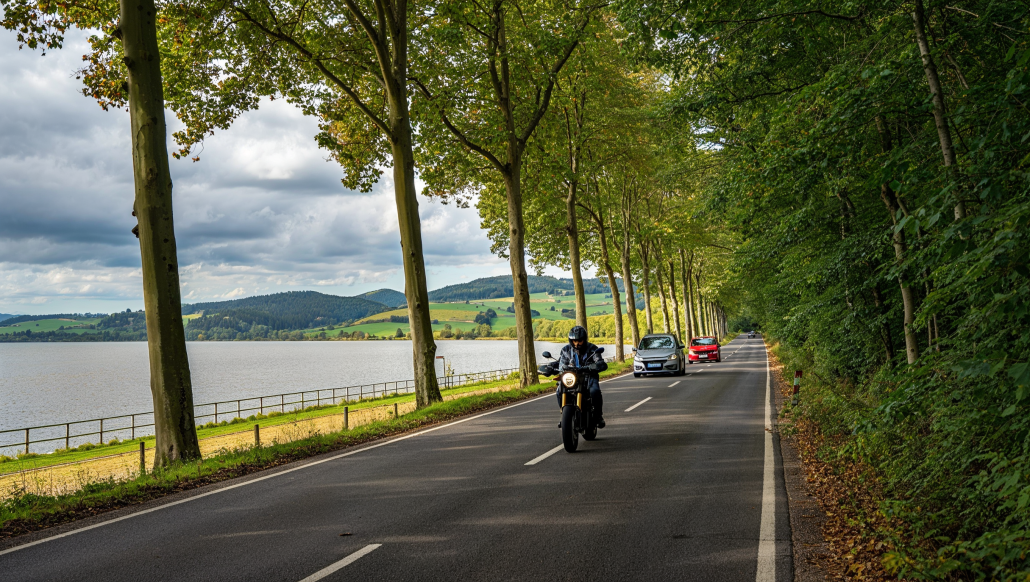
The background to the decision lies in traffic volumes that have been growing for years. According to the Provincial Institute for Statistics ASTAT, around the year 2000, fewer than 10,000 vehicles per day traveled the main route through the Grödner Valley at peak times. By 2025, this number had risen to over 20,000 vehicles. Roughly half of those continue onto the Grödner Joch and Sellajoch passes, which connect Gröden with the Gader Valley and Fassa Valley respectively. The share of motorcycles on these routes reaches up to 30 percent depending on the season and weather.
It is not only motorcycles that face criticism. Cars, sports cars, and increasingly motorhomes along with the waste they leave behind are also viewed negatively. Residents also report illegal racing and around-the-clock noise pollution. Conflicts of interest between locals and the tourism industry have been intensifying for years.
Alpine Club and Greens Welcome the Initiative
The Alpine Club South Tyrol (AVS) has expressly welcomed the decision. AVS President Georg Simeoni called it a “historic moment” and stated: “For decades, we have been pointing out the capacity limits of the Dolomite passes.” The introduction of a traffic-calmed zone represents a decisive step forward for preserving the natural landscape. According to Simeoni, a more car-free Grödner Joch would bring greater recreation for everyone, strengthen local outdoor activities, and promote climate-friendly tourism.
At the same time, the AVS calls for consistent development of the details: traffic must be clearly managed, and public transport must be expanded. Simeoni emphasized that the decision is “a beginning, not an endpoint,” and the AVS expressly supports a similar step for the Sellajoch as well.
The South Tyrolean Greens also expressed their approval. Co-chair Elide Mussner commented on the planned start of the trial phase with “Hallelujah!” and stated that the Greens had been advocating for traffic calming on the Dolomite passes at various levels for more than 15 years. During the summer months, entire villages sometimes come to a standstill due to ever-increasing numbers of day visitors.
Accompanying Measures and Open Questions
In addition to exemptions for residents and overnight guests, plans include interceptor parking lots, signage about the driving ban further down in the valley, and more frequent bus services. Accessibility via public transport and cable car facilities is to be improved.
Which routes are supposed to absorb the additional traffic when the Grödner Joch is closed remains unclear. Anyone entering the Grödner Valley from the Brenner motorway and heading for Corvara would have to detour via the Sellajoch, the Pordoi, and the Campolongo instead of taking the direct route over the Grödner Joch. That traffic patterns in the region will shift is considered certain.
Signal Effect for the Entire Region
The initiative at the Grödner Joch could find imitators. According to media reports, similar restrictions could be introduced at the Sellajoch as early as next year. The Alpine Club South Tyrol expressly supports this step. In the past, there have already been experiments in the Grödner Valley with day-long closures of the Sellajoch. At the Pragser Wildsee in the Hochpustertal, individual vehicle access has been restricted for some time and is only possible with pre-booked tickets in limited quantities. A large-scale low-emission zone for the entire Dolomites has been in the project stage since 2022 but has not yet been implemented.
Other Alpine regions have comparable measures in place. In Tyrol, bans have been imposed on motorcycles with a stationary noise level exceeding 95 decibels on particularly busy routes. In Trentino, speed limits of 60 km/h apply on some mountain roads and passes. Whether the Grödner Joch marks the beginning of a broader development in the Dolomites will likely become clear at the latest after the trial phase in spring 2027.