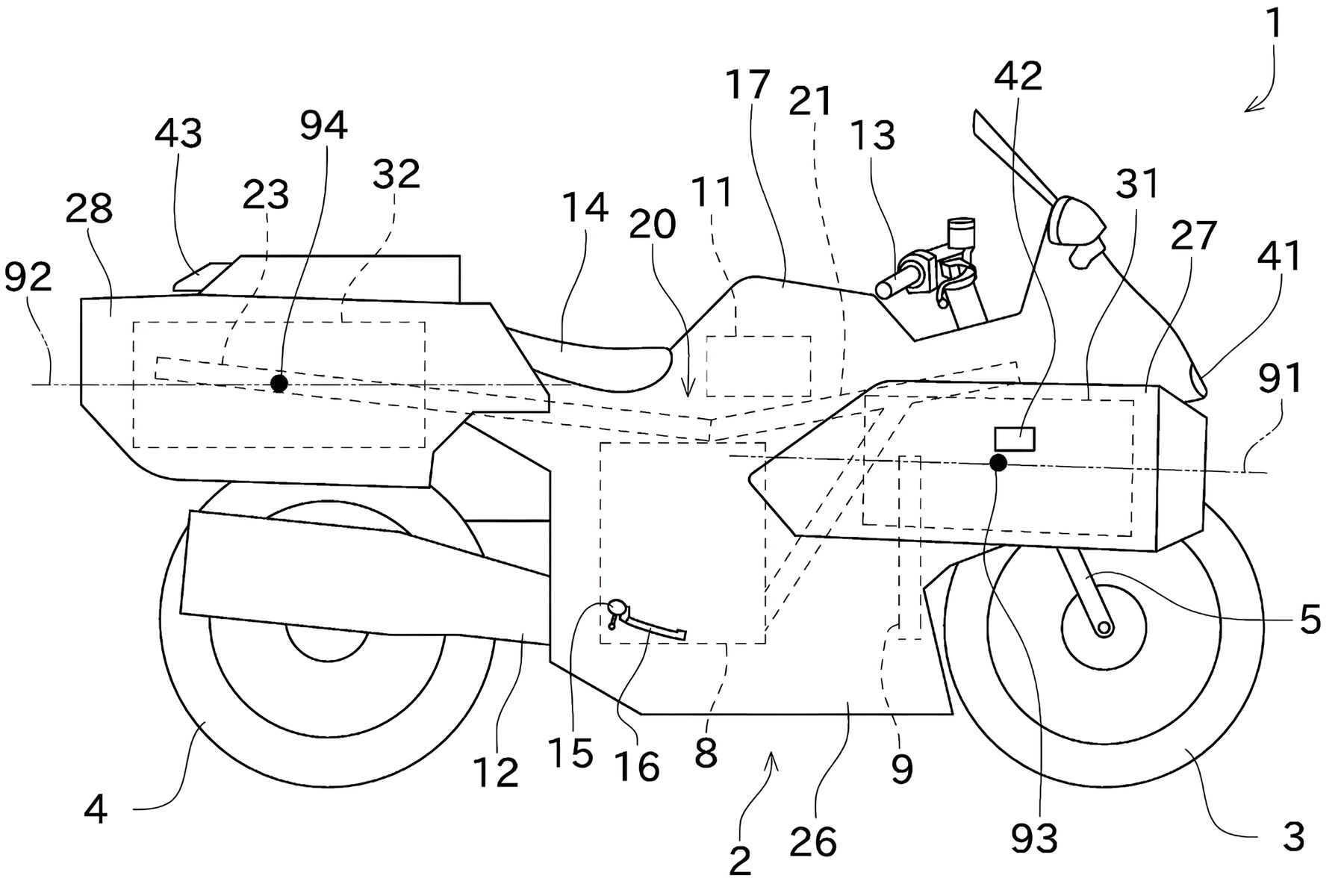
- Based on the supercharged 999 cc four-cylinder engine from the H2
- Four cylindrical pressure vessels for compressed hydrogen (700 bar)
- Project is considered a demonstrator, not a production vehicle
Hydrogen as a fuel for internal combustion engines sounds promising in theory: the element burns almost emission-free, producing mainly water vapor as a byproduct, and is said to deliver roughly three times as much energy per kilogram as gasoline. But this is precisely where the technical dilemma begins that Kawasaki has been struggling with in its hydrogen project for years.
The Problem with Energy Density
Hydrogen may be the most energy-rich element by weight, but it is also the lightest and therefore the most problematic in terms of volume for vehicle developers. At normal atmospheric pressure, one kilogram of hydrogen would require around 11,000 liters of tank volume. To replace the energy content of a typical 14-liter motorcycle tank holding about ten kilograms of gasoline, approximately 110,000 liters of uncompressed hydrogen would be needed.
The solution is compression: hydrogen is compressed to around 700 bar in cylindrical pressure vessels, similar to scuba tanks. But even under this enormous pressure, ten liters of compressed hydrogen correspond to only about 1.4 liters of gasoline. To achieve the same range as a conventional motorcycle, roughly 100 liters of tank volume would still be required.
Two Large Tanks at the Rear, Two New Ones at the Front
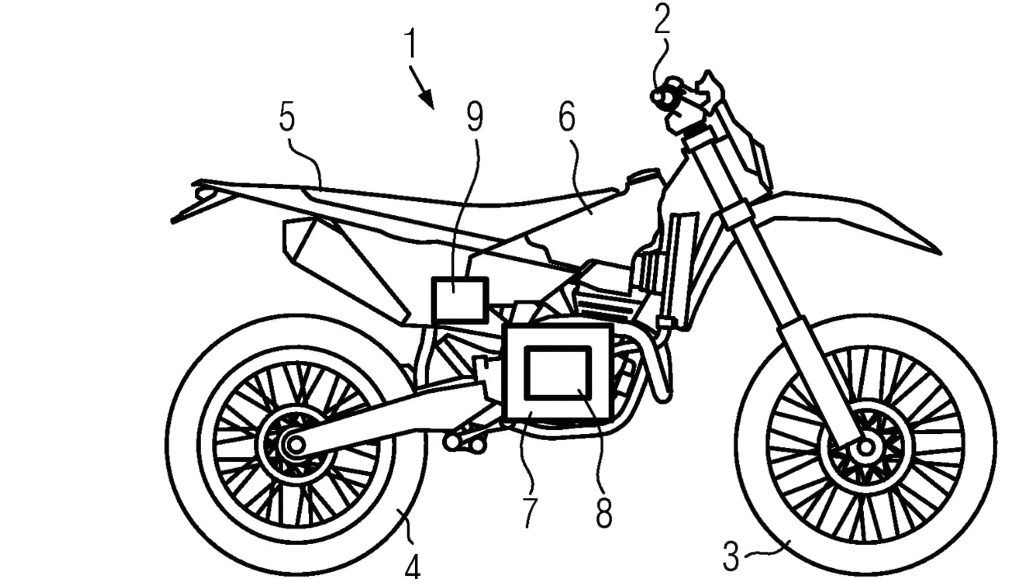
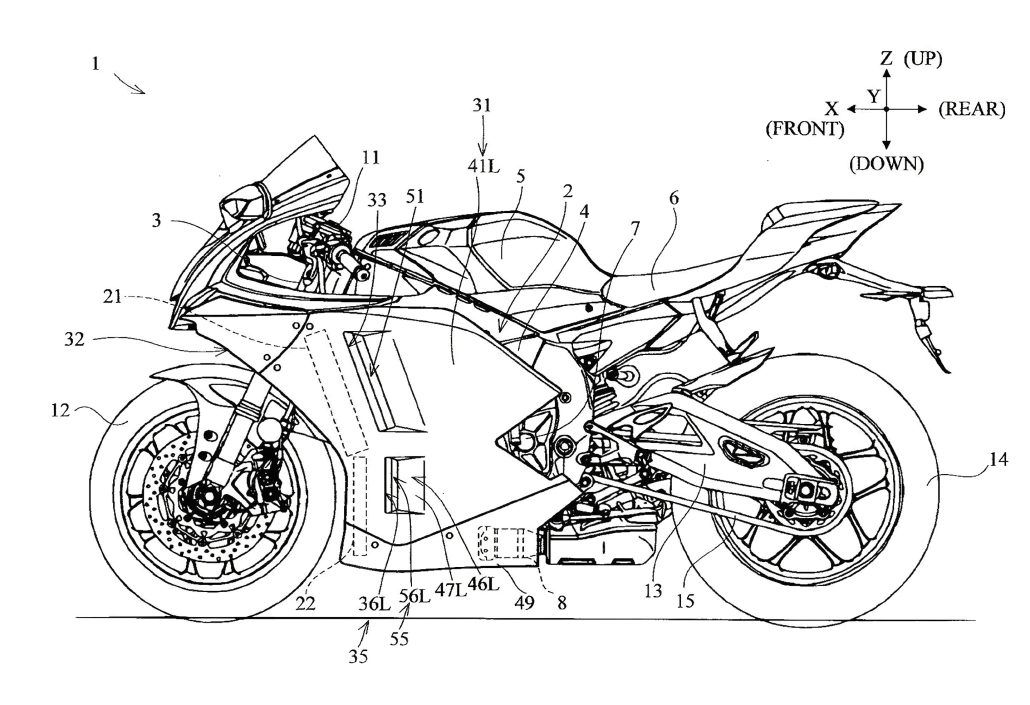
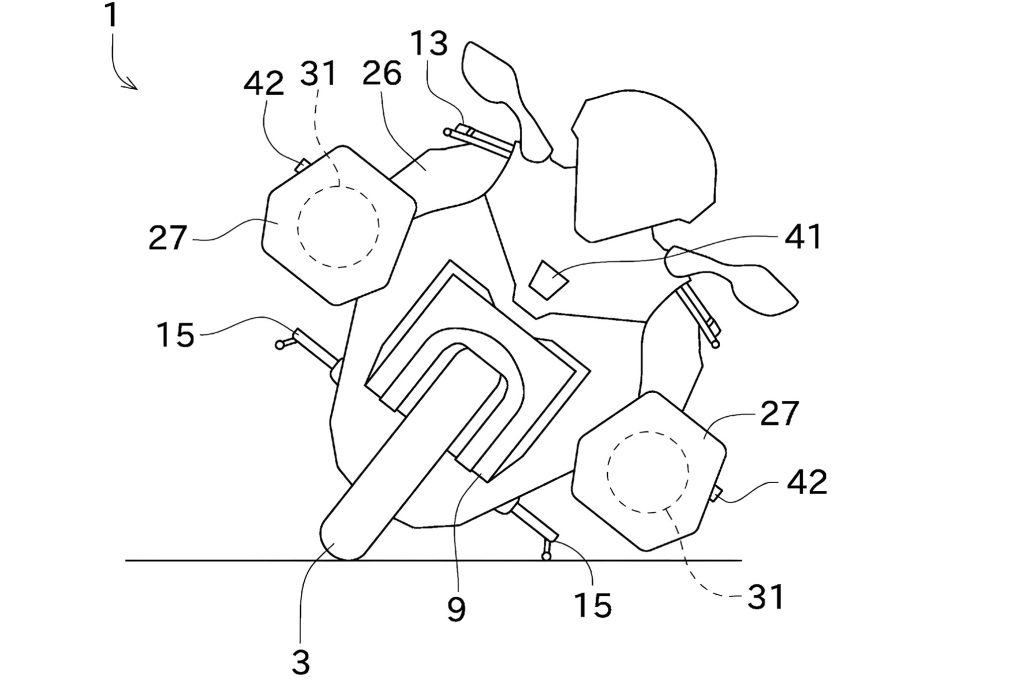
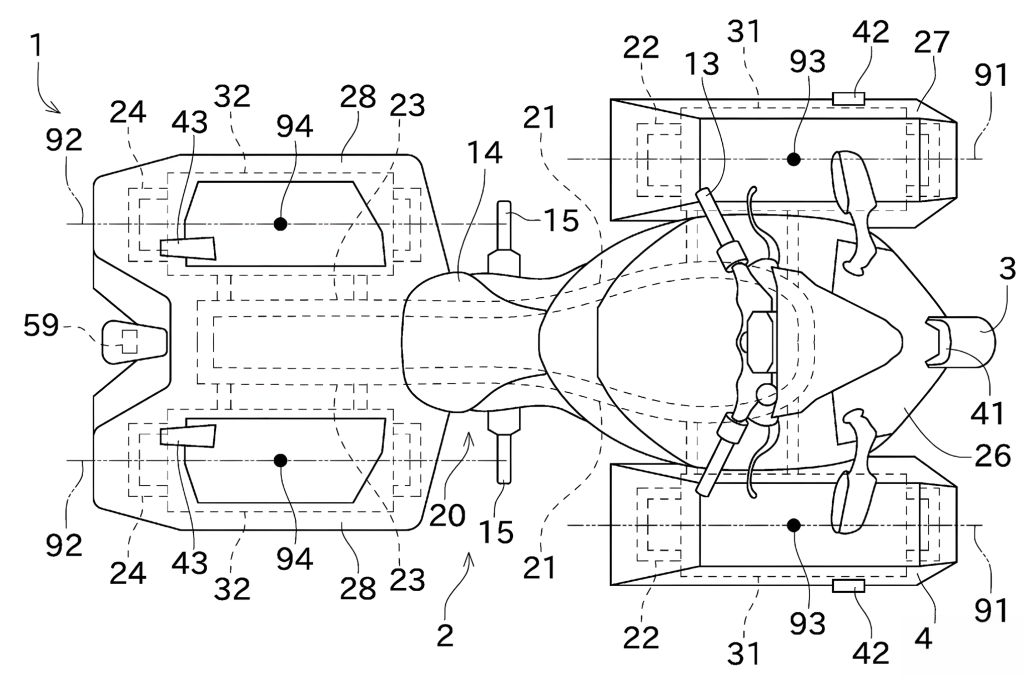
The publicly shown Kawasaki prototype carries two hydrogen cylinders where the pillion seat and luggage would normally go. Still, the range remains limited. The newly filed patent now shows a further development with two additional tanks mounted on the sides of the fairing in front of the rider. This doubles the fuel capacity.
Since the tanks must be cylindrical for pressure resistance reasons, they cannot be shaped around existing components or integrated in a space-saving manner. The two new containers extend above the 999 cc four-cylinder engine and the front fork, protrude beyond the front fairing, and must extend far enough outward to leave room for the rider’s knees. The result is a motorcycle that appears significantly wider than its predecessor.
There is also the safety aspect: a bursting hydrogen tank in an accident would lead to a fire of considerable force. Therefore, the containers must be surrounded by sturdy protective frames, which further increases weight and volume.
Demonstrator Rather Than Production Model
Given these design challenges, the question arises as to what goal Kawasaki is pursuing with the hydrogen project. A production vehicle is hard to imagine, and even if one were to emerge, the lack of hydrogen refueling stations for motorcycles would make everyday use virtually impossible.
The background lies in the corporate environment: Kawasaki Heavy Industries is a strong advocate of the so-called hydrogen society concept, in which hydrogen is envisioned as the dominant energy carrier of the future. KHI is involved in building a complete hydrogen supply chain, from production, which is planned to take place partly in Australia, through storage to transportation. The corporation operates specially developed ships for the global transport of liquefied hydrogen. Toyota pursues a similar concept. In this context, the motorcycle project can be understood as a technological demonstrator intended to show that hydrogen works in principle as a fuel for internal combustion engines, even if the road to everyday practicality remains long.
What Does This Mean for Me as a Motorcyclist?
For everyday riding, this patent changes nothing for now. Kawasaki is primarily demonstrating that hydrogen propulsion for motorcycles is technically feasible, but the obstacles remain enormous: no refueling network, barely manageable dimensions, and a weight that is difficult to calculate. Anyone hoping for a low-emission alternative to the combustion engine will be more likely to find it in electric drivetrains for the foreseeable future. The Kawasaki project is a glimpse into a possible future, but far from a promise to motorcyclists.


- S100 2160S100 2160, Helmpolster Reiniger – 300 ml male