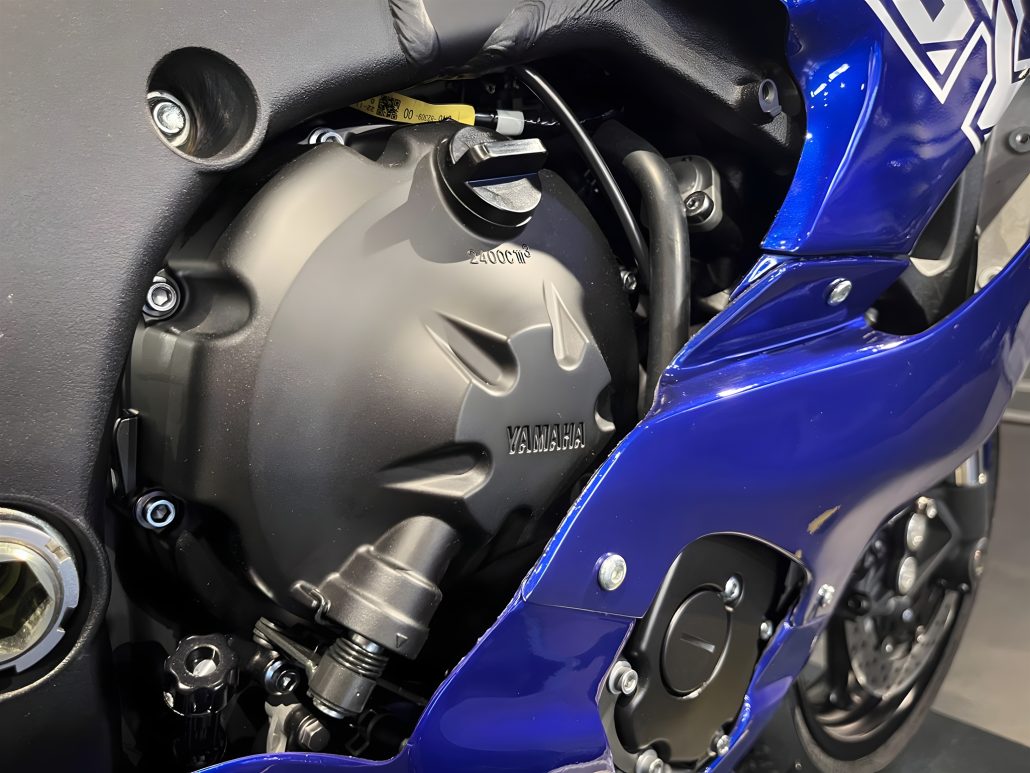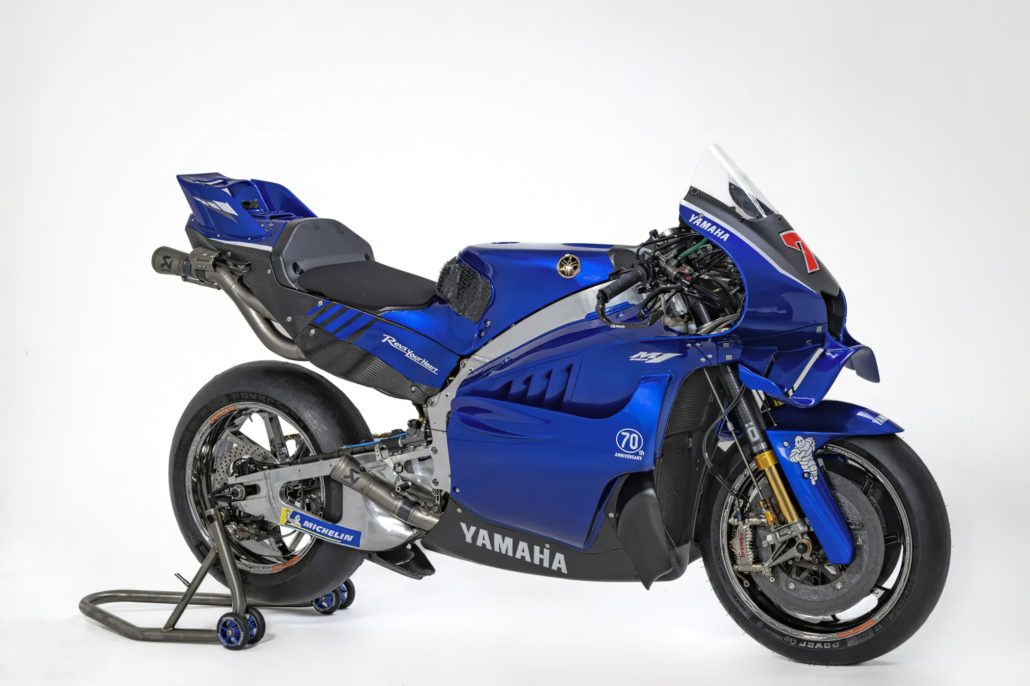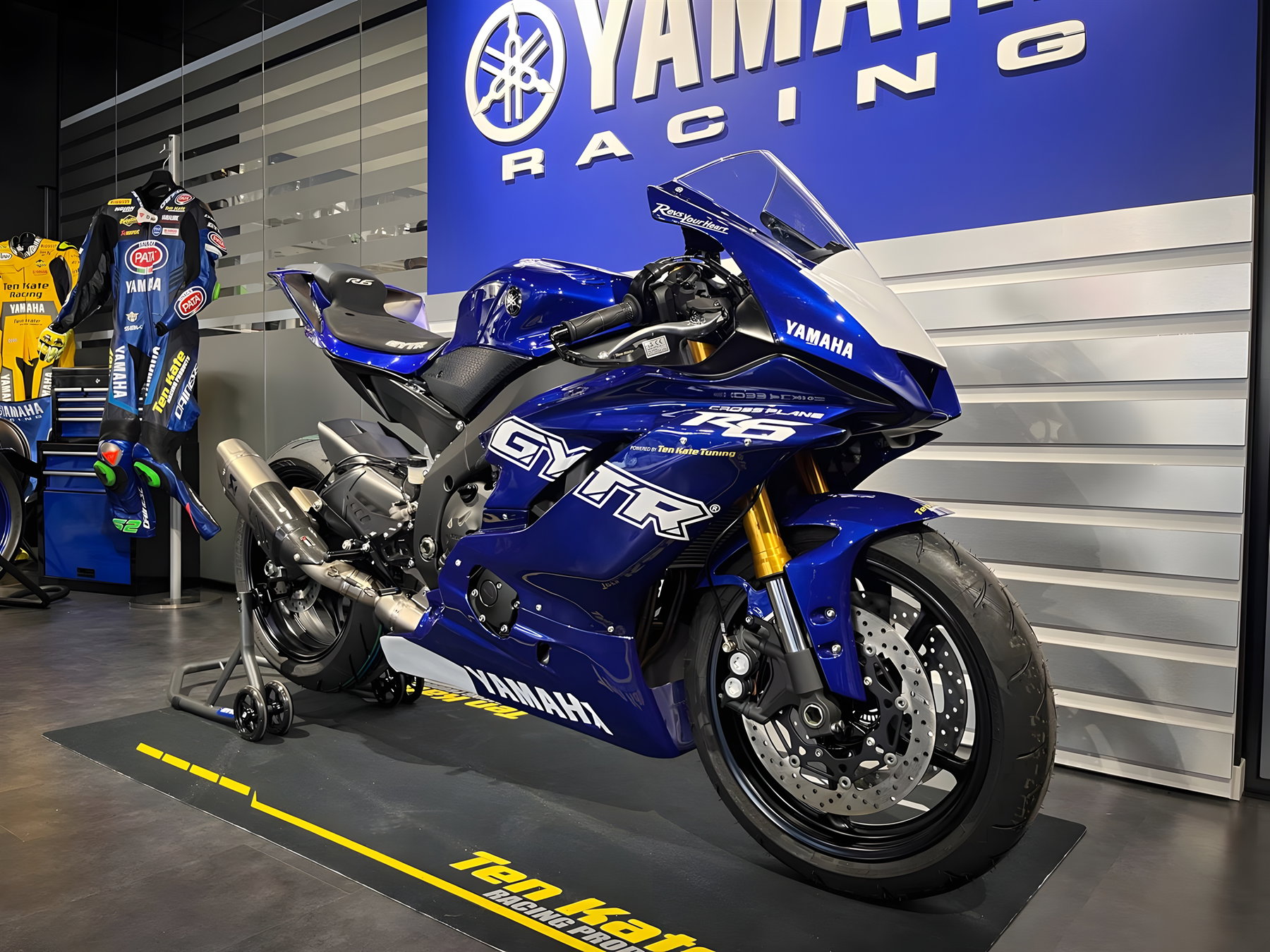
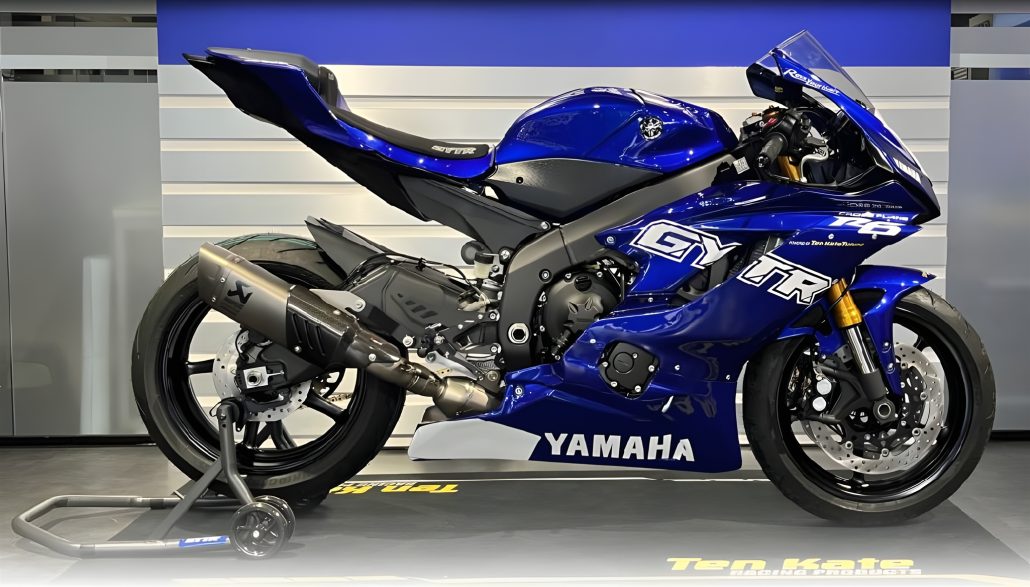
- Ten Kate developed a crossplane crankshaft entirely in-house for the Yamaha R6
- The engine produces around 128 hp (approx. 94 kW) with 65 Nm of torque, revving to 15,800 rpm
- The one-off build was tested at the TT Circuit Assen and is priced at 49,900 euros (approx. 53,400 USD) plus VAT
The Yamaha YZF-R6 is one of the most iconic supersport motorcycles of the past two decades. In 2021, the 600cc inline-four’s era as a road-legal model in Europe ended when Euro 5 emission standards took effect. While the R6 continued briefly as a track-only race version without street homologation, the triple-cylinder R9 has since taken over as Yamaha’s supersport flagship. At Ten Kate Racing Products in Nieuwleusen, Netherlands, the team was clearly undeterred and instead launched an ambitious engineering project: developing a crossplane crankshaft specifically for the R6’s 600cc inline-four engine.
What Makes a Crossplane Crankshaft Different
Crossplane technology has been a hallmark of the Yamaha YZF-R1 since 2009 and differs fundamentally from conventional flatplane design. In a standard inline-four with a flatplane crankshaft, the cylinders fire at even 180-degree intervals within the four-stroke cycle, which spans 720 degrees of crankshaft rotation. This produces the characteristic, evenly revving sound of a supersport four-cylinder.
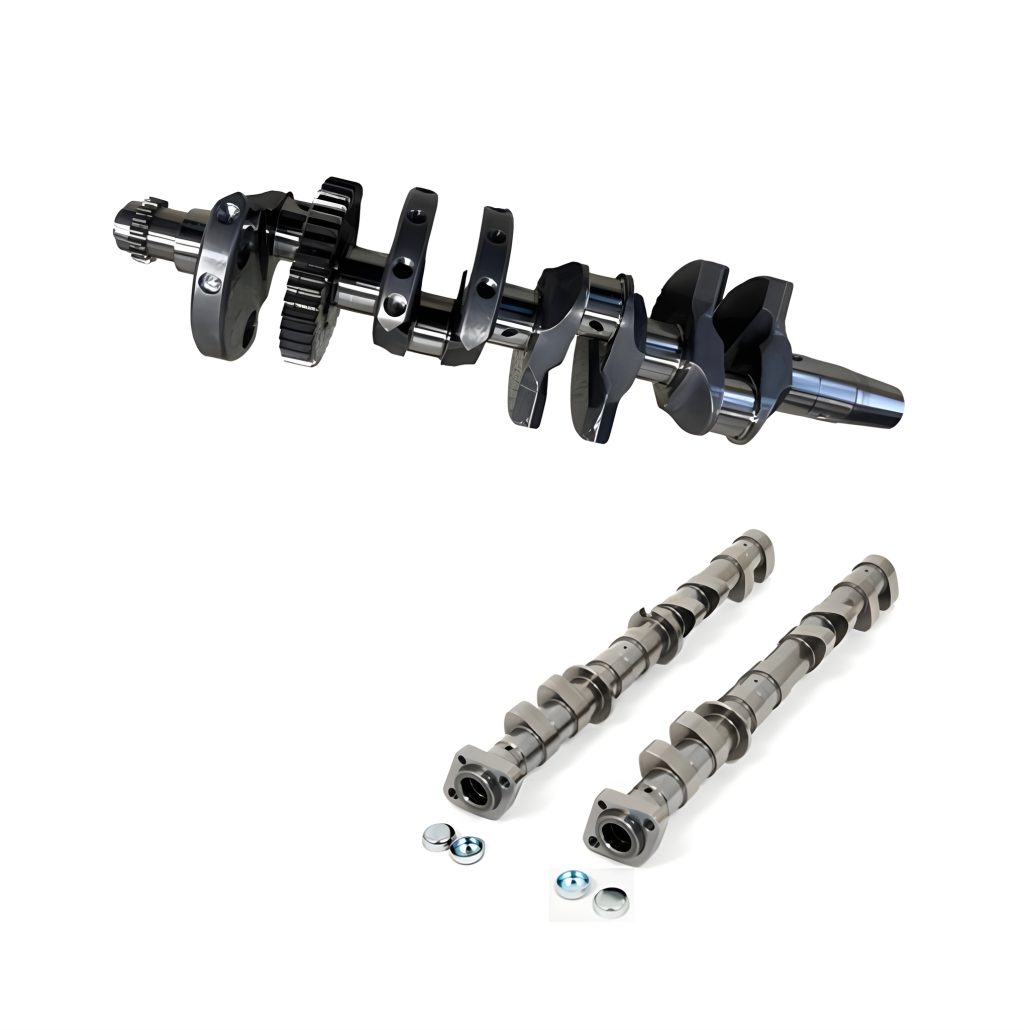
With a crossplane crankshaft, the crank pins are offset by 90 degrees from each other. This results in an uneven firing order: 270 degrees between the first two cylinders, then 180 degrees, then only 90 degrees, and finally another 180 degrees before the first cylinder fires again. This pattern replicates the firing behavior of a 90-degree V4 engine. The advantage lies in power delivery: the long 270-degree pause gives the rear tire a brief moment to regain grip after a power pulse before the next thrust arrives. This is intended to provide better traction and smoother throttle response.
However, crossplane design introduces a challenge. Unlike the perfectly balanced flatplane crankshaft, the uneven firing order creates additional vibrations and rocking moments within the engine. The R1 solves this problem with a separate balance shaft that rotates at crankshaft speed and uses offset weights to compensate for the oscillations.
Tungsten Instead of a Balance Shaft: Ten Kate’s Solution for the R6
This was precisely the central challenge for Ten Kate’s engineers. The considerably more compact R6 simply lacks the space for an additional balance shaft. The solution: tungsten weights integrated directly into the crankshaft web of the new crossplane crankshaft. Tungsten is particularly well suited as a counterweight in tight spaces due to its extremely high density.
The development process began with a comprehensive study of the R1 crossplane crankshaft and its balance shaft. The entire assembly was captured via 3D scanning and converted into a high-precision CAD model. Based on this data, Ten Kate simulated whether the R1’s architecture could serve as a starting point for a crossplane design in the R6.
The simulations included not just the crankshaft but the complete R6 engine including the valve train. The camshafts play a crucial role because they can generate additional moments that affect crankshaft loading. Through minor geometric adjustments to the camshafts, counter-rotating moments could be created that contribute to vibration reduction.
After completing the computer simulations, Ten Kate manufactured several prototype crankshafts with different balance factors. Each prototype was physically produced, installed in running engines, and tested under real operating conditions. This iterative process of simulation, manufacturing, testing, and evaluation ensured that the final configuration was not only theoretically correct but also mechanically robust and track-ready.
Vibration Analysis: Comparison with Stock R6 and R1
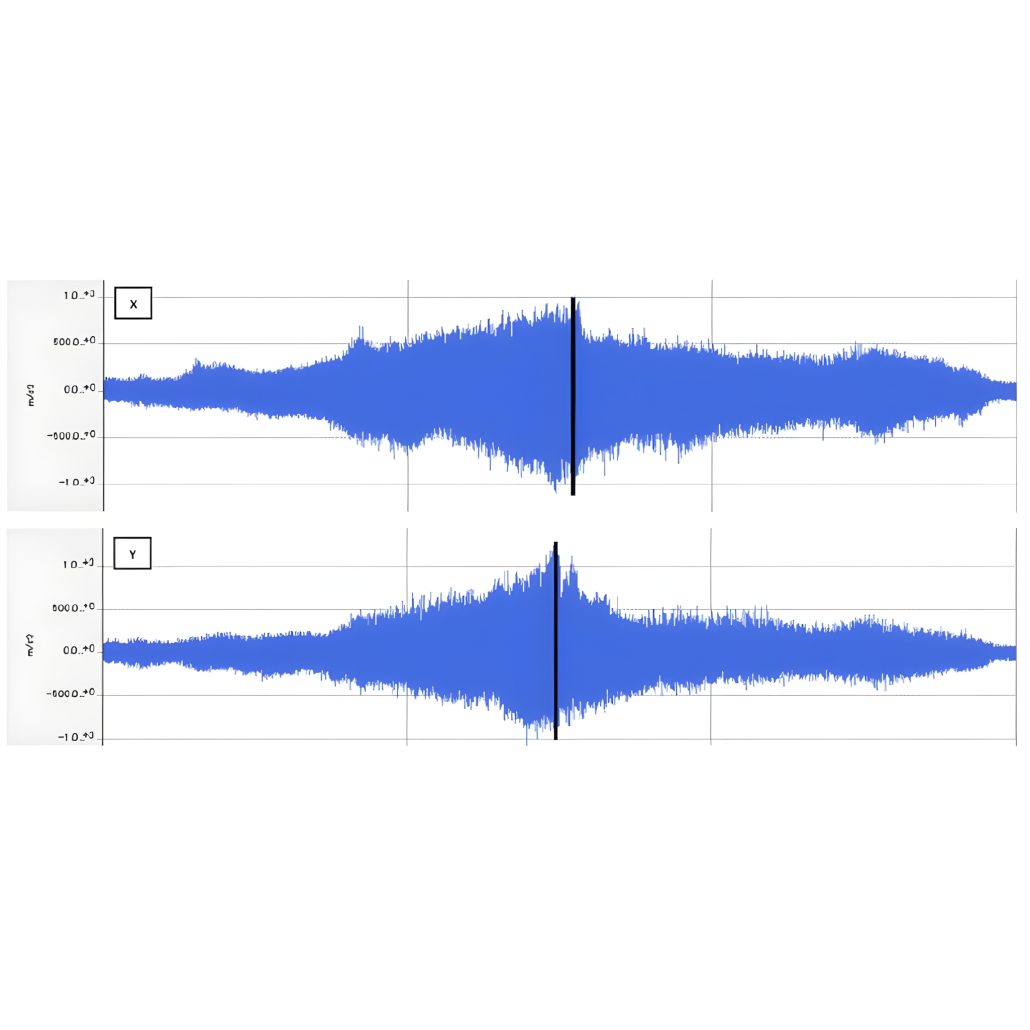
Beyond virtual analysis, Ten Kate placed great emphasis on practical vibration measurements. The various crossplane prototypes were systematically compared with measurement data from a conventional Yamaha R6 and an R1. Both engines served as references, since their vibration characteristics are considered proven and reliable in practice.
Measurements were conducted both on the engine dynamometer and at the race track, with vibrations recorded at the engine itself and at various points on the chassis. This holistic approach made it possible to fine-tune the overall package and find the optimal balance between performance, smoothness, and rider feedback.
GYTR ECU: Adaptation Rather Than Replacement
A deliberate decision within the project was to retain the standard GYTR ECU from the R6. This keeps the motorcycle fully anchored within Yamaha’s official racing ecosystem. To accommodate the crossplane configuration, the ignition and start maps were modified, and the injection sequence was adapted to the new firing intervals. Additionally, Ten Kate rewrote the entire error code strategy of the ECU to ensure compatibility with the altered crankshaft geometry and firing order.
Performance Data: Comparable to the Stock R6
In its current specification, the Crossplane R6 delivers performance figures comparable to a conventional YZF-R6. Maximum power is approximately 128 hp (approx. 94 kW), with peak torque of 65 Nm (approx. 48 lb-ft). Peak torque is reached at approximately 14,200 rpm, with the rev limit set at 15,800 rpm.
However, peak power figures were never the primary goal of the project. According to Ten Kate, the focus was on the riding experience: the characteristic crossplane sound, the improved feel at the throttle, and the way torque is delivered to the rear wheel. Under racing conditions in particular, this smoother power delivery is intended to increase rider confidence and improve controllability.
Track Test at Assen and the History Behind It
The final real-world test took place at the TT Circuit Assen, ridden by an experienced track rider. The focus was not solely on lap times but on the complete package: throttle response, traction feel, mechanical smoothness, and the rider’s confidence in the machine.
Ten Kate brings the right expertise to such a project. The Dutch company has a long motorsport heritage, including twelve World Supersport titles and one World Superbike title. In 2007, James Toseland won the WorldSBK championship on a Ten Kate Honda. Between 2003 and 2008, the team claimed 68 percent of all race wins in World Supersport. Since 2019, Ten Kate has worked closely with Yamaha and celebrated WorldSSP title wins with Dominique Aegerter (2021 and 2022) and most recently with Stefano Manzi in 2025 on the Yamaha R9.
The crossplane project was conceived and executed entirely independently by Ten Kate Racing Products, separate from their existing Yamaha racing partnership. According to Ten Kate, it is intended to remain a one-off build. There are currently no plans for series or small-batch production. Interested parties can contact Ten Kate directly. The price is 49,900 euros (approx. 53,400 USD) plus VAT.