- Manufacturers expressed satisfaction after their meeting with Liberty CEO Derek Chang in Austin
- The new agreement is set to govern MotoGP revenue distribution for the 2027 to 2031 period
- Numerous rider contracts for 2027 have already been signed but remain unannounced
For almost a year, the MotoGP Sports Entertainment Group, formerly known as Dorna Sports, and the manufacturer association MSMA have been negotiating a new commercial agreement. This deal is intended to establish the economic framework for the motorcycle World Championship over the coming five years and is already being compared to Formula 1’s famous Concorde Agreement. At the US Grand Prix in Austin, the home race of rights holder Liberty Media, what appears to have been the decisive meeting between the parties took place.
Manufacturers Negotiate as a United Front
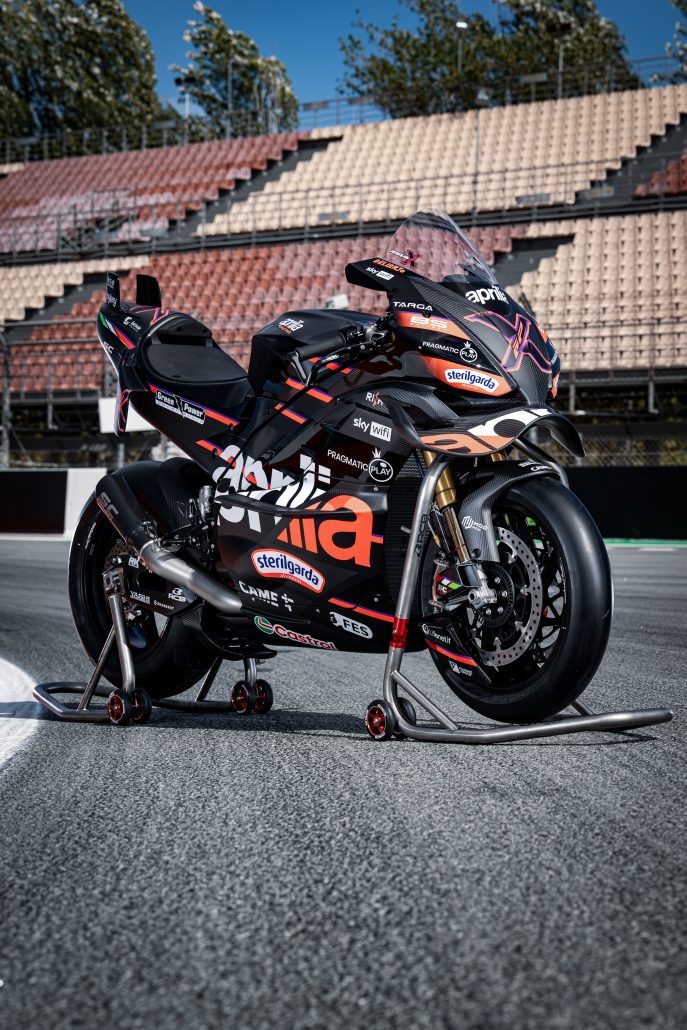
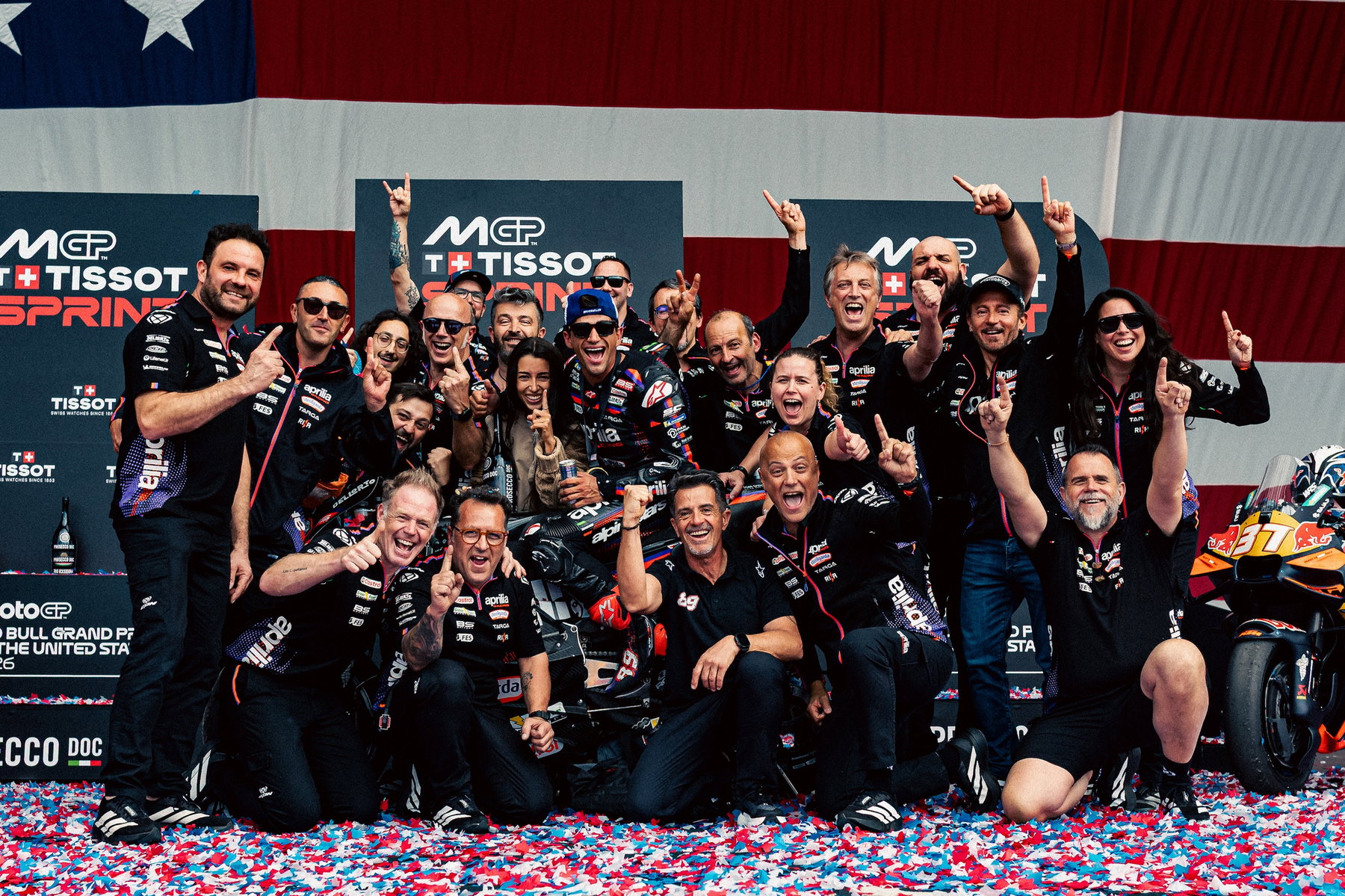
Unlike in previous years, Ducati, Aprilia, KTM, Honda and Yamaha are not approaching the talks individually but as a unified bloc. This strategy traces back to a meeting at the Czech Grand Prix in July 2025, where the five manufacturers signed a joint position paper and appointed former Yamaha director Lin Jarvis as their official negotiator and spokesperson. Jarvis appeared alongside MSMA President Massimo Rivola before MotoGP CEO Carmelo Ezpeleta to present the manufacturers’ demands. Ezpeleta reportedly reacted to this united approach with displeasure.
As part of this united strategy, the manufacturers have largely avoided public comments on the negotiations. Rivola, in his dual role as Aprilia Racing CEO and current MSMA President, offered only a few words during the Austin weekend to Sky Italia: “You know I can’t talk about it. We had a meeting, yes, that’s true, you all saw us going up together. We were satisfied, it was a good meeting. We also met Derek Chang, the CEO of Liberty, so we move forward.”
KTM Motorsport Director Pit Beirer underlined the apparently positive atmosphere with a social media image showing him alongside Chang, Liberty board member Robert R. Bennett, MotoGP CEO Carmelo Ezpeleta and KTM CEO Gottfried Neumeister. Ducati CEO Claudio Domenicali and Piaggio Group chief Michele Colaninno, who collected the winner’s prize for the Aprilia team in Austin, were also present at the discussions.
Money and Power: The Sticking Points in Detail
At the core of the negotiations are two central questions: the distribution of revenue and the ownership of grid slots.
MotoGP currently generates an estimated annual revenue of 460 to 480 million euros. In 2023, revenue stood at 486 million euros, with over three million trackside spectators and TV distribution in more than 200 countries. The business model rests on three pillars: television rights, which account for nearly half of income, global sponsorship deals and the fees that circuits pay to host a Grand Prix.
Liberty Media, which acquired the commercial rights to MotoGP in 2025 at a total valuation of around 4.2 billion euros, is currently offering the manufacturers approximately nine million euros per team per year as a fixed payment. Satellite teams currently receive about 6.5 to 7 million euros annually under a five-year agreement brokered by IRTA President Lucio Cecchinello. Under the previous model, satellite teams received around 2.5 million euros per leased motorcycle, totalling five million euros per season.
The manufacturers, however, are seeking a fundamentally different structure. Instead of a fixed sum, they want a percentage share of the championship’s total revenue, comparable to the Formula 1 system. There, teams receive around 50 per cent of profits, with the exact distribution depending on Constructors’ Championship results. The difference between fourth and fifth place in Formula 1 can amount to more than ten million euros. A partially performance-based model is also being discussed for MotoGP, which would reward the most successful brands.
Grid Slots as a Power Question
The second major sticking point concerns the ownership of grid slots. These currently belong to the MotoGP Sports Entertainment Group, which typically assigns them to teams for five-year periods. The current allocation expires at the end of 2026. Teams are pushing to hold the rights to their grid slots themselves, as this would significantly increase their value in negotiations with sponsors and potential investors. This issue has the potential to shift the entire power structure of MotoGP.
In return, Liberty Media is demanding significantly greater engagement from the manufacturers in promoting the championship. This includes global events, media content, marketing initiatives and developing rider personalities as brands, a strategy Liberty has already successfully implemented in Formula 1. Among other things, each team would be required to provide a rideable show bike for every rider at race weekends, to enable events similar to the 2026 season launch in Kuala Lumpur.
Austin as the Key Moment: Why Texas?
The meeting taking place at the US Grand Prix was no coincidence. Austin is Liberty Media’s home race, and senior executives from the corporation were present at the Circuit of the Americas. Before the race weekend, Rivola had already highlighted the strategic value of the venue, describing Austin as “a very fitting place to sit down together”, after all, it is “Liberty Media’s home”.
Positions have moved significantly closer in recent weeks. MotoGP Sporting Director Carlos Ezpeleta said during the Austin weekend that they were “very, very close” to an agreement. The deal could therefore be concluded in the coming weeks, possibly before the Jerez Grand Prix in late April.
2027 Rider Market: Signed but Not Announced
The delayed agreement on the new commercial framework has had an unusual side effect: numerous rider contracts for the 850cc era from 2027 have already been signed but are not being officially announced. The logic is simple. As long as the commercial agreement is not finalised, the manufacturers have not formally committed to the 2027 season. A premature announcement of rider signings would weaken the MSMA’s negotiating position with the promoter.
Carlos Ezpeleta expressed surprise at this practice. He said he had no knowledge of any team or manufacturer withholding announcement of a signed rider. Asked about specific names, he said: “There have already been some written agreements that have changed. Nevertheless, it seems unusual to have a signed contract and not announce it.”
The list of reported but unconfirmed transfers is remarkable. Pedro Acosta is said to be moving from KTM to Ducati to ride alongside reigning World Champion Marc Marquez, whose contract extension is also considered certain. Francesco Bagnaia is reportedly set to land at Aprilia on a four-year deal following his departure from the Ducati factory team, where he would form an all-Italian rider pairing with the already confirmed Marco Bezzecchi. Fabio Quartararo is said to be ending his eight-year Yamaha era to join Honda. Jorge Martin, whose move from Ducati to Aprilia has not delivered the desired sporting success, is reportedly set to join Yamaha as their new lead rider. Alex Marquez is being linked to KTM as Acosta’s replacement, while Maverick Vinales is said to be stepping up from the Tech3 satellite team to the KTM factory squad.
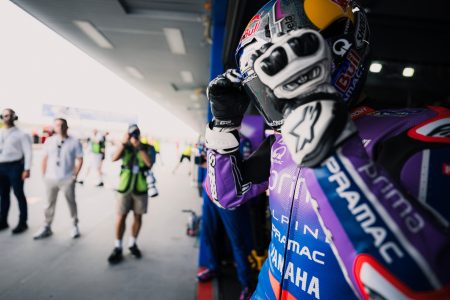
Of all this, only a single deal has been officially confirmed: Bezzecchi’s contract extension with Aprilia in February 2026, a two-year deal for 2027 and 2028. In addition, there are pre-contracts for Toprak Razgatlioglu at Pramac Yamaha, Johann Zarco at LCR Honda and rookie Diogo Moreira at Honda, which were concluded before the negotiation standoff.
That Bezzecchi was the only rider to be confirmed early is not considered a coincidence. The move is seen in the paddock as a calculated part of the MSMA strategy to maintain pressure on the promoter without completely opening the united front.
What Happens Next?
If Austin did indeed produce the decisive breakthrough, it could trigger a chain reaction on the rider market. The extended break in the race calendar, caused by the postponement of the Qatar Grand Prix, provides an ideal window for official announcements before the Jerez round in late April. Behind the scenes, technical preparations for 2027 are already in full swing. KTM and Honda have already put prototypes of their 850cc machines on track, and Ducati, Aprilia and Yamaha also confirm internal development programmes for the new era, which alongside the smaller displacement will also bring a ban on ride-height devices, new aerodynamic rules, sustainable fuels and the switch from Michelin to Pirelli as tyre supplier.
MotoGP thus stands before its biggest economic and sporting upheaval in years. Whether Liberty Media can transform the championship into a commercially much larger product, as it did with Formula 1, depends significantly on how the new agreement ultimately looks and whether all five manufacturers stay on board long-term.
Frequently Asked Questions
-
When will the new MotoGP agreement between manufacturers and Liberty Media be signed?
An agreement could be reached in the coming weeks following the positive meeting in Austin. Carlos Ezpeleta said at the US Grand Prix that they were very, very close to a deal. A conclusion before the Jerez Grand Prix in late April is considered possible.
-
Why are MotoGP rider contracts for 2027 not being announced?
The manufacturers have agreed within the MSMA not to announce any rider signings until the commercial framework agreement with the promoter has been signed. An early announcement would weaken their negotiating position, as the manufacturers have not formally committed to 2027.
-
Which MotoGP riders are switching teams in 2027?
Numerous transfers are considered certain but are not officially confirmed. Pedro Acosta is reportedly moving to Ducati, Francesco Bagnaia to Aprilia, Fabio Quartararo to Honda, Jorge Martin to Yamaha and Alex Marquez to KTM. Marc Marquez is expected to extend with Ducati. Only Marco Bezzecchi staying at Aprilia has been officially confirmed so far.
-
What changes in MotoGP from 2027?
From 2027, new technical regulations apply: the displacement limit drops from 1000 to 850cc, ride-height devices are banned, aerodynamics are restricted, sustainable fuels are introduced, and Pirelli replaces Michelin as tyre supplier.
-
How much money do MotoGP teams receive from the promoter?
Liberty Media currently offers around nine million euros per factory team per year. Satellite teams already receive approximately 6.5 to 7 million euros annually. The manufacturers are pushing for a percentage share of total revenue rather than fixed payments, similar to the Formula 1 model.

- SW-MOTECH Satteltaschenpaar Quick-Lock Blaze PRO H 30-40 Liter – Motorradzubehör – Motorradgepäck Neutral