- Independent testing by the Finnish research center VTT confirms high charging speeds for the Donut Lab solid-state battery
- 80 percent state of charge in under five minutes at 11C, full charge in approximately seven minutes
- Industry experts and scientists continue to doubt that the combination of all advertised properties is technically feasible
When Donut Lab presented an allegedly production-ready solid-state battery at CES in early January 2026, the industry was astounded. An energy density of 400 watt-hours per kilogram (Wh/kg), a full charge in five minutes, and a lifespan of 100,000 cycles — those were the promises made by the Finnish startup. For comparison: current lithium-ion batteries achieve between 250 and 300 Wh/kg, and the combination of high energy density, extreme charging speed, and long durability has so far been considered nearly impossible to achieve simultaneously.

Massive Criticism After the CES Presentation
The expert community reacted with corresponding skepticism. Apart from a few mockups, Donut Lab had not shown any reliable data or functional prototypes at the trade show in Las Vegas. Yang Hongxin, head of the Chinese battery manufacturer Svolt Energy, put it bluntly: “All parameters contradict each other… Anyone with even basic knowledge of this technology would think it’s a scam.”
Several experts also picked apart the announcements on YouTube. British electric drivetrain specialist Ryan Hughes analyzed the known specifications on his channel “Ziroth Tech” and reached a sobering conclusion. After evaluating the current state of research and speaking with experts, he rated the probability that the battery actually exists in the advertised form as “very low.”
The Capacitor Theory and Scientific Objections
Hughes based his skepticism on several observations. The alleged elimination of lithium, the long lifespan, the fast charging capability, and the adjustable operating voltage would point more toward a capacitor than a conventional battery. Indeed, confidential investor documents revealed a connection between Donut Lab and the company Nordic Nano, which had previously raised capital for the development of a capacitor-based energy storage device. Similar specifications are cited for that product, including an energy density of 400 Wh/kg.
Various scientific approaches, such as pseudocapacitors with carbon nanotubes, have achieved high energy densities at the material level. However, as complete systems, the values are significantly lower. Finnish battery researcher Juho Heiska also pointed out that the necessary coating processes for carbon nanotubes with titanium oxide are very complex, which contradicts the promise of low-cost manufacturing.
Donut Lab Responds with Independent Tests
Donut Lab CEO Marko Lehtimäki explained the initially restrained communication strategy as a deliberate approach. He said they had let the loudest voices in the industry speak first, so that people outside the battery industry would also understand the magnitude of the breakthrough they intend to bring to market. After that, they could silence the skeptics once the evidence was in hand.
For the independent verification, Donut Lab commissioned the VTT Technical Research Centre of Finland, a government research institution based in Espoo near Helsinki. VTT is comparable to Germany’s Fraunhofer Society and serves as a bridge between academic science and industrial application. The results are to be presented over several weeks as part of an “I Donut Believe” campaign, with one aspect per week released via YouTube video.
The VTT Test Results in Detail
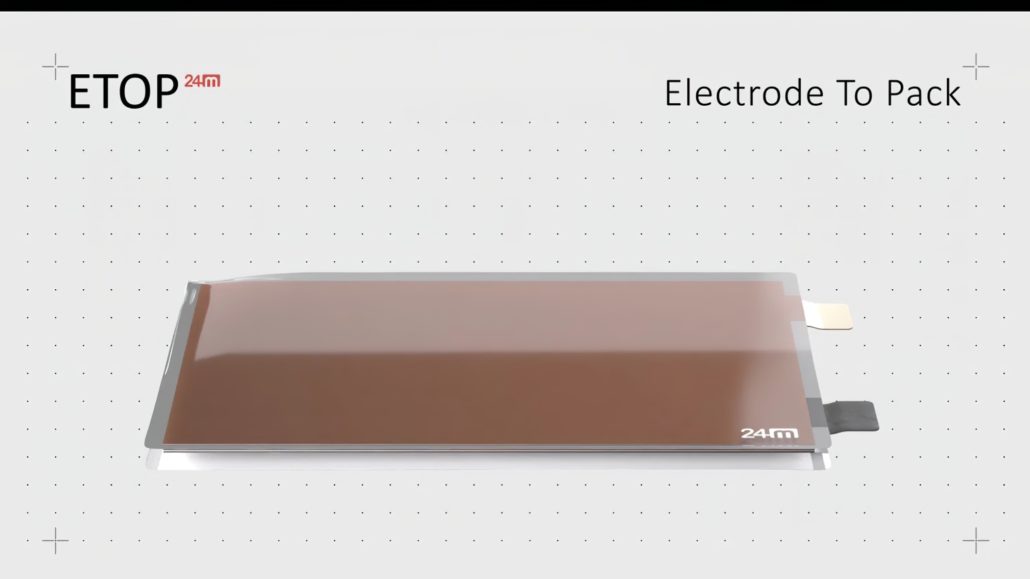
A single prismatic solid-state cell with the following specifications was tested: 26 ampere-hours (Ah) nominal capacity, 3.6 volts nominal voltage, and 94 watt-hours (Wh) energy content at a maximum charging voltage of 4.3 volts. The tests were conducted at room temperature, deliberately without active cooling. Instead, two passive cooling configurations were used: one with two aluminum plates on both sides of the cell, and one with a single cooling plate on the bottom.
In the tests at 5C (130 ampere charging current), the cell reached 80 percent state of charge after 9.5 minutes. The full charge took between just under twelve and 13.5 minutes, depending on the cooling configuration. Notably, nearly 100 percent of the charged capacity was available during the subsequent discharge. The surface temperature remained at 47 degrees Celsius with dual-sided cooling; with single-sided cooling, it rose to 61.5 degrees.
The 11C tests (286 amperes) yielded significantly more impressive results. Here, the cell reached 80 percent charge in 4.5 to five minutes, with a full charge to 100 percent taking just over seven minutes. Energy efficiency ranged from 98.4 to 99.6 percent. However, a critical point emerged with single-sided cooling: the surface temperature reached 90 degrees Celsius, which led to the termination of one test run. After a four-minute cooling phase, the test could be resumed. With dual-sided cooling, the temperature was approximately 63 degrees.
Impressive, but Not Quite as Promised
The VTT results therefore do not fully confirm the claim of a complete five-minute charge. Five minutes at 11C was enough for 80 percent, not 100 percent. The full charge took over seven minutes. However, Donut Lab argues that in a real electric vehicle, active cooling systems would be used that could extract significantly more performance from the cell than the passive laboratory setups.
A technical advantage over many competing solid-state concepts was demonstrated in terms of mechanical resilience. While alternative solid-state batteries often require high compression pressure and expand by up to 20 percent during charging, the Donut cell required no special compression and remained dimensionally stable. This could significantly simplify integration into battery packs.
In its conclusions, VTT noted that the cell was successfully charged for more than nine minutes at 5C and for more than three minutes at 11C under the specified test conditions. During subsequent discharge, 98.4 to 99.6 percent of the charged capacity was available.
Connections Between Donut Lab and Verge Motorcycles
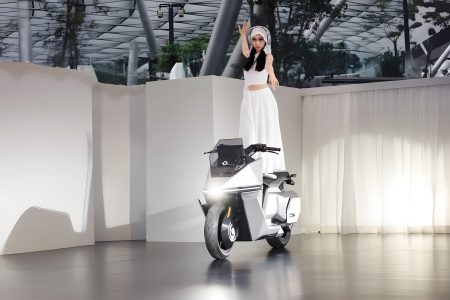
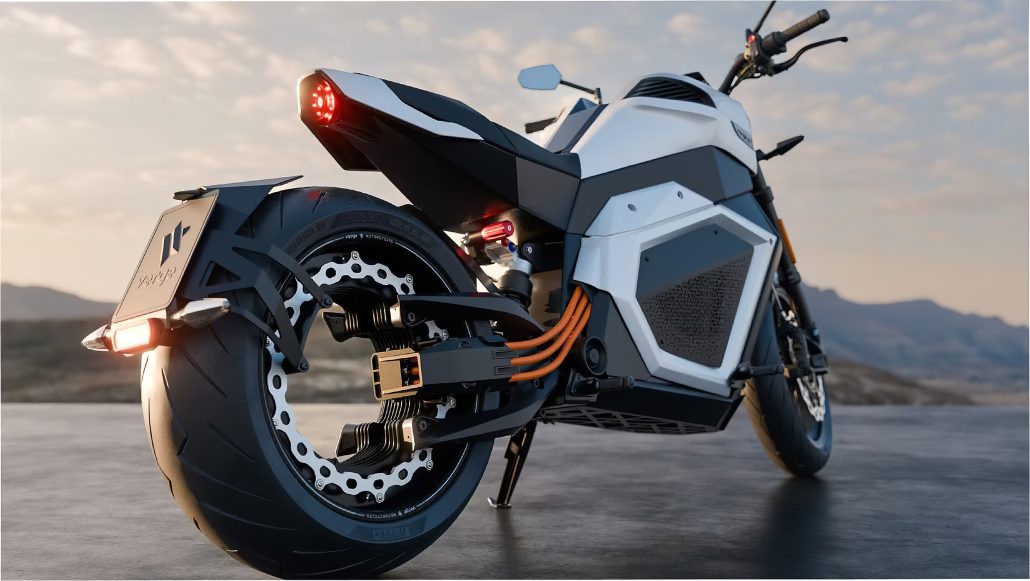
For the motorcycle world, the Donut Lab battery is of particular interest because Finnish electric motorcycle manufacturer Verge Motorcycles intends to bring the first production vehicle with this technology to market. The Verge TS Pro model is set to be equipped with the solid-state battery as early as the first quarter of 2026, promising a range of 600 kilometers.
However, the partnership between Donut Lab and Verge Motorcycles is not a collaboration between two independent companies. Donut Lab is a subsidiary of Verge Motorcycles and has existed since 2018 but operated in so-called stealth mode for six years. Donut Lab CEO Marko Lehtimäki is part of the founding team of Verge, whose operational business is in turn managed by his brother Tuomo Lehtimäki. This relationship was made public in 2024 through a social media post, though the entanglement is barely mentioned on the companies’ websites.
Questionable Methods in Capital Raising
Beyond the scientific doubts, there are also indications of problematic business practices. An investor accuses Donut Lab of pressuring private investors in Finland with unsolicited calls and time-limited special offers. High return promises and artificially created urgency are considered warning signs in the startup industry, as companies with genuinely revolutionary technologies typically receive capital from major investors or industrial partners.
What Remains Unanswered
The VTT results published so far relate exclusively to the charging speed of a single cell. There is no independently verified data yet on the other promises, particularly the energy density of 400 Wh/kg and the lifespan of 100,000 cycles. Information on long-term cycle stability, self-discharge, and behavior in module and pack configurations is also missing. The industrial scalability of manufacturing remains unclear as well.
The piecemeal publication via weekly YouTube videos may be intended as a transparency offensive, but in execution it resembles a marketing campaign more than a scientific publication of results. Whether Donut Lab can provide enough evidence in the coming weeks to dispel the considerable doubts of the expert community remains to be seen.
What This Means for Motorcyclists
Should Donut Lab’s technology actually prove to be practical, it would represent an enormous step forward specifically for electric motorcycles. One of the biggest arguments against electric two-wheelers remains the limited range combined with long charging times. A battery with 400 Wh/kg energy density and the ability to charge to 80 percent in just a few minutes would theoretically largely solve this problem. The Verge TS Pro, as the first announced production model with this technology, promises a 600-kilometer range, which would be sufficient even for longer tours. At the same time, eliminating complex cooling systems and heavy compression housings would reduce weight — a factor that affects the riding experience on motorcycles far more significantly than in cars. However, behind all these promises so far are only laboratory results from a single cell and the considerable doubts of the expert community regarding the overall technology. Until further independent tests are available and a functioning production vehicle is on the road, healthy skepticism remains the appropriate stance.


- MILESTONE Ride 6: Day One Edition – PS5