- 77 motorcycle organizations back the 2026 position paper
- The papers cover 17 policy areas, from electrification and licensing to guardrails
- Core demand: Motorcycles must be recognized as a distinct form of transport in all strategies
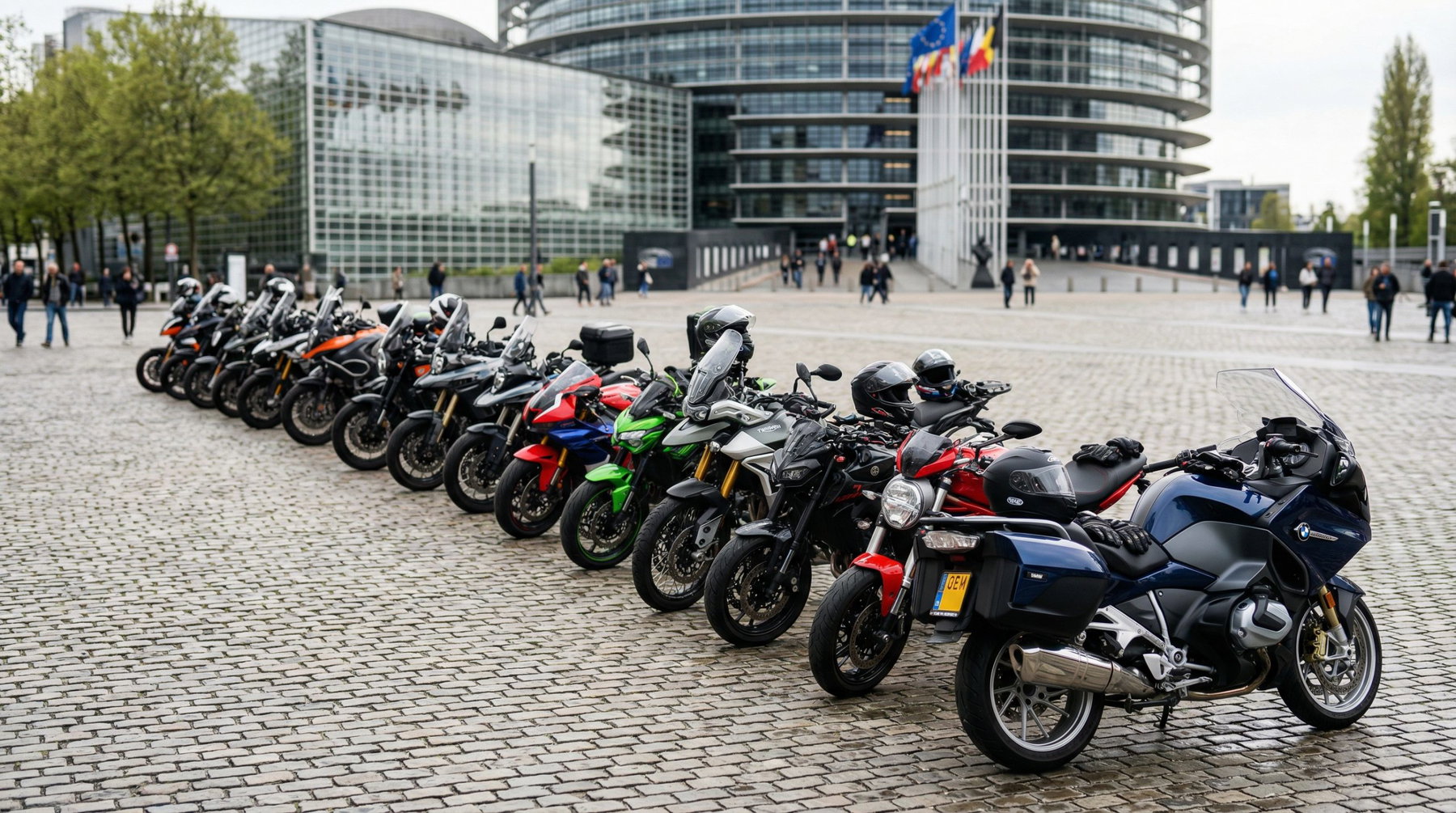
The European motorcycling community has sent a clear signal to policymakers. On March 26, 2026, FIM Europe, FEMA and the British NMC published a comprehensive position paper aimed at shaping the future of motorcycling in Europe at the political level. Together, the three organizations represent 77 national motorcycle associations, speaking for millions of riders across the continent.
17 Position Papers for an Entire Industry
The 2026 position paper is a revision and expansion of the joint positions first published in 2022. It comprises a total of 17 individual papers organized into four main areas: vehicle technology, road infrastructure, riders, and mobility aspects.
Jesper Christensen, chair of the joint working group, put it this way: The position papers help authorities and decision-makers make informed and wise decisions in the interest of all road users, including motorcyclists.
Decarbonization: Yes, But Technology-Neutral
One of the central topics of the position paper is how the motorcycle sector can contribute to CO₂ reduction. The associations acknowledge the need for decarbonization but call for a technology-neutral approach. This means not only electric drivetrains but also alternative fuels such as synthetic fuels, biofuels, and hydrogen should be considered equally valid pathways.
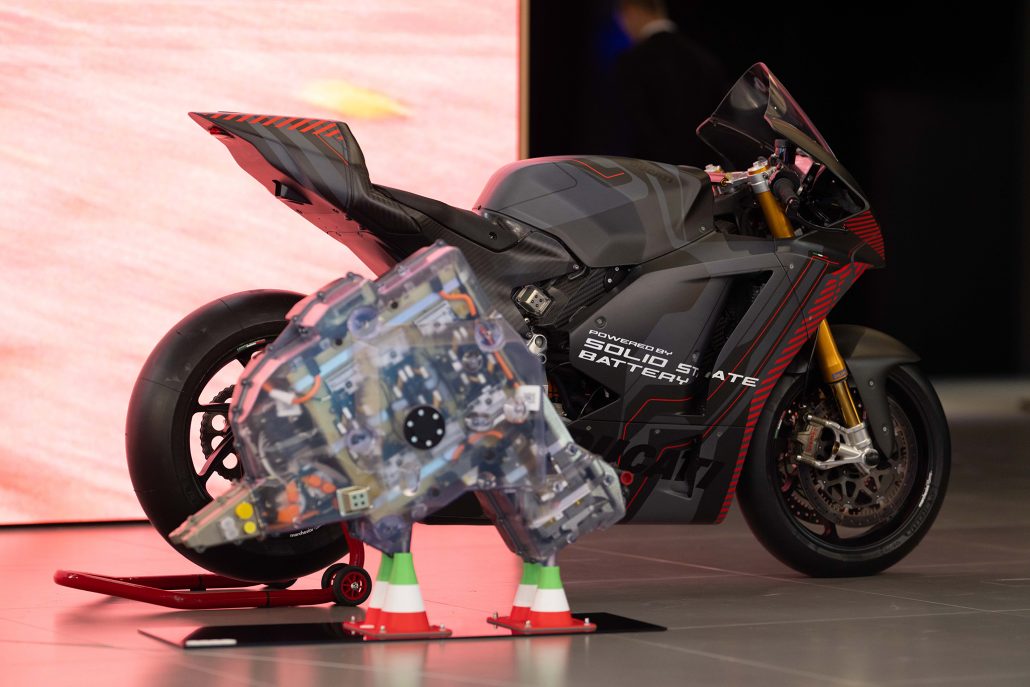
Batteries capable of providing sufficient range and performance are heavy and can negatively affect a two-wheeler’s handling and safety. According to the associations, current battery technologies are therefore best suited for urban use with limited range.
Electrification: Swappable Batteries and Charging Infrastructure in Focus
The associations call for a dual infrastructure: public and semi-public charging stations for motorcycles with fixed batteries on one hand, and strategically placed swap stations for urban commuter two-wheelers on the other. They consider the standardization of swappable battery systems particularly important.
The organizations also have clear expectations regarding payment systems: These should be interoperable, simple, and usable without a dedicated app. One particularly notable demand: authorities should consider free charging for electric motorcycles.
Technical Inspections: Costs Without Measurable Benefits
The motorcycle associations oppose a mandatory EU-wide PTI (Periodic Technical Inspection) and cite studies to support their position. The MAIDS study identified technical failure as the primary cause in just 0.7 percent of motorcycle accidents. Human behavior, by contrast, was responsible for up to 87 percent of crashes. Structured rider training programs could reduce accident rates by up to 35 percent.
Intelligent Speed Assistance and Rider Aid Systems
A system that actively limits acceleration is simply dangerous for motorcyclists. Full control over speed is essential for balance and vehicle handling on two wheels. Any form of ISA for motorcycles should only be introduced once thorough testing has proven that no additional risk to the rider exists.
Infrastructure and Guardrails: Deadly Hazards at the Roadside
The associations call for new standards for guardrails and median barriers that also account for motorcycle rider safety. Existing guardrails on curves should be retrofitted with Motorcycle Protection Systems (MPS). New wire rope barriers or barriers with unprotected posts should no longer be permitted.
The associations also see a need for action regarding traffic calming measures such as speed bumps. Motorcycles are balance vehicles where a sudden vertical or lateral impulse can cause loss of equilibrium.
Licensing, Mobility, and the Right to Repair
Taking the same test three times under the progressive access system (A1, A2, A) adds no value. The associations instead propose a single comprehensive test, with training upgrades for moving between categories. The test should focus more closely on real-world riding conditions.
Many local and national authorities have no motorcycle strategy whatsoever. The specific proposals range from opening bus lanes to accepting lane filtering in congested traffic, free parking, and tax incentives.
Roy N. Wetterstad, 2nd Vice President of FIM Europe, notes that political pressure on motorcycling has never been greater. Wim Taal, Secretary General of FEMA, emphasizes that the papers are not the end of a process but the beginning of a stronger, more unified advocacy for Europe’s motorcyclists.
Frequently Asked Questions
-
What do FIM Europe, FEMA and NMC demand in their position paper?
The three associations call for, among other things, a requirement to consider motorcycles in every road planning decision, EU-wide minimum standards for guardrails with underrun protection, the right to repair for all motorcycles, and the preservation of the internal combustion engine as an equal drivetrain option alongside electric.
-
Who is behind the position paper?
FIM Europe is the European umbrella organization for national motorcycle federations, FEMA is the Federation of European Motorcyclists’ Associations representing riders’ interests, and NMC is the National Motorcyclists Council of the United Kingdom.
-
Why was the paper published now?
The EU is negotiating several legislative packages in 2026 that affect motorcycles: the Euro 6 emissions standard, the General Safety Regulation III, a potential requirement for second-generation ABS systems, and a proposal for an EU-wide city toll. The associations want to exert influence early.
-
What about the Euro 6 standard for motorcycles?
The Euro 6 emissions standard for motorcycles is set to take effect from 2028 and could render certain engine designs economically unviable. The associations call for motorcycle-specific limits rather than adopting passenger car values.
-
Does the position paper also affect Germany?
Yes, directly. All proposed measures target EU legislation that must be implemented in every member state. The DMSB and BVDM are involved in the initiative through FIM Europe and FEMA.

- BRIDGESTONE 24758Bridgestone – Battlax Hypersport S23 – 180/55 Zr17 Tl 73(w) Rear – Sommerreifen