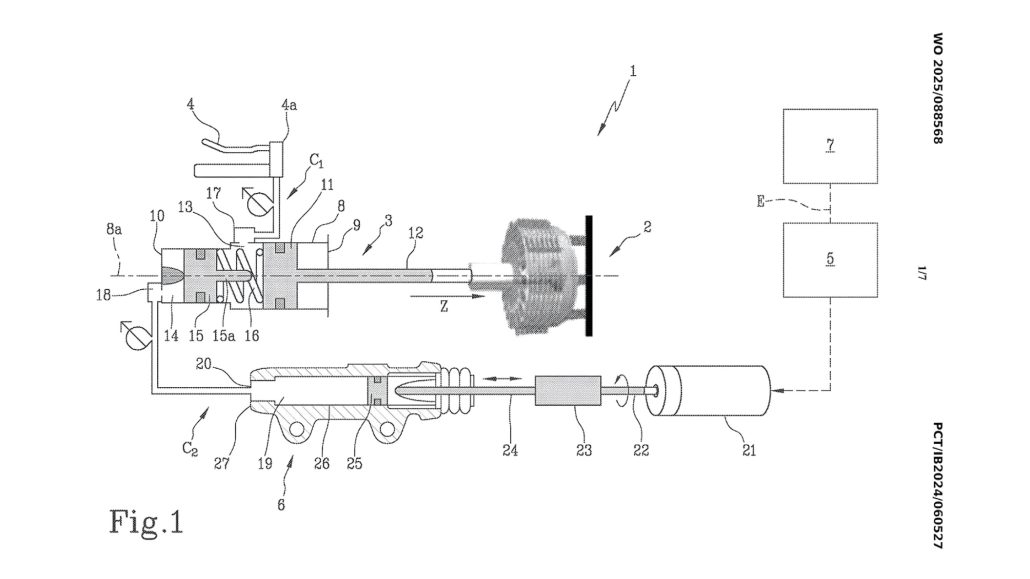
- Very simple technical design without complex electronics
- Removable batteries with manual locking system
- Focus on price-conscious markets such as India and Africa
After years in which electric motorcycles were mainly launched on the market with high performance, complex technology, and correspondingly high prices, a new Honda patent suggests a different approach. Instead of seeking innovations in the premium segment, the focus here is on a deliberately simple electric motorcycle design that is intended to impress above all with its low cost and practicality.
Simple design instead of high-tech
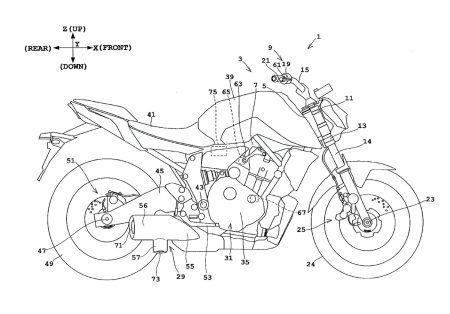
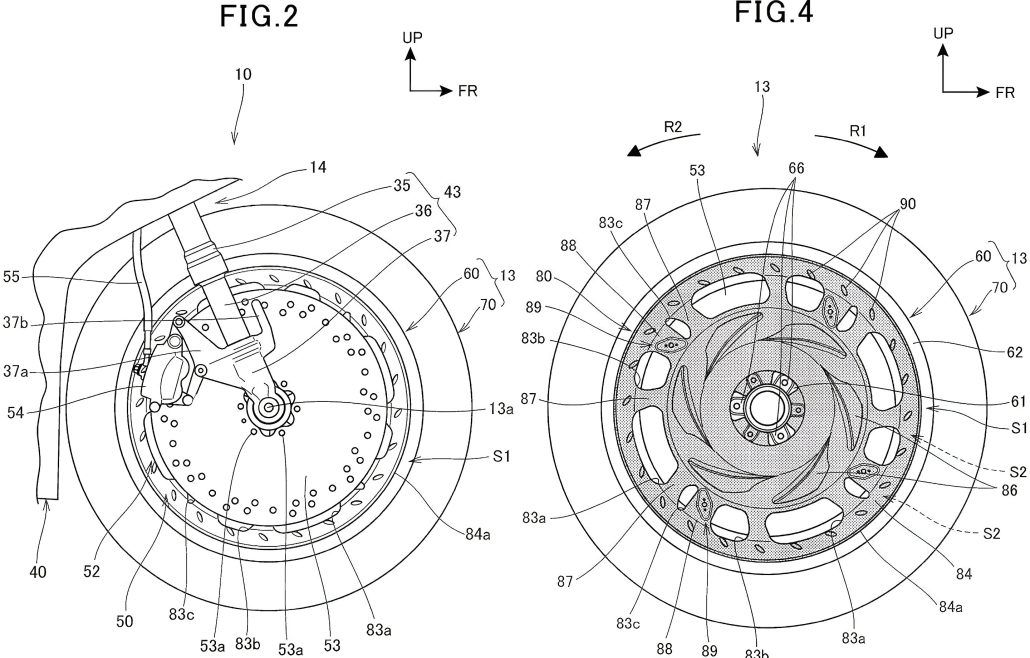
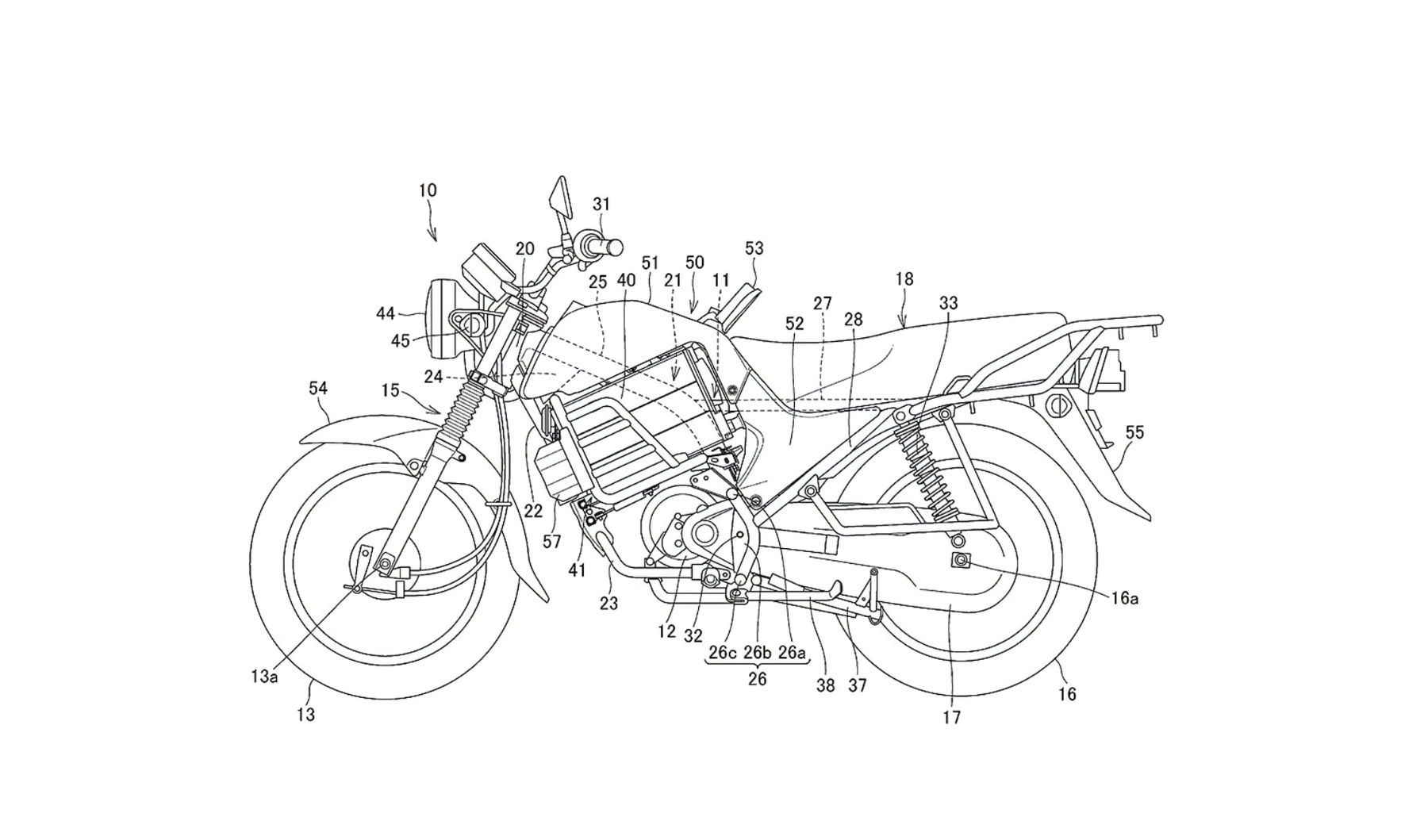
The design described in the patent is based on a very conventional concept. The motorcycle uses a classic steel backbone frame and does without complex or expensive components. Two shock absorbers are used at the rear, while a simple drum brake operated by a Bowden cable is provided at the front. In other respects, too, the layout is strongly based on familiar, simple motorcycles with combustion engines.
A small electric motor is located where an air-cooled single-cylinder engine would normally be found. This is combined with a single-speed transmission, suggesting the simplest possible power transmission with low maintenance requirements. The aim appears to be to make the electric drive cheaper overall than a classic combustion engine in this vehicle class.
Battery concept at the heart of the patent
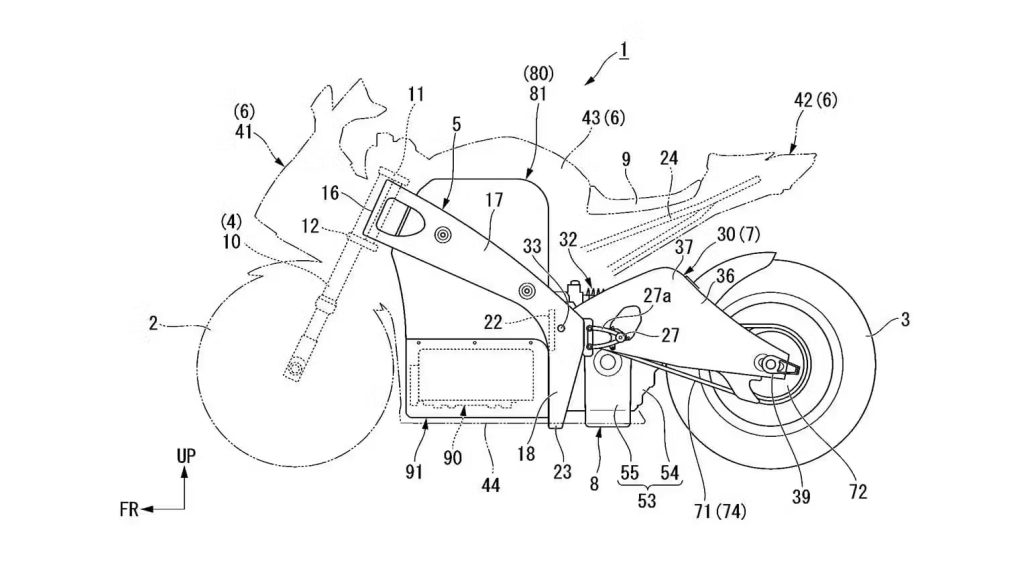
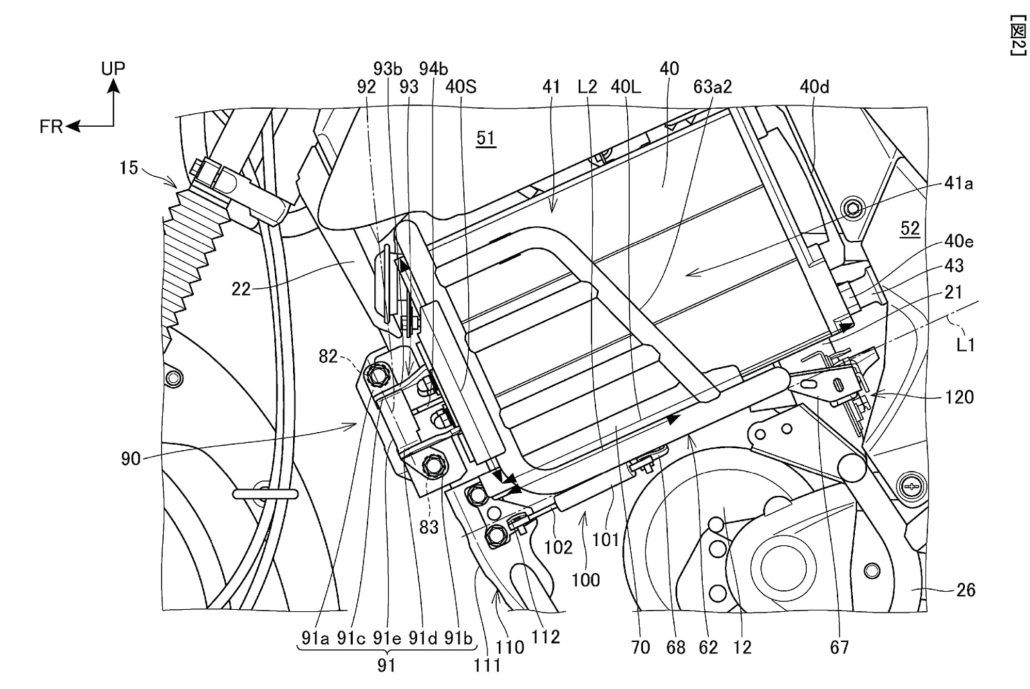
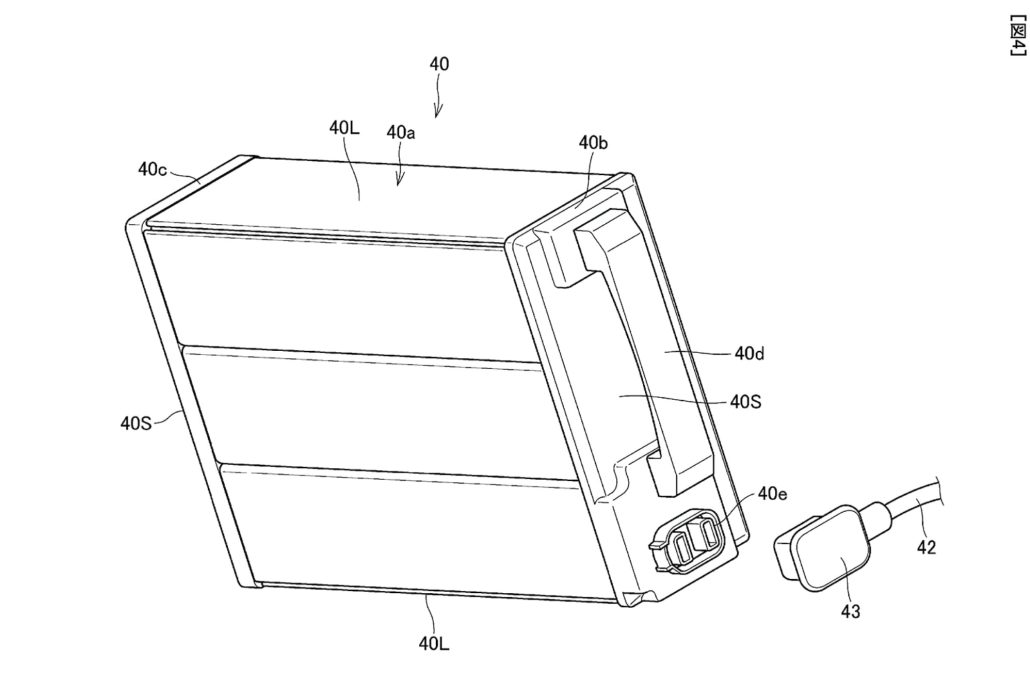
The central feature of the patent is the way in which the batteries are housed in the vehicle. Honda envisages two removable batteries located on the left and right sides of the dummy tank body. Each battery is housed in a metal frame that is hinged at the front.
These frames can be swung out to the side so that the batteries can be removed. Once the batteries are in place, the holders are swung back to their original position. The batteries engage in corresponding recesses in the upper part of the vehicle and are fixed in place there.
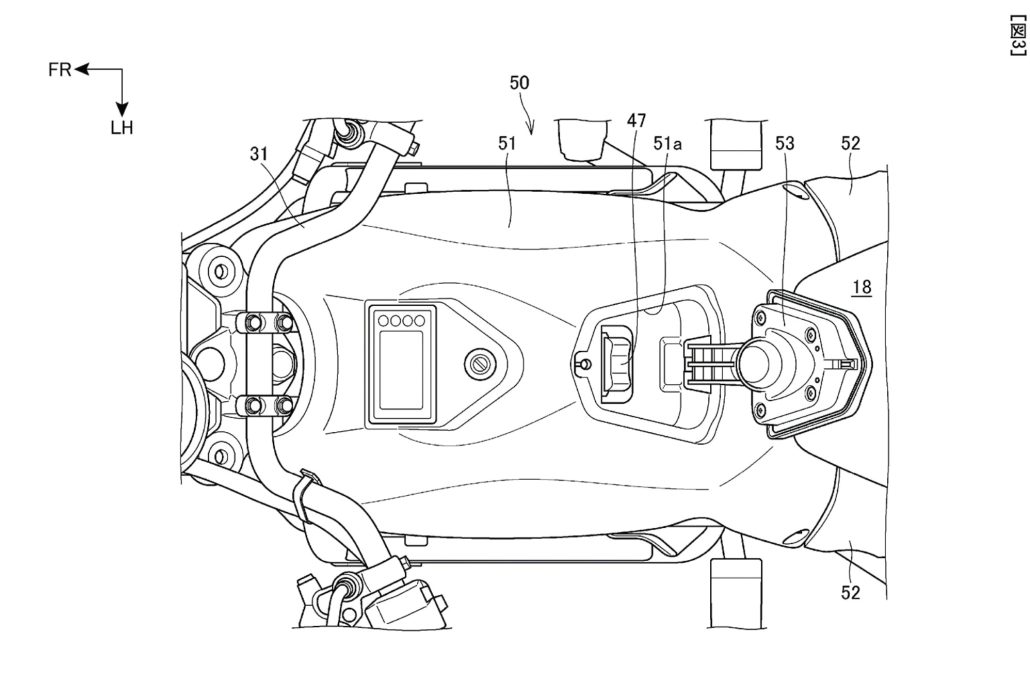
A lockable flap on the top conceals a simple mechanical locking mechanism. Only after opening with a key can the battery holders be unlocked and the batteries removed. In addition, the patent shows a classic ignition lock solution located behind a very simple display unit. Among other things, this display is intended to provide information on the state of charge.
Charging without on-board electronics
The concept completely dispenses with a permanently integrated charging unit. Instead, the batteries are simply connected to the vehicle via flexible cables when installed. To charge them, they must be removed and charged separately from an external power source.
This approach saves on additional technology, weight, and costs. At the same time, it entails restrictions in everyday use, such as the manual handling of the batteries. Details on the battery technology used, range, or power output are not mentioned in the patent.
Focus on cost rather than performance
It can be deduced from the overall concept that performance and range are to play a subordinate role in this electric motorcycle. Rather, the goal is likely to be to make the drive and energy storage so inexpensive that they can compete with simple combustion engines in terms of price.
The vehicle is apparently intended for markets where affordable mobility is a priority and electric scooters are already widely used. The patent does not indicate whether and when Honda will actually put such an electric motorcycle into series production.
What does this mean for me as a motorcyclist?
Above all, this concept means a shift in perspective on electric motorcycles. Instead of range, performance, or digital features, the focus is on pure utility. For motorcyclists, this means that electric mobility does not necessarily have to be expensive, complicated, or technology-heavy. A simply designed electric motorcycle could make it easier to get started, especially in everyday urban life or for short commutes. At the same time, it is clear that comfort, performance, and long-distance suitability are deliberately taking a back seat here. Those who see motorcycling primarily as a functional means of transportation could benefit from such concepts. For riders who are looking for emotion, performance, or touring suitability, however, this approach remains more of a supplement than a replacement.
→ This article is part of our comprehensive overview of patents and future technologies – find all developments in our Patents and Future Motorcycle Technology overview.


- Shoei 12060292Shoei Neotec 2 Klapphelm Blau male

Redakteur bei Motorrad Nachrichten. Fokus auf Technik, Szene und Motorradpolitik – neutral, sachlich, verständlich.
Verantwortlich für die Seiten www.Motorcycles.News, www.Motorrad.Training und den YouTube-Kanal "Motorrad Nachrichten", sowie deren social Media-Seiten.