- EV-Hybrid switching while riding now possible up to 60 km/h instead of 25 km/h
- Sport mode now available in automatic transmission (AT) mode for the first time
- Kawasaki Italy drops the entry price to 6,995 euros
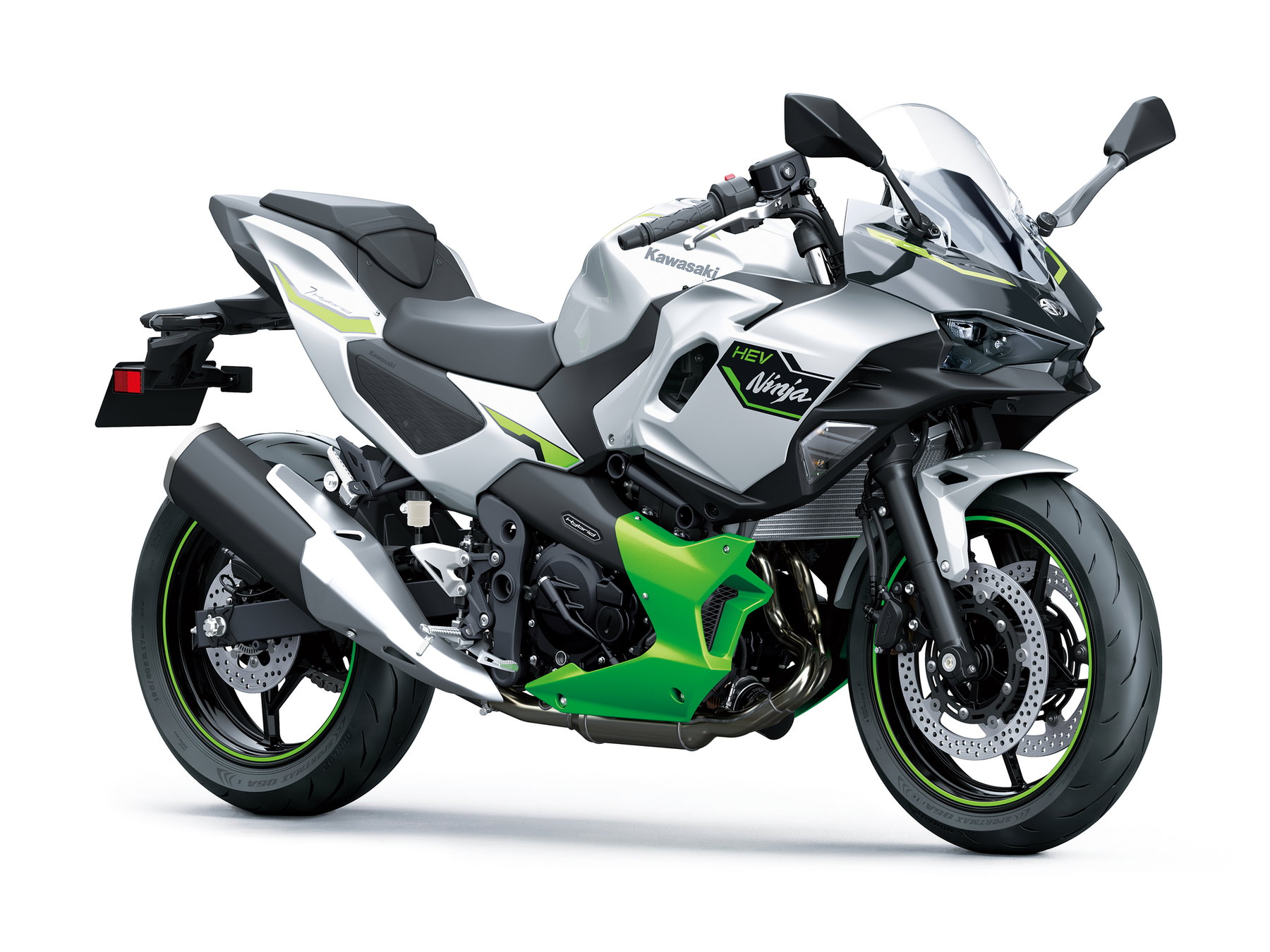
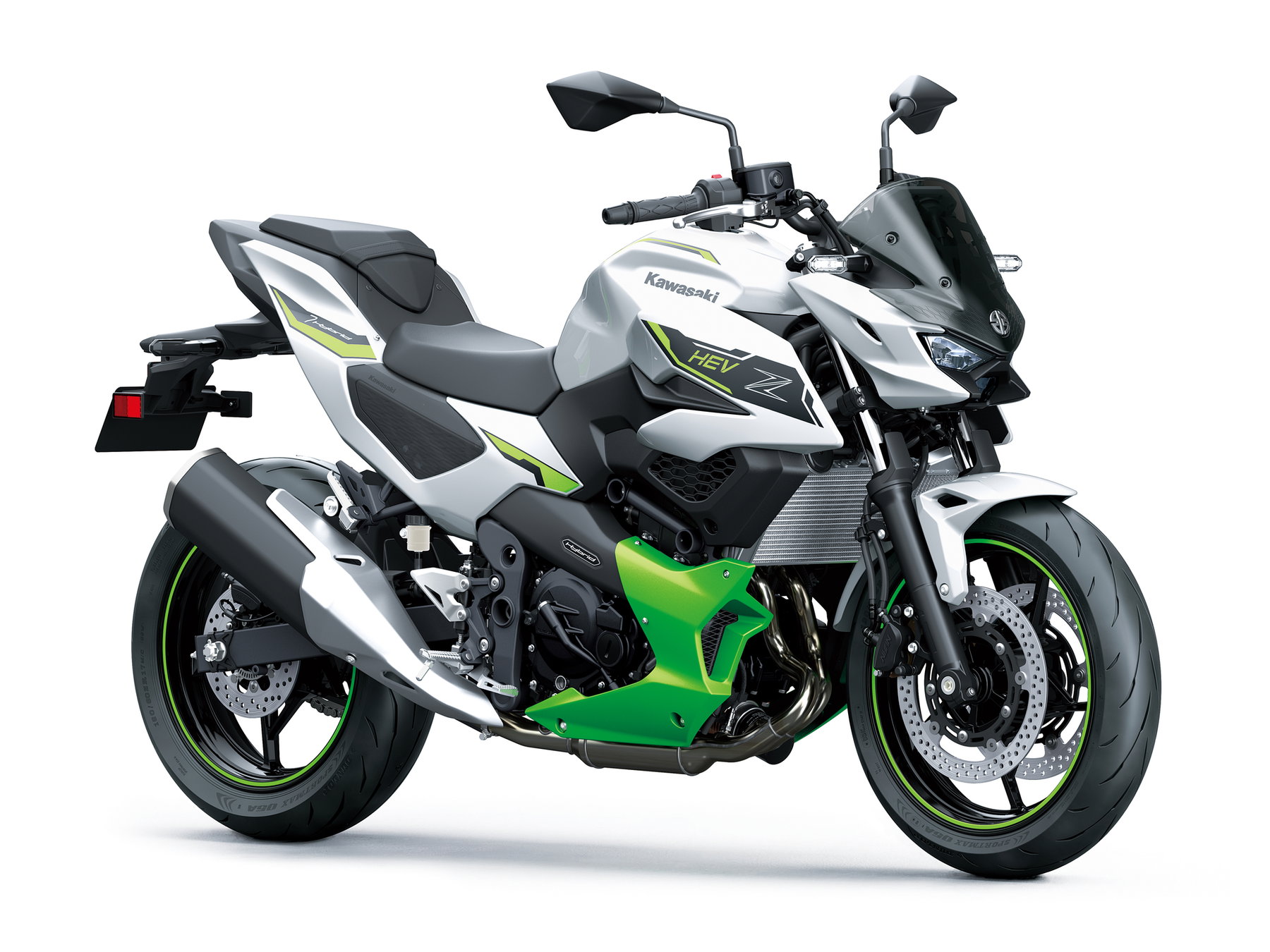
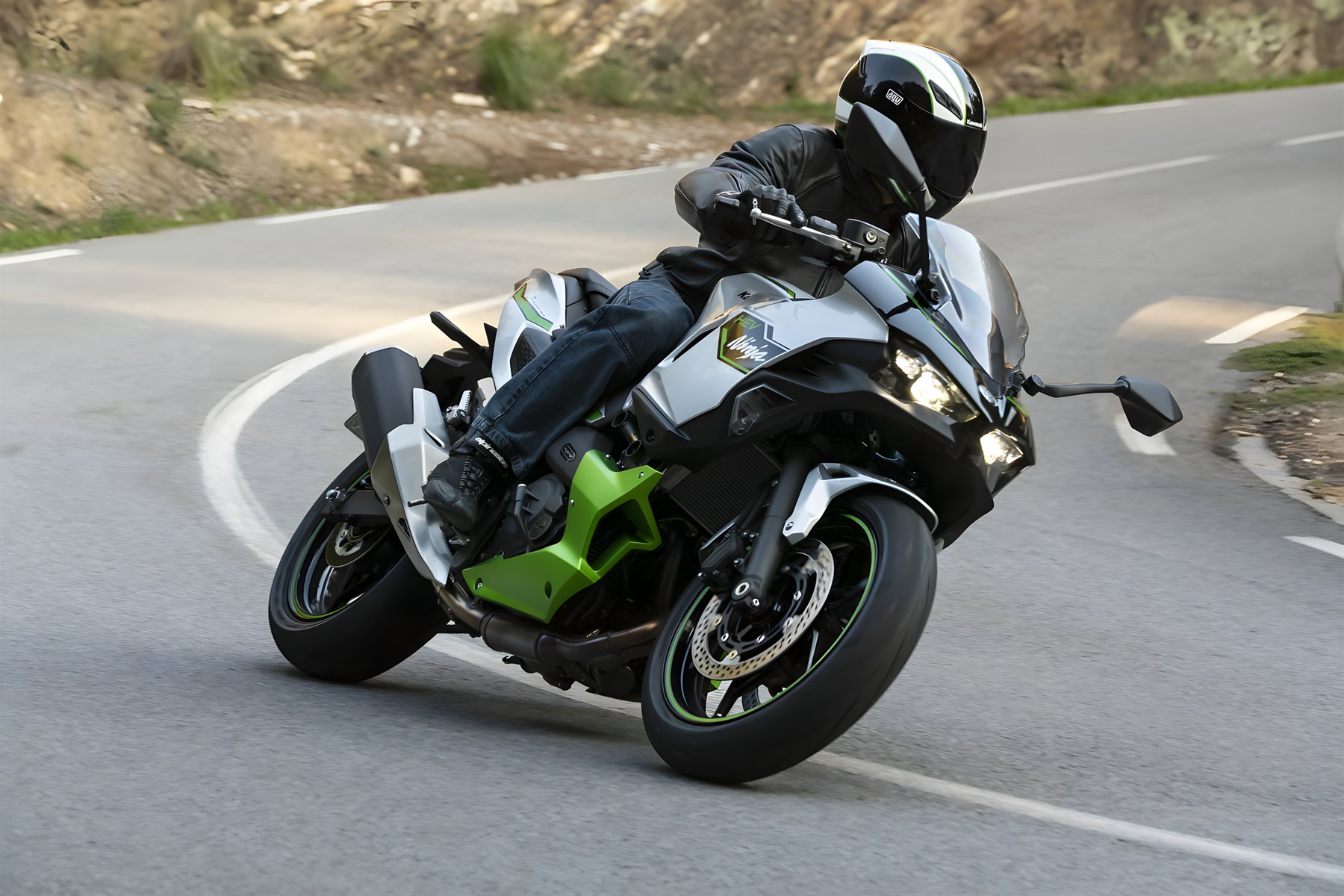
The Kawasaki Ninja 7 Hybrid and the Kawasaki Z7 Hybrid remain the only mass-produced strong hybrid motorcycles in the world. For the 2026 model year, Kawasaki has made two targeted improvements to the engine control unit (ECU) of both models, designed to significantly enhance their everyday usability. Visually, nothing changes. The updates are software-only and are the result of feedback from the dealer network, media representatives, and customers.
EV-Hybrid Switching Now Possible up to 60 km/h
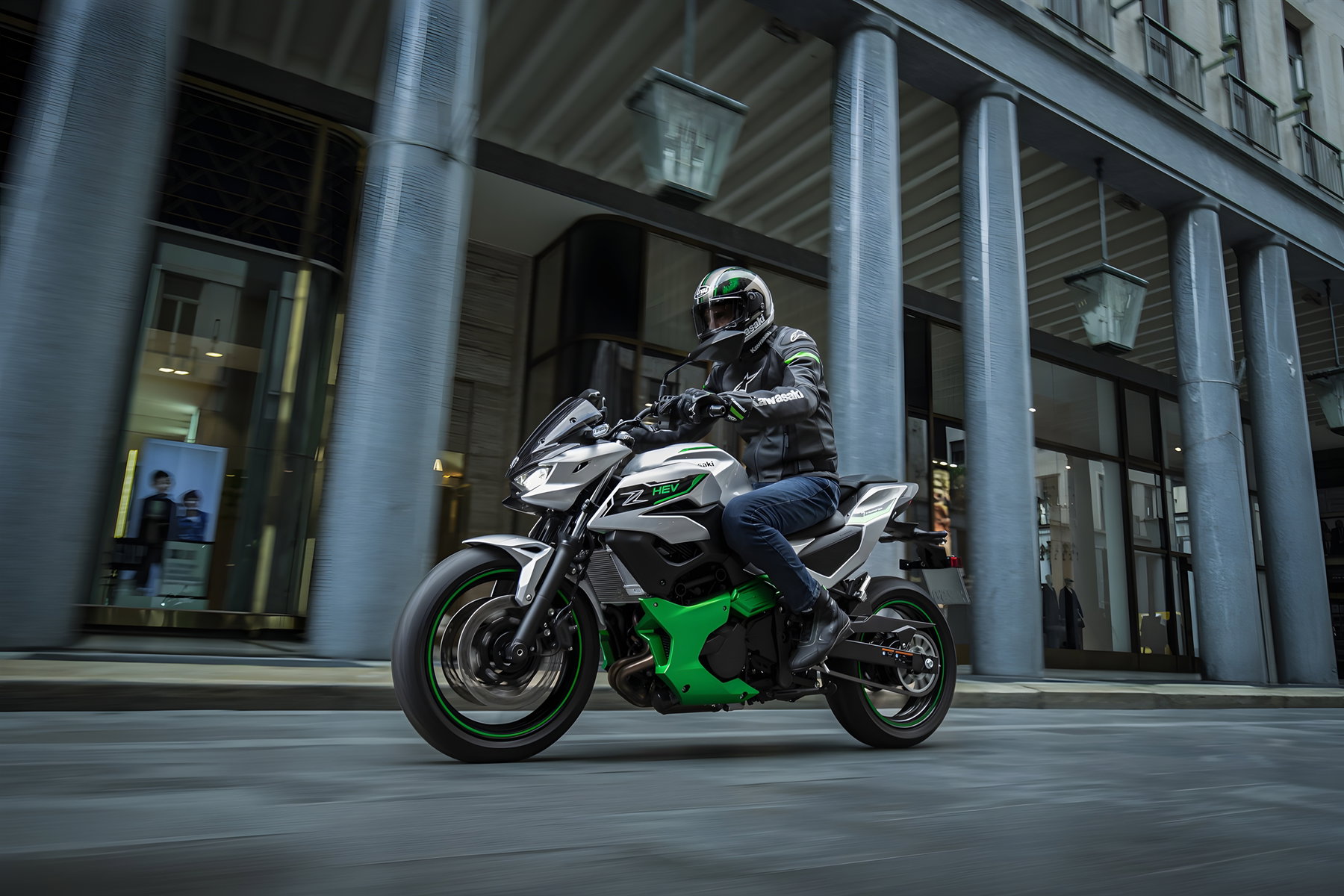
One of the key features of the Kawasaki hybrid platform is the ability to manually switch between pure electric EV mode and hybrid mode while riding. This is particularly relevant in urban environments, such as when entering or leaving a zero-emission zone. Previously, however, this switch was only possible at speeds up to 25 km/h. In practice, this meant riders had to brake significantly before switching, which greatly limited the function’s usefulness in flowing traffic.
With the 2026 update, Kawasaki raises this threshold to 60 km/h. This means the drive mode can now be changed at normal city speeds without disrupting traffic flow. For example, a rider approaching a zero-emission zone at 50 km/h can now switch directly to EV mode without first slowing down to 25 km/h. Conversely, switching back to hybrid mode when leaving such a zone works just as seamlessly.
Sport Mode Now Available with Automatic Transmission for the First Time
The second improvement concerns the Sport mode of the electronically controlled 6-speed transmission. Previously, this mode was only available in manual transmission (MT) mode, where gear changes are controlled via paddle shifters on the left handlebar switch. Anyone wanting the sportier transmission mapping had to shift manually.
Starting with the 2026 model year, Sport mode can be activated for the first time in combination with the automatic transmission (AT) setting. The transmission then handles gear changes independently, but with a sportier and more aggressive shift logic compared to normal automatic operation. This enhancement is intended to offer advantages particularly in dense city traffic and mixed riding profiles, allowing riders to focus entirely on the riding situation without sacrificing the more dynamic engine characteristics.
The Technical Foundation: Strong Hybrid with Parallel Twin and Electric Motor
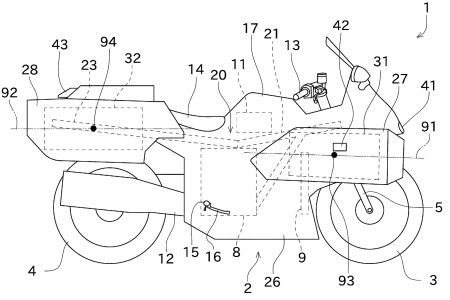
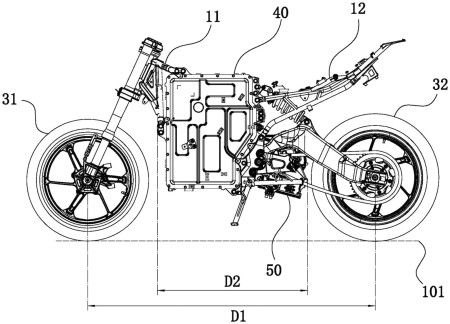
The Kawasaki Ninja 7 Hybrid and Z7 Hybrid are based on a so-called strong hybrid architecture. Unlike mild hybrid systems, where the electric motor merely assists the combustion engine, the electric motor in the Kawasaki models can also propel the motorcycle independently.
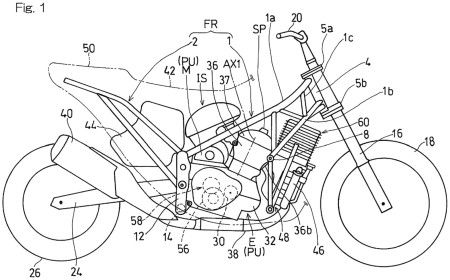
The combustion engine is a liquid-cooled 451 cc parallel twin derived from the Kawasaki Eliminator, designed for high-revving performance. The Integrated Starter Generator (ISG) combines starter and generator functions in a single unit. On the electric side, a liquid-cooled traction motor delivers a rated output of 7.0 kW (9.5 hp) and a peak output of 9.0 kW (12.2 hp), powered by a 48-volt lithium-ion battery. The battery charges during riding via the combustion engine; external charging is neither provided for nor necessary.
The transmission operates without a clutch lever or foot shift lever. The hydraulic clutch is entirely controlled by the ECU. In Sport Hybrid and Eco Hybrid modes, riders can choose to shift manually via the paddle shifters or use automatic mode. In EV mode, the motorcycle runs purely on electric power, though this is limited to fourth gear or lower and low speeds.
Additional features include e-Boost, which in Sport Hybrid mode delivers the combined output of both powertrains for approximately five seconds. Kawasaki states that the power during this moment is comparable to that of a 650-class machine. Both models also feature a walk mode with reverse function at a maximum of approximately 3 km/h, as well as an Automatic Launch Position Finder that automatically engages first gear when stopping.
Chassis, Brakes, and Equipment
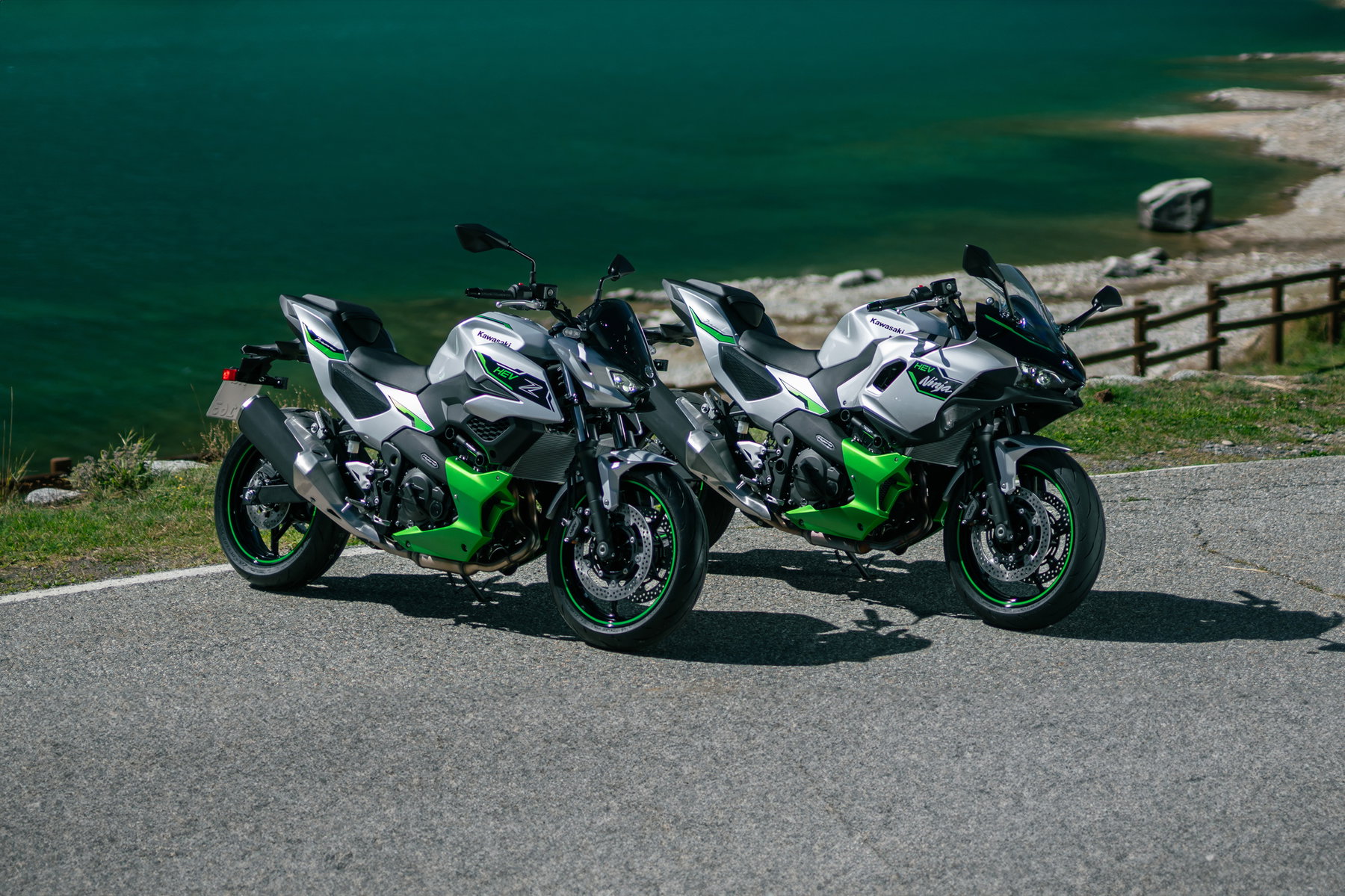
Both models share largely the same technical platform. The differences are limited to aesthetics: the Ninja 7 Hybrid features a full fairing, while the Z7 Hybrid is designed as a naked bike with a higher handlebar offering a more upright riding position.
The front suspension consists of a non-adjustable 41 mm telescopic fork. At the rear, a Uni-Trak shock absorber with linkage beneath the swingarm allows seat height adjustment. The seat height is approximately 795 mm. Braking is handled by two 300 mm disc brakes with twin-piston calipers at the front and a single 220 mm disc with a single-piston caliper at the rear. ABS comes standard.
The fuel tank holds 14 liters. The curb weight of the Ninja 7 Hybrid is approximately 228 kg (502.7 lbs). The instrument display is a 4.3-inch TFT color screen with Bluetooth connectivity to the Kawasaki Rideology app, which provides access to riding data, GPS information, and maintenance logs.
Price Development: Kawasaki Italy Drops the Entry Price to 6,995 Euros
In addition to the technical updates, Kawasaki Italy has undertaken a notable price repositioning. Starting in April 2026, the hybrid range is available there from 6,995 euros. This represents a significant reduction from the previous list price, which was most recently 12,955 euros for the Ninja 7 Hybrid. Kawasaki Italy describes the measure as a strategic adjustment aimed at making hybrid technology accessible to a broader audience and positioning the models at a price level comparable to conventional mid-range motorcycles.
Whether similar price adjustments will follow in other markets is not yet known. In the United States, the original list price (MSRP) was 12,499 US dollars (approximately 11,500 euros). Significant dealer discounts had already been observed there recently.
The updated 2026 models are now available for test rides at selected Kawasaki dealers.
Frequently Asked Questions
-
What updates do the 2026 Kawasaki Ninja 7 Hybrid and Z7 Hybrid receive?
Kawasaki has updated the ECU software on both models. The switch between EV and hybrid mode is now possible at speeds up to 60 km/h instead of the previous 25 km/h, and Sport mode can now be used with the automatic transmission for the first time.
-
How does the Kawasaki Ninja 7 Hybrid powertrain work?
The Kawasaki Ninja 7 Hybrid uses a strong hybrid architecture combining a 451 cc parallel twin with a 48-volt electric motor producing 9.0 kW peak output. The system offers three riding modes: pure electric, Eco Hybrid, and Sport Hybrid. The battery charges automatically while riding via the combustion engine.
-
How much does the 2026 Kawasaki Z7 Hybrid cost?
In Italy, the hybrid range is available from April 2026 starting at 6,995 euros. The regular list price for the Ninja 7 Hybrid in Italy was previously 12,955 euros. Whether similar price reductions will be implemented in other markets is currently unknown.
-
Does the Kawasaki Ninja 7 Hybrid need to be plugged in to charge?
No, external charging is not required. The 48-volt lithium-ion battery charges automatically during riding via the integrated starter generator and the combustion engine.
-
Do the Kawasaki hybrid motorcycles have a reverse gear?
Both models feature a walk mode with reverse function that allows maneuvering at a maximum speed of approximately 3 km/h. This function is powered by the electric motor.

- MotoGP 25 (Day One Edition) – PlayStation 5 [Blu-ray]Preise gelten bei Bestellung im Mediamarkt Onlineshop!