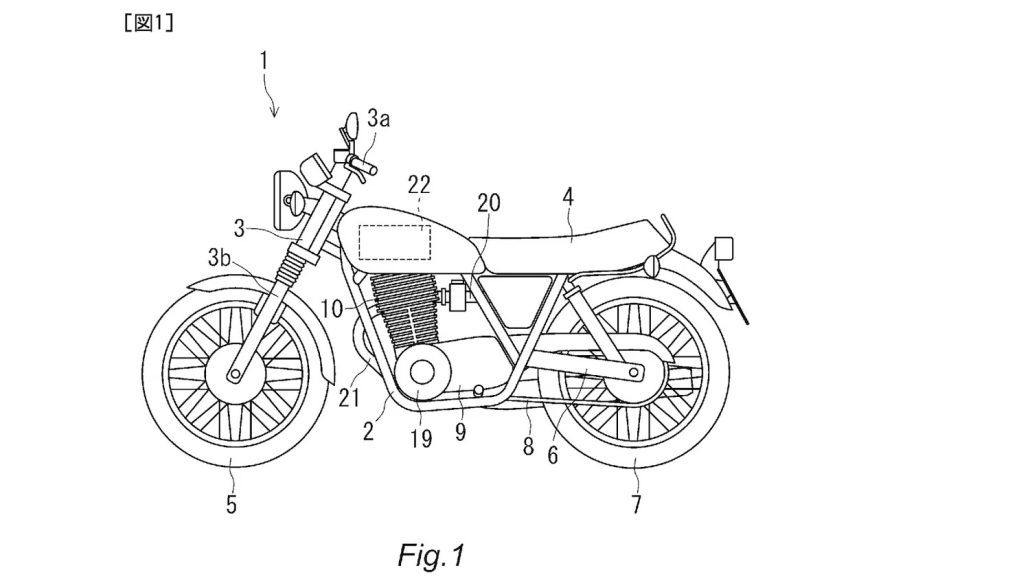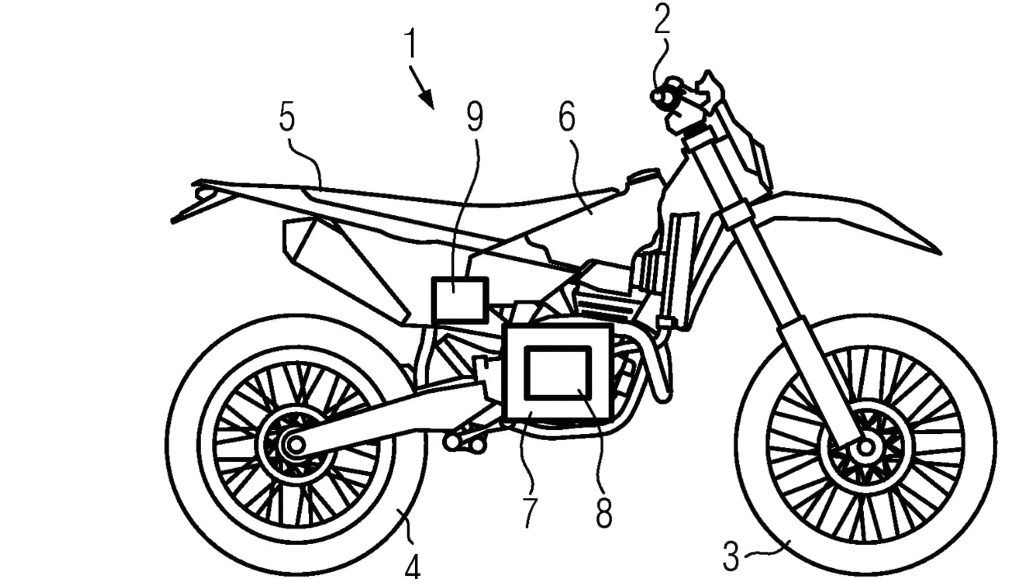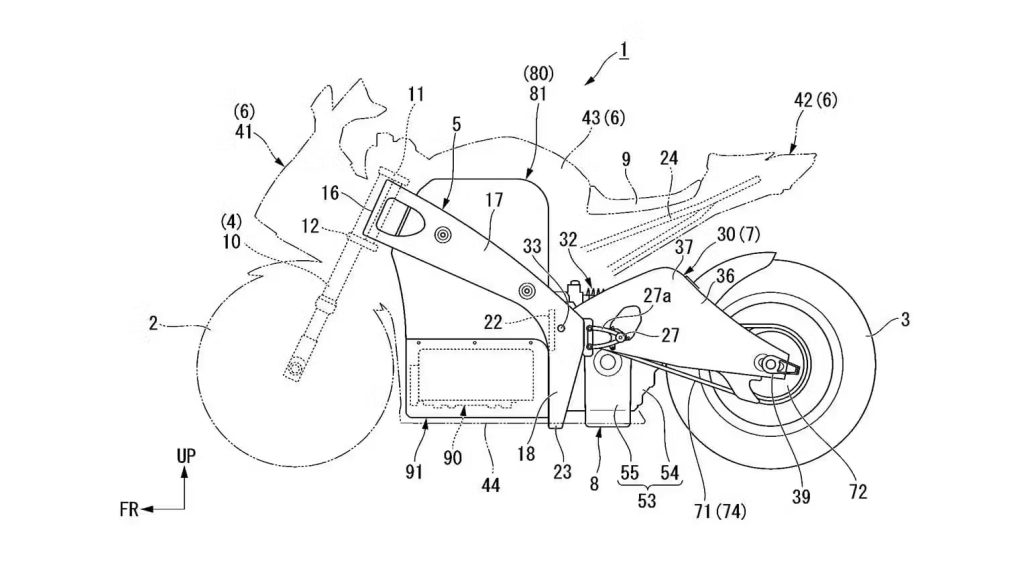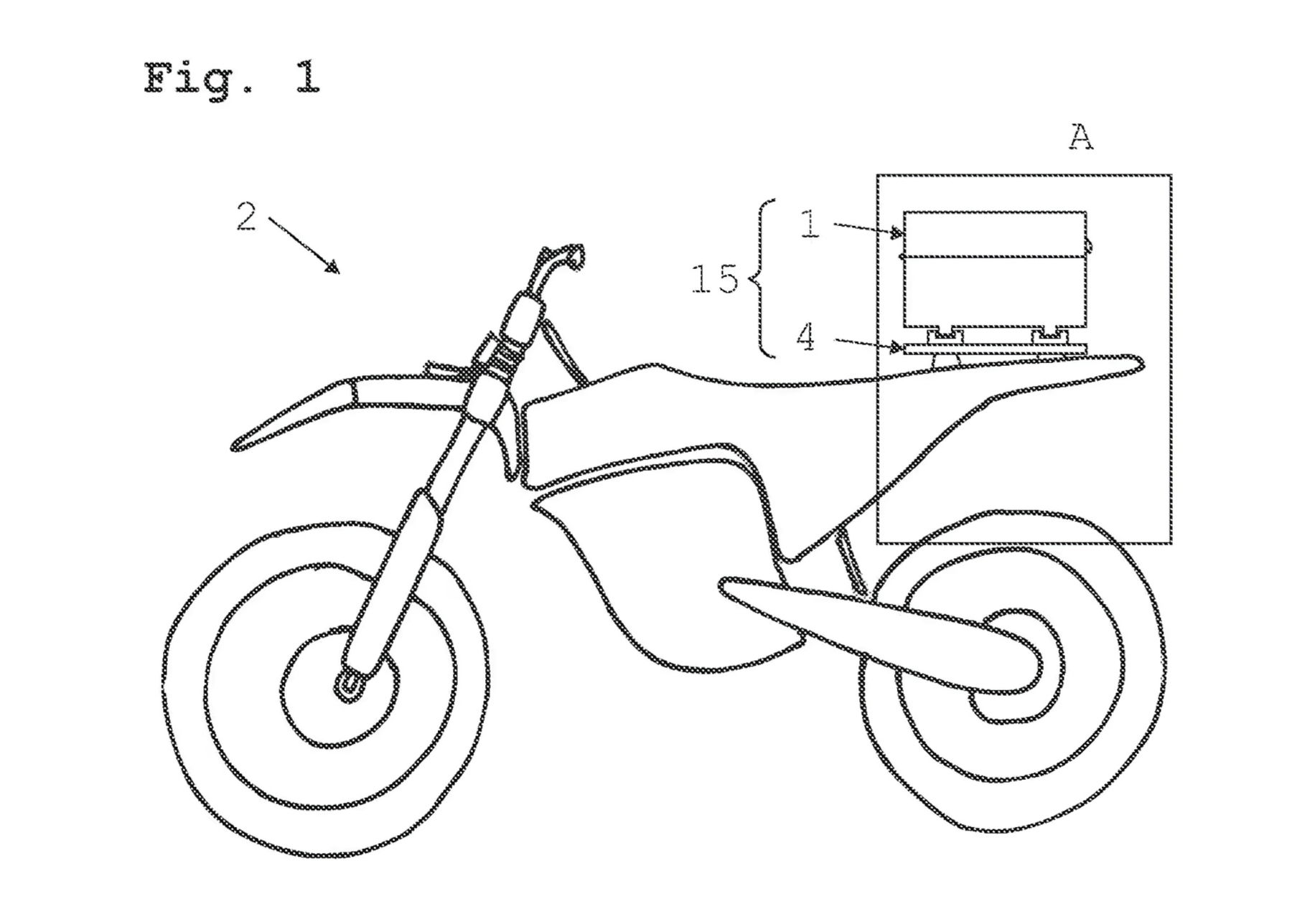
Although the patent drawings show a model resembling the KTM Freeride E-XC, it is unlikely that this exact model will serve as the platform. Rather, it appears to be a schematic example for future electric models.
Three Concepts, One Goal: More Range for E-Bikes
The basic idea behind the system is simple: a lightweight, compact electric motorcycle with limited range for urban daily use should be quickly convertible into a long-distance capable vehicle when needed. To this end, the patent describes three technically different variants of a range extender, all of which look identical externally and connect directly to the motorcycle’s high-voltage system.
Mini Combustion Engine as Power Source
The first variant employs a classic range extender in the familiar sense: a small combustion unit with an integrated generator. This solution combines a compact gasoline engine, a generator, and a fuel tank in a single box. The generated DC voltage can be used either while riding or when stationary to charge the main battery. This solution is reminiscent of well-known concepts from the automotive sector but has rarely been implemented on motorcycles.
Hydrogen Fuel Cell as an Alternative Solution
As a second option, KTM describes a version with a fuel cell. The patent specification does not go into detail, but it is likely a hydrogen fuel cell, as has already been used in some two-wheeler prototypes. Here, hydrogen from a pressurized tank is combined with oxygen from the ambient air to produce electrical energy and water. Due to current infrastructure challenges and the high cost of fuel cells, this technology is still considered impractical for everyday use.
Additional Battery Packs in Top Case Format
The third and simplest variant uses additional battery cells to extend range. KTM envisions two configurations: one is an empty container with slots for two standardized, swappable battery units. This aligns with KTM’s participation in the Swappable Batteries Motorcycle Consortium, which aims to establish cross-manufacturer battery systems. The second configuration integrates the additional batteries permanently into the top case, including its own charging port for home charging.
Flexibility as the Key to Everyday Practicality
The core of the concept is modular expandability. The motorcycle remains light and agile for everyday use but can be quickly equipped with more range for longer tours. Studies show that most motorcycle trips are relatively short and fall within the range of current electric models. At the same time, occasional long-distance rides are relevant for many users, which clearly demonstrates the practical benefit of such range extender concepts.
Whether and when this technology will reach production readiness remains to be seen. As always, the specific implementation and additional costs will be decisive. What is clear, however: with this flexible solution, KTM could significantly increase the everyday practicality of electric motorcycles and tap into new buyer segments.


→ This article is part of our comprehensive overview of patents and future technologies – find all developments in our Patents and Future Motorcycle Technology overview.

- BRIDGESTONE 24758Bridgestone – Battlax Hypersport S23 – 180/55 Zr17 Tl 73(w) Rear – Sommerreifen



Redakteur bei Motorrad Nachrichten. Fokus auf Technik, Szene und Motorradpolitik – neutral, sachlich, verständlich.
Verantwortlich für die Seiten www.Motorcycles.News, www.Motorrad.Training und den YouTube-Kanal "Motorrad Nachrichten", sowie deren social Media-Seiten.