- Liberty CEO Derek Chang confirms talks with Miami organizer South Florida Motorsports
- MotoGP to move closer to major cities, with Adelaide and Buenos Aires leading the way
- Riders like Enea Bastianini criticize the Safety Commission and call for a riders’ union
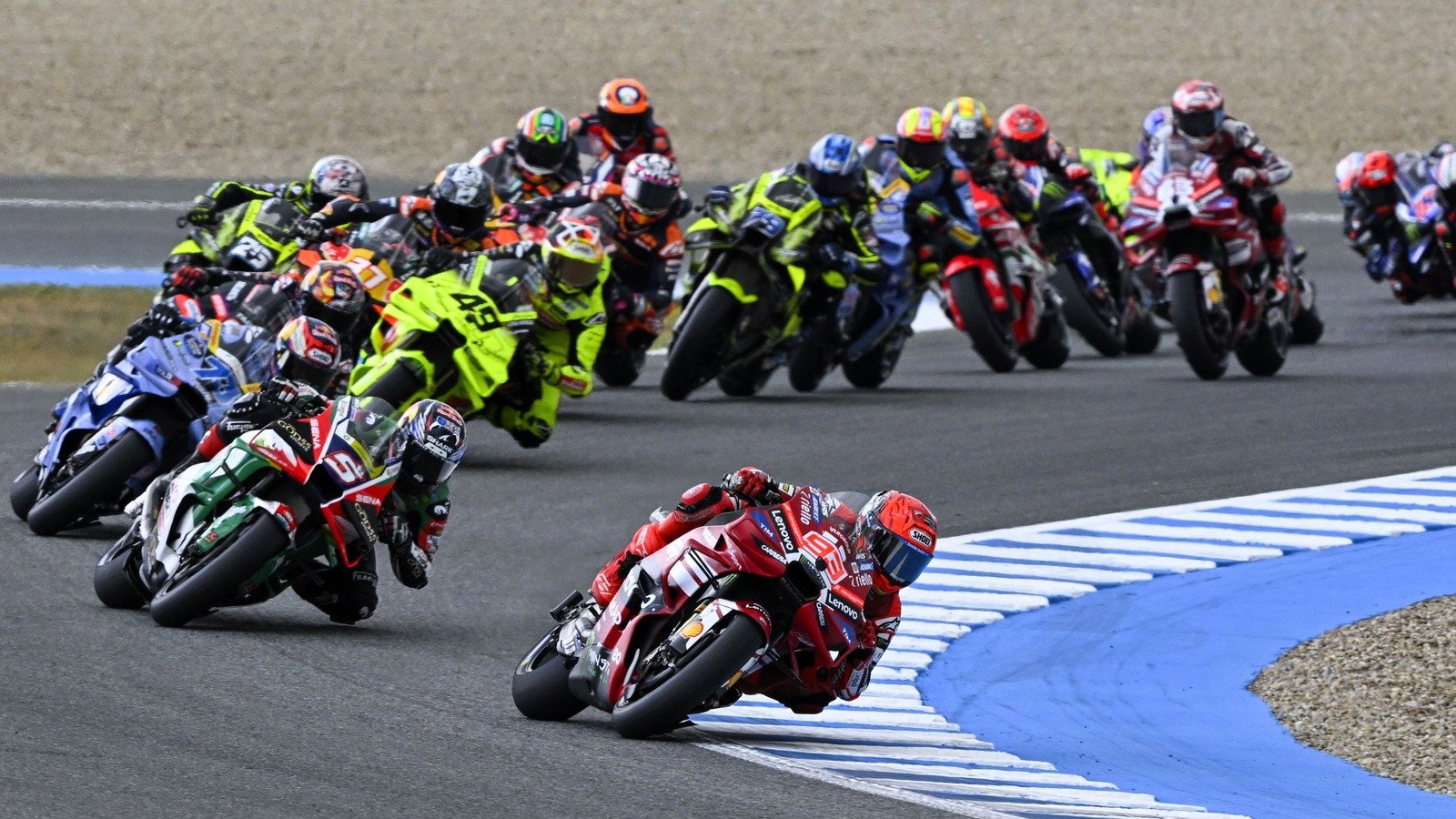
Liberty Media is reshaping MotoGP. The Colorado-based media company, which acquired the motorcycle World Championship from Dorna Sports last year, is pursuing a clear strategy: more races in major cities, more spectators, more revenue. During an investor call covering Q1 2026 earnings, CEO Derek Chang publicly confirmed for the first time that Miami is being evaluated as a venue for a second US race. At the same time, rider opposition to the new owners’ safety policies is growing.
Why is Liberty Media considering Miami for a MotoGP race?
Miami is in focus because a racing circuit already exists there. The temporary facility around the Miami Dolphins’ Hard Rock Stadium, known as the Miami International Autodrome, has been used for the Formula 1 Grand Prix since 2022. Chang described Miami in the investor call as “a logical spot, because there’s already a track there.”
However, this is not a traditional street circuit. The Miami International Autodrome is a temporary facility built on the stadium grounds. The concept works for Formula 1, but MotoGP has fundamentally different safety infrastructure requirements. Chang acknowledged that there are “a lot of things that have to get worked out,” particularly regarding safety concerns, “where you’ve got different requirements than Formula 1.”
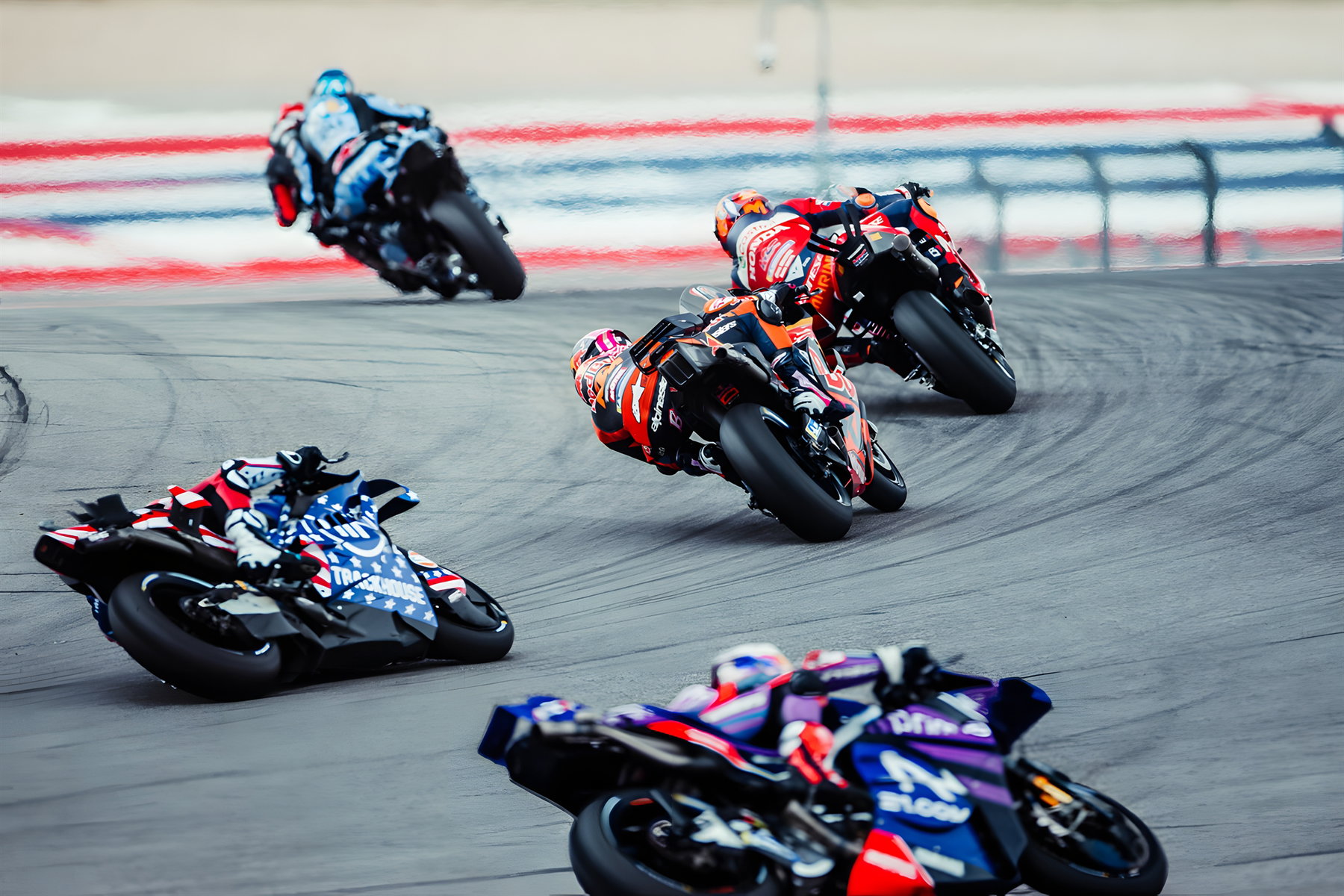
The 2026 MotoGP calendar already includes 22 races. Currently, the Grand Prix at the Circuit of the Americas in Austin, Texas, is the only US race per season. As recently as 2013, there were three races in the United States. The Austin race is widely reported to be one of the poorest-attended events on the calendar and is the only race where attendance figures are regularly not published.
What are Liberty Media’s plans for the MotoGP calendar?
The Miami plans are part of a broader strategy. Liberty Media wants to bring MotoGP closer to the fans, and in Chang’s words, that means closer to the cities. “Our stated objective is to get some of these races closer to cities where we can leverage off of the infrastructure, whether it’s the airport and long-distance travel, for both ourselves as well as for the fans who are coming in internationally, and the hotels and the restaurants and sort of ease of access,” Chang explained.
First steps in this direction have already been taken. For 2027, MotoGP has announced the relocation of the Australian Grand Prix from Phillip Island to Adelaide, where racing will take place on a modified version of the former Formula 1 street circuit. The return to Buenos Aires for the Argentine Grand Prix follows the same pattern. “We’re already starting to make progress on that,” Chang said.
The blueprint is clear: Liberty Media used exactly this strategy to turn Formula 1 into a commercial success in the US. Since the takeover in 2017, races in Miami, Las Vegas, and most recently Madrid have been added. Formula 1 is experiencing a boom in the United States, reflected in attendance figures. The Miami Formula 1 Grand Prix alone reportedly attracts over 275,000 visitors per race weekend.
What safety concerns exist for a MotoGP race in Miami?
This is precisely where the discussion becomes fundamental. MotoGP removed street circuits and public roads from the calendar for good reason. In the 1970s and 1980s, the motorcycle World Championship moved away from venues like Imatra in Finland, the Nurburgring, and the Isle of Man TT because riders who crashed were hitting trackside structures, suffering fatal or serious injuries.
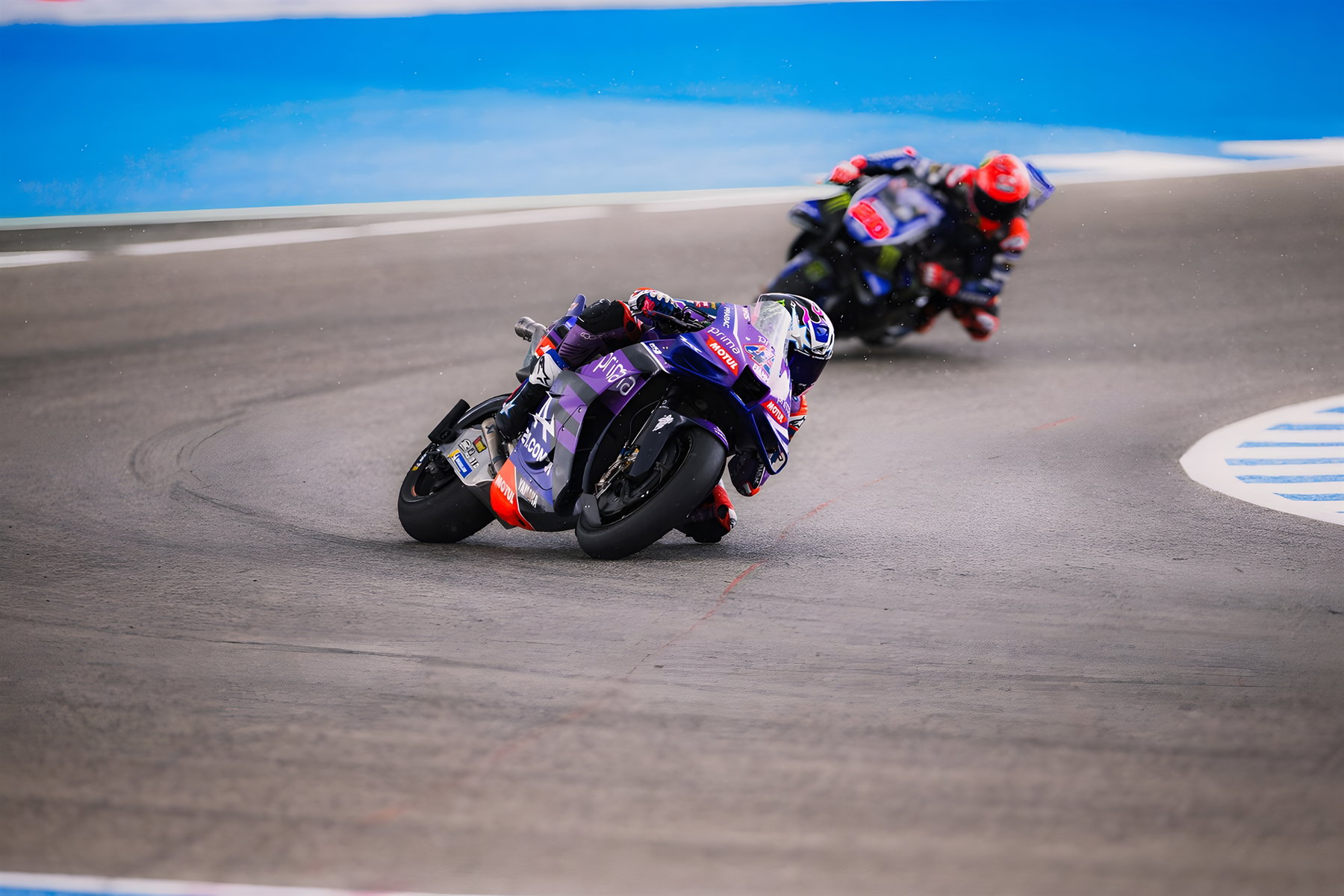
The Miami International Autodrome brings exactly this issue back into play. The track is lined with concrete walls and offers virtually no run-off areas. Buildings and bridges around the circuit limit the options for moving barriers further back. A crashed MotoGP rider can slide considerably further at speeds exceeding 300 km/h than a Formula 1 driver in a closed cockpit. Adapting the track to MotoGP safety standards would therefore require significantly more work than for Formula 1.
The planned Adelaide circuit has also not been fully explained in this regard. The MotoGP Sports Entertainment Group has published a track layout that resembles a parkland circuit rather than a classic street circuit and includes gravel traps. However, specific details on the implementation of the safety infrastructure are still outstanding.
Why are riders protesting against Liberty Media’s direction?
The safety debate around Miami and Adelaide is not happening in a vacuum. During the 2026 MotoGP season, growing dissatisfaction among riders over the handling of safety issues has emerged.
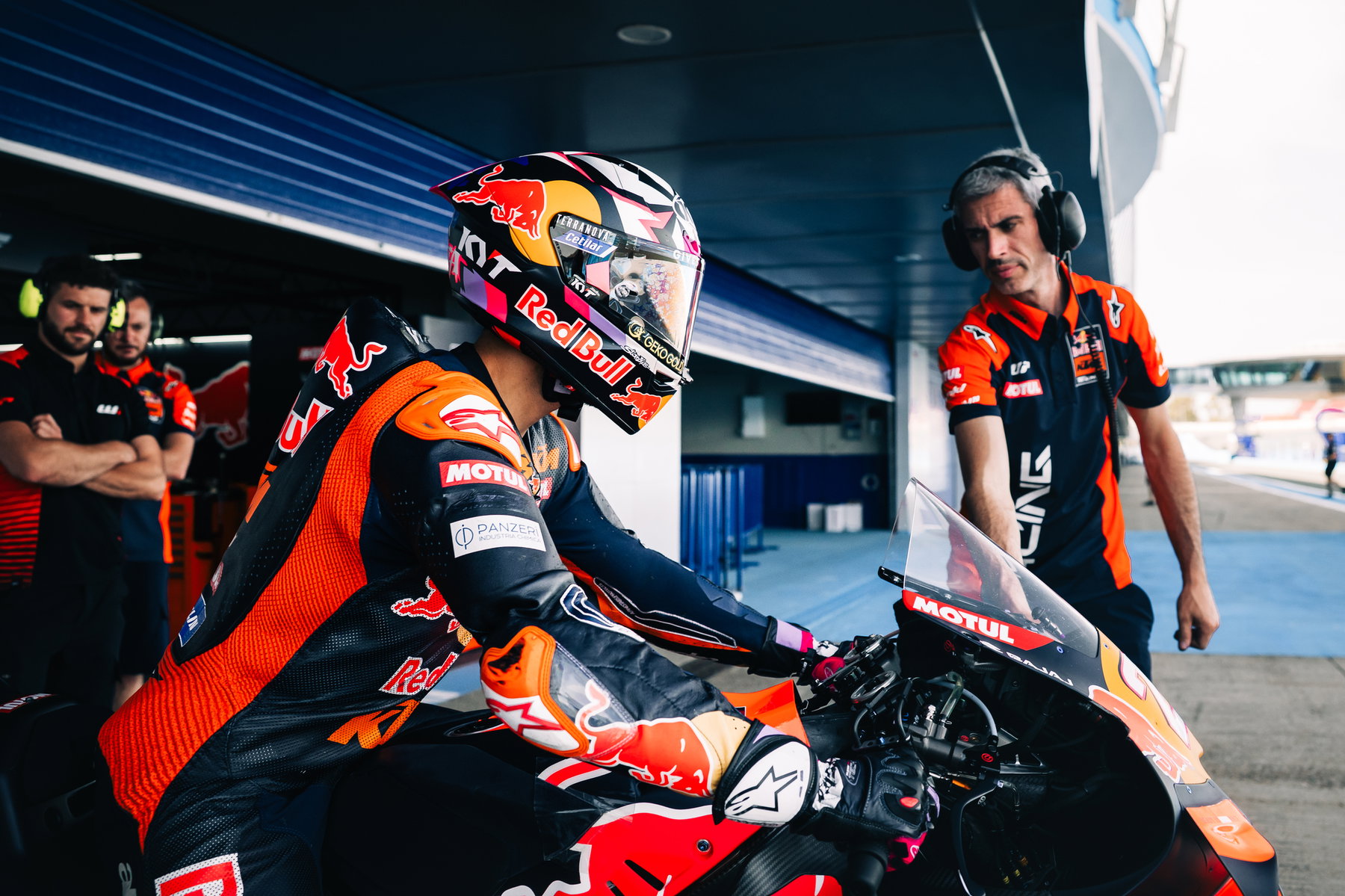
Enea Bastianini, riding for the Red Bull KTM Tech3 team, spoke openly about his frustration at the Spanish Grand Prix in Jerez. He revealed that he had not attended a single Safety Commission meeting in 2026, believing the discussions there produce no results. “We have the safety commission but it’s very difficult to talk in the safety commission and be satisfied for the future, if I’m honest, because we talk a lot every time but things don’t always change,” Bastianini said.
Bastianini points to his own experience. During MotoGP’s debut at Balaton Park in Hungary in August 2025, he crashed at the chicane at turns 12/13 and slid back onto the track, directly into the path of the following pack. Luca Marini and Pedro Acosta barely managed to avoid him. “I’m very curious to see how it will be in Balaton, the corner where I crashed. If it will be the same, what can we do? We can talk. But we need to resolve the problem, not talk,” the Italian said.
2021 World Champion Fabio Quartararo also confirmed that he has withdrawn from Safety Commission meetings. He pointed to a fundamental problem: a lack of unity among the riders. At the Indian Grand Prix, for example, when unexpected rain created chaotic conditions, the riders could not agree on a unified course of action. “They [F1] are years in front of us,” Quartararo said.
Bastianini is therefore calling for the establishment of a riders’ association modeled on the Grand Prix Drivers’ Association (GPDA) in Formula 1. “Three years ago we started talking about making something new for the riders, because there’s IRTA for the teams and nothing for the riders. For safety and for many other things I hope we will have something, because for us it will be a different world,” Bastianini explained.
Formula 1 has had an organized driver representation through the GPDA since the early 1960s. MotoGP has no comparable body. Attempts to establish a similar association in 2023 came to nothing.
How does Liberty Media plan to balance tradition and expansion?
Chang emphasized during the investor call that there will be no radical overhaul of the calendar. “We don’t want a wholesale change-out of all the races. We have a long heritage here of races in many compelling locations. It makes a lot of sense to keep them there. They’ve been fixtures on the race calendar and they bring a lot to the sport and a lot to the identity of the sport,” the Liberty CEO said.
Chang specifically cited examples: he had already visited Austin and Jerez in 2026 and would still be attending Mugello and Assen to get a sense of what makes each venue special. The goal is to improve the fan experience without distorting the championship. Even at venues that will not be relocated, there is room for improvement.
Whether this balancing act succeeds remains to be seen. In Formula 1, the shift toward street races and glamorous venues has brought commercial success but has also alienated parts of the hardcore fanbase. Traditional circuits came under pressure or had to accept rotation systems. For MotoGP, an additional complication is that safety requirements for motorcycle racing are fundamentally different from those in car racing. A Miami MotoGP Grand Prix would therefore be a long-term project, as Chang himself acknowledged: “It’s going to take time, just like it did with F1.”
The parallel debate over Spanish venues illustrates the scale of the transformation. MotoGP boss Carmelo Ezpeleta indicated at a press conference that at least one of the current four Spanish races (Jerez, Barcelona, Aragon, Valencia) could eventually be dropped from the calendar, as having nearly 20 percent of all races in a single country is not sustainable.
Frequently Asked Questions
-
When could a MotoGP race in Miami take place?
There is no specific timeline. Liberty CEO Derek Chang described it as a long-term project, drawing comparisons to Formula 1, whose US expansion also took years. There has been no official announcement of a date or a concrete agreement with organizer South Florida Motorsports.
-
What safety issues does the Miami International Autodrome present for MotoGP?
The track is lined with concrete walls and has very limited run-off areas. MotoGP riders require significantly more safety margins than Formula 1 drivers, as crashed riders slide unprotected across the asphalt. Buildings and bridges around the track make structural modifications even more difficult.
-
Why is Enea Bastianini boycotting the MotoGP Safety Commission?
Bastianini has stated that he did not attend a single Safety Commission meeting in 2026 because, in his view, much is discussed but little changes. He points to his own crash at Balaton Park in 2025, where he slid back onto the track after a chicane crash and was narrowly missed by the following pack.
-
Is there a riders’ union in MotoGP?
No. Unlike Formula 1, which has had the Grand Prix Drivers’ Association since the 1960s, MotoGP has no official rider representation. Bastianini and other riders are calling for the creation of such an association, but previous attempts in 2023 failed.
-
Which circuits could come under pressure from the calendar changes?
Phillip Island has already been replaced by Adelaide. MotoGP boss Carmelo Ezpeleta indicated that at least one of the four Spanish races could be dropped long-term. The Austin race at the Circuit of the Americas is struggling with declining attendance. However, traditional circuits like Mugello, Assen, and Le Mans are expected to remain, according to Chang.
➜ This article is part of our comprehensive overview: MotoGP 2026 Season: The Complete Overview – Teams, Riders, Calendar & Standings. Find all key information on this topic in one place.