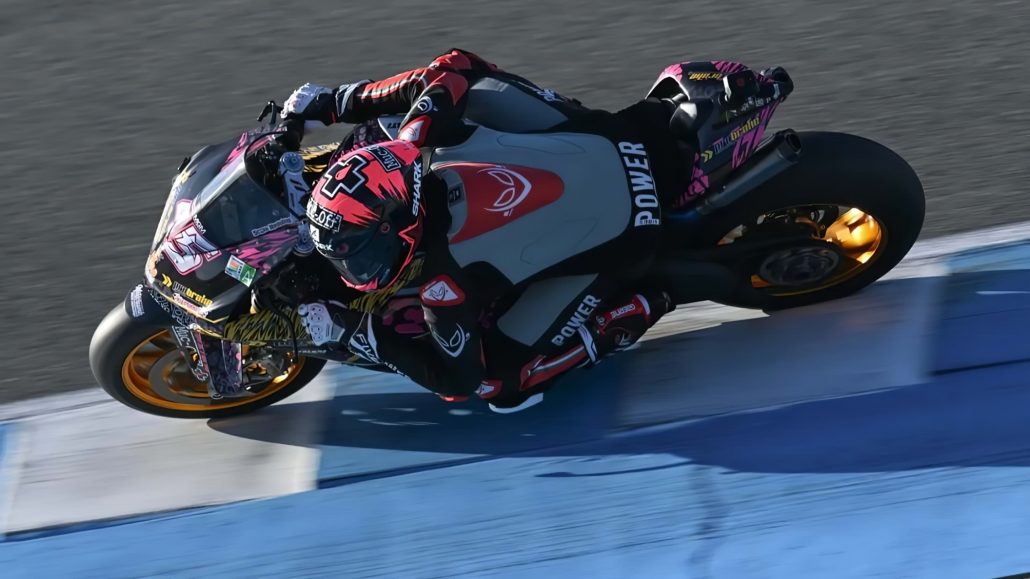
- Tint change in less than a second, according to the manufacturer
- Power supply via integrated solar panel, no battery required
- Compatible with Race R Pro GP, Aeron GP, and Aeron
Changing light conditions are one of the constant challenges of motorcycling. Low sun, tunnel passages, or wooded sections of road can significantly impair visibility. With the new IRID visor, Shark presents a technical solution that aims to address this problem with an active approach.
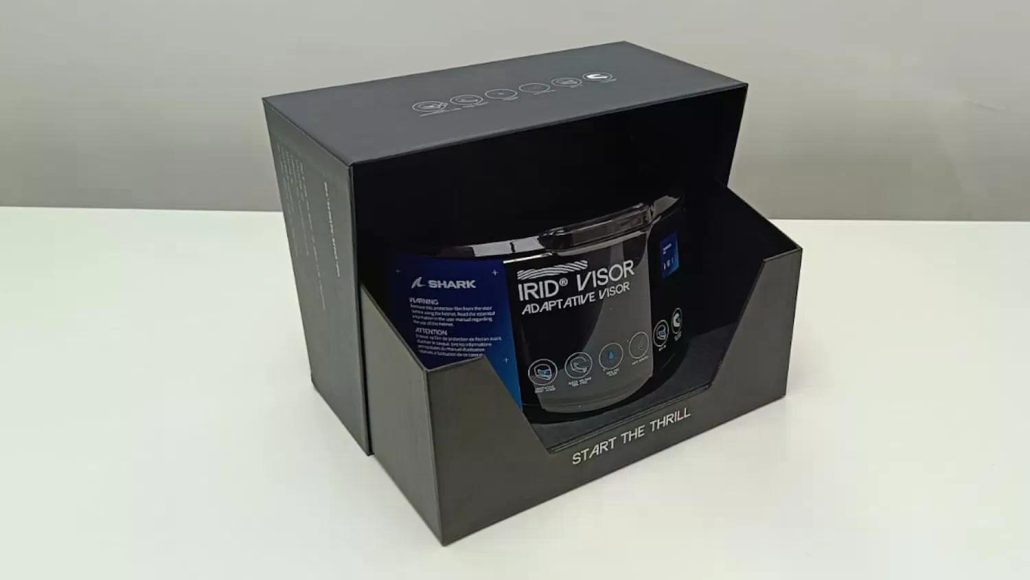
Active instead of chemical photochromism
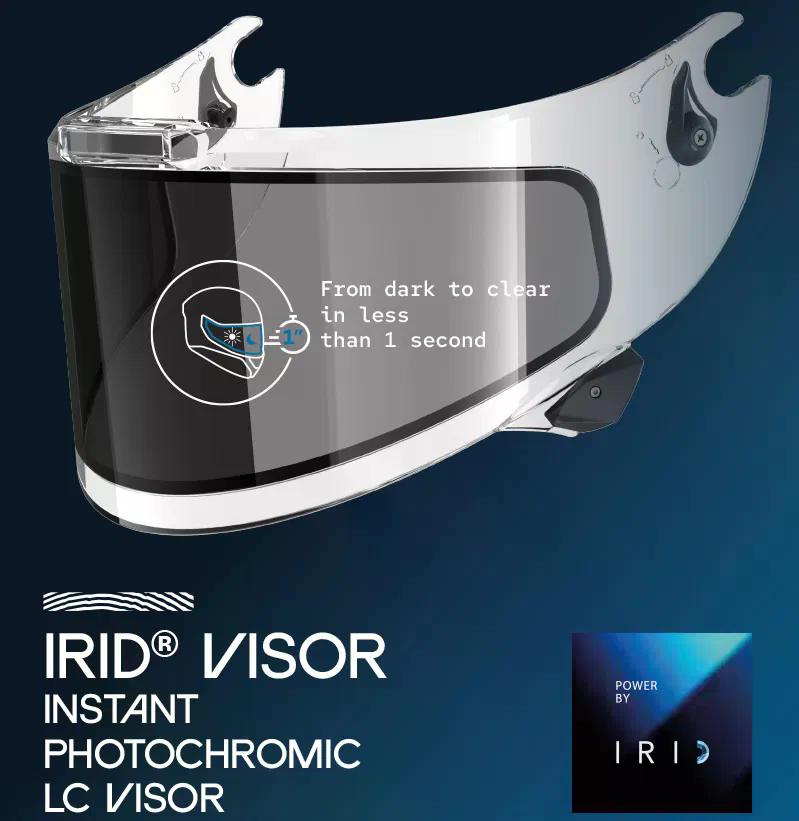
Unlike classic photochromic visors, which rely on chemical reactions caused by UV light, the IRID visor uses electro-photochromic technology. At the heart of the system is a liquid crystal film that reacts directly to changes in light. The energy required for this is supplied by a small solar panel integrated into the upper part of the visor.
As soon as light hits the panel, the liquid crystal film is activated and the tint of the visor changes. Shark states that the change from clear to tinted should take less than a second. By comparison, according to the manufacturer, conventional photochromic visors can take up to 40 seconds to darken and significantly longer to return to maximum transparency.
Functionality and technical features
The IRID system does not require a rechargeable battery or regular battery and is designed to be completely self-sufficient. According to the manufacturer, the design is waterproof and designed for long-term use in everyday motorcycle riding. In addition, the visor has an integrated anti-fog layer and a scratch-resistant and UV-protective coating.
The visor is based on the VZ100 design and is currently only intended for use with Shark Racing full-face helmets. These include the Race R Pro GP, Aeron GP, and Aeron models. The system is not intended for use at night, as it is explicitly designed for daylight conditions.
Variants and areas of application
Shark offers the IRID visor in three versions. The VZ Clear version has a light tint and is approved for use on public roads. The VZ Dark and VZ Iridium Blue variants are more heavily tinted and, according to the manufacturer, are intended exclusively for use on the racetrack.
The manufacturer is planning a staggered market launch. The clear version will be available first, with the darker and colored versions to follow shortly thereafter.
Positioning in the market
With the IRID visor, Shark is positioning itself in the premium segment. According to current information, the price is around $390 for the clear version. This puts the system well above classic photochromatic visors, which are available for around $200 or, on certain platforms, sometimes for less than $100, and also above electronic alternatives such as other electrochromatic solutions.
Shark sees the IRID visor less as a comfort accessory and more as a safety-related advancement. Rapid adaptation to changing light conditions is intended to reduce the time during which visibility is restricted. Whether the technical effort and high price will prove worthwhile in everyday use will only become clear after a broad market launch.
Availability and outlook
Currently, the IRID visor is limited to Shark’s sportiest full-face helmets. It is not yet known whether the technology will also be adapted for road-oriented helmets or other series in the future. The high price is likely to be one of the reasons why many road helmets continue to rely on integrated sun visors.
What does this mean for me as a motorcyclist?
For me as a motorcyclist, the IRID visor means above all that I no longer have to actively think about visibility conditions. According to the manufacturer, the visor reacts almost immediately to rapid changes between sun, shade, and darker sections such as tunnels, without the need for manual intervention. This can help to reduce short periods of restricted visibility. At the same time, it remains clearly limited in its area of application: daytime use, with a sporty focus and at a high price. Its usefulness therefore depends heavily on your personal riding profile, in particular how often you ride in changing light conditions and whether you ride with compatible Shark helmets.


- S100 2160S100 2160, Helmpolster Reiniger – 300 ml male



Redakteur bei Motorrad Nachrichten. Fokus auf Technik, Szene und Motorradpolitik – neutral, sachlich, verständlich.
Verantwortlich für die Seiten www.Motorcycles.News, www.Motorrad.Training und den YouTube-Kanal "Motorrad Nachrichten", sowie deren social Media-Seiten.