- The new 350cc engine is based on the existing 398cc single-cylinder with a reduced bore
- Power losses vary by model, while torque drops noticeably across the board
- Despite the smaller displacement, the models will continue to carry the “400” badge
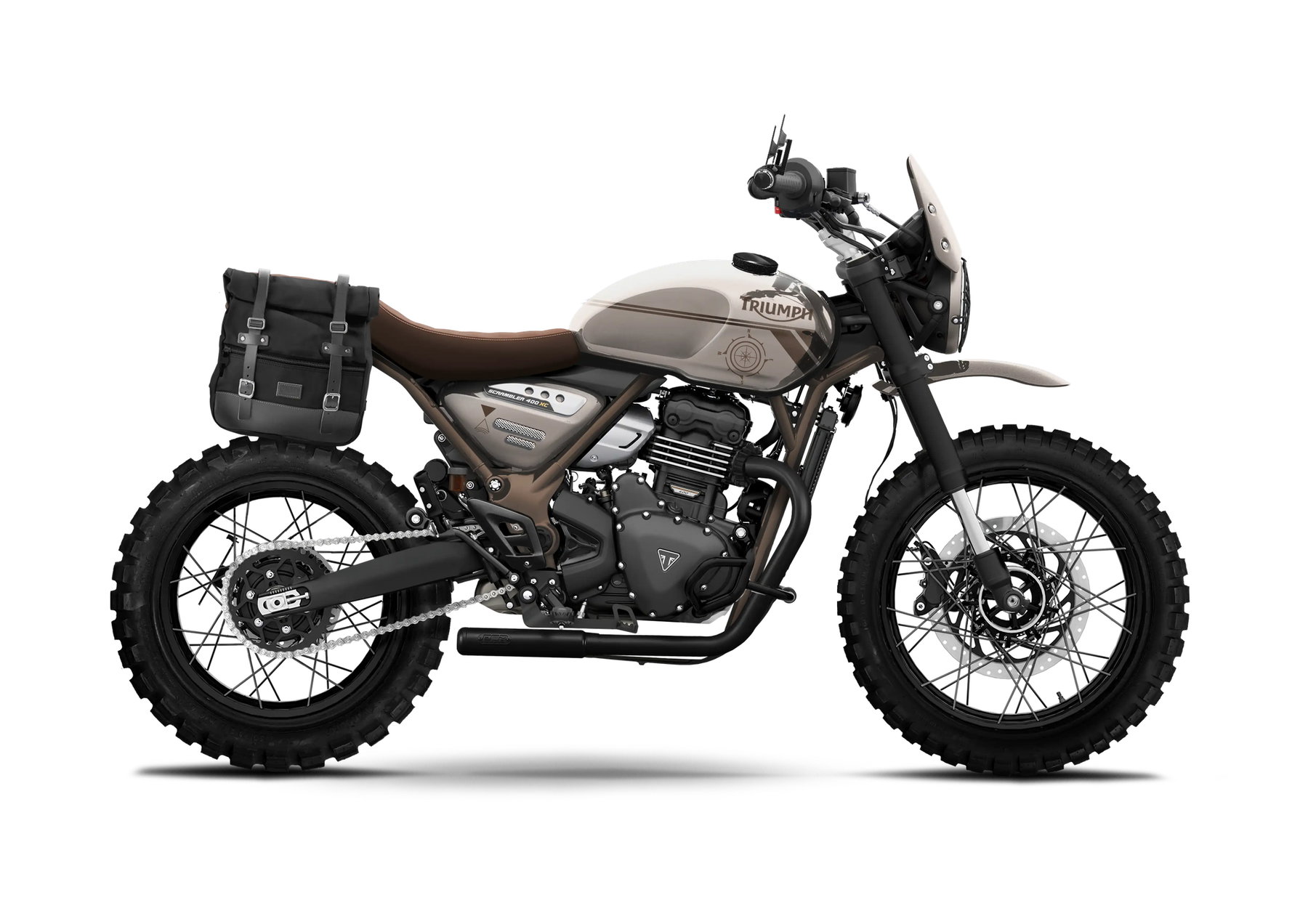
Triumph Motorcycles is about to make one of the most important product launches in its recent history in India. On April 6, 2026, the entire 400 range, consisting of the Speed 400, Scrambler 400 X/XC, Speed T4, and Thruxton 400, is set to debut with a new 350cc engine. Just before the official reveal, the technical specifications of the downsized powerplant have leaked online, showing in detail what changes beneath the tank.
Why Triumph Is Reducing Displacement
The motivation behind this move is not a technical evolution but a tax-driven one. In September 2025, the Indian government fundamentally restructured motorcycle taxation with the introduction of GST 2.0. Models with a displacement of up to 350 cubic centimeters are now taxed at 18 percent, down from the previous 28 percent. Motorcycles above this threshold face a 40 percent tax rate, a significant increase from the earlier 31 percent.
For Triumph and its Indian manufacturing partner Bajaj Auto, this represents a massive shift in competitiveness. The existing 400 range with its 398.15cc single-cylinder engine sits just above the tax threshold and is therefore subject to the highest rate. By reducing displacement to approximately 349 cubic centimeters, the motorcycles move into the lower tax bracket. According to dealer sources, prices are expected to drop by 15,000 to 20,000 Indian rupees (approximately 160 to 215 euros / 175 to 235 USD), depending on the model.
Rajiv Bajaj, Managing Director of Bajaj Auto, officially confirmed the April launch back in late February. Triumph sells an average of around 4,000 units of the 400 range per month in India, despite the currently higher taxation.
The Leaked Engine Specifications in Detail
The new engine is not an entirely new unit but a downsized version of the existing 398cc single-cylinder. The displacement reduction is reportedly achieved by reducing the bore while keeping the stroke unchanged. This affects the power delivery characteristics, with differences varying by model.
Speed T4
The entry-level Speed T4 is expected to produce around 28.6 hp (21.3 kW) at 7,500 rpm in 350cc form. Maximum torque is reportedly 31 Nm at 5,500 rpm. Compared to the current 398cc engine, that represents a decrease of approximately 2 hp (1.5 kW) and 5 Nm. Acceleration from 0 to 60 km/h is said to take 3.5 seconds, and 0 to 100 km/h 9.6 seconds. Top speed drops from 141.4 km/h to 137 km/h.
Speed 400 and Scrambler 400 X/XC
The Speed 400 and Scrambler models are expected to deliver around 36.5 hp (27.2 kW) at 8,500 rpm with the 350cc engine. Torque sits at 32 Nm at 7,000 rpm. For comparison, the current 398cc engine produces 39.5 hp (29.5 kW) at 8,000 rpm and 37.5 Nm at 6,500 rpm. The power decrease of 3 hp (2.2 kW) is modest, but torque drops by a more noticeable 5.5 Nm.
Thruxton 400
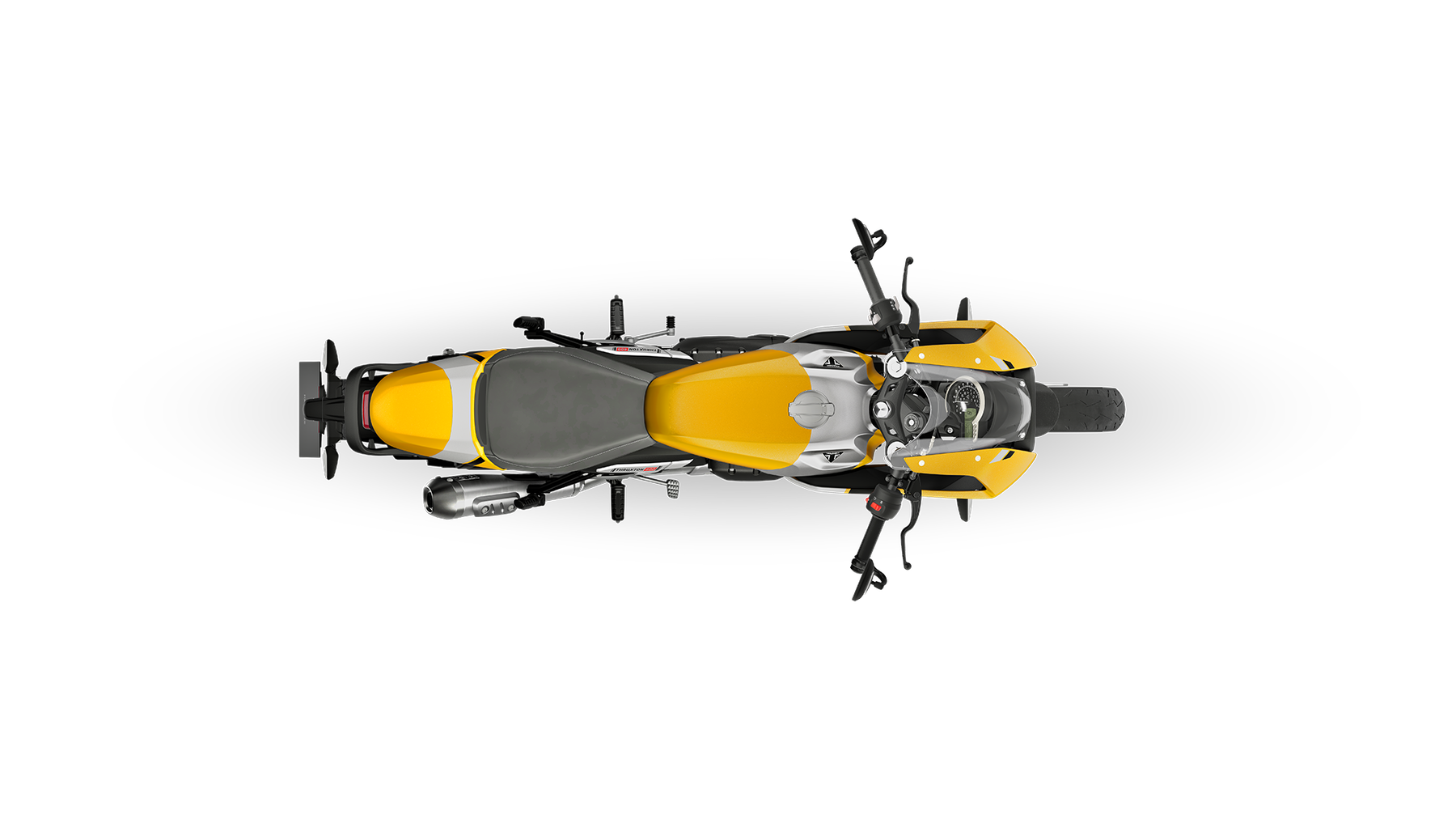
The Thruxton 400 retains the strongest tune in the 350cc lineup. It is expected to produce 39.5 hp (29.5 kW) at 8,750 rpm and 32 Nm at 7,500 rpm. The current model delivers 41.5 hp (30.9 kW) and 37.5 Nm. The Thruxton remains the fastest model in the range with a claimed top speed of 157 km/h.
Notably, across all models, peak power is achieved at higher rpm than with the 398cc engine. This suggests a slightly more rev-happy character that may come at the expense of low-end grunt. Whether this is actually noticeable in everyday riding will only become clear after first ride reviews.
350cc Engine, but Still “400” on the Tank
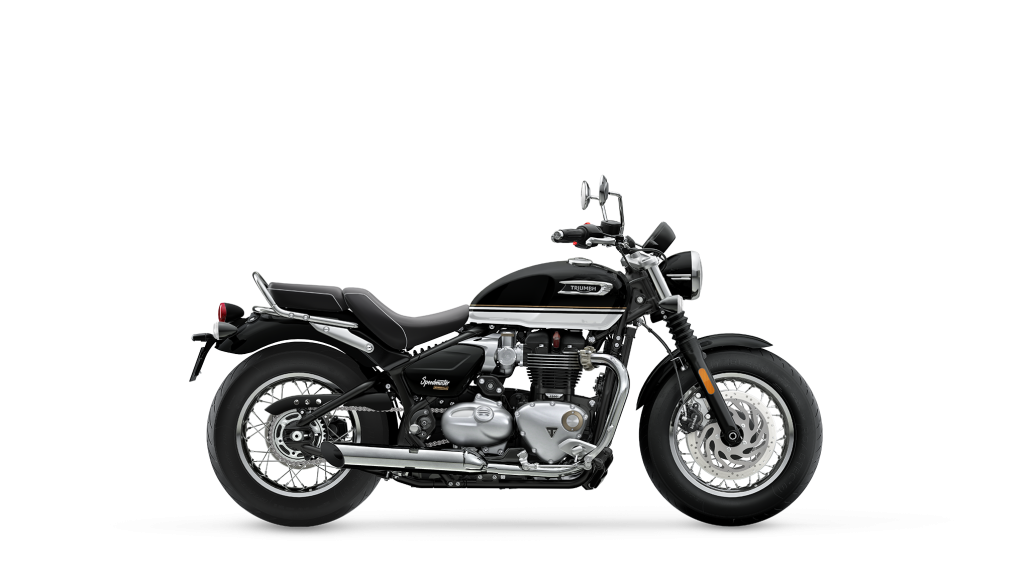
A notable detail of the marketing strategy: despite being equipped with a 350cc engine, the motorcycles will continue to be sold under their existing model names with the “400” designation. Units already spotted at dealerships still carry the “Speed 400” badge unchanged.
From a business perspective, this makes sense for Triumph and Bajaj. The 400 range has already built strong brand recognition in India. The “350” label could weaken that perception, especially in a market segment where displacement figures play an important role in purchasing decisions. This approach is not uncommon in the industry, as model designations from other manufacturers do not always match the actual displacement either.
400cc Range to Remain Available Alongside New Models
Despite the introduction of the 350cc variants, Bajaj-Triumph reportedly plans to continue offering the existing 400cc models on the Indian market. Since Bajaj continues to manufacture the 400 range for international markets, the company will first monitor market response. The future of the 400cc versions on the Indian market will depend on how strong demand remains for the more expensive models.
Some dealers have already begun taking unofficial bookings for the new 350cc models ahead of the official launch. Booking fees reportedly start at around 5,000 Indian rupees (approximately 54 euros / 59 USD), depending on the dealer.
Not Just Triumph: KTM and Bajaj Also Plan Downsizing
The displacement reduction is not limited to Triumph. Bajaj Auto has confirmed that the same strategy will extend to the KTM model range. Rakesh Sharma, Executive Director of Bajaj Auto, had already stated during the quarterly earnings call that the company is working with its partners KTM and Triumph to reshape the portfolio to take advantage of the lower GST rates. Bajaj’s own models like the Dominar 400 and Pulsar NS400Z are also expected to transition to sub-350cc configurations in the future.
What This Means for the Indian Market
The 350cc segment in India is traditionally dominated by Royal Enfield, with Honda and Jawa also holding strong positions. Triumph is positioning itself as a premium alternative in this segment, combining British brand prestige with Bajaj’s cost-efficient local manufacturing. The lower taxation provides the brand with financial headroom that should also reduce financing costs and insurance premiums for buyers.
Whether this strategy pays off will become clear after the April 6 launch. The performance figures, despite the smaller displacement, drop only marginally. The most noticeable difference lies in torque. How this translates to real-world riding will ultimately determine whether the concept succeeds.
Frequently Asked Questions
-
Why is Triumph introducing a 350cc version of the 400 range in India?
The main reason is India’s GST 2.0 tax reform from September 2025. Motorcycles up to 350cc are taxed at 18 percent, while models above that threshold face a 40 percent tax rate. The displacement reduction is expected to lower prices by 15,000 to 20,000 rupees (approximately 160 to 215 euros / 175 to 235 USD).
-
How much power does the Triumph Speed 400 with the 350cc engine produce?
The Speed 400 with the new 350cc engine is expected to produce around 36.5 hp (27.2 kW) at 8,500 rpm. That is approximately 3 hp (2.2 kW) less than the current 398cc version with 39.5 hp (29.5 kW).
-
Will the Triumph 400 keep its name despite the smaller 350cc engine?
Yes, the models will continue to be marketed as Speed 400, Scrambler 400, and Thruxton 400 despite the smaller displacement. Design, features, and appearance remain unchanged.
-
When will the Triumph 350cc range launch?
The official launch in India is confirmed for April 6, 2026. Some dealers have already started accepting unofficial bookings ahead of the launch.
-
Will the existing 400cc versions continue to be sold?
Bajaj-Triumph plans to keep selling the 400cc models alongside the new 350cc range for now. The final decision on the future of the 400cc versions in India will depend on market response.


- Schuberth 4157215360Schuberth C5, Klapphelm – Schwarz – M (56/57) male