- Zongshen files patent for a three-wheeler with two rear wheels and all-wheel drive
- The system switches between rigid trike mode and tilting motorcycle mode via air suspension
- Whether the concept will ever enter production remains unclear
Zongshen patents tilting three-wheeler with two riding modes
Tilting three-wheelers have existed since the 1970s. BSA launched the Ariel 3 in 1970, arguably the first vehicle of this kind. The engine sat on a horizontal platform while the front section of the vehicle, including the rider, leaned into corners. Commercially, the Ariel 3 was a disaster and is widely considered one of the reasons for BSA’s collapse in 1973. Honda picked up the idea far more successfully in the 1980s with the Gyro series. These models are still in use as utility vehicles in Japan today. In the modern iteration, manufacturers like Piaggio with the MP3 or Yamaha with the Tricity and the Niken use two front wheels and one rear wheel. Parallelogram linkages ensure that the entire vehicle tilts into corners, behaving similarly to a conventional motorcycle.
Zongshen Flips the Concept
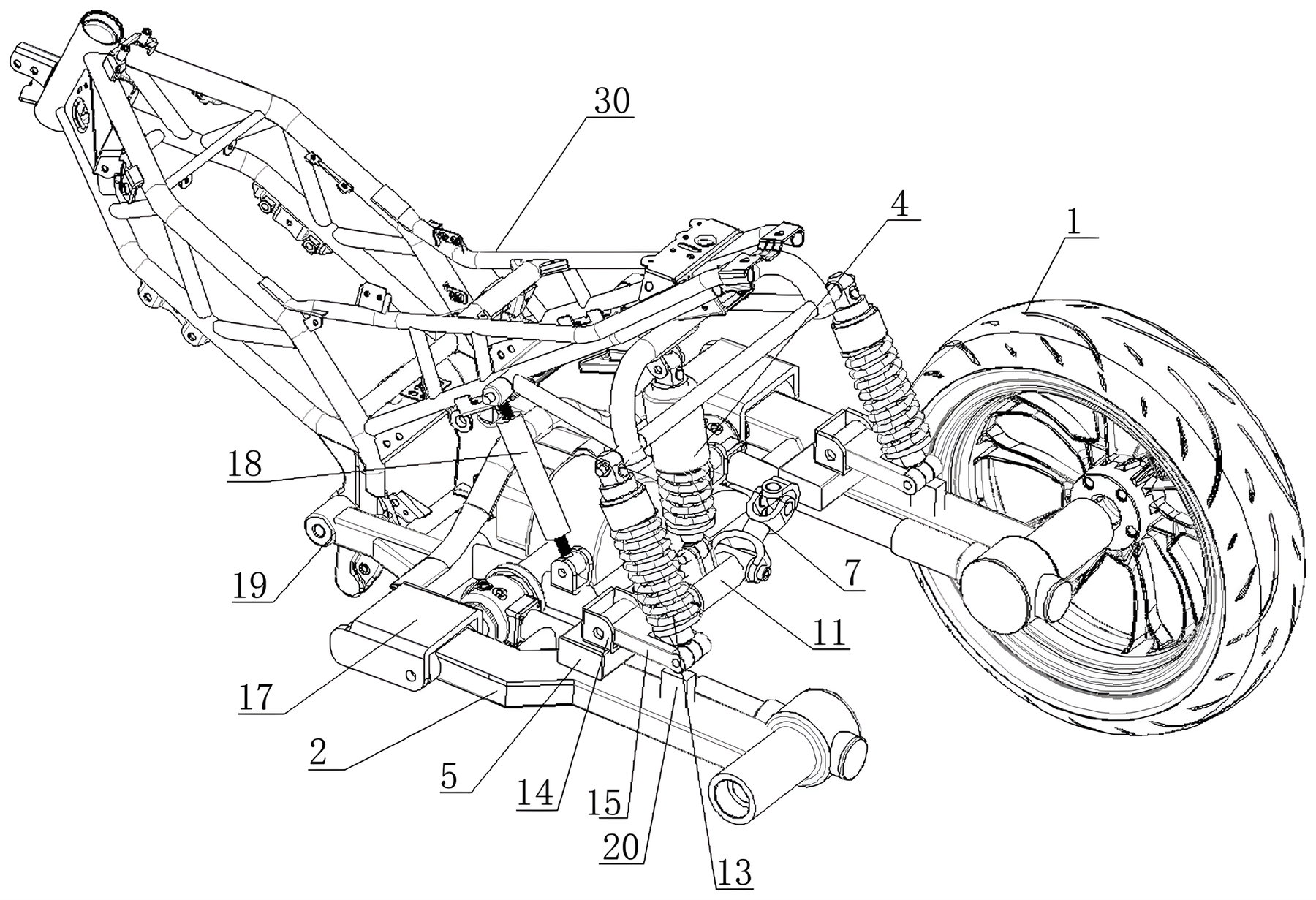
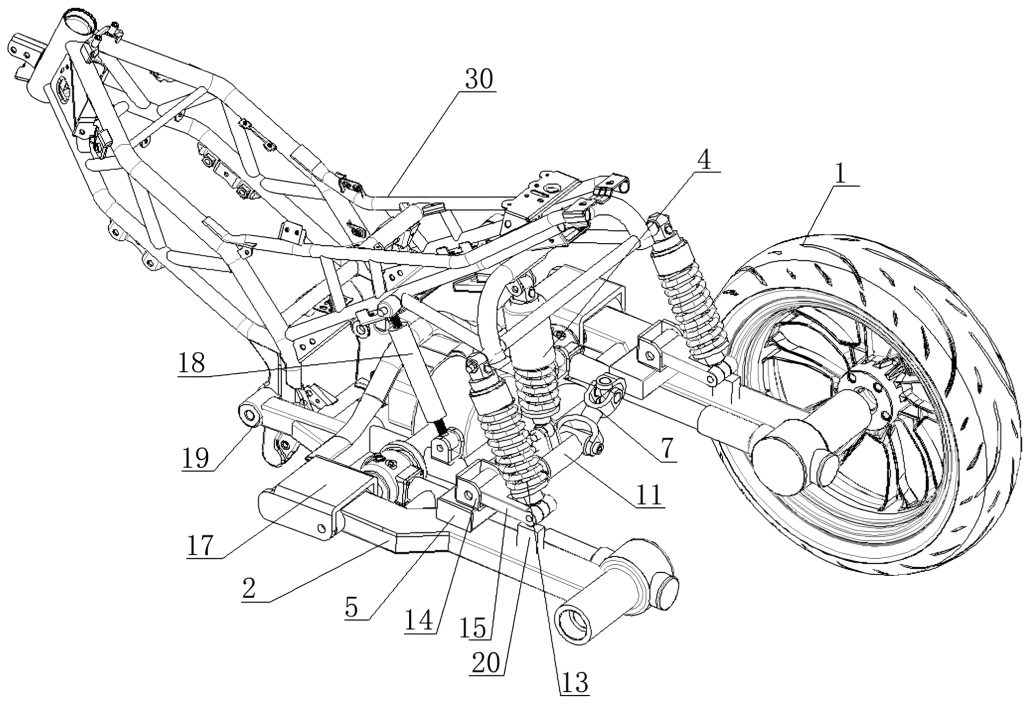
Zongshen, based in Chongqing and best known for its Cyclone model range, takes a different approach with its patent application. Instead of two front wheels, the design uses two rear wheels and a single front wheel. The foundation is a conventional motorcycle frame to which the entire rear wheel module is bolted. The key feature: all three wheels can tilt into corners, but not permanently. The system offers two clearly separated riding modes that can be switched at the push of a button.
Differential and Cardan Shafts for Rear All-Wheel Drive
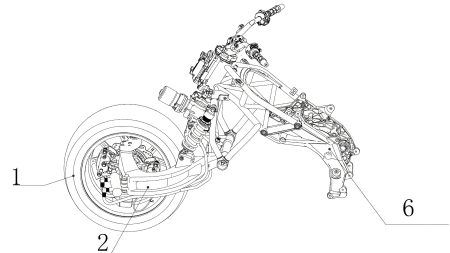
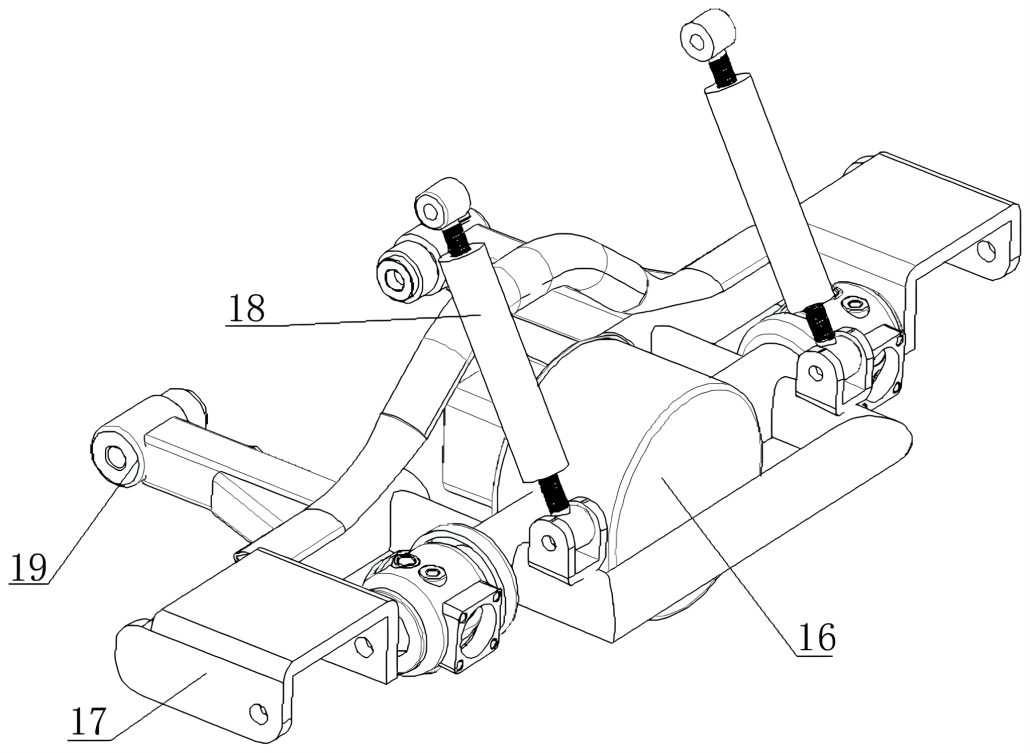
Both rear wheels are driven through a differential mounted between the two swingarm pivots. From there, power is transmitted via two lateral output shafts running concentrically with the swingarm pivots. Bevel gears redirect the power into cardan shafts housed within two single-sided swingarms. At the end of each swingarm sits another bevel gear that ultimately drives the respective rear wheel. Two adjustable struts connect the differential housing to the mounting points on the subframe where the rear shock absorbers would be attached on a conventional motorcycle.
Two Riding Modes Thanks to Height-Adjustable Air Suspension
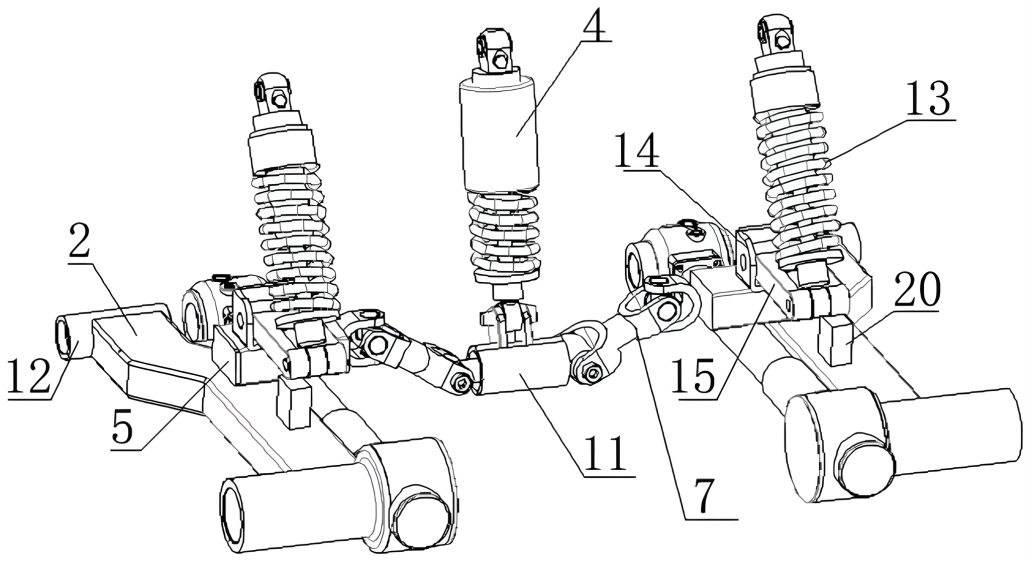
The real innovation lies in the rear suspension. Three shock units are employed: two lateral spring-damper units and one central air spring. The latter is connected to both swingarms via universal joints.
In trike mode, the central air spring is at its shortest position. The rear of the vehicle drops, and the two lateral shock units rest on bump stops on the upper surfaces of the swingarms. In this state, the swingarms are locked and the vehicle cannot tilt into corners. The suspension still functions, but lean angle is impossible. According to the patent, this mode is intended for low speeds and parking.
When switching to tilting mode, air is pumped into the central spring unit. It extends, raises the rear of the vehicle, and lifts the lateral shock units off the swingarm bump stops. From this point on, only the central air spring supports the entire weight of the rear end. Both swingarms can now move independently, and the vehicle leans into corners like a motorcycle. A safety mechanism ensures that at excessive lean angles, one of the lateral shock units regains contact with the swingarm, acting as a soft limiter for maximum tilt angle.
The Question of the Engine Remains Open
The patent application does not specify which engine would power the vehicle. However, the layout with differential and cardan shafts suggests that a longitudinally mounted engine would be better suited than a transversely mounted unit. Both an electric motor and an internal combustion engine would be conceivable.
Series Production Remains Uncertain
A patent application does not automatically mean the vehicle will ever be built. However, the Chinese motorcycle industry has proven to be increasingly experimental in recent years and shows less and less reluctance toward unusual vehicle concepts. Whether there is actually a market for a tilting three-wheeler with two rear wheels that is not already covered by established concepts with two front wheels remains to be seen.
➜ This article is part of our comprehensive overview: Motorcycle Patents and Future Technology: What Manufacturers Are Developing. Find all key information on this topic in one place.

- MICHELIN 091745Michelin – Pilot Power 2ct Rear – 190/50 Zr17 Tl 73(w) Rear – Sommerreifen