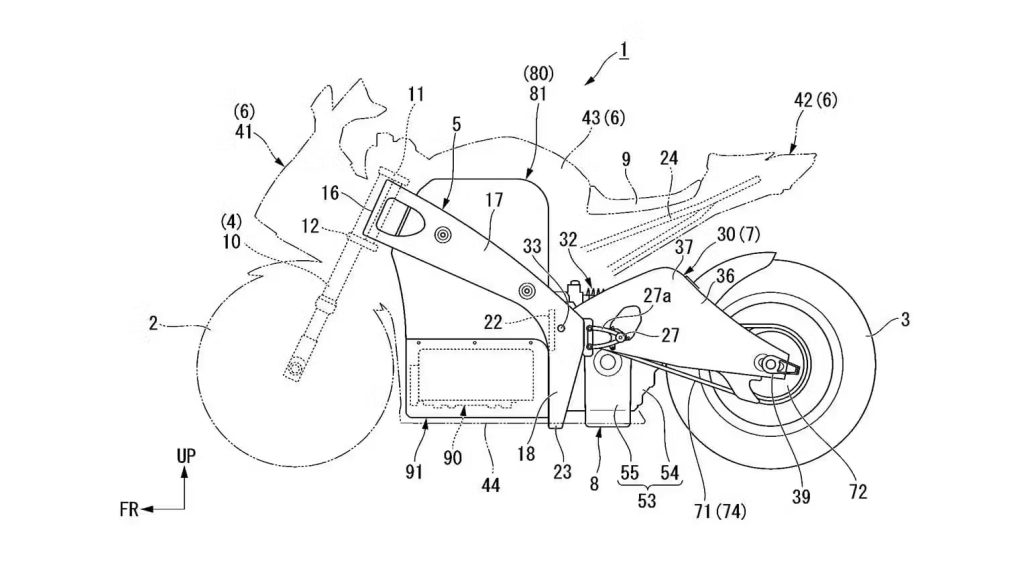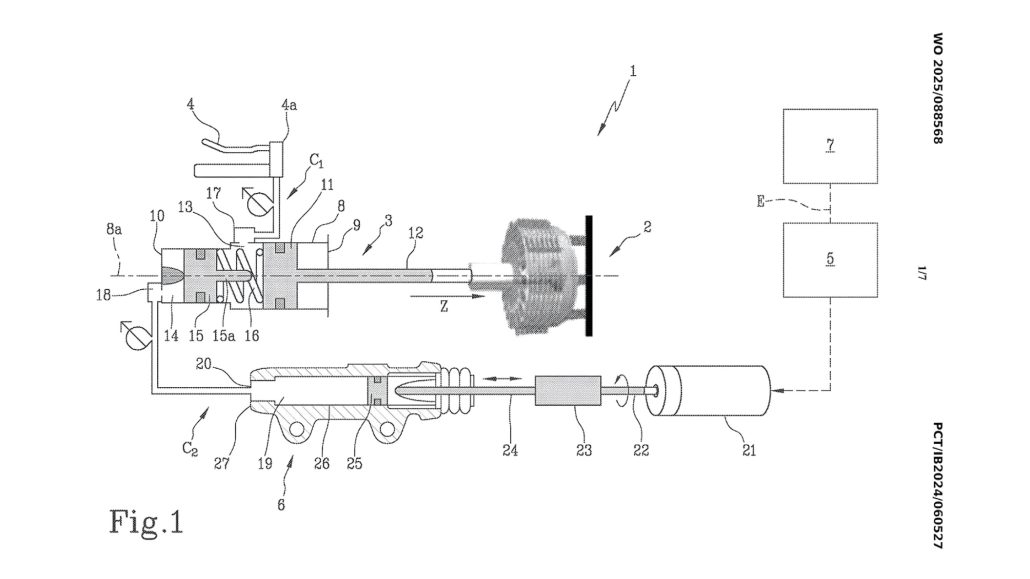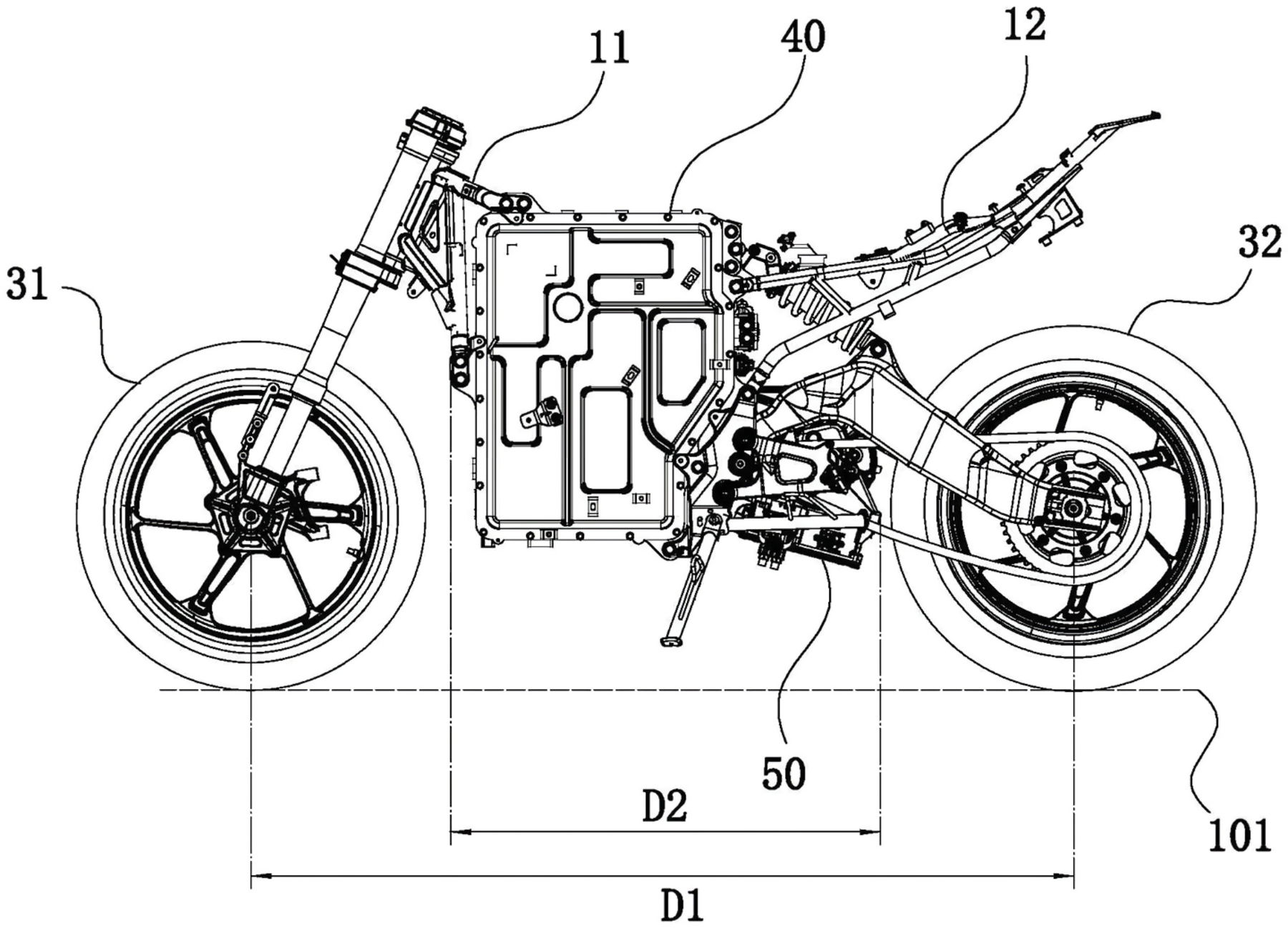
- Patent with detailed illustrations of battery, motor, and frame
- Battery plays a key role in the chassis
- Some components taken from the CFMoto 450SS
The development of electric motorcycles in the upper market segment is currently progressing more cautiously than expected a few years ago. High prices and limited range and performance compared to combustion engines are apparently hindering widespread acceptance. Nevertheless, work on new concepts continues behind the scenes. A recent patent application by CFMoto now provides a concrete preview of a lightweight electric sports motorcycle.
Design with load-bearing battery unit
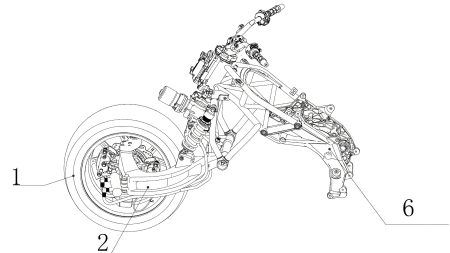
The patent shows a significantly advanced version of a concept that was already unveiled last year. The focus is particularly on the battery, motor, and frame structure. As with other current developments in the field of larger electric motorcycles, the battery is used as a structural element.
Honda’s first larger electric motorcycle, the Honda WN7, also uses a similar design. At CFMoto, the battery housing forms the central component of the chassis. The steering head is attached directly to one end of the battery housing.
In contrast to concepts in which the aluminum housing of the battery alone serves as a load-bearing element, CFMoto supplements the design with two aluminum trellis frame segments attached to the sides. These are designed to relieve the load on the battery housing and provide additional protection against damage. A steel rear frame is attached to the rear section, which is connected to both the battery housing and cast brackets.
Motor position and rear suspension
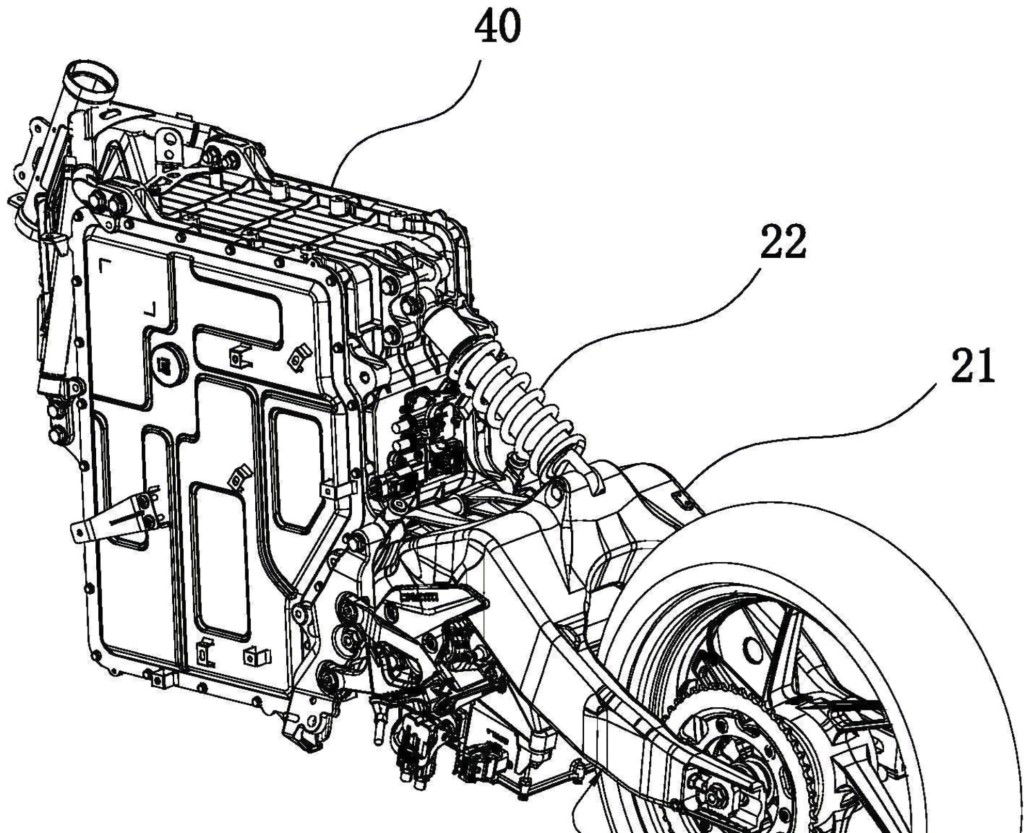
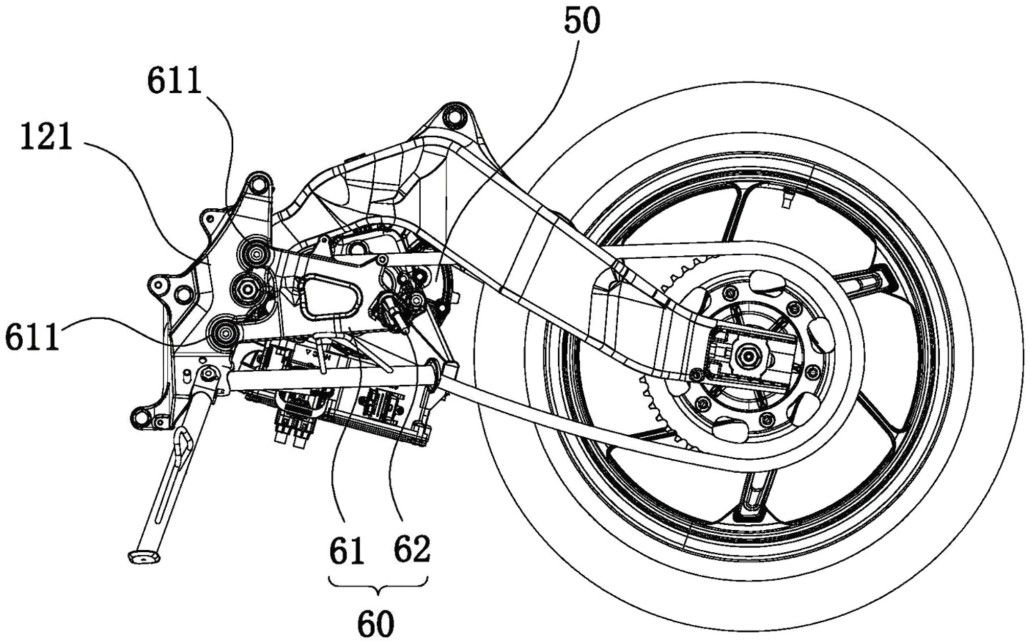
In this design, the electric motor is positioned unusually far back, behind the swing arm bearing. To keep the overall width to a minimum, the rear swing arm curves over the motor.
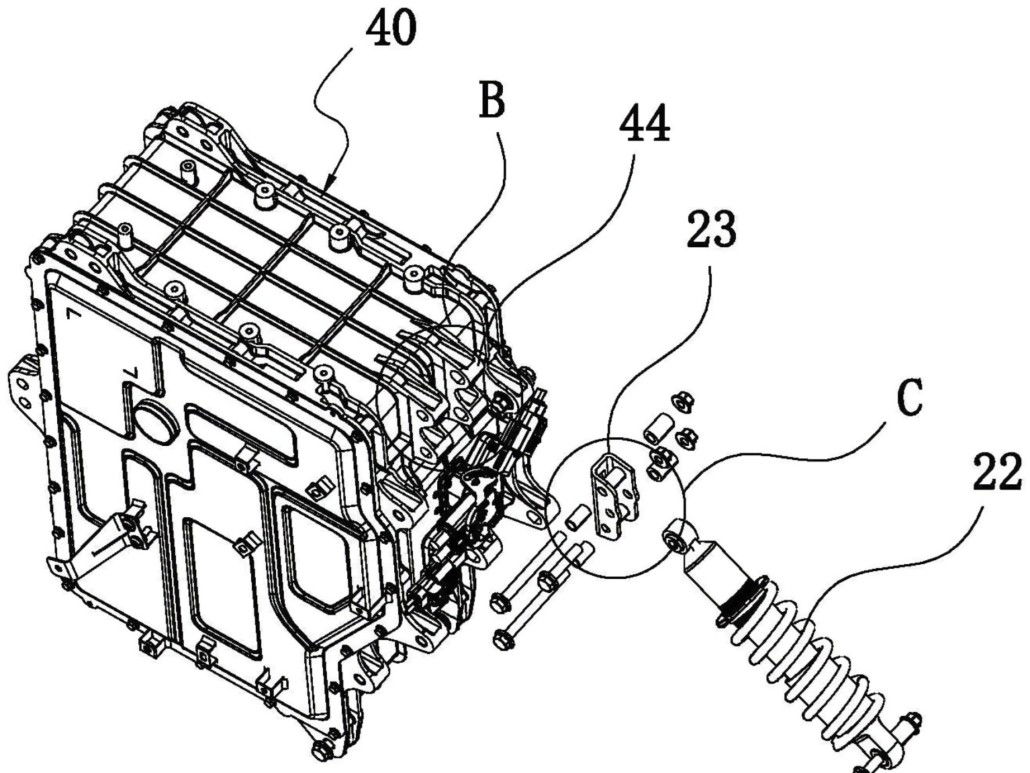
This arrangement leaves no room for a deflection with a progressive characteristic curve. Instead, the suspension strut is connected directly to the swing arm and to a bracket at the rear of the battery housing. It is precisely this upper suspension strut mount that is the focus of the patent application.
The motor and transmission are bolted to the battery pack via two cast aluminum brackets. These brackets also serve as mounts for footrests and side stands. The illustrations also show reinforcement structures in the outer edge of the battery housing and stiffeners pressed into the side aluminum covers. Mounting points for components on the rear frame that have not yet been specified in detail are also shown.
Focus on weight and installation space
The entire patent focuses on reducing weight and size. These two factors are considered key challenges, especially for sporty electric motorcycles, as they have a direct impact on performance and range.
The illustrations show a chain drive. According to the description, a belt drive could also be used as an alternative. The chassis and brake components, as well as the wheels, are strongly reminiscent of the CFMoto 450SS. This model has an output of 51 hp, which corresponds to 37.5 kW, and weighs 375 lbs, or around 170 kg. The parallels could indicate that the electric sports motorcycle is to be positioned in a comparable performance class.
Market launch still uncertain
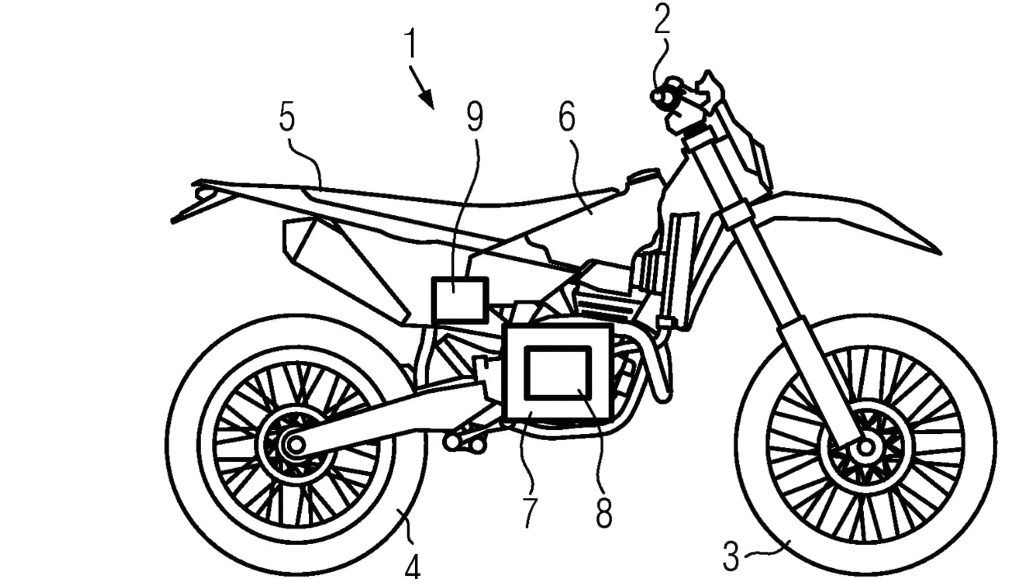
Given the manufacturer’s dynamic development, it seems possible that a near-series model could be presented in the near future. However, a look at the CF X electric motocross bike, which was also patented and presented as a concept in 2024, shows that a considerable amount of time can pass between patent application and series production. This model has not yet gone into production.
Whether and when the electric sports motorcycle based on the now published patent documents will actually come onto the market therefore remains to be seen. What is clear, however, is that CFMoto is continuing to work intensively on a lightweight and compact solution for a sporty electric motorcycle.
What does this mean for me as a motorcyclist?
For motorcyclists, the patent indicates that CFMoto is working on an electrically powered sports motorcycle that could be based on familiar mid-range models in terms of weight and dimensions. The use of existing chassis components and the compact design suggest that the handling will be more sporty and familiar rather than representing a completely new concept. At the same time, the focus on weight reduction and space optimization shows that range and performance remain key areas of development. However, it remains to be seen whether this will result in a production-ready model in the near future, as the manufacturer’s previous electric projects have not yet gone into production.
→ This article is part of our comprehensive overview of patents and future technologies – find all developments in our Patents and Future Motorcycle Technology overview.