- Inline four-cylinder with 399 cc and up to 80 hp (59 kW) at over 14,000 rpm
- Showa suspension and Brembo Stylema brakes as standard
- Edizione Speciale with carbon bodywork, Öhlins shock and CNC-machined components
- Market launch during 2026, including Europe
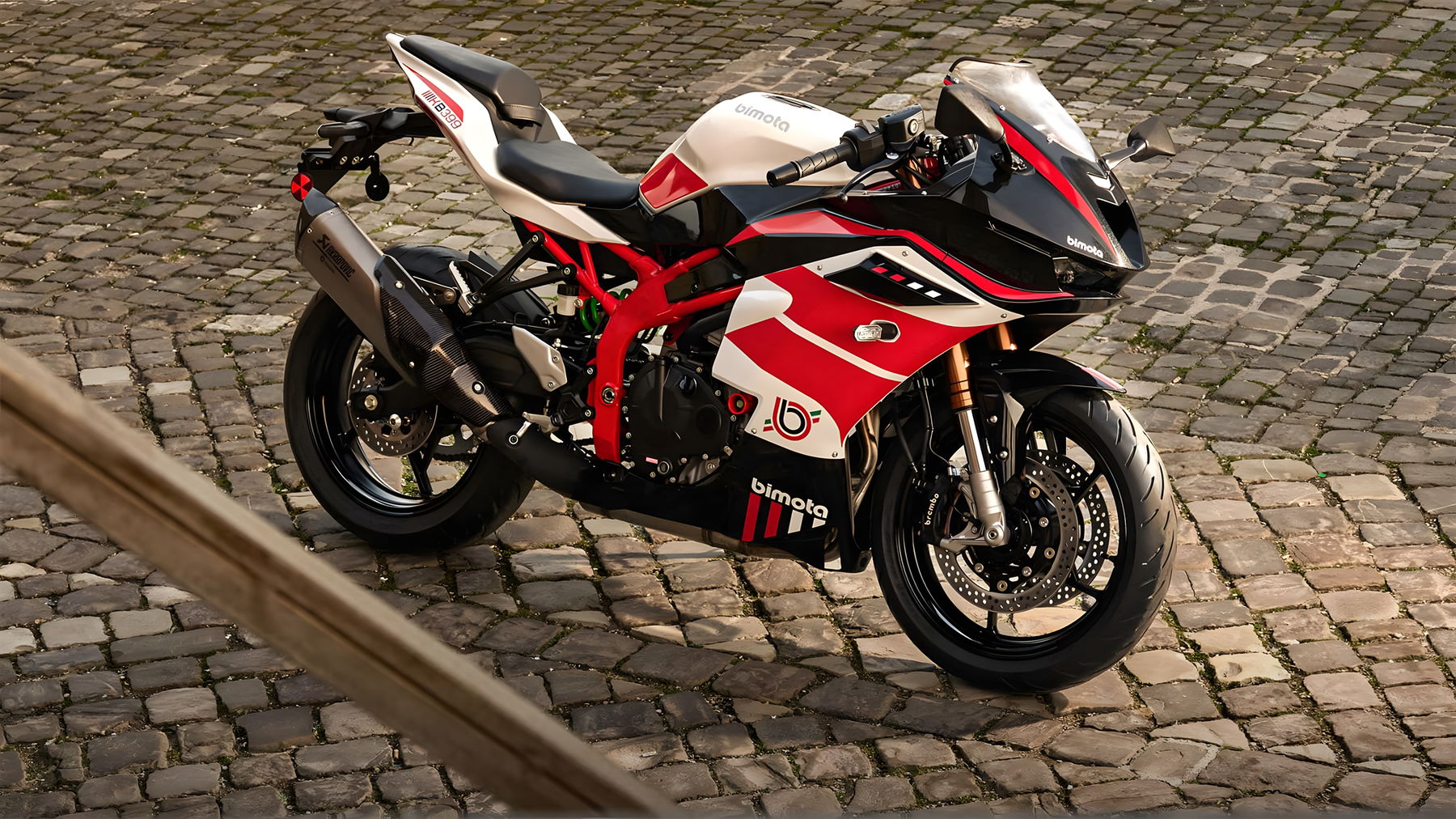
Under the motto “Espresso di Bimota”, the Italian boutique manufacturer from Rimini unveiled a new model on March 18, 2026 that doesn’t quite fit the typical Bimota mould. Instead of yet another exclusive superbike in the five-figure price range, the KB 399 brings a comparatively compact 400cc machine to the starting line. The technical basis is the Kawasaki Ninja ZX-4RR, which is hardly surprising given the ownership structure. Kawasaki has held just under 50 percent of the legendary small-series sports motorcycle manufacturer since 2019. The official presentation took place just days before the start of the Osaka Motorcycle Show in Japan, which is likely no coincidence, as 400cc motorcycles have always held a special status there.
High-Revving Inline-Four from the Ninja ZX-4RR
At the heart of the KB 399 sits an inline four-cylinder with 399 cc displacement, sourced from the current Kawasaki Ninja ZX-4RR. With a bore of 57.0 mm and a stroke of 39.1 mm, the engine is extremely short-stroke and correspondingly rev-happy. The compression ratio stands at 12.3:1, with fuel delivery handled by a fuel injection system with four 34 mm throttle bodies. In Kawasaki tune, the four-cylinder produces up to 80 hp (59 kW) at speeds beyond 14,000 rpm, with the peak figure achieved using ram-air boost at high speeds. The KB 399 is Euro 5+ compliant and has full road homologation.
What makes this engine so special in its displacement class is the combination of four cylinders and extreme willingness to rev. No other current 400cc engine revs this high while offering four cylinders. Bimota describes the power characteristics as a blend of solid torque in the low and mid-range with explosive power delivery in the upper registers. A titanium Akrapovič silencer developed specifically for the KB 399 comes as standard equipment, designed to emphasise the sound of the high-revving four-cylinder. A quickshifter for the six-speed gearbox is also included, which should more than prove its worth with such a rev-hungry engine.
Bimota Frame with Kawasaki Genes
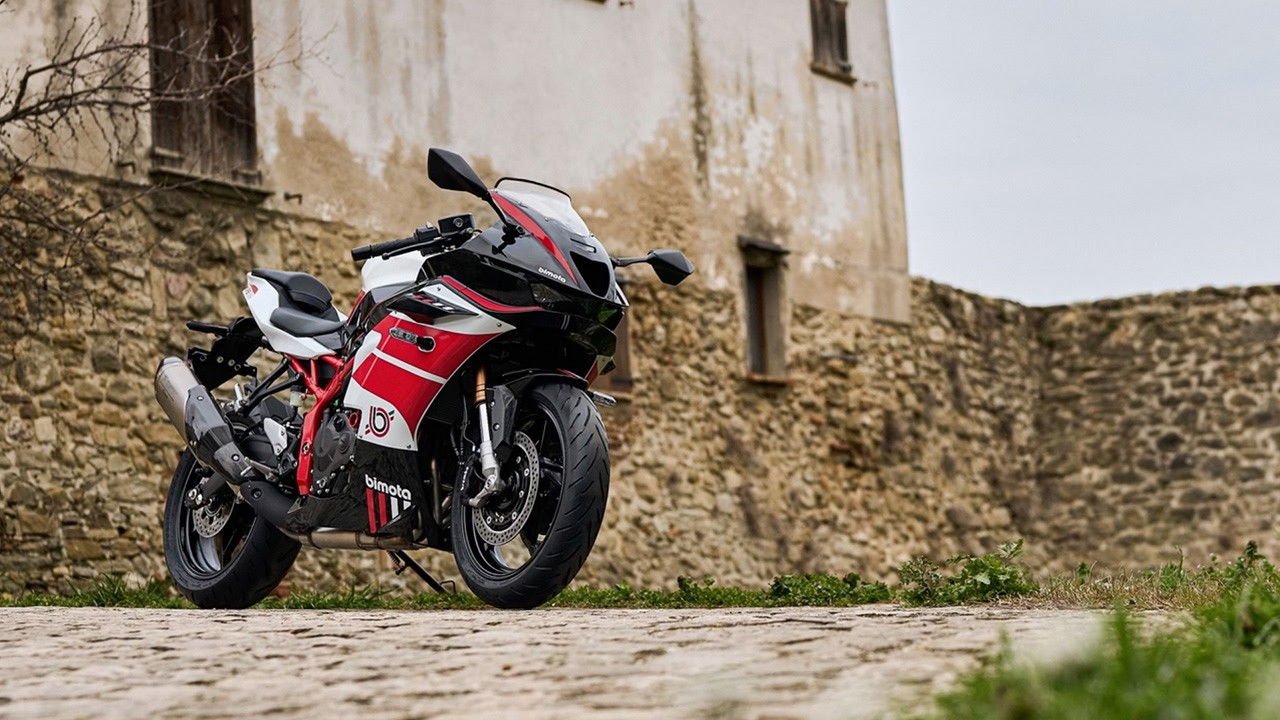
The KB 399 takes a slightly different approach to the chassis compared to its bigger sibling, the KB998 Rimini. While the 998 receives an elaborate trellis frame with CNC-machined aluminium plates, the KB 399 uses a steel frame with a welded subframe and a rear swingarm also made of steel. This construction closely follows the Kawasaki Ninja ZX-4RR as its technical base. The frame is, however, painted in a colour developed specifically for this model, giving it a distinctive look.
Despite the constructive kinship with Kawasaki, Bimota uses premium components in the details. The upper and lower triple clamps as well as the steering head cap are made from solid aluminium billet and CNC-machined. These parts come from the Rimini region and underscore the craftsmanship ethos that Bimota refuses to abandon even on a comparatively affordable model.
Showa, Brembo and Öhlins for the Edizione Speciale
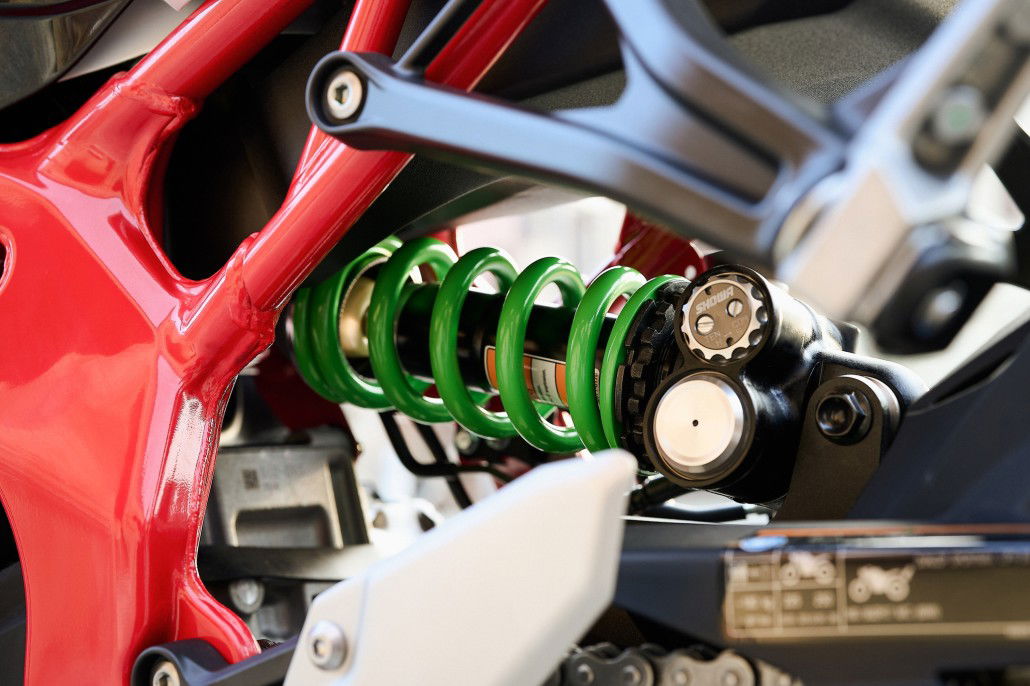
The standard KB 399’s suspension consists of a fully adjustable Showa SFF-BP upside-down fork with 41 mm stanchion diameter paired with a Showa BFRC-lite rear shock. The braking system comes courtesy of Brembo, featuring Stylema monoblock calipers with radial mounts on a twin front disc setup. This puts the braking performance well above what is typically found in the 400cc class.
For those wanting more, the KB 399 ES — the Edizione Speciale — swaps the rear shock for a fully adjustable Öhlins STX46. Additional upgrades include CNC-machined levers, adjustable footpegs and more aggressively positioned clip-on handlebars. The ES version is likely aimed primarily at track use.
Carbon, Winglets and Italian Craftsmanship
Visually, the KB 399 clearly takes its cues from the bigger KB998 Rimini from the Superbike World Championship. The bodywork was designed and modelled by Bimota’s craftsmen in Italy. Winglets are also present, intended to generate additional downforce just like those on the KB998 Rimini.
On the Edizione Speciale, the upper, side and lower fairing panels are made from dry carbon fibre. The standard version comes in the brand’s signature tricolore livery of white, red and black. Both variants feature the Kawasaki digital display and its mode selection for power delivery and traction control.
Bimota has not officially disclosed the weight. The Kawasaki Ninja ZX-4RR tips the scales at 189 kg (417 lbs) wet according to factory specifications. With the use of carbon parts and the titanium Akrapovič silencer, the KB 399 could shave off a few kilograms.
Bimota and the 400cc Class: Not a First
Bimota adding a 400cc machine to its lineup is not an entirely new development from a historical perspective. Back in the 1980s, the manufacturer produced the YB7 Folgore based on the Yamaha FZR 400. Since Kawasaki’s investment in 2019, however, only KB models on Kawasaki platforms have been in the range, including the KB998 Rimini, the Tesi H2 with the supercharged engine from the Kawasaki Ninja H2, and the retro-styled KB4.
The model name follows the established pattern: the KB designation stands for the Kawasaki-Bimota collaboration, the number 399 derives from the displacement. The ES suffix denotes the higher-spec Edizione Speciale.
Availability and Price
The Bimota KB 399 is scheduled for sale during 2026 and will also be available in Europe. Bimota has not yet announced specific pricing. The Kawasaki Ninja ZX-4RR as the technical base currently retails at around €10,000 (approximately $10,500) in Germany. The Bimota version with its premium suspension components, Akrapovič exhaust and CNC-machined aluminium parts is certain to carry a significant premium. An even higher surcharge is to be expected for the Edizione Speciale with carbon bodywork and Öhlins shock.
Whether the KB 399 could also see action in racing remains open. The Kawasaki ZX-4RR is already used in the Kawasaki Superteen class in Great Britain and moves to a new junior sportbike category in 2026. A potential deployment in the new World Sportbike class would be conceivable. For the KB998 Rimini, racing in the Superbike World Championship with the BbKRT team and riders Alex Lowes and Axel Bassani was part of the concept from the very beginning.

- MICHELIN 091745Michelin – Pilot Power 2ct Rear – 190/50 Zr17 Tl 73(w) Rear – Sommerreifen



Redakteur bei Motorrad Nachrichten. Fokus auf Technik, Szene und Motorradpolitik – neutral, sachlich, verständlich.
Verantwortlich für die Seiten www.Motorcycles.News, www.Motorrad.Training und den YouTube-Kanal "Motorrad Nachrichten", sowie deren social Media-Seiten.