- New VI-grade DiM500 driver-in-the-loop simulator now operational at R&D centre near Rome
- Expected to eliminate up to 12,000 experimental tyres per year
- Virtual Tyre Development already reduces raw material consumption and CO₂ emissions by up to 60 percent
When most people think of tyre development, they probably picture test vehicles circling closed tracks lap after lap to put new rubber compounds and tread patterns through their paces. At Bridgestone, the future looks quite different. The Japanese tyre manufacturer has commissioned a state-of-the-art driving simulator at its research and development centre near Rome, one that is set to fundamentally transform how tyres are developed.
A virtual test lab for tyre development
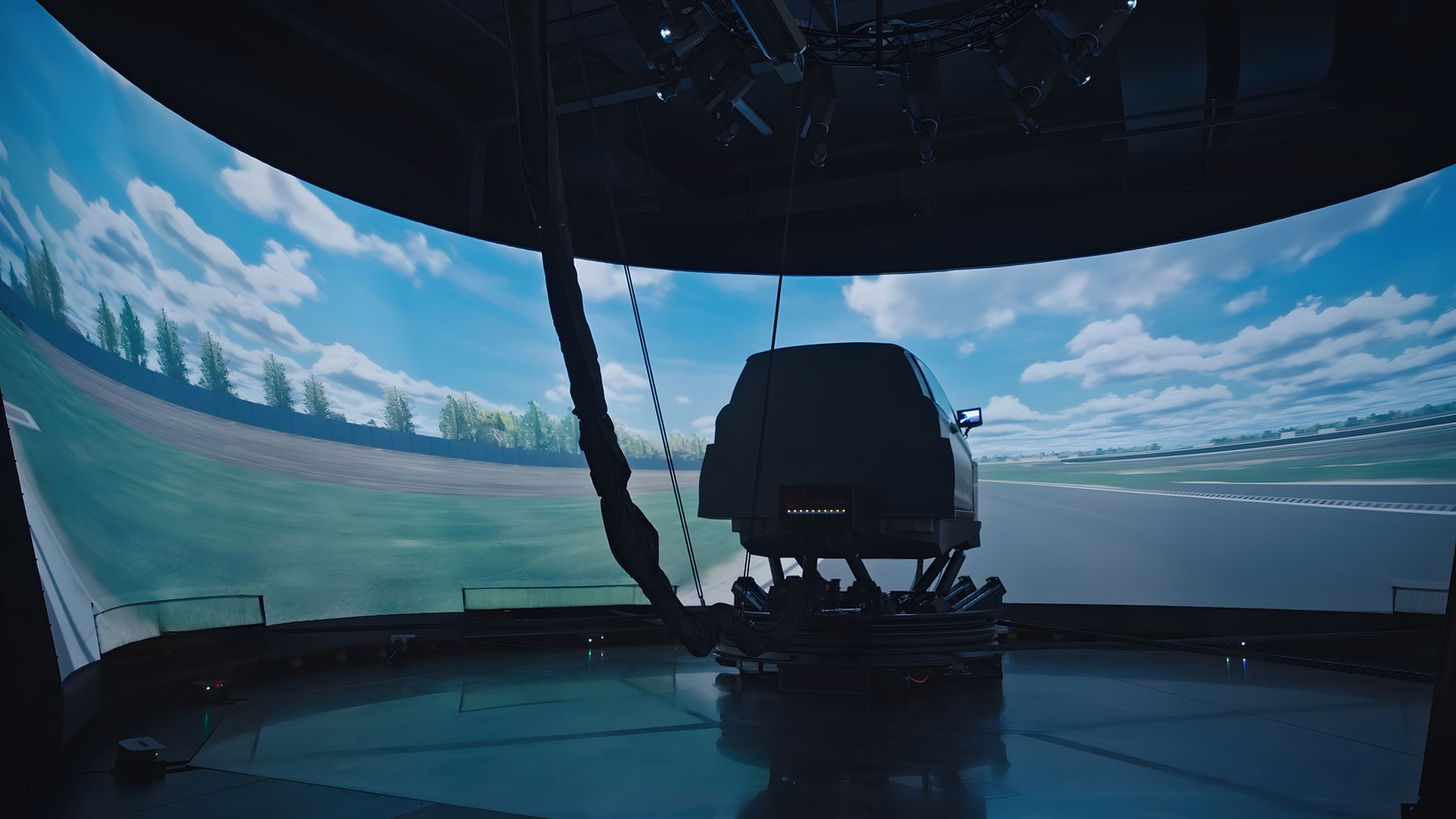
The new system is a VI-grade DiM500 driver-in-the-loop simulator. At its core is a large motion platform with a five-metre motion radius, paired with a carbon fibre cockpit. The driver is immersed in a realistic virtual environment that replicates real-world driving conditions. The platform can reproduce forces equivalent to those experienced during physical testing, enabling precise analysis of tyre behaviour.
What makes the DiM500 special is its combination of high-resolution simulations, subjective driver feedback, historical data and artificial intelligence. This approach allows test driver feedback to be integrated into the development process much earlier than before. Bridgestone can now evaluate a significantly larger number of tyre specifications than would be possible with conventional physical testing, and in less time.
Physical testing remains but moves to the final stage
This does not mean real-world track testing is being abandoned entirely. Physical testing remains an essential part of Bridgestone’s development process. However, it will now be reserved for the final phase of tyre validation, once the fundamental specifications have already been defined and optimised virtually. This is expected to noticeably shorten the overall development cycle.
Currently, the simulator focuses primarily on evaluating dry performance. Bridgestone is working to expand the system to cover a broader range of conditions, including wet surfaces and more complex terrains.
Fewer prototypes, fewer emissions
The introduction of the DiM500 also has an environmental dimension. According to Bridgestone, the simulator is expected to make the production of up to 12,000 experimental tyres per year obsolete. That means less raw material consumption, lower production effort and reduced CO₂ output.
Bridgestone describes itself as a pioneer in digital tyre development for over a decade. Its existing Virtual Tyre Development technology is said to have already reduced raw material consumption and CO₂ emissions in the development phase of original equipment tyres by up to 60 percent. The DiM500 adds a crucial component to this digital ecosystem.
Mattia Giustiniano, Senior Vice President R&D at Bridgestone West, put the investment into perspective: “Bridgestone is already considered a pioneer in digital tyre development – leveraging Virtual Tyre Development for more than a decade. By integrating the driver into the digital development cycle, this investment adds a crucial new piece to our evolving ecosystem.”
Giustiniano added that the introduction of the simulator represents a significant step towards improving the efficiency and sustainability of R&D processes while opening up new opportunities for innovation.
Closer collaboration with vehicle manufacturers
Another advantage of the DiM500 lies in the ability to develop tyres and vehicles in parallel. Previously, tyre manufacturers often had to wait for finished or nearly completed vehicle models before they could develop matching tyres. With the simulator, Bridgestone can now advance tyre development simultaneously with vehicle development and work more closely with manufacturers. The goal is to tailor tyres precisely to each vehicle in order to fully exploit its performance potential.
Currently limited to automobiles
The DiM500 at Bridgestone’s development centre near Rome currently serves exclusively for the development of passenger car tyres. An application in the two-wheeled sector is not planned at this time. Whether the technology will eventually be used for motorcycle tyre development remains to be seen. However, the possibilities the simulator offers in tyre development are likely to be of interest to the motorcycle sector as well, where precise tyre behaviour plays an even greater role in safety than it does for cars.


- S100 2160S100 2160, Helmpolster Reiniger – 300 ml male