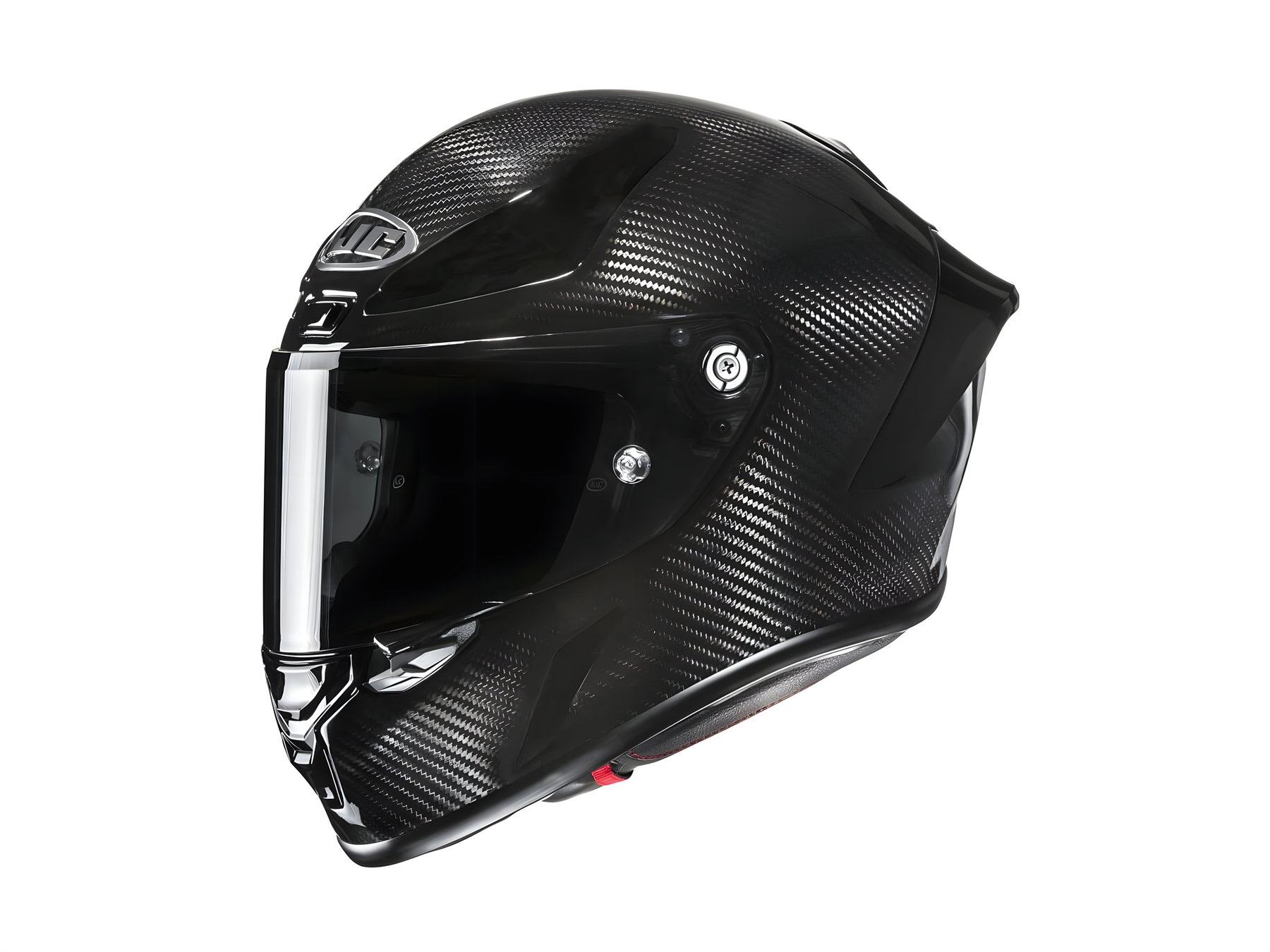
- Carbon shell with four shell sizes for sizes 2XS to 2XL
- Dual homologation to ECE 22.06 and FIM FRHPhe-02
- Priced from 749.90 euros (approximately 785 USD) for solid colors, replica designs from 999.90 euros (approximately 1,047 USD)
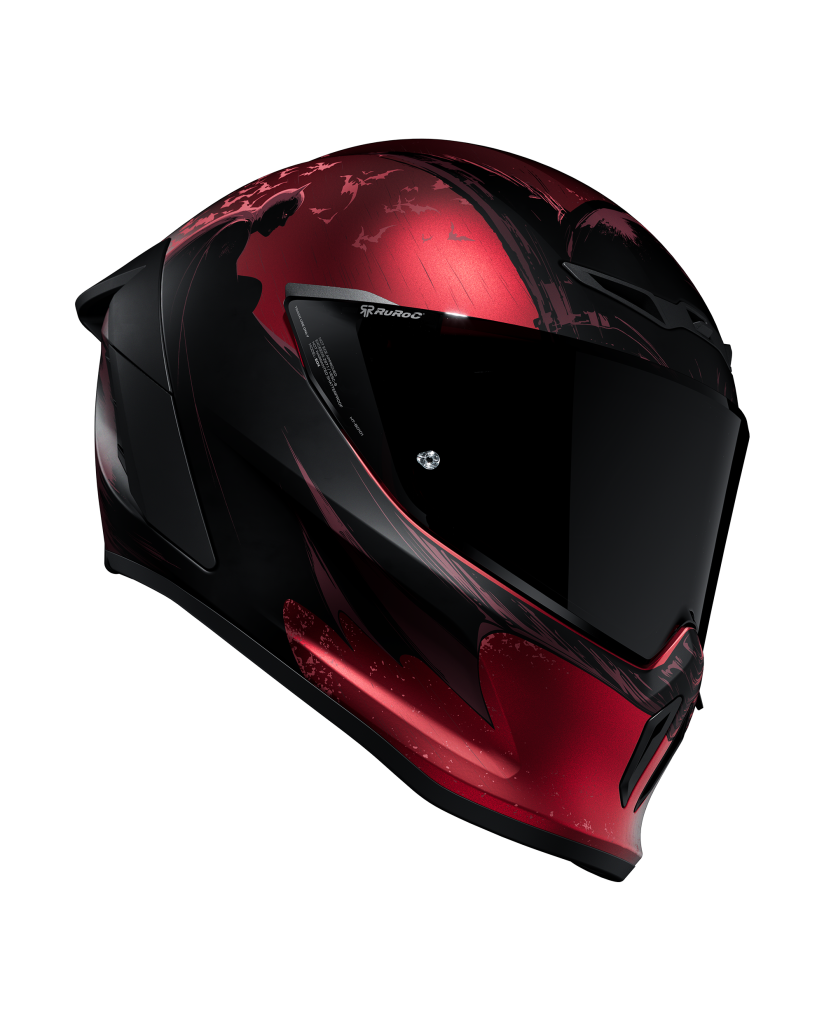
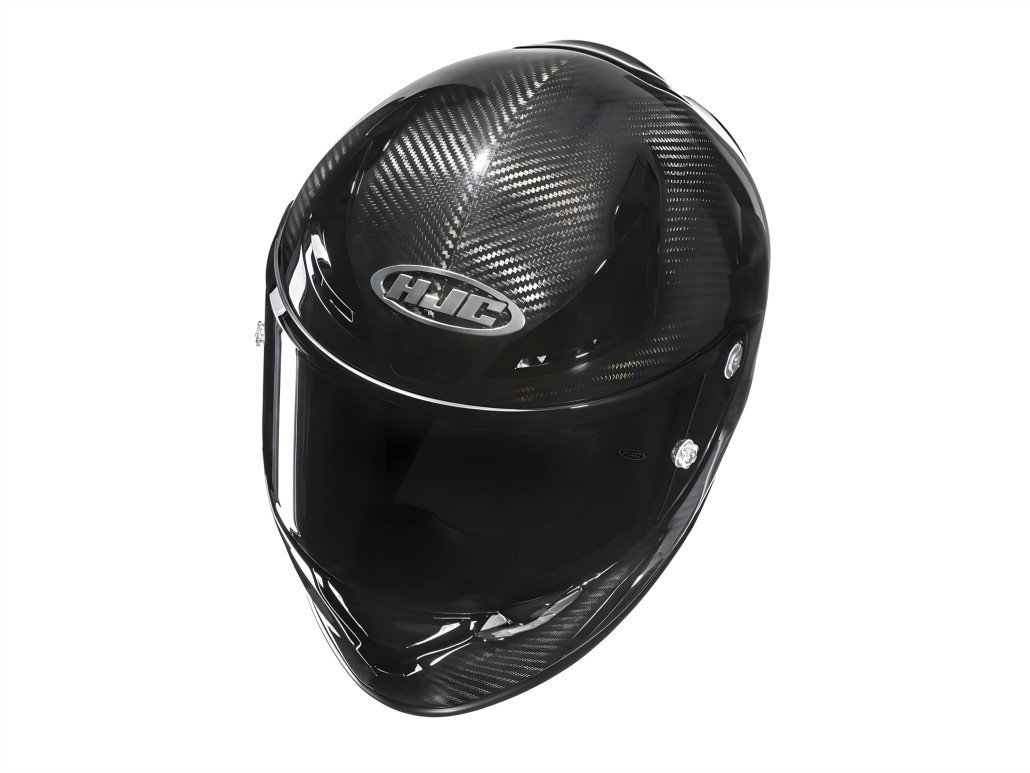
South Korean helmet manufacturer HJC has unveiled the RPHA 1 V2 Carbon, the successor to its previous top-tier full-face helmet. The helmet replaces the RPHA 1, which has been available since 2022 and was HJC’s first production model to carry the FIM homologation at the time. According to the manufacturer, the new version is built to the same specifications used by MotoGP riders Fabio Quartararo and Brad Binder on the racetrack. HJC is one of the few helmet manufacturers worldwide that operates its own wind tunnel, where the aerodynamics of the RPHA 1 V2 Carbon were developed and optimized.
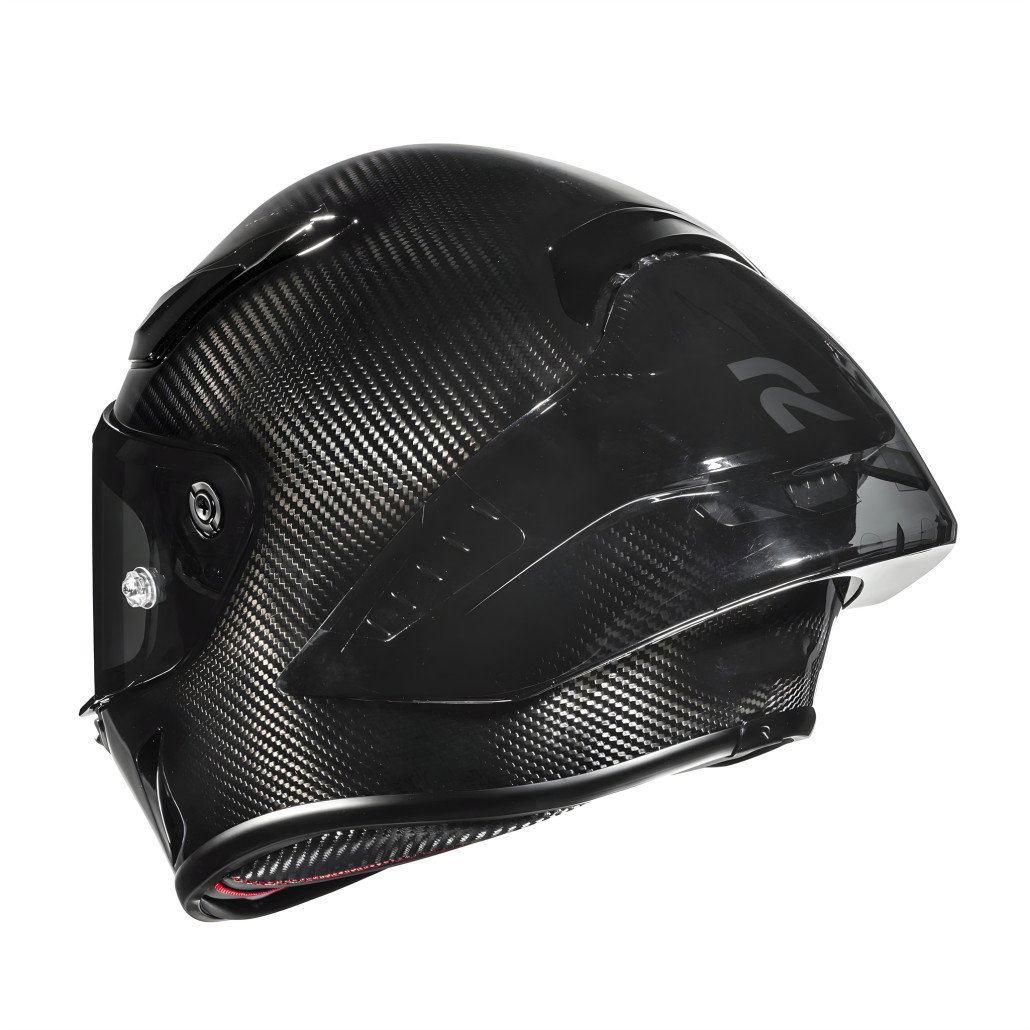
Carbon Shell with PIM Plus Matrix
At the core of the RPHA 1 V2 Carbon is a redesigned outer shell made from carbon fiber. HJC uses the so-called PIM Plus Matrix, a hybrid construction combining carbon and fiberglass weave. This material mix is intended to provide high impact resistance at low weight. According to HJC, the helmet weighs approximately 1,400 grams in size M with a tolerance of plus/minus 50 grams. In an independent weigh-in test, 1,438 grams were recorded, placing the RPHA 1 V2 Carbon among the lightest racing helmets on the market. Compared to the predecessor with ECE homologation, the weight has reportedly decreased by 5.4 percent despite the stricter FIM-02 requirements, which is attributed to the higher carbon content in the new shell construction.
The outer shell is offered in four different shell sizes, covering the entire size range from 2XS (head circumference 52 cm) to 2XL (63 cm). Within each shell size, four different EPS inner shells provide a total seven-step size coverage. The compact shell shape is designed to prevent the helmet from appearing oversized, which also improves aerodynamic efficiency.
Aerodynamics from the Wind Tunnel
The shell shape was developed in HJC’s in-house wind tunnel. The goal, according to the manufacturer, was maximum stability at speeds beyond 300 km/h, as encountered on MotoGP circuits. Side buffeting and vertical pressure forces are said to be minimized by the aerodynamic profile.
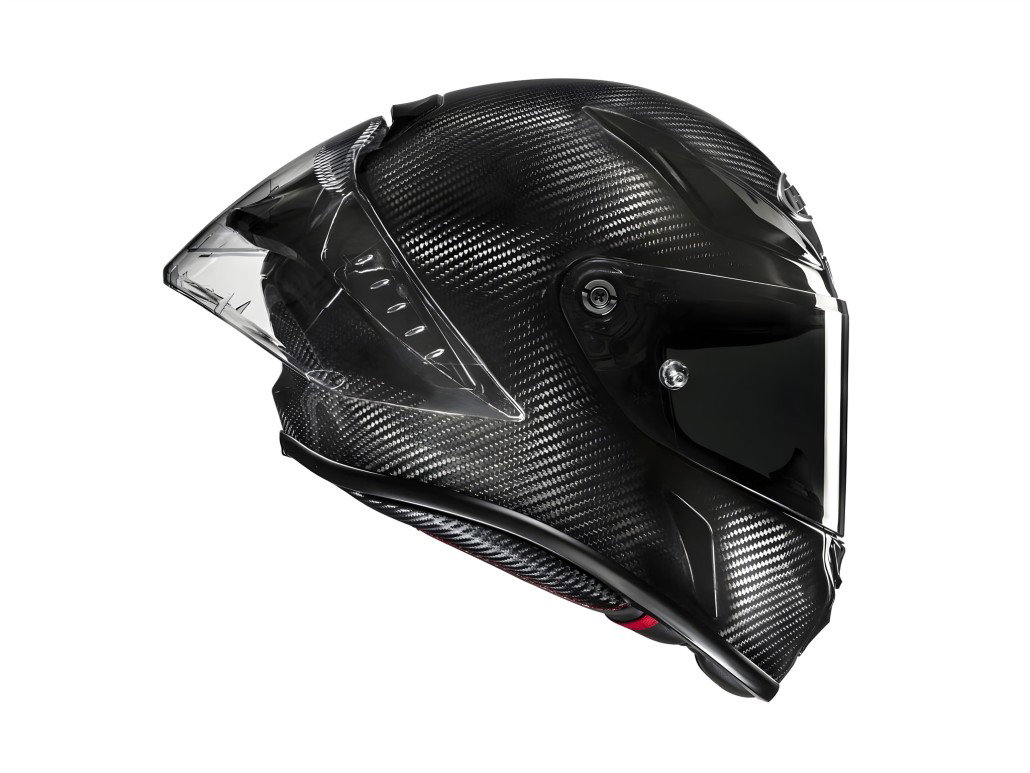
A pre-installed racing spoiler sits at the rear, designed to improve stability at high speeds on straights. An additional spoiler attachment is included, allowing the aerodynamic effect to be further adjusted according to riding style and track conditions. The extended spoiler variant is said to not only increase stability on straights but also reduce aerodynamic drag.
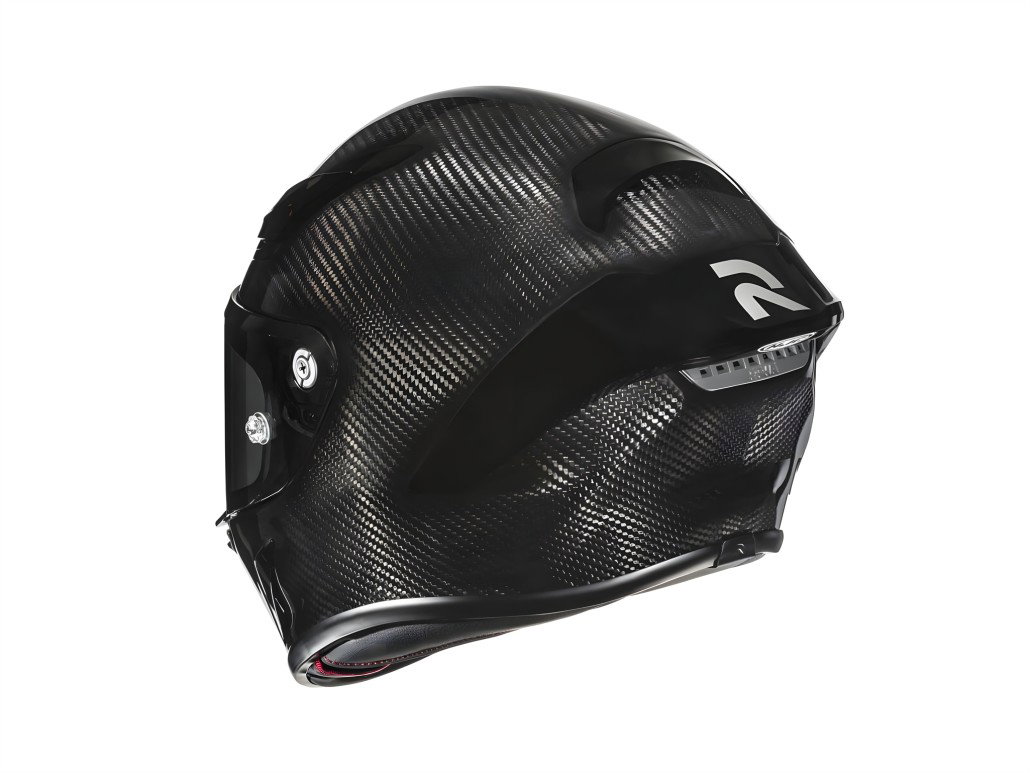
Ventilation with Five Inlets and Four Outlets
The ventilation system is designated ACS (Advanced Channeling Ventilation System). It consists of five air inlets and four exhaust openings connected via channels in the EPS inner liner. Air is directed from the front through the helmet and is designed to transport heat and moisture toward the rear. In an independent road test, the RPHA 1 V2 Carbon achieved the top score for ventilation with a measured temperature difference of zero degrees between ambient air and the helmet interior.
Three of the five inlets are located in the forehead area, with two more at the chin. The ventilation sliders can be operated while wearing gloves.
Visor System with Metal Lock
The RPHA 1 V2 Carbon comes with the HJ-35 visor, a 2D flat visor with scratch protection and 99 percent UV protection. Attachment is via the newly developed EASY base plates, a dual-pivot system with a ratchet mechanism that allows tool-free visor changes. For added security during high-speed riding, a metal lock anchors the visor firmly to the shell, preventing unintentional opening.
On the inside of the visor, there are ergots for mounting an anti-fog insert; on the outside, mounts for tear-off visors. Included in the box are a Pinlock 120 XLT, a set of tear-offs, and an additional dark-tinted visor. Additionally, a photochromic visor is reportedly in development that automatically darkens in changing light conditions.
Interior and Safety Details
The interior lining consists of 3D comfort pads covered with SilverCool fabric. This material is said to be antibacterial, odor-inhibiting, moisture-wicking, and quick-drying. All inner pads are removable and washable. The cheek pads are available in four different thicknesses and can be swapped to customize the fit. According to the manufacturer, the helmet features an intermediate oval fit, which corresponds to the most common head shape.
For emergency use, the helmet has a quick-release extraction system on the cheek pads, allowing emergency responders to remove the helmet in a controlled manner. The chin strap is secured with a double-D buckle, which has been upgraded to titanium rings on the V2. Compared to steel rings, the titanium rings are said to be lighter yet stronger.
Additional details include a chin wind deflector (bavette), a removable nose guard, eyeglass channels on the sides, and pre-installed speaker pockets for communication systems.
FIM FRHPhe-02: What the New Standard Means
The FIM homologation has been mandatory for international FIM motorcycle racing competitions since 2019. With the new version FRHPhe-02, which takes effect in 2026, the requirements have been tightened. According to HJC, the updated standard includes stricter impact tests, higher energy absorption requirements, and for the first time, improved protection against rotational forces. In addition to the FIM-02 certification, the RPHA 1 V2 Carbon also meets the ECE 22.06 standard. For the US market, the helmet additionally carries DOT certification (FMVSS 218) and is sold there under the designation RPHA 1N V2 Carbon.
Noise Level on the Road
In an independent road test at a speed of 130 km/h, a noise level of approximately 102 decibels was measured. For a racing helmet without additional sound insulation or wind deflectors, this is a solid result. The actual perceived loudness also depends on factors such as windshield, seating position, and individual fit.
Colors, Designs, and Availability
In the base version, the HJC RPHA 1 V2 Carbon is available in two solid-color variants that showcase the visible carbon weave of the shell: one in gloss black and one in matte black. The price is 749.90 euros (approximately 785 USD).
Additionally, HJC offers two Quartararo replica designs. The Snow Diablo design is inspired by a wintry color scheme with icy tones, while the Quartararo Le Mans III is modeled after the helmet Quartararo wore at the French Grand Prix. Both replica variants cost 999.90 euros (approximately 1,047 USD). The Snow Diablo version has been available in stores since December 2025.
The size range spans from 2XS (52) to 2XL (63). HJC offers a five-year warranty on the helmet.
Frequently Asked Questions
-
How much does the HJC RPHA 1 V2 Carbon cost?
The solid-color version in gloss or matte black costs 749.90 euros (approximately 785 USD). The Quartararo replica designs Snow Diablo and Le Mans III are priced at 999.90 euros (approximately 1,047 USD).
-
What certifications does the HJC RPHA 1 V2 Carbon have?
The helmet is certified to ECE 22.06 and the new FIM standard FRHPhe-02. For the US market, it additionally carries DOT certification (FMVSS 218).
-
How much does the HJC RPHA 1 V2 Carbon weigh?
HJC states the weight at approximately 1,400 grams (plus/minus 50 grams) in size M. An independent test recorded 1,438 grams on the scale.
-
What sizes are available for the HJC RPHA 1 V2 Carbon?
The helmet is available in sizes 2XS (52) to 2XL (63) and is manufactured in four shell sizes to ensure a compact fit across the entire size range.
-
What is included with the HJC RPHA 1 V2 Carbon?
In addition to the clear HJ-35 visor, the package includes a Pinlock 120 XLT, a dark-tinted secondary visor, a set of tear-off visors, and a racing spoiler. The packaging also contains a premium helmet bag.

- DR. O.K.WACK 2031DR. O.K.WACK Motorradreinigung 2031 2l