Modular Design for Powertrain and Chassis
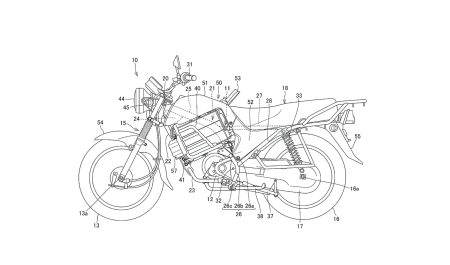
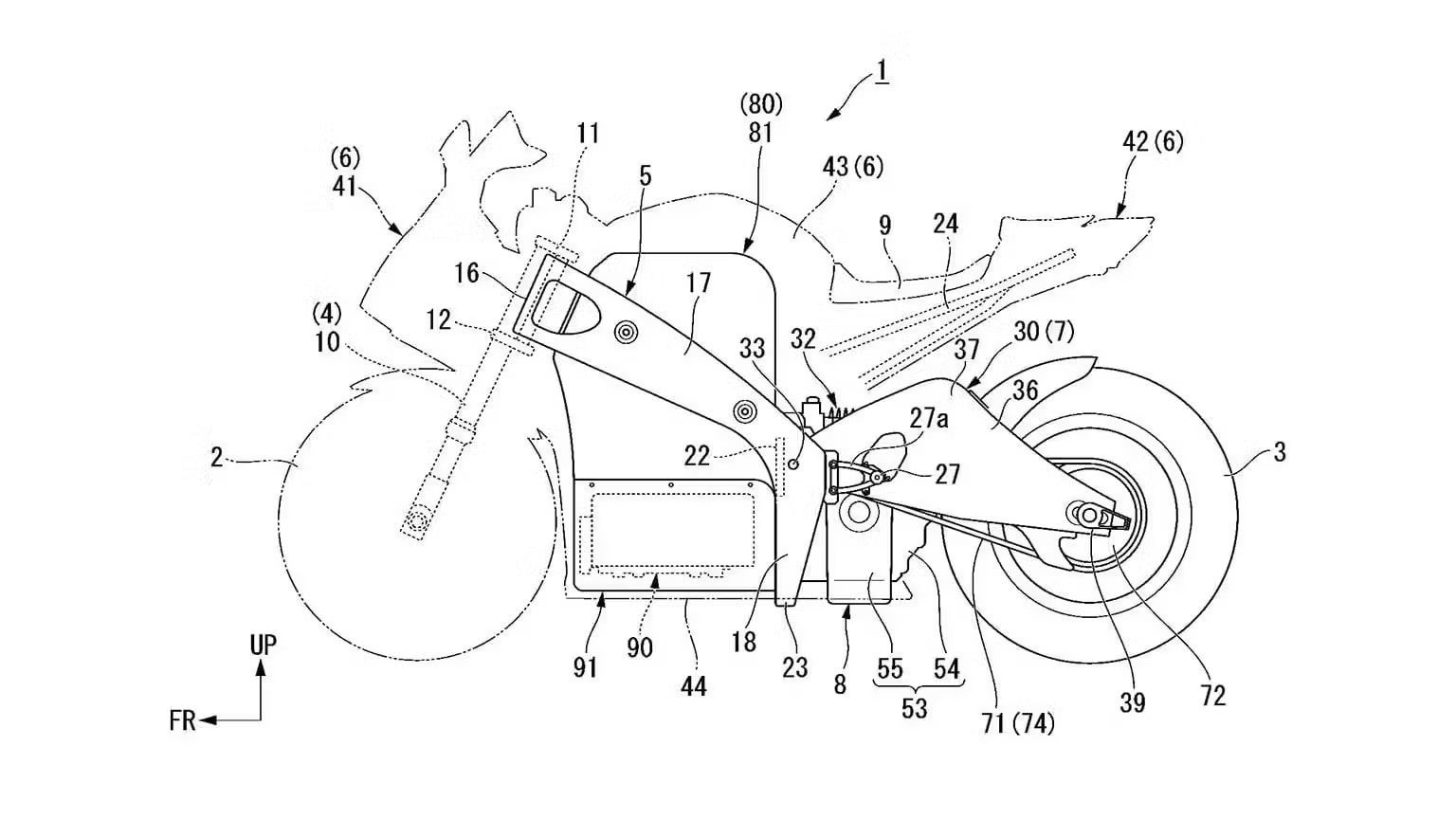
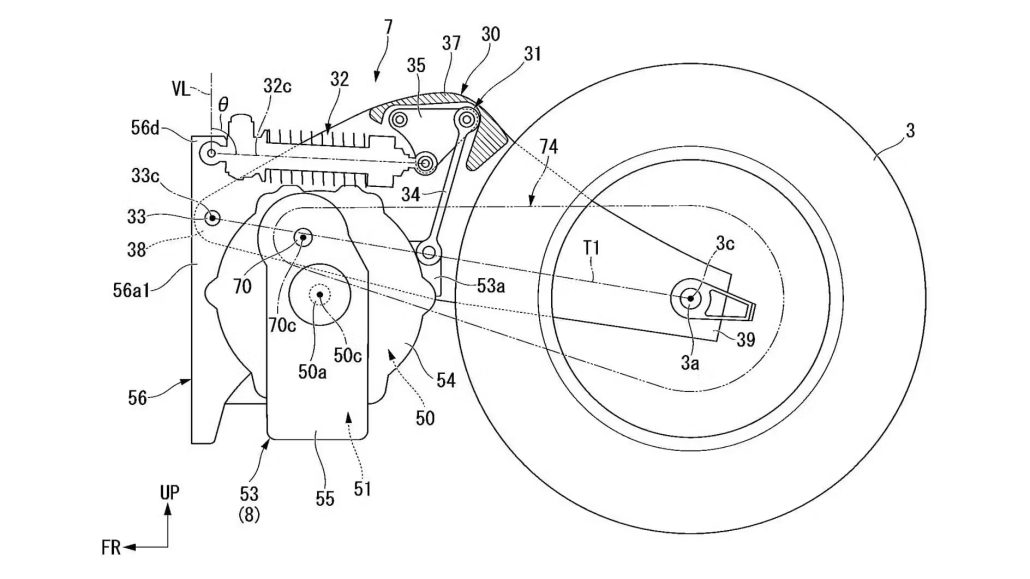
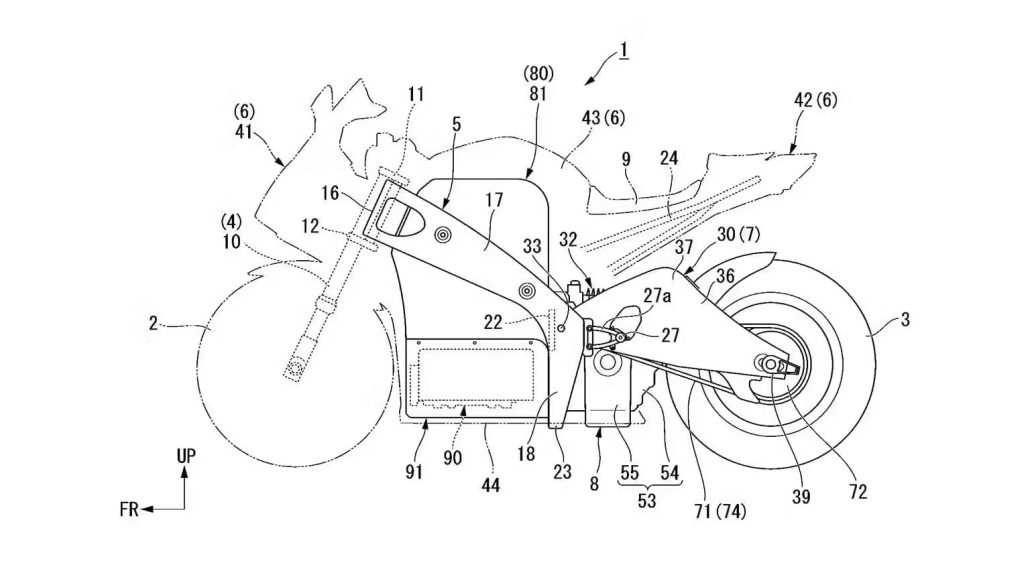
A central element of the patent is the modular concept: the motor, swingarm, and rear suspension are designed as a single unit that can be flexibly adapted to different chassis designs. This construction method differs from conventional motorcycles and offers advantages in integrating the battery and electronics. Particularly striking is the placement of the motor and gearbox, which are located in the rear section of the chassis, deep within the swingarm. The drive sprocket sits eccentrically in the motor, suggesting a reduction gearbox. This creates more space in the main frame for large energy storage units and an extended swingarm while maintaining a short wheelbase.
Experience from the Mugen Shinden Project
Between 2012 and 2019, Honda gained extensive experience with electric motorcycles at the Isle of Man Tourist Trophy. The Mugen Shinden team won six consecutive victories there from 2014 to 2019, with riders including Michael Rutter and John McGuinness. The technical solutions shown in the new patent drawings are strongly reminiscent of the most recently used prototypes of the Mugen racers.
Detailed Construction Solutions
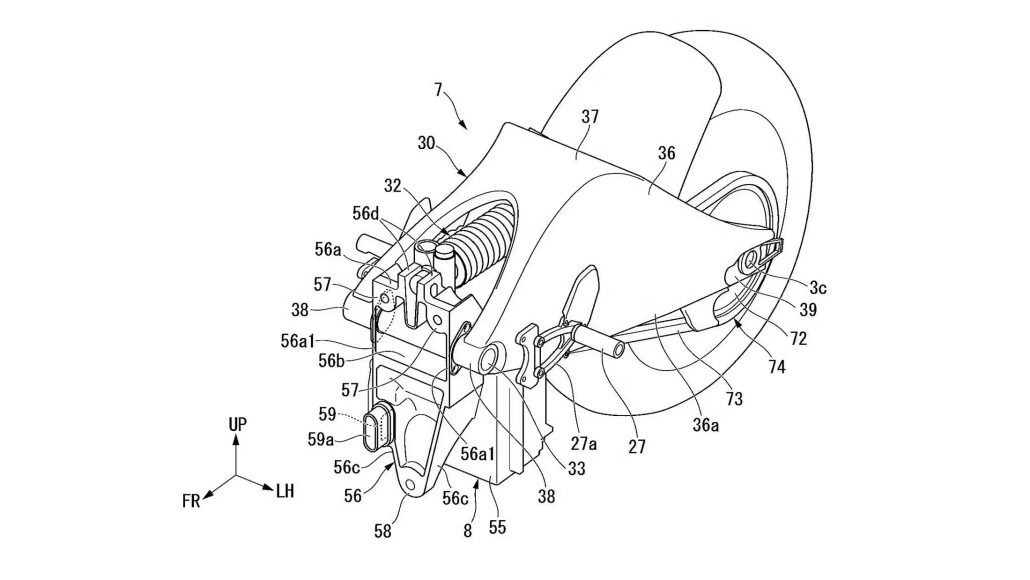
In the current patent, the drive unit with motor, swingarm pivot, and shock absorber mounting point sits on a massive cast aluminum block. This unit is attached to the rear of the main frame with three large bolts. The high-voltage wiring also terminates at this mounting point. According to the patent application, the load on the main frame remains the same regardless of whether a more powerful motor is installed. This is made possible by the stable unit of powertrain and swingarm, which is structurally connected to the main frame.
The shock absorber is housed horizontally above the motor and integrated centrally into the swingarm. This compact design is intended to enable balanced handling while also offering considerable flexibility for different chassis concepts.
Future Outlook: Honda Plans Comprehensive Electrification
According to its own statements, Honda plans to launch around 30 new electric models by 2030, including retro bikes and electric scooters. While the market for electric supersport bikes remains cautious as of mid-2025, Honda appears to be strategically preparing for future developments. New battery technologies such as solid-state or sodium-ion cells could significantly boost the potential of electric motorcycles in the coming years.
Conclusion
Although the patent application does not guarantee series production, the detailed sketches and their proximity to existing prototypes suggest an advanced stage of development. Honda is positioning itself as one of the manufacturers ready to move in the electric supersport segment as soon as the technology and the market are ready.
→ This article is part of our comprehensive overview of patents and future technologies – find all developments in our Patents and Future Motorcycle Technology overview.


- Shoei 11189027Shoei X-SPR Pro Marquez Dazzle Helm Rot Blau male

Redakteur bei Motorrad Nachrichten. Fokus auf Technik, Szene und Motorradpolitik – neutral, sachlich, verständlich.
Verantwortlich für die Seiten www.Motorcycles.News, www.Motorrad.Training und den YouTube-Kanal "Motorrad Nachrichten", sowie deren social Media-Seiten.