- Base: crashed Moto Guzzi 1000 SP Spada, built in 1981, with 949 cc V-twin
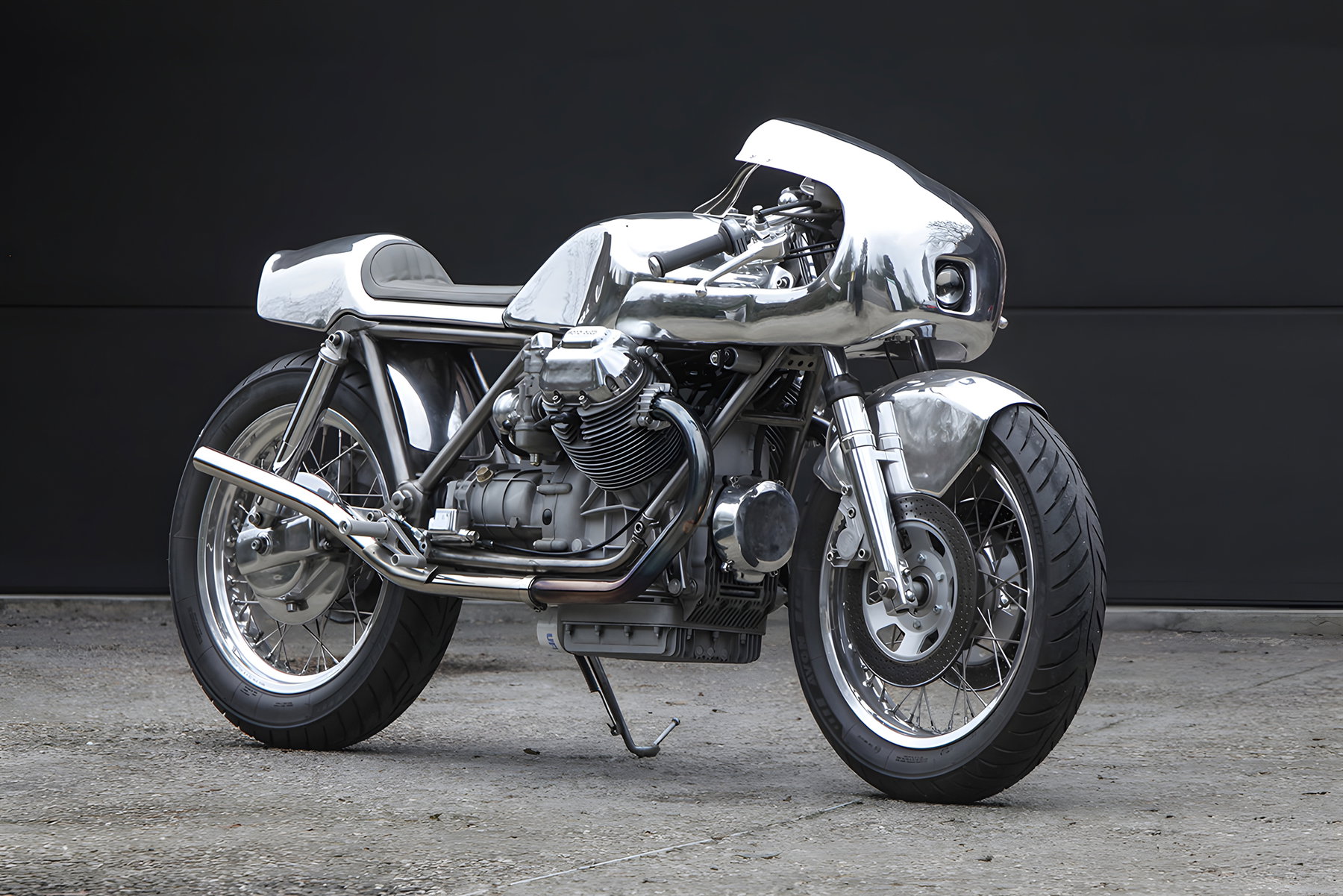
- All bodywork panels completely handcrafted from aluminum
- Paint-free finish: brushed aluminum with clear coat as Shiny Hammer’s signature
The Moto Guzzi 1000 SP is one of those motorcycles that helped establish a new category in the late 1970s. From 1978 onward, Moto Guzzi offered the SP1000 as a factory-faired sport touring model, conceived as a direct response to the BMW R100RS of 1977. The abbreviation SP stood for “Super Protection” and referred to the two-piece fairing that Moto Guzzi had developed in its in-house wind tunnel. The lower section was mounted to the frame, the upper part to the triple clamp. The Tonti frame, named after designer Lino Tonti, formed the backbone of the machine. With its two straight, parallel top tubes running between the laterally protruding cylinders, it allowed for a low seating position. The air-cooled 90-degree V-twin with 949 cc displacement, 88 mm bore and 78 mm stroke produced 71 hp (52 kW) at 6,800 rpm and delivered 84 Nm (62 lb-ft) of torque at 5,200 rpm. Power was transmitted to the rear wheel via a five-speed gearbox and the shaft drive typical of Guzzi.
How Did a Crashed Spada Become a Café Racer?
The starting point for this project was far from ideal. Samuel Aguiar found the 1000 SP as a crash-damaged vehicle, with the front wheel literally pushed into the engine block. The fork and front suspension were massively bent. Before any thought of a conversion could begin, the machine first had to be straightened out. According to Aguiar, the only engine damage was a defective alternator. After replacing it and conducting a thorough inspection, the 949 cc V-twin ran perfectly again.
The Spada was regarded in its day as a reliable touring machine with stable handling characteristics and an integrated braking system that distributed stopping force across both axles. The relaxed V-twin sent its power to the rear wheel via the shaft drive and could cruise at highway speeds for hours on end. What had aged less gracefully, however, was the plastic fairing, which was considered modern in the late 1970s but looked increasingly dated over the years.
This is precisely where Aguiar stepped in. His idea was to use a familiar, classic design for the tank shape, but then take an unconventional turn with the front fender. He describes wanting to create a kind of “strange café racer” that combines conventional and unorthodox style elements.
What Engine Modifications Did Shiny Hammer Make?
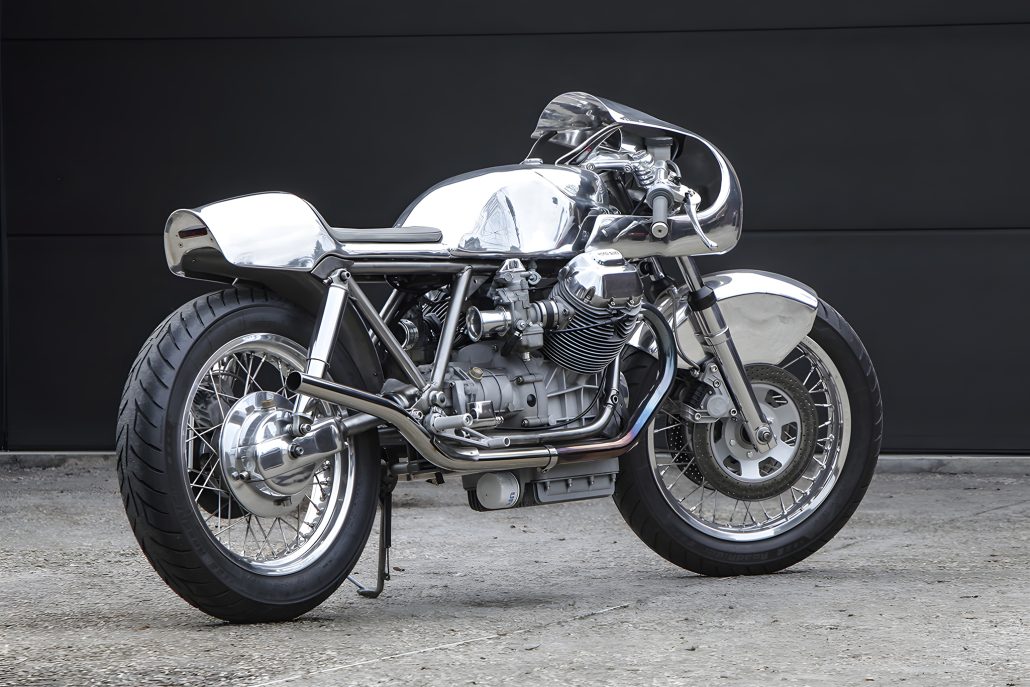
After repairing the engine, Aguiar went beyond mere restoration. The stock 32 mm Dell’Orto carburetors gave way to a pair of 36 mm units from the same manufacturer, breathing through custom-made aluminum velocity stacks. The exhaust system is a complete custom fabrication in stainless steel. Two straight-through pipes with integrated baffle inserts keep noise levels in check without overly muffling the V-twin’s sound.
What Makes the Bodywork of This Build So Special?
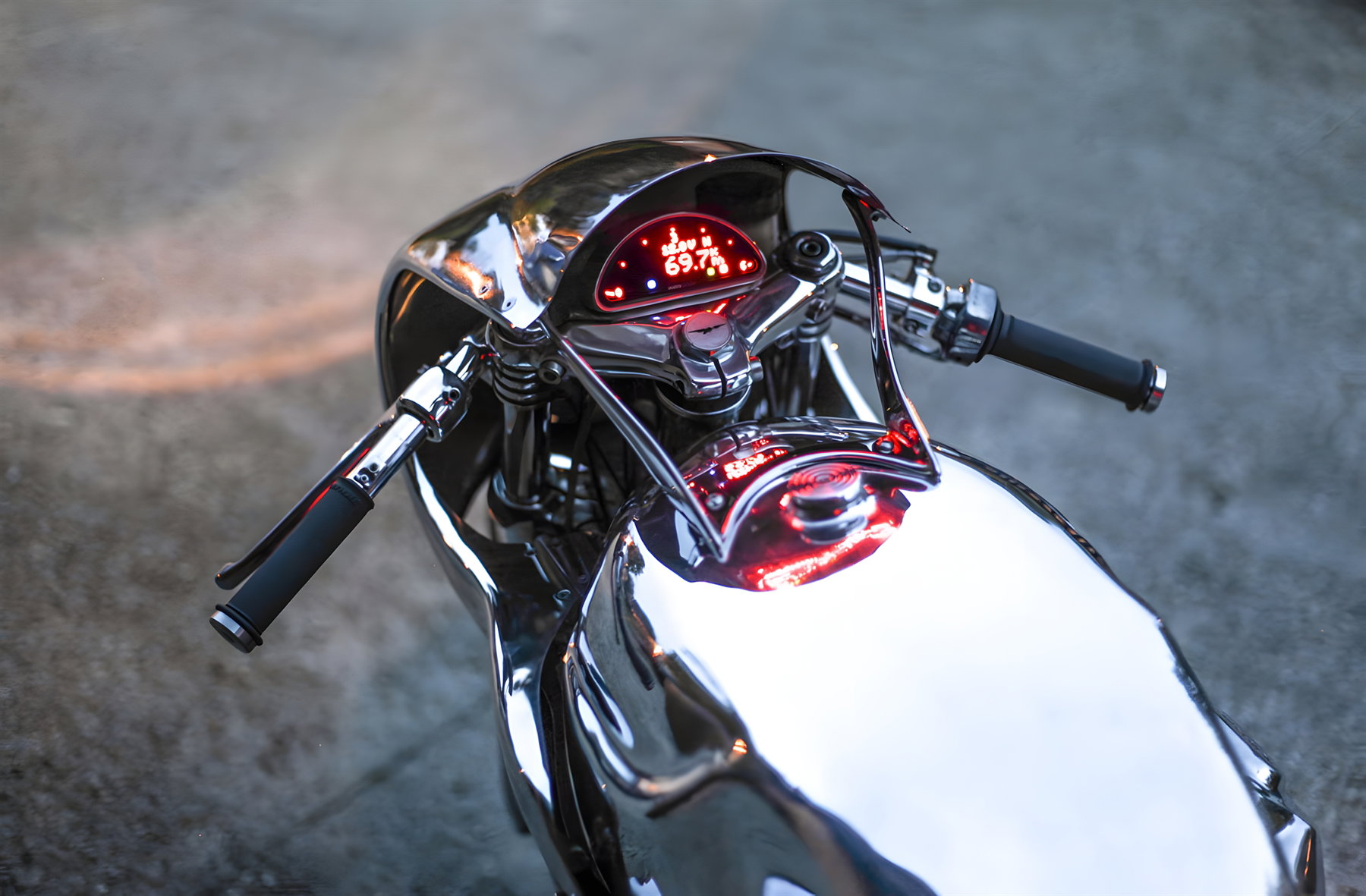
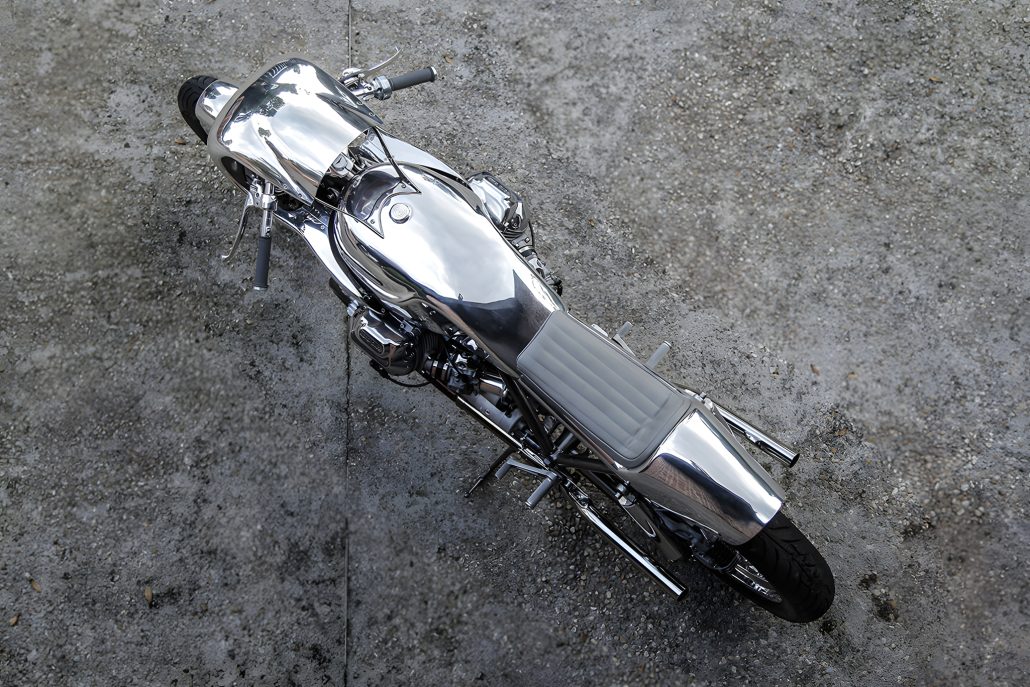
The true centerpiece of the project is the completely new aluminum bodywork. Tank, fairing, tail section and fenders were hand-shaped by Aguiar. The contours of the tank and the small front fairing, into which a headlight from a Peugeot Ludix scooter is set, appear both precise and organic. The front fender and shortened tail section deliver the intended break from classic café racer aesthetics.
For the execution, Aguiar had to learn a new skill. He recounts that he had wanted to learn aluminum welding for years and acquired a TIG welding machine for this project. The results show no sign that this was a learning project. Weld seams are practically invisible on the finished parts.
The decision to forgo paint was made during the process. Aguiar initially considered painting the bodywork black or gray but then decided to simply brush the aluminum and seal it with clear coat. The result is a motorcycle where the entire section above the engine appears as though formed from a single piece of aluminum. The same approach was applied to the frame. After welding in a narrower subframe, the steel was also left unpainted, brushed and protected against corrosion with clear coat.
The color accents on this motorcycle come not from paint but from the materials themselves. The slight bluing of the exhaust headers from heat exposure, the red of the taillight lens, and the glow of the Motogadget Motoscope Pro dashboard provide the only points of color. The seat leather was chosen in Nardo Gray, matching the tone of the engine casings. In the dark, the lights of the digital dashboard are intended to reflect off the polished tank, creating a reddish light play on its surface.
What Suspension and Components Are in the Shiny Hammer Café Racer?
The suspension combines refurbished original parts with high-quality aftermarket components. The telescopic fork comes from the stock Spada but was overhauled, slightly lowered and fitted with Brembo brakes. Aguiar rounded and polished the triple clamp to visually clean up the cockpit. Directly behind it sits the Motogadget Motoscope Pro as a digital speedometer, the latest generation of the Motogadget dashboard.
At the rear, oil-pneumatic shock absorbers from Fournales are employed. These vintage shocks feature air-sprung dampers whose preload can be adjusted with a standard bicycle pump. The desired air pressure was set so that, together with the lowered front end, a balanced vehicle stance is achieved.
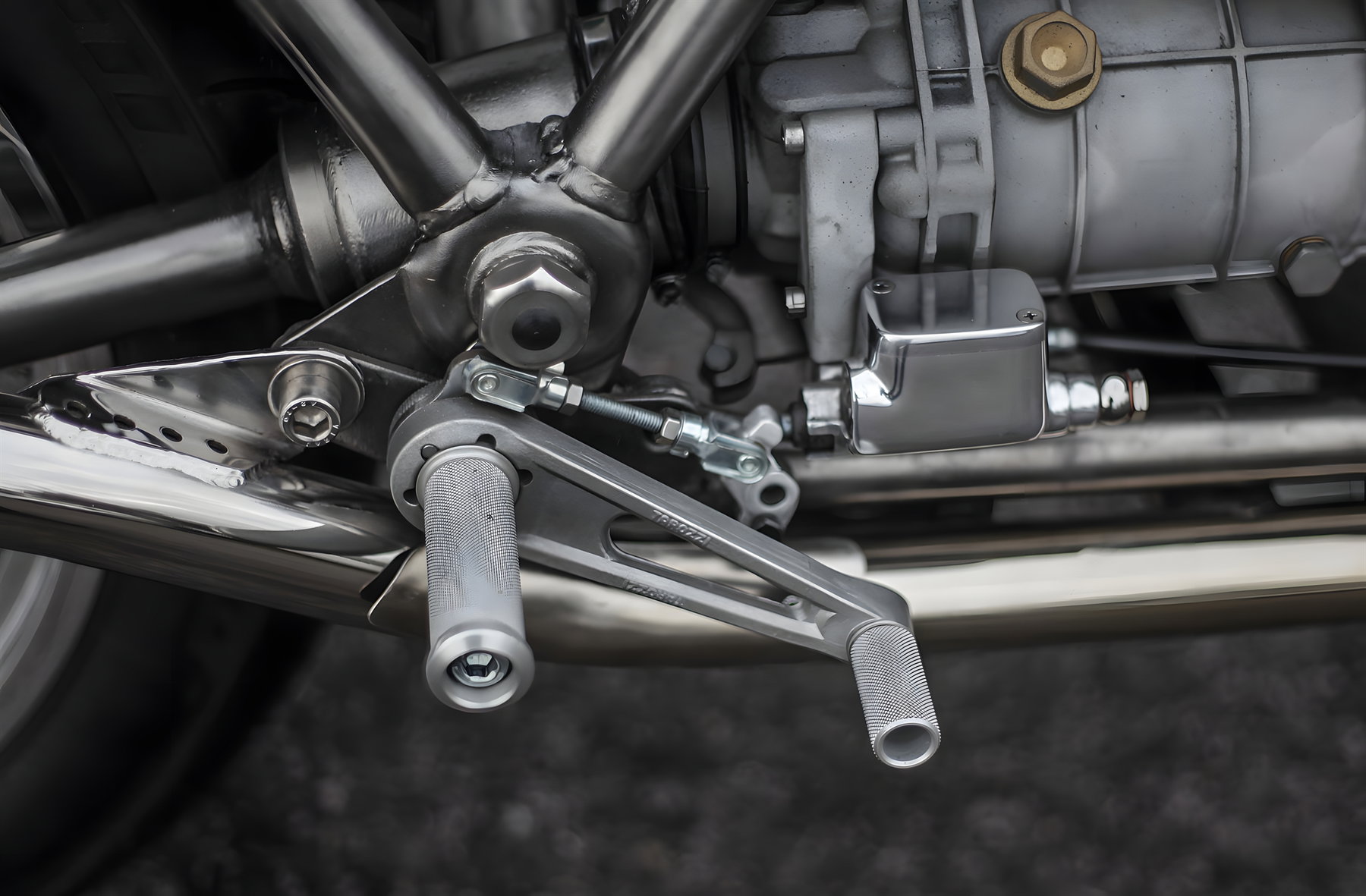
The original 18-inch cast wheels were replaced by custom-built spoke wheels from Morad, also in 18-inch format, with widths of 2.5 inches at the front and 3.5 inches at the rear. They are fitted with Avon Roadrider AM26 tires. Tarozzi rearsets, a Beringer master cylinder assembly with a special front lever, and a Brembo brake system complete the chassis setup. The rear master cylinder comes from a 50 cc scooter and operates via a custom-made linkage.
Who Is Samuel Aguiar and What Is Behind Shiny Hammer?
Samuel Aguiar runs his Shiny Hammer workshop in Saint-Quentin, a city near the Belgian border in northern France. He works full-time as a furniture designer and builds motorcycles at irregular intervals. His previous projects could hardly be more different: a streamlined electric scooter called “Hope” based on a Vectrix VX-1, which is intended to visually recall a mix of an early Porsche 356, an iPhone and a Pokémon, as well as an extensively converted 1972 Harley-Davidson Shovelhead FLH.
Forgoing paint and working with raw, polished metal surfaces is developing into a hallmark of Shiny Hammer. It is an approach that forgives no mistakes, because there is no layer of paint behind which imperfections could hide.
The Guzzi is a personal project. Aguiar admits that with every build he intends to sell the finished motorcycle, but then regularly falls in love with the result. He keeps most of his builds because each machine has its own character.
Frequently Asked Questions
-
What is the Moto Guzzi 1000 SP Spada?
The Moto Guzzi 1000 SP was a sport touring motorcycle with a factory fairing built from 1978. The abbreviation SP stood for “Super Protection” and referred to the two-piece fairing developed in a wind tunnel. The air-cooled 949 cc V-twin produced 71 hp (52 kW) at 6,800 rpm.
-
What modifications did Shiny Hammer make to the Moto Guzzi 1000 SP engine?
Samuel Aguiar replaced the stock 32 mm Dell’Orto carburetors with larger 36 mm units and fabricated a complete stainless steel exhaust system with integrated baffle inserts. The 949 cc engine itself only needed a new alternator after the crash.
-
Why does the Shiny Hammer Moto Guzzi have no paint?
Samuel Aguiar chose to simply brush the hand-shaped aluminum and seal it with clear coat rather than painting it. With unpainted surfaces there is no protective layer to hide imperfections, which demands a high degree of craftsmanship. The raw metal technique is becoming a Shiny Hammer trademark.
-
What shock absorbers does the Shiny Hammer café racer use?
The rear features oil-pneumatic shock absorbers from Fournales. These vintage shocks have adjustable air-sprung dampers whose preload can be set with a standard bicycle pump.