- The blockade of the Strait of Hormuz has driven base oil prices up by as much as 50 percent.
- European stockpiles of synthetic lubricants could be depleted by late May to early June.
- Lubricant manufacturer SCT/MANNOL responds with forward-looking procurement planning but announces unavoidable price increases.
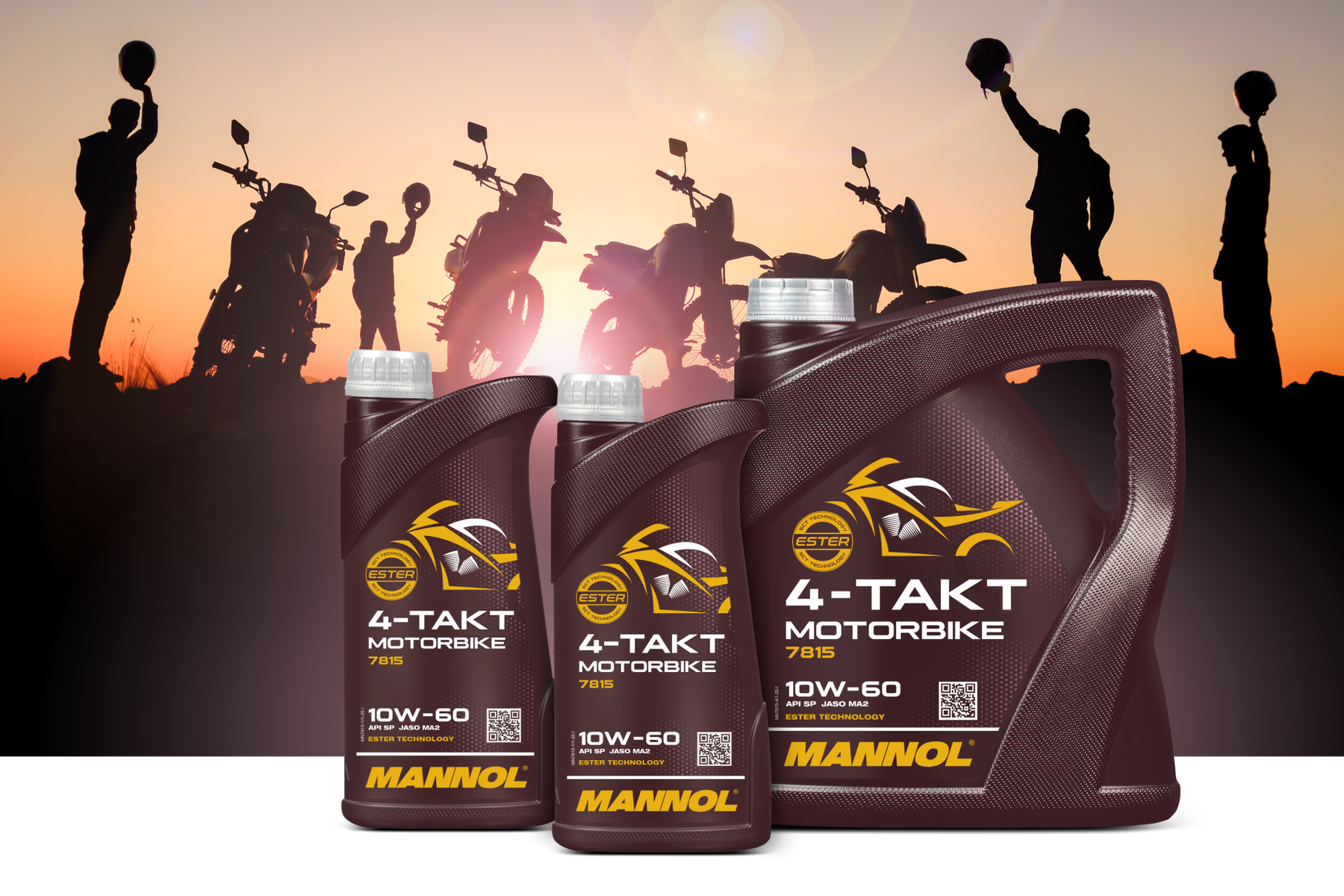
Anyone planning a motorcycle oil change in the coming weeks should brace for higher prices. The blockade of the Strait of Hormuz by Iran, ongoing since late February 2026, has not only driven fuel prices upward but is now also causing growing shortages of motor oils and other lubricants. Wedel-based lubricant manufacturer SCT, which distributes engine and transmission oils worldwide in over 90 countries under the MANNOL brand, responded to the tense situation in a press release in mid-May 2026 and announced price increases.
Why is Motor Oil Running Short Due to the Hormuz Crisis?
The Strait of Hormuz is the most critical chokepoint for global oil trade. Roughly 20 percent of worldwide oil shipments and one-fifth of global liquefied natural gas trade normally pass through this strait between the Persian Gulf and the Gulf of Oman. Since the outbreak of the Iran war in late February 2026, the passage has been effectively blocked. Tanker traffic initially dropped by approximately 70 percent, after which shipping came to a near standstill. The Brent crude price temporarily surged to as high as 126 US dollars per barrel and stood at around 105 US dollars on May 11, 2026.
But the impact extends far beyond expensive fuel. The market for base oils, which serve as the foundation for all lubricants, is coming under increasing pressure. Particularly affected are Group III base oils and polyalphaolefins (PAO), which are used as feedstocks for synthetic lubricants. According to commodities agency Argus Media, the Gulf states in the Middle East account for 15 to 20 percent of global nameplate capacity for Group III oils. Last year, 72 percent of European Group III base oil imports came from this region.
Specifically, two major production facilities are either shut down or operating at reduced capacity: the ADNOC refinery in Abu Dhabi with an annual capacity of approximately 500,000 tons of Group III oil, and the Bapco refinery in Sitra with roughly 400,000 tons. Additionally, the Gulf region is an important supplier of ethylene, the feedstock for PAO.
What Does the Shortage Mean for Motorcyclists?
The consequences of the base oil shortage fundamentally affect all vehicles with internal combustion engines, including motorcycles. Modern motorcycle engines rely on high-quality synthetic lubricants based on Group III oils or fully synthetic base oils. Particularly in high-performance engines with high rev limits and tight tolerances, the right oil quality is essential.
Gabrielle Twining, leading base oil expert at Argus Media, warned in an interview with Business Insider: “The situation is worse than during the Covid pandemic, and prices are reaching record highs. The market reluctantly absorbs the price increases because buyers know that alternative sources of supply are scarce, restricted or do not exist at all.”
According to Twining, several suppliers indicated that their stockpiles would be empty by late May to early June. For motorcyclists, this means specifically: anyone already planning an oil change or who has just started the riding season should expect noticeably higher prices. The surcharges vary depending on the oil type and manufacturer.
How is Lubricant Manufacturer SCT/MANNOL Responding to the Crisis?
Lubricant manufacturer SCT, based in Wedel near Hamburg, is among the companies that responded early to the supply shortages. In a press release dated May 11, 2026, the company stated that it intended to ensure continuous product supply in the coming months through forward-looking procurement planning and careful inventory management.
SCT distributes lubricants in over 90 countries under the MANNOL brand and processes, by its own account, approximately one million liters of lubricating oil daily across its two facilities. The main plant in Klaipėda, Lithuania, is one of the largest lubricant plants in Northern Europe, producing more than 700,000 liters per day on approximately 50,000 square meters. The newer facility in Dubai supplements capacity with an additional 300,000 liters daily. Approximately 75 percent of total production is motor oil.
According to SCT, price increases on end products are currently unavoidable. The company pointed to a specific mechanism: the average delivery time for lubricant manufacturing components currently stands at approximately six weeks due to disrupted transport routes. However, since the prices that apply are those current at the time of delivery, manufacturers must already pass on the future higher procurement costs to their end products.
What Role Does the Loss of GTL Oils Play?
Beyond the direct supply disruptions, a second factor is exacerbating the situation. Due to damaged refineries in the Hormuz region, the availability of GTL oils (Gas-to-Liquids) is severely limited. GTL oils are produced from natural gas and have been used primarily in lubricant production. As these oils become unavailable, manufacturers are increasingly turning to HC oils (hydrocracked oils) as a substitute. This in turn is driving up prices in that segment as well, by up to 50 percent according to SCT.
For the lubricant market as a whole, this creates a chain reaction: fewer Group III oils from the Middle East, limited GTL availability, rising demand for HC oils as a substitute, and simultaneously higher energy and transportation costs. Alternative supplies from South Korea, another important production country for Group III oils, are also limited according to Argus Media, as raw material supply there has declined. European manufacturers are also preferentially supplying Asian customers, where higher prices can sometimes be obtained.
How Big is the Problem for the Automotive Industry Overall?
The lubricant shortage is affecting not only the aftermarket, meaning workshops and end consumers, but increasingly also vehicle production. According to Argus Media, some German automakers are already urgently searching for new sources of motor oil. Some manufacturers are no longer receiving the motor oils needed for the initial fill of new vehicles (known in industry jargon as “First Fill” or “Factory Fill”).
Twining warned that in the worst case, production volumes would have to be reduced if the situation does not ease. BMW stated in response to an inquiry from Business Insider that it was monitoring the situation closely and maintaining close contact with its supplier network. A company spokesperson said there were currently no disruptions to the supply of lubricants such as motor oils to BMW Group plants.
The logistics industry is also affected. Trucks and buses primarily use Group II base oils. Deliveries from the United States, an important exporter to Europe, are limited according to Twining, because large refineries are prioritizing their contract customers in Asia and expanding their business there. In the worst case, public transportation could also suffer from the lubricant shortage.
How is the Geopolitical Situation at the Strait of Hormuz Developing?
A swift easing of the supply situation is not in sight. In early April 2026, the United States and Iran agreed on a two-week ceasefire, during which Iran reopened the Strait of Hormuz under conditions. Iran demanded a transit fee of one US dollar per barrel of oil from tankers. In early May, the freighter San Antonio of French shipping company CMA CGM was also attacked and damaged in the strait.
Iran has further expanded its control over the strait and significantly extended the area defined as the Strait of Hormuz. It now stretches from the city of Jask in the east to the island of Sirri in the west, a senior officer of the Iranian Revolutionary Guards declared. Saudi Aramco CEO Amin Nasser made clear that even with an immediate reopening of the strait, market normalization would take months. Should the reopening be delayed beyond mid-June, he would not expect normal conditions before 2027.
According to a survey by the German Federation of Wholesale, Foreign Trade and Services (BGA) dated May 11, 2026, 90 percent of surveyed companies are suffering from increased transportation costs. BGA President Dirk Jandura called on the German government to work diplomatically toward a swift end to the conflict.
What Can Motorcyclists Do Now?
For motorcyclists whose oil change is due in the coming weeks, it is advisable to clarify workshop appointments and oil availability early. Those who need a specific oil grade with a particular manufacturer approval should check in advance whether their preferred product is still available. Short-term alternatives with equivalent specification and approval may be considered, provided they meet the requirements of the respective engine.
Panic buying, however, should be avoided. Motor oil typically has a maximum shelf life of five years, and excessive hoarding by individual customers worsens the shortage for everyone.
Twining summed up the situation for Business Insider: “For the time being, motorists can still delay their oil changes, but there could come a point where they need the oil, their cars can no longer be driven and they no longer function properly.” This assessment applies equally to motorcycles.
The current situation is part of a series of supply chain disruptions that have been hitting various industries repeatedly since the COVID-19 pandemic in 2020. The 2026 Hormuz crisis demonstrates just how deep the dependence of the entire vehicle industry, including the motorcycle sector, runs on a single strait in the Middle East.
Frequently Asked Questions
-
Will motor oil for motorcycles become more expensive?
Yes, motor oil is currently becoming noticeably more expensive. The blockade of the Strait of Hormuz has driven base oil prices up by as much as 50 percent. Lubricant manufacturers such as SCT/MANNOL are already passing on the increased procurement costs to dealers and end customers.
-
Why is motor oil in short supply?
The Strait of Hormuz, through which approximately 20 percent of global oil shipments pass, has been blocked since late February 2026 due to the Iran war. Important refineries in the region are damaged or shut down. Last year, Europe sourced 72 percent of its Group III base oil imports from the Gulf states.
-
When will the motor oil supply normalize?
A swift easing is not foreseeable. According to Saudi Aramco CEO Amin Nasser, market normalization would take months even with an immediate reopening of the Strait of Hormuz. Industry experts warn that European base oil stockpiles could be depleted by late May or early June.
-
What does the motor oil shortage mean for the 2026 motorcycle season?
Motorcyclists should expect higher prices for oil changes. Availability issues may also arise for specific oil grades with particular manufacturer approvals. It is advisable to plan workshop appointments early and, if necessary, switch to equivalent alternative products.
-
How is MANNOL responding to the lubricant crisis?
Lubricant manufacturer SCT/MANNOL, based in Wedel near Hamburg, says it relies on forward-looking procurement planning and careful inventory management to secure its ability to deliver. However, the company has announced price increases on its end products.