- MCIA, NMC and NMDA submit joint response to government consultation
- Industry supports progressive training but demands far broader reforms
- Return to single-part test and incentives for progression from CBT to full licence called for
The UK’s motorcycle training, testing and licensing system is facing its most comprehensive review in over a decade. The Motorcycle Industry Association (MCIA), the National Motorcyclists Council (NMC) and the National Motorcycle Dealers Association (NMDA) have submitted a joint response that goes well beyond the measures put forward by the government for discussion. The catalyst: an official consultation launched by the Driver and Vehicle Standards Agency (DVSA) on 7 January 2026, examining possible reforms to the motorcycle licensing system in England, Scotland and Wales.
Why is the UK motorcycle licensing system under review?
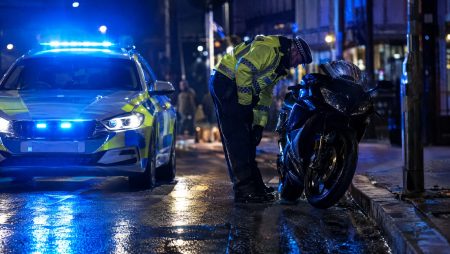
According to the industry bodies, the current system is no longer working as originally intended. Motorcyclists account for just 1 percent of all road traffic in the UK but are responsible for 21 percent of road fatalities and 20 percent of serious injuries. These figures date from 2024 and were cited by the government in the consultation as a central argument for reform. Per billion miles travelled, the likelihood of being killed or seriously injured on a motorcycle is more than 40 times higher than in a car.
The graduated licensing system introduced between 2009 and 2013, with categories AM, A1, A2 and the full category A, was intended to improve safety. However, NMC chief executive Craig Carey-Clinch views the outcome critically: “After decades of positive progress on motorcycle safety, the current regime, introduced between 2009 and 2013 has been implicated in an increase in rider fatalities and the stalling of safety progress in other areas since then.”
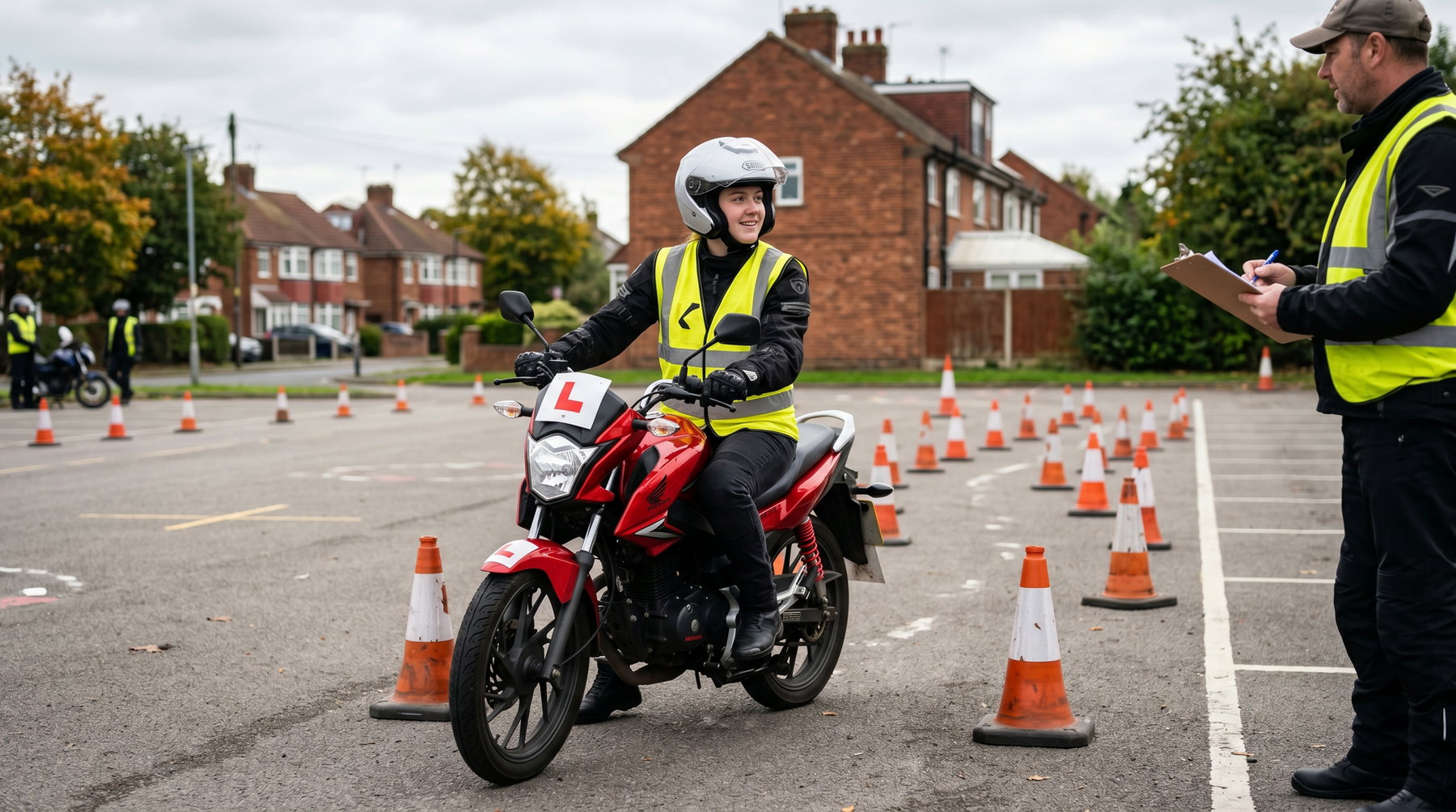
Another problem is the high number of so-called perpetual learners. DVSA data shows that between March 2023 and March 2025, around 77,000 riders renewed their Compulsory Basic Training (CBT) without ever taking a full riding test. That represents 23 percent of all certificates issued during this period. On average, approximately 180,000 CBT certificates are issued annually, but only around 40,678 riders actually pass the full motorcycle test.
What does the government propose in the consultation?
The DVSA consultation covers seven topic areas. A central point is the introduction of Progressive Access Training. Currently, riders who wish to upgrade from an A1 to an A2 licence or from A2 to the full category A must retake both parts of the practical test (Module 1 and Module 2) on a more powerful motorcycle. The consultation examines whether a structured training course at an approved training body could suffice instead, without the need for a retest with a DVSA examiner. The existing test option would be retained.
Further proposals in the consultation concern restricting riders to automatic motorcycles if the CBT was completed on an automatic, integrating a theory test or hazard perception test into the CBT process, updating the CBT syllabus (which has remained largely unchanged since its introduction in 1990), merging the separate CBT and DAS instructor qualifications into a single certification, possible changes to the validity period of the CBT certificate including a potential waiting period before renewal, and digitalising the CBT administration process to reduce fraud and improve data quality.
What do MCIA, NMC and NMDA demand beyond the consultation?
The three associations support many of the consultation proposals, including improving instructor qualifications, Progressive Access Training, integrating theory and hazard perception into CBT, and a digital CBT platform. At the same time, they criticise the consultation for not going far enough.
In their joint response, they additionally call for an incentivised progression pathway from CBT through to the full licence. A visible, rewarding route should motivate learners to move beyond their provisional status and signal that motorcycling is a serious mode of transport. They also demand a review of the two-part test structure with the aim of returning to a single test. Abolishing the separate Modules 1 and 2 would remove unnecessary barriers and strengthen confidence in the licensing process.
Furthermore, the associations demand that electric L-category vehicles be accommodated within licensing regulations, that regulated access pathways be created for slow electric mobility vehicles, and that the entire L-category sector be included, encompassing vehicle classes L6 and L7. The associations argue that some of the greatest future gains in emissions reduction and modal shift could come precisely from these segments.
Why do the associations warn against overly restrictive reforms?
A central argument in the joint response is the concern that stricter or more expensive rules could push riders into illegality. MCIA chief Tony Campbell put it this way: “Reform must not create additional barriers as this will only push riders towards illegal and unregulated alternatives which is already evident in towns and cities across the country.”
This concern is shared by training schools. Mark Jaffe, owner of Phoenix Motorcycle Training, one of the UK’s largest training providers with 22 locations, welcomes the general direction of the strategy. However, he expresses concerns about a potential cap on CBT renewals. Not all learners are able to take the formal theory test, and for these riders, CBT renewal is the only way to continue riding legally.
Instructor Lorraine Graley of Triskelion Motorcycle Training warns that a mandatory waiting period before CBT renewal could lead some riders to simply continue riding illegally. Particularly affected would be riders in the gig economy, such as food delivery couriers, where economic pressure could outweigh the fear of enforcement.
How has the MCIA campaign developed?
The current joint response does not stand in isolation. The MCIA had already published a comprehensive reform paper in October 2023 under the title “A Licence to Net Zero”. It set out seven specific demands, including earlier access to L-category vehicles, lowering the minimum age for A2 licences to 18 and for the full licence to 21, introducing a CBT Plus as an intermediate step after two years, returning to a single test instead of the separate Modules 1 and 2, and new vehicle categories for electric light mopeds and e-scooters.
This long-running campaign ultimately led the government to unveil its Road Safety Strategy on 7 January 2026, which for the first time in over a decade announced a comprehensive review of the motorcycle licensing system. The strategy sets the goal of reducing road fatalities and serious injuries by 65 percent by 2035. Tony Campbell described the announcement as a “hugely significant moment for the motorcycle sector and a massive campaign win for MCIA”.
How has the industry reacted to the reform plans?
Reactions from the industry have been largely positive. Fabrizio Cazzoli, managing director of Ducati UK, called the announcement “more than welcome” and emphasised that the industry had long been waiting for simplification. James Bruno, sales manager at Fowlers, sees the proposals as having the potential to reinvigorate the struggling new vehicle market, after UK motorcycle sales fell by nearly a fifth in 2025.
However, opinions among motorcyclists themselves are divided. In a survey by the trade magazine MCN, 48 percent of participants rejected the reform proposals. The cost of obtaining a licence remains a significant barrier for many. A 24-year-old rider told MCN that the cheapest price for upgrading from A2 to the full licence was 500 pounds (approximately 595 euros / 660 US dollars), but he had also seen quotes of 1,000 pounds (approximately 1,190 euros / 1,320 US dollars).
DVSA data reveals how rarely the existing graduated system is actually used: over the past five years, only 3,757 riders have passed a test in more than one motorcycle category, with just 40 completing the full progression from A1 through A2 to the full category A. During the same period, a total of 260,670 tests were conducted across all motorcycle categories.
What happens next?
The consultation was originally opened on 7 January 2026. According to the official GOV.UK page, the closing date was 11 May 2026. After evaluating the responses received and the commissioned research, the government will decide on possible legislative changes. There is no fixed timeline for implementing specific reforms. Experience suggests that consultations of this kind are followed by draft legislation, parliamentary debates and phased implementation over the following years.
The joint response from MCIA, NMC and NMDA is available on the websites of the respective organisations. Whether the government will follow the industry’s broader demands or confine itself to the narrower topics of the original consultation is likely to become clear in the coming months.
Frequently Asked Questions
-
What is the UK motorcycle licensing consultation about?
The DVSA launched a consultation on 7 January 2026 examining reforms to the motorcycle licensing system in England, Scotland and Wales. It covers seven topic areas including Progressive Access Training, CBT syllabus updates, instructor qualifications and digitalisation of CBT administration.
-
What is Progressive Access Training?
Progressive Access Training would allow riders to upgrade from A1 to A2 or from A2 to the full category A licence through a structured training course at an approved training body, rather than retaking both parts of the practical test on a more powerful motorcycle.
-
Why do MCIA, NMC and NMDA want a return to a single-part test?
The three associations argue that the current two-part test structure with separate Modules 1 and 2 creates unnecessary barriers. Returning to a single test would simplify the process and strengthen confidence in the licensing system.
-
What are perpetual learners in the UK motorcycle system?
Perpetual learners are riders who repeatedly renew their Compulsory Basic Training (CBT) certificate without ever taking a full riding test. DVSA data shows that between March 2023 and March 2025, around 77,000 riders renewed their CBT without progressing to a full licence, representing 23 percent of all certificates issued.
-
How rarely is the graduated licensing system used in the UK?
Over the past five years, only 3,757 riders passed a test in more than one motorcycle category, with just 40 completing the full progression from A1 through A2 to category A. During the same period, 260,670 tests were conducted across all motorcycle categories.
-
What is the MCIA’s ‘A Licence to Net Zero’ paper?
Published in October 2023, the MCIA reform paper set out seven demands including earlier access to L-category vehicles, lower minimum ages for A2 and full licences, a CBT Plus intermediate step, a return to single-part testing, and new categories for electric light mopeds and e-scooters.
-
When will the UK motorcycle licensing reforms be implemented?
There is no fixed timeline. The consultation closed on 11 May 2026. After evaluating responses and commissioned research, the government will decide on legislative changes. Typically, consultations are followed by draft legislation, parliamentary debates and phased implementation over subsequent years.
➜ This article is part of our comprehensive overview: Motorcycle Law & Policy: Legislation, Court Rulings and Developments for Riders. Find all key information on this topic in one place.