- 1,200 cc V4 with 209 hp and 130 Nm: broad torque band confirmed, peak power deliberately below competitors
- Real-world fuel consumption around 7.1 liters per 100 km at a brisk pace, range with the 14.5-liter tank under 170 kilometers
- First criticisms: sensitive clutch, traction control in road mode intervenes too early, optimization via software update planned
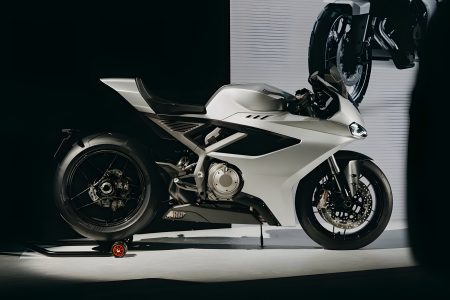
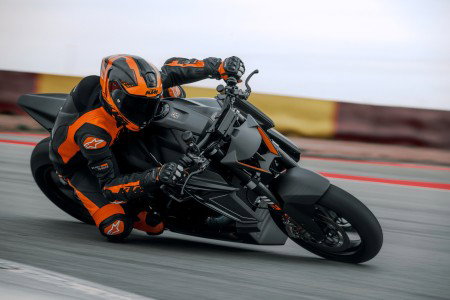
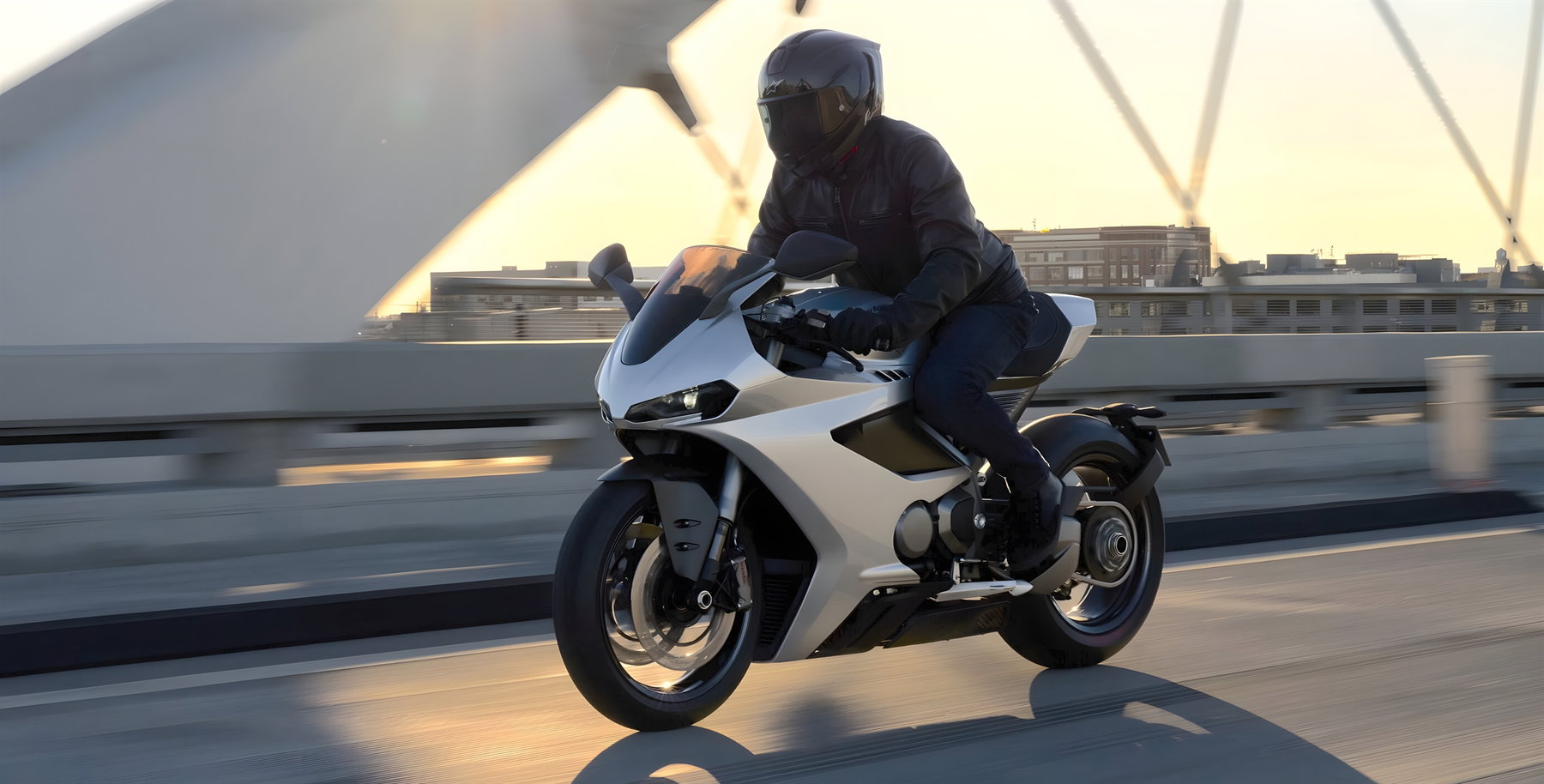
On paper, the Norton Manx R was already familiar: four variants starting at 23,250 euros, an entirely new V4 engine, semi-active Marzocchi suspension and Brembo Hypure brakes. What was missing were answers to the question of how all this actually feels in practice. In mid-May 2026, Norton invited journalists to Seville to ride the Manx R in Signature specification on Andalusian country roads and at the Circuito Monteblanco. The findings provide a significantly more concrete picture of what Norton’s flagship can do — and where fine-tuning is still needed.
How Does the Norton Manx R’s V4 Engine Perform in Everyday Riding?
The 1,200 cc V4 reaches its peak output of 209 hp (154 kW) at 11,500 rpm and delivers maximum torque of 130 Nm at 9,000 rpm. Norton has consistently tuned the engine for the mid-range, and that is noticeable from the very first meter. Between 5,000 and 9,000 rpm, the engine reveals its true character: linear power delivery, a distinctive V4 sound from the underseat exhaust system, and an eagerness to rev that invites quick shifting through the bidirectional quickshifter.
Norton states that 77 percent of the torque is already available from 5,000 rpm. In practice, this checks out. The Manx R pulls strongly from low and mid-range revs without developing the brute force that a Ducati Panigale V4 or a BMW S 1000 RR unleash at the top end. The character leans more toward sovereign pulling power than explosive thrust. Those seeking maximum acceleration at the rev limit are better served by the competition. Those wanting a superbike that behaves accessibly on country roads without constantly putting the rider on edge will find exactly that in the Manx R.
One detail Norton only communicated during the ride presentation: the two cylinder banks of the V4 are controlled independently. When accelerating out of corners, the throttle bodies of one bank can remain nearly closed while the other operates with wider throttle openings. This improves mixture preparation and throttle response compared to uniform control of all four cylinders. The engine is manufactured by TVS in Hosur, India, weighs 73.3 kilograms and is the first Norton ever to carry full Euro 5+ homologation.
Notably, however, the clutch is remarkably sensitive, turning pull-away maneuvers into an exercise in concentration and causing stalls at inopportune moments. Finding neutral with a cold engine also proves problematic. Additionally, in the more aggressive riding modes, there is a slight delay on initial throttle opening that does not match the otherwise direct character of the drivetrain. Norton has provisions for wireless software updates, through which such calibration issues can be addressed in the future.
How Do the Suspension and Brakes Perform in Practice?
The semi-active Marzocchi suspension on the Signature version is one of the positive surprises. The system uses linear potentiometers directly inside the right fork leg and the shock absorber, measuring position, speed and acceleration of the suspension movement in real time and adjusting damping every three milliseconds. On the road, this manifests as noticeably more comfortable response than many competitors offer. On varying road surfaces, the suspension responds smoothly to bumps and firms up perceptibly at higher speeds. At the Circuito Monteblanco, known for its patchy asphalt in places, the suspension also handles the problematic braking zones convincingly.
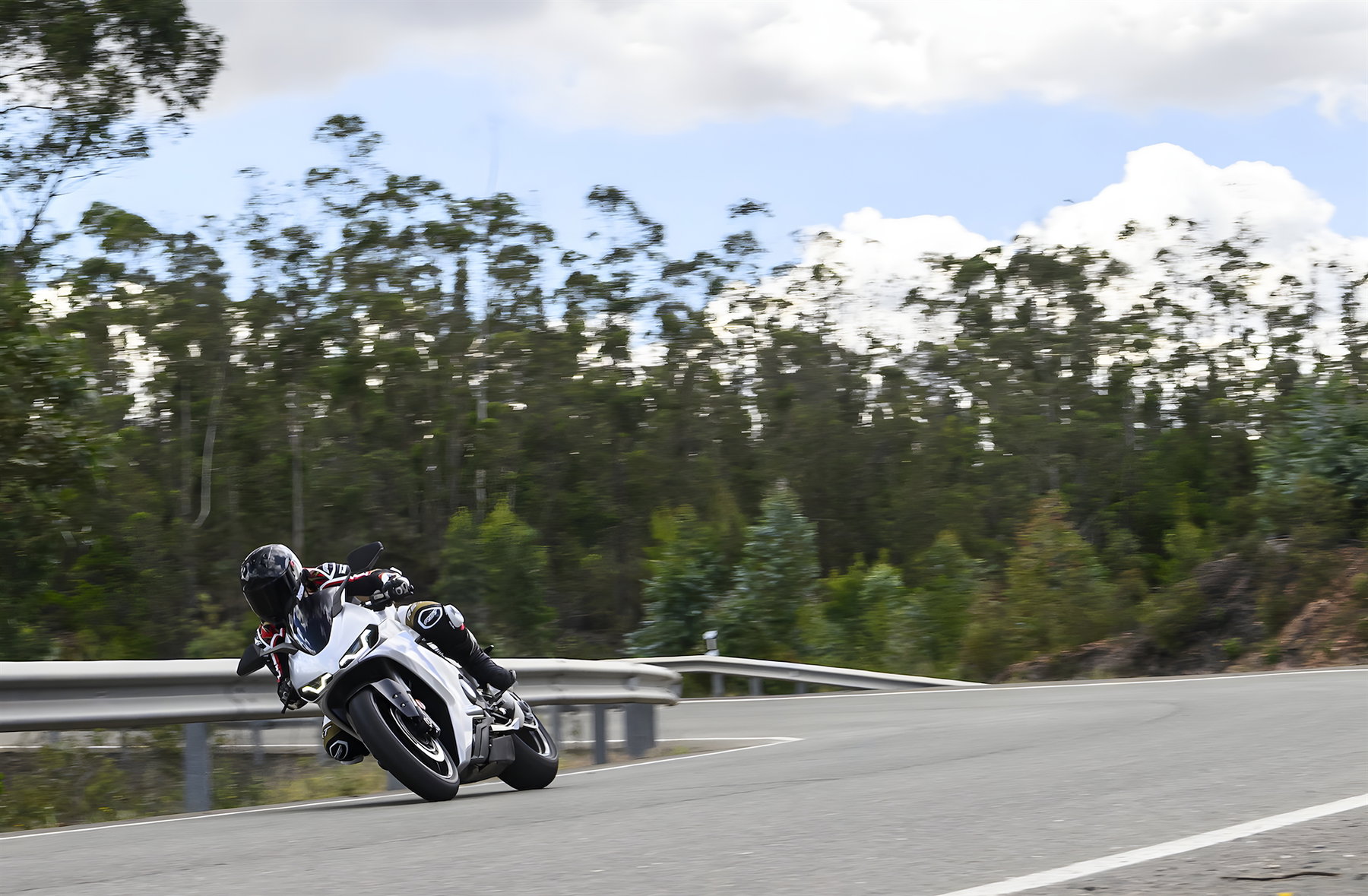
Norton has deliberately made the aluminum frame more flexible in torsional and lateral planes than the competition. The idea behind this: above approximately 40 degrees of lean angle, it is no longer the suspension but the controlled flex of the frame itself that absorbs road irregularities. The inspiration comes from the Isle of Man TT, where motorcycles must function on public roads with all their imperfections. In practice, this results in handling that feels neutral and stable but rewards a flowing rather than an aggressive riding style. Despite the shortest wheelbase in the class (1,435 mm), the Manx R is not among the most agile superbikes during rapid direction changes.
Weight plays a role here. The Signature tips the scales at 203 kg (448 lbs) without fuel. With the full 14.5-liter tank, the total comes to around 213 kg (470 lbs). For comparison: a Ducati Panigale V4 S weighs 187 kg (412 lbs) without fuel — roughly 16 kg less. On winding mountain roads, this difference is noticeable, although the Manx R never feels sluggish. The handling simply demands a bit more body input than the lighter competition.
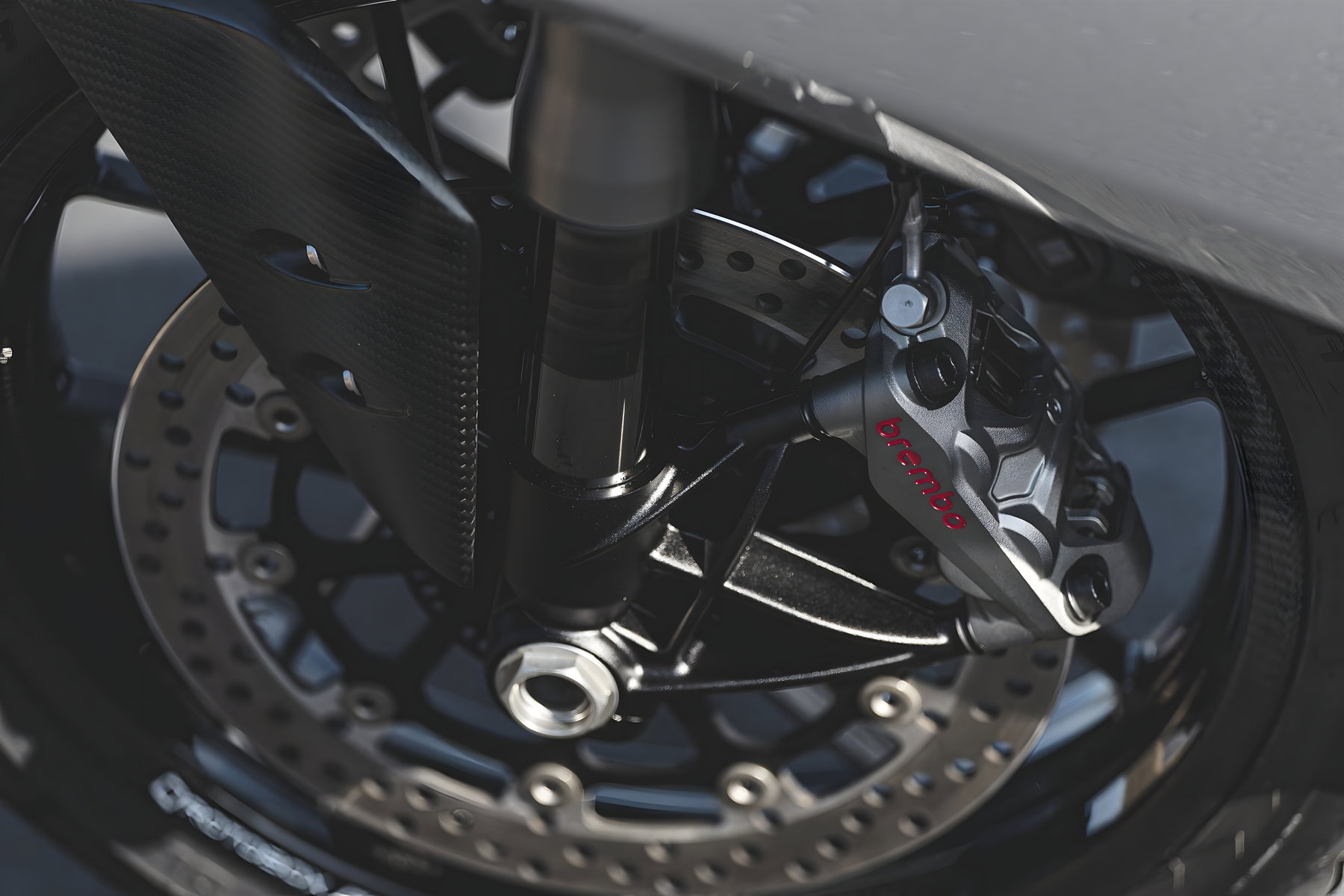
The Brembo Hypure brake calipers on the 320 mm discs are among the Manx R’s undisputed strengths. Stopping power is outstanding. The ABS algorithm allows controlled rear-wheel lift under hard braking to maximize weight transfer to the front wheel, then sets it back down in a controlled manner. Norton speaks of achievable deceleration of 1 G, and after the first braking points, there is no reason to doubt that figure.
How Does the Manx R’s Electronics Package Behave?
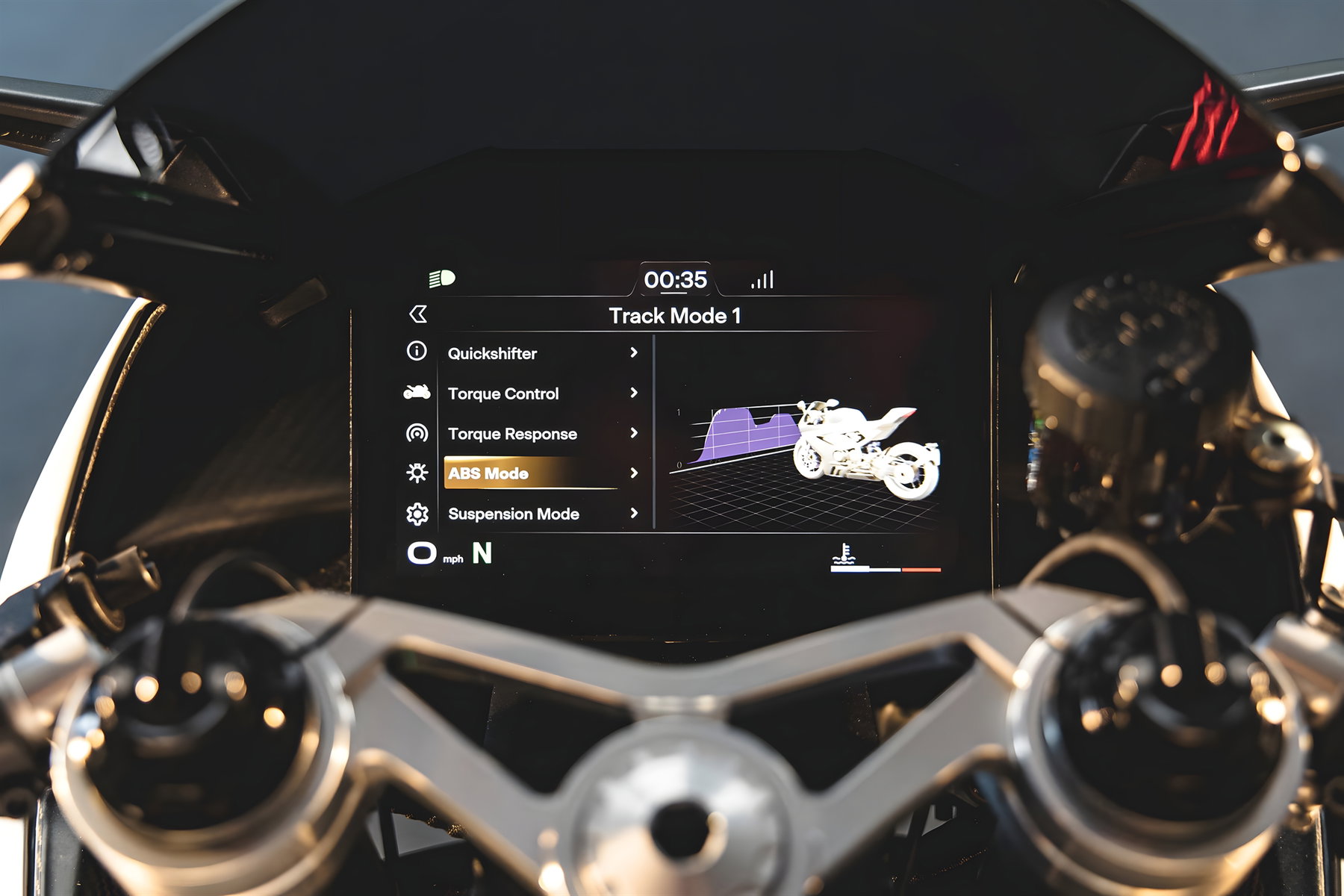
The electronics present a mixed picture. In “Road” riding mode, the traction control intervenes too early and noticeably curtails drive out of corners. This is particularly apparent on track, where the interventions disrupt the flow of riding. Switching to “Sport” mode changes the character significantly: the mapping becomes more direct, electronic interventions recede into the background, and the engine comes much more into its own. For track riding, two individually configurable track modes are available, in which wheelie control can be deactivated and traction control reduced to a minimum. The difference between road and track mode is enormous.
Brian Gillen, Chief Technical Officer at Norton and previously at MV Agusta, explained at the presentation: “We don’t have an anti-wheelie system. We have wheelie control.” The system does not suppress front-wheel lift but regulates the pitch rate and torque saturation so that the wheel does not rise too high and sets back down in a controlled manner. In practice, however, it is noticeable that the wheelie control can only be switched on or off, with no intermediate levels. In a class where multi-stage systems are standard, this feels somewhat rudimentary.
The 8-inch touchscreen display works like a smartphone when stationary and is intuitively operated. While riding, control is handled via the aluminum switchgear on the handlebars. Riding modes can be changed on the move without complication, and the system retains the chosen settings even after a restart. The keyless system is somewhat impractical, as most leather suits do not have a pocket for the key fob.
How Practical Is the Norton Manx R for Daily Use?
The ergonomics are typical of a superbike but not extreme. The clip-ons are positioned relatively wide apart and not excessively low, the footpegs are sportily placed but not torturously high. The seat padding is above average for a superbike. Longer stints of more than 45 minutes still take a noticeable toll on wrists and back. The standard windscreen is very small and offers minimal wind protection. Norton plans a taller “double bubble” screen as an option.
Fuel consumption reveals a weak point. At a brisk pace, the average sits at around 7.1 liters per 100 km. Combined with the compact 14.5-liter tank, total range comes in under 170 kilometers, with the fuel warning light illuminating after about 130 kilometers. Norton itself quotes consumption of about 6.4 liters per 100 km for gentle riding, which would stretch range to around 225 kilometers. For extended road tours — which Norton promotes as a core use case — these are tight margins.
The Base and Apex models come as two-seaters, while the Signature and First Edition are single-seaters only. All variants offer Bluetooth connectivity, smartwatch synchronization, a tracking function with remote immobilization and theft alerts, as well as a gear change recommendation on the display. Service intervals are 16,000 kilometers or one year, and the warranty runs for three years or 48,000 kilometers.
How Much Does the Norton Manx R Cost in Germany?
The base model of the Norton Manx R costs 23,250 euros (approximately 24,700 USD) in Germany. The Apex with semi-active suspension and forged OZ Racing wheels is priced at 29,750 euros (approximately 31,600 USD). The Signature with carbon fiber bodywork and Rotobox carbon wheels costs 43,750 euros (approximately 46,500 USD). The First Edition, limited to 150 units with titanium fasteners, billet aluminum components and a special livery, is available on request only.
Order books are expected to open online at the end of May 2026. The German market is scheduled to receive deliveries in the third quarter of 2026, with distribution handled by TVS Motor GmbH. Color options include black and silver for all models. Apex, Signature and First Edition can additionally be ordered in gray or green, with a surcharge of 500 pounds (approximately 580 euros / 670 USD). Signature and First Edition are also available in unpainted carbon finish on request.
What Strengths and Weaknesses Does the Manx R Show After First Ride Impressions?
After the first real-world experience, the Norton Manx R positions itself as a superbike with its own distinct character. Clear strengths include the torque-rich and characterful V4 engine, the excellently performing semi-active suspension, the impressive braking performance of the Brembo Hypure system, and the high-quality finish with meticulous attention to detail. The deliberate omission of aerodynamic winglets and the understated design set the Manx R visually apart from the competition.
On the other side stand a weight that is high for the class, a sensitive clutch, an overly aggressive traction control system in base mode, the lack of graduated wheelie control, limited tank range, and slippery tank flanks. Norton has at least created the infrastructure with wireless software updates to address electronic calibration issues after market launch.
For the superbike class, the Manx R represents an unusual approach: not a lap-time-optimized racer, but a motorcycle that aims to be accessible on the road and enjoyable on the track without overwhelming the rider. Whether this positioning will succeed in direct competition with the Ducati Panigale V4, BMW S 1000 RR and Aprilia RSV4 remains to be seen at market launch. The path taken with the Manx R is nonetheless a clear signal that Norton, under the TVS umbrella, is planning for the long term. Alongside the Manx R, three further models are in the pipeline: the Manx naked bike, and the Atlas and Atlas GT adventure tourers.
Frequently Asked Questions
-
What is the real-world fuel consumption of the Norton Manx R?
At a brisk pace, fuel consumption averages around 7.1 liters per 100 km. Combined with the 14.5-liter tank, total range comes in under 170 kilometers. The fuel warning light illuminates after about 130 kilometers.
-
How much does the Norton Manx R Signature weigh with a full tank?
The Signature weighs 203 kg (448 lbs) without fuel. With the full 14.5-liter tank, the total comes to around 213 kg (470 lbs). That makes it roughly 16 kg heavier than a Ducati Panigale V4 S without fuel.
-
What issues does the Norton Manx R show in initial ride impressions?
Notable issues include a very sensitive clutch, overly aggressive traction control intervention in road mode, a lack of graduated wheelie control, and slippery tank flanks. Norton plans wireless software updates to address electronic calibration issues.
-
How much does the Norton Manx R Signature cost in Germany?
The Norton Manx R Signature costs 43,750 euros (approximately 46,500 USD) in Germany. It includes carbon fiber bodywork, Rotobox carbon wheels, semi-active Marzocchi suspension and a single-seat tail. The base model starts at 23,250 euros (approximately 24,700 USD).
➜ This article is part of our comprehensive overview: New Motorcycles 2026: All Models, Releases, and Highlights at a Glance. Find all key information on this topic in one place.