- Both chambers of parliament have approved the motion for a transit fee
- The fee is intended to vary based on traffic density, time of day, and day of the week
- The Federal Council must now draft legislation; a public referendum is possible
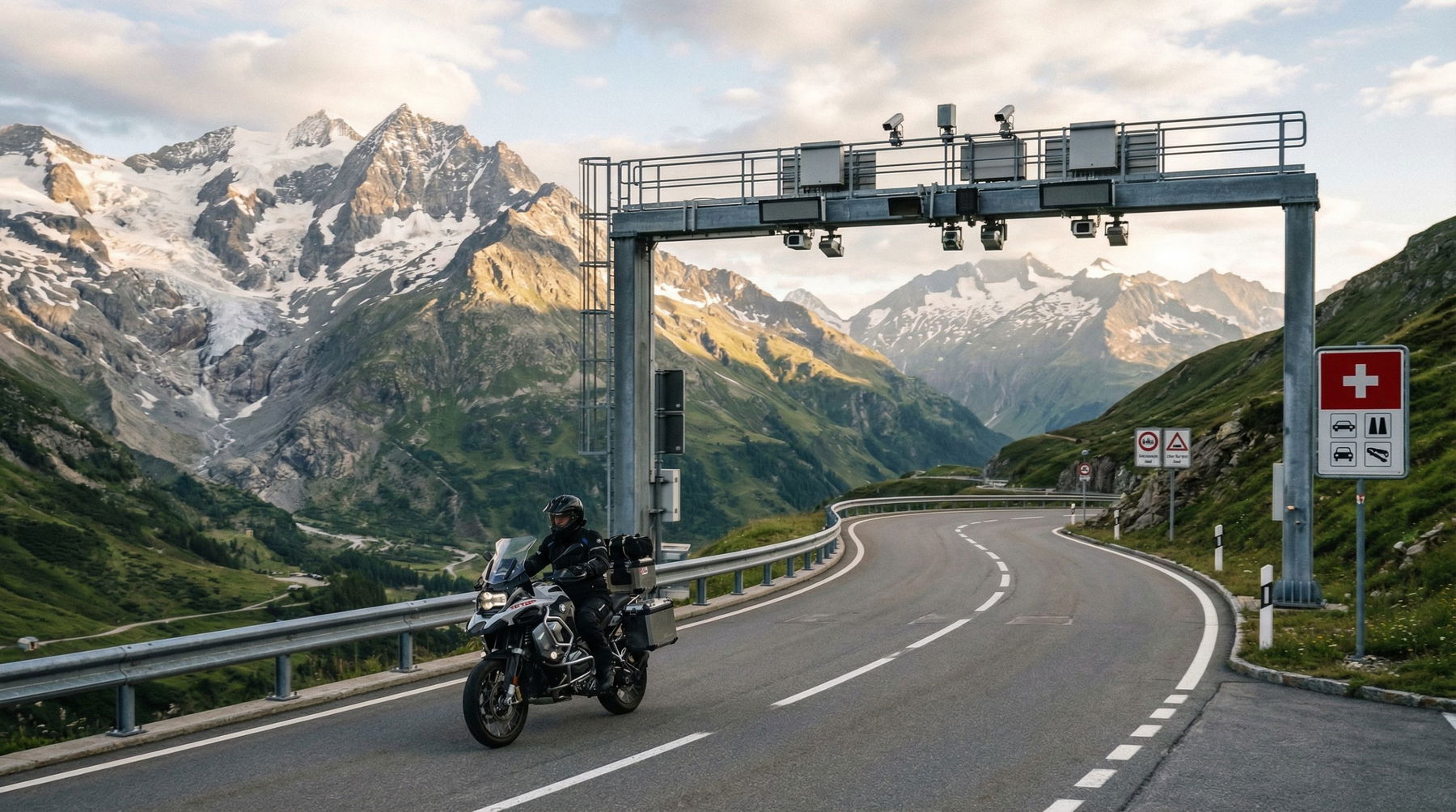
Anyone setting out from southern Germany by motorcycle to reach the lakes of northern Italy, Sardinia, or Corsica typically takes the route through Switzerland. Until now, the motorway vignette costing around 45 euros (approximately 47 US dollars), valid for 14 months from December 1 to January 31 of the following year, was sufficient. It allowed unlimited use of the Swiss road network. This arrangement could fundamentally change: The Swiss parliament has paved the way for an additional transit fee specifically targeting foreign vehicles that merely pass through the country.
National Council Approves with Overwhelming Majority
On March 19, 2026, the National Council, as the second chamber, voted 173 to 13 with three abstentions in favor of the motion introduced by Ticino SVP Council of States member Marco Chiesa. The Council of States had already adopted the proposal unanimously in September 2025. The National Council’s transport committee had previously given the green light with a clear 16 to 2 vote and five abstentions. The Federal Council is now tasked with drafting corresponding legislation.
Chiesa justified his initiative by pointing to the growing burden on people and nature caused by transit traffic. It was not about punishment, he said, but about managing traffic flow and distributing costs fairly. Pure transit traffic offers no significant benefit to Switzerland, according to the former SVP president.
More Than 55,000 Hours of Traffic Jams on National Roads Alone
The numbers speak for themselves: In 2024, the federal government recorded more than 55,000 hours of traffic congestion on national roads alone. The situation at bottlenecks such as the Gotthard Tunnel has shown no signs of improvement for years. Uri canton’s centre-right National Council member Simon Stadler, one of the most vocal supporters of the motion, described the situation on the ground in parliament: Practically every weekend from spring to autumn, there is congestion. On particularly busy days, around 80 percent of vehicles in mountain areas have foreign license plates.
According to the Council of States, traffic congestion increased ninefold from 2000 to 2023, reaching 42,318 hours. Congestion caused by sheer overload accounts for 87 percent of all traffic jam causes.
How the Transit Fee Is Supposed to Work
The planned fee targets all owners of privately registered foreign vehicles, explicitly including motorcyclists. Transit is defined as a border-to-border crossing completed in less than twelve hours without a significant stop within the country. What exactly constitutes a significant stop has not yet been defined. When asked whether a lunch break at a rest area would suffice, Stadler told the National Council: No. The precise details would need to be worked out by the Federal Council.
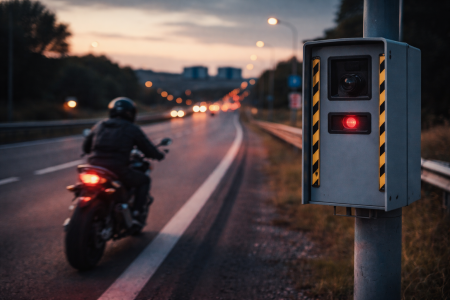
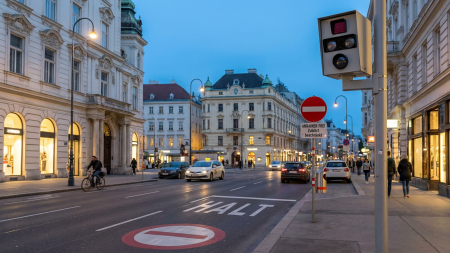
Technically, the fee would be charged through automatic license plate recognition at border crossings. If less than twelve hours pass between entry and exit, the transit fee is levied retroactively. The amount is intended to vary based on traffic density, time of day, and day of the week. During holidays and vacation periods, the fee would likely be higher than in the off-season. Revenue would flow into the National Roads and Urban Transportation Fund (NAF).
Stadler presented a sample calculation in the National Council: At a price of 21 Swiss francs (approximately 22 euros / 23 US dollars) per trip, more than 110 million Swiss francs (approximately 116 million euros / 121 million US dollars) in revenue could be generated.
No Alternate Route Possible
Those hoping to avoid the planned fee by taking alternative routes are likely to be disappointed. The motion applies to all foreign vehicles that merely pass through Switzerland, regardless of the route chosen. For motorcyclists heading to Italy, this means all classic routes, including popular mountain pass crossings, would be affected. What matters is not the route taken, but the time spent in the country. Whether detours or planned overnight stays to exceed the twelve-hour threshold are worthwhile ultimately depends on the amount of the fee.
Federal Council and Critics See Significant Hurdles
Despite broad parliamentary support, there are notable reservations. Transport Minister Albert Roesti openly opposed the motion in the National Council, even though he admitted he knew he had no chance of prevailing. He pointed to a range of significant administrative hurdles. Taxing vehicles passing through would effectively require monitoring all border crossings in Switzerland, which he called complex and costly.
The Green Liberals (GLP) also rejected the motion. Zurich GLP National Council member Barbara Schaffner warned of enforcement problems and heavy administrative burdens. At a time when Switzerland seeks to stabilize and develop its relationship with Europe through the Bilateral III agreements, this was not a productive approach, she argued. She also cautioned that the fee would require a constitutional amendment, which in turn would trigger a public referendum.
Constitutional Concerns Raised by the Federal Council
As early as November 2024, the Federal Council had expressed significant constitutional concerns in an initial statement. According to the government, a fee levied exclusively on foreign-registered vehicles would be incompatible with the principle of general taxation under Article 127 of the Federal Constitution. The principle of equality under Article 8 would also be violated, as there is no objective reason to charge only foreign vehicles. Domestically registered vehicles contribute equally to traffic congestion. Furthermore, Article 82 Paragraph 3 of the Federal Constitution guarantees the toll-free use of public roads.
Motion sponsor Chiesa, however, argues by invoking the Alpine protection article in the Constitution, which requires the federal government to protect Alpine regions from the effects of transit traffic. He also emphasizes that the fee is consistent with the Land Transport Agreement and the Free Movement of Persons Agreement with the EU. The Free Movement Agreement regulates the right to entry, residence, and employment, but not mere transit. From a purely legal standpoint, the motion is compatible with EU treaties, Transport Minister Roesti conceded. How the EU would react politically, however, remains to be seen.
A Long Road to Possible Implementation
With both chambers of the Swiss parliament having adopted the motion by large majorities, the ball is now in the Federal Council’s court. It must draft legislation while addressing numerous open questions: the precise design of the fee, the technical implementation of border monitoring, the definition of a significant stop, and compatibility with the constitution. Should a constitutional amendment indeed be required, a public referendum would follow. A concrete timeline for implementation does not yet exist.




Redakteur bei Motorrad Nachrichten. Fokus auf Technik, Szene und Motorradpolitik – neutral, sachlich, verständlich.
Verantwortlich für die Seiten www.Motorcycles.News, www.Motorrad.Training und den YouTube-Kanal "Motorrad Nachrichten", sowie deren social Media-Seiten.