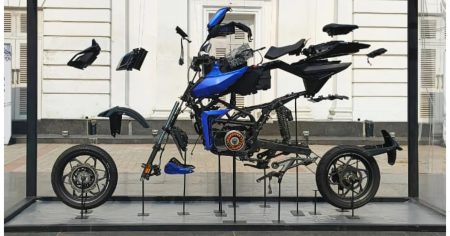
- Honda has filed a patent for a pseudo-clutch with three vibration motors
- The technology is illustrated on the CR Electric Proto, Honda’s electric motocross prototype
- The system is also intended to serve as a training tool for the transition from electric to combustion engines
Simplicity is considered one of the key selling points of electric motorcycles: twist the throttle and go, without having to worry about gear shifting or clutch operation. Honda is now taking a step in the opposite direction with a new patent, adding exactly this complexity back in. The goal is not an end in itself, but rather more precise control over power delivery, particularly in competition use.
What exactly does the new Honda patent show?
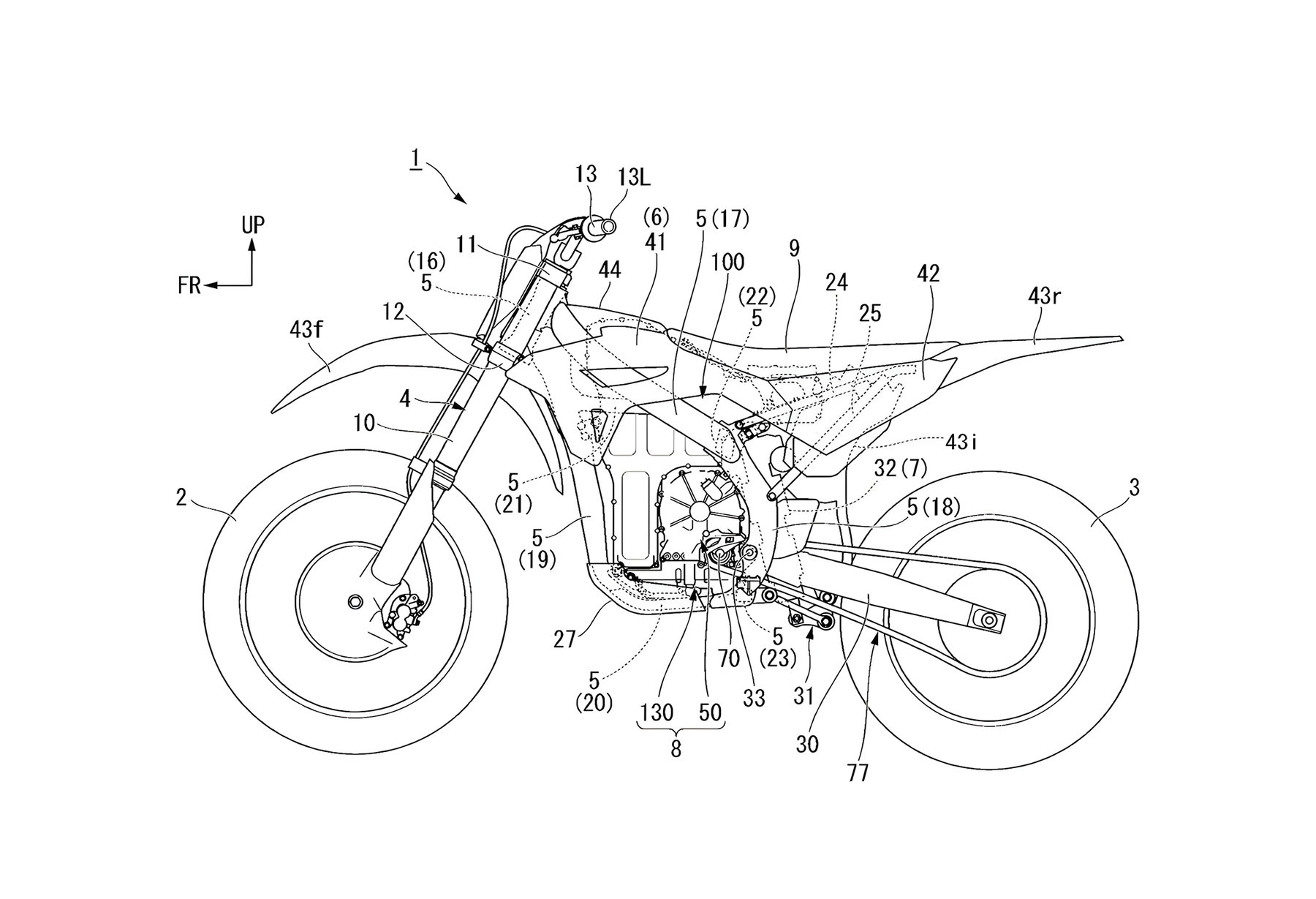
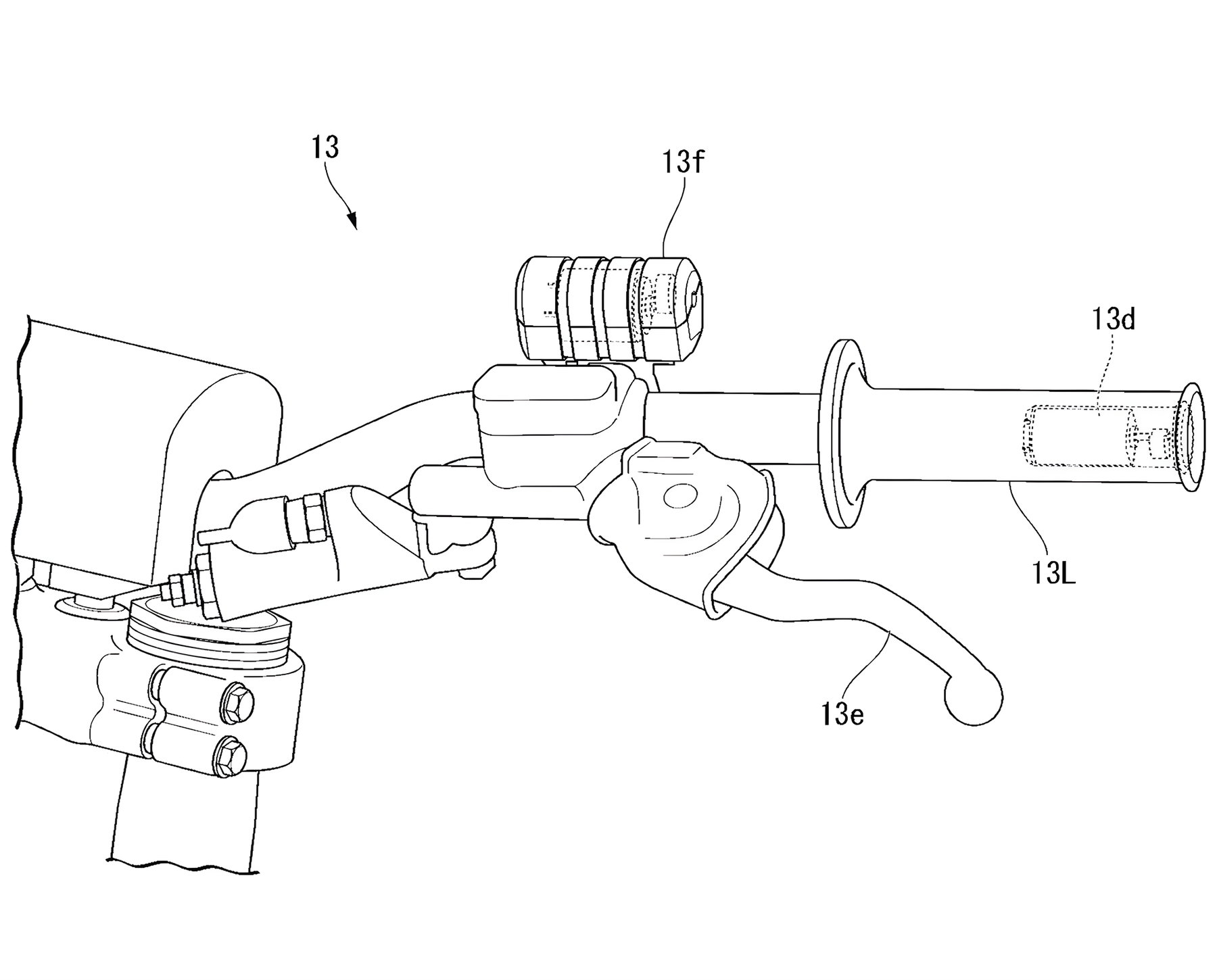
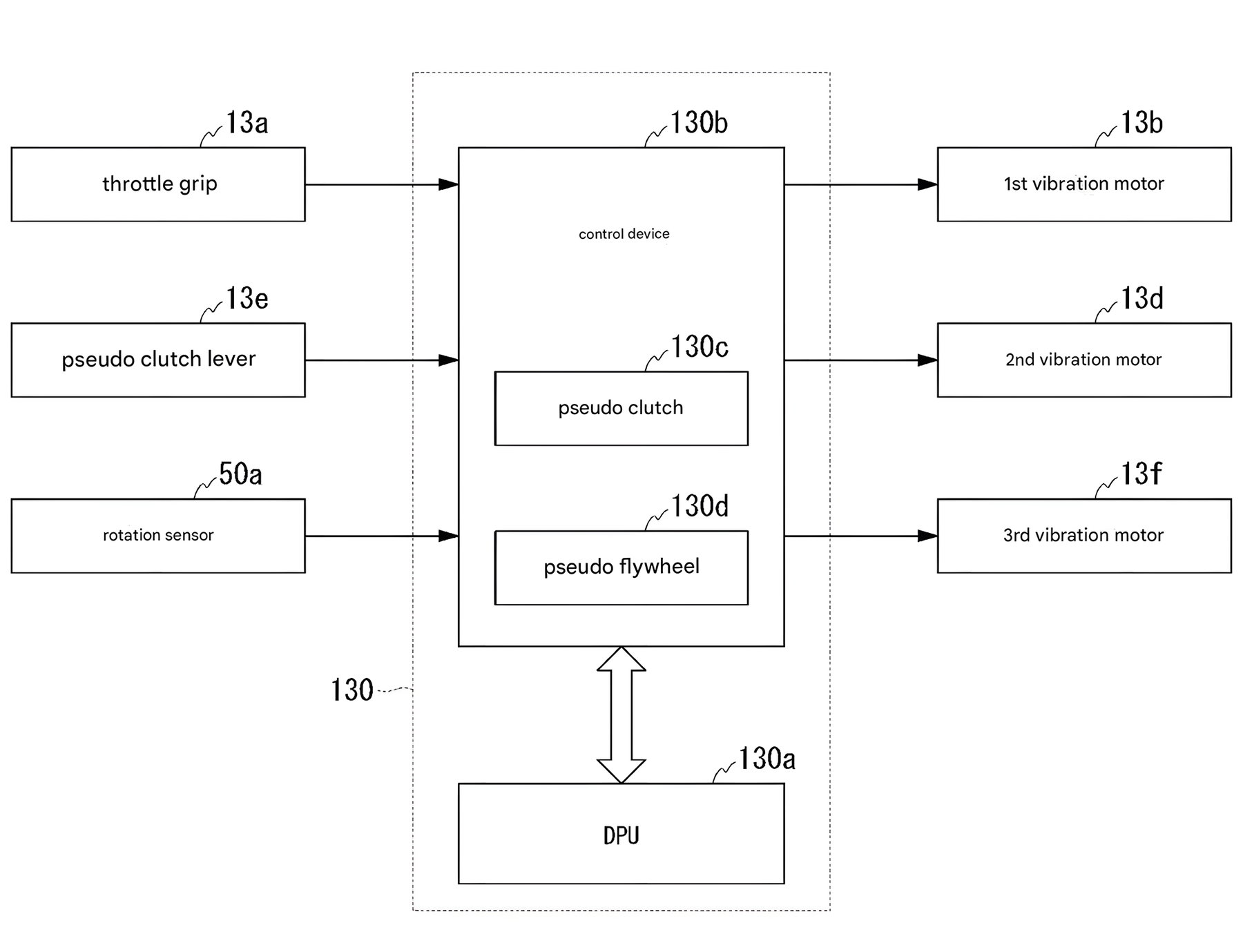
The patent describes a system that places a clutch lever on the left handlebar side of an electric motocross machine. The whole thing is illustrated on the Honda CR Electric Proto, the electric motocross prototype from Honda Racing Corporation (HRC). Unlike a conventional clutch, however, there is no mechanical connection between the lever and the drivetrain. Instead, the clutch lever controls the electric motor’s power output purely electronically.
The operating principle is deliberately modeled on the behavior of a conventional clutch. When the lever is pulled halfway, motor power is reduced to half. When pulled completely, power is cut entirely, regardless of how far the throttle is open. That alone would be a simple throttling function. But the patent goes further.
How does the torque boost work at launch?
Particularly interesting is the torque boost function, which replicates the behavior of a combustion engine when the clutch is released quickly. If the rider opens the throttle with the clutch lever pulled and then releases the lever abruptly, the electric motor briefly delivers a torque spike that exceeds the power level set by the throttle. This simulates the effect that combustion engine riders know as “dumping the clutch.” For quick starts in motocross, this function can offer a significant advantage because power delivery becomes more precisely controllable than with the pure throttle control of most electric motorcycles.
What role does haptic feedback play?
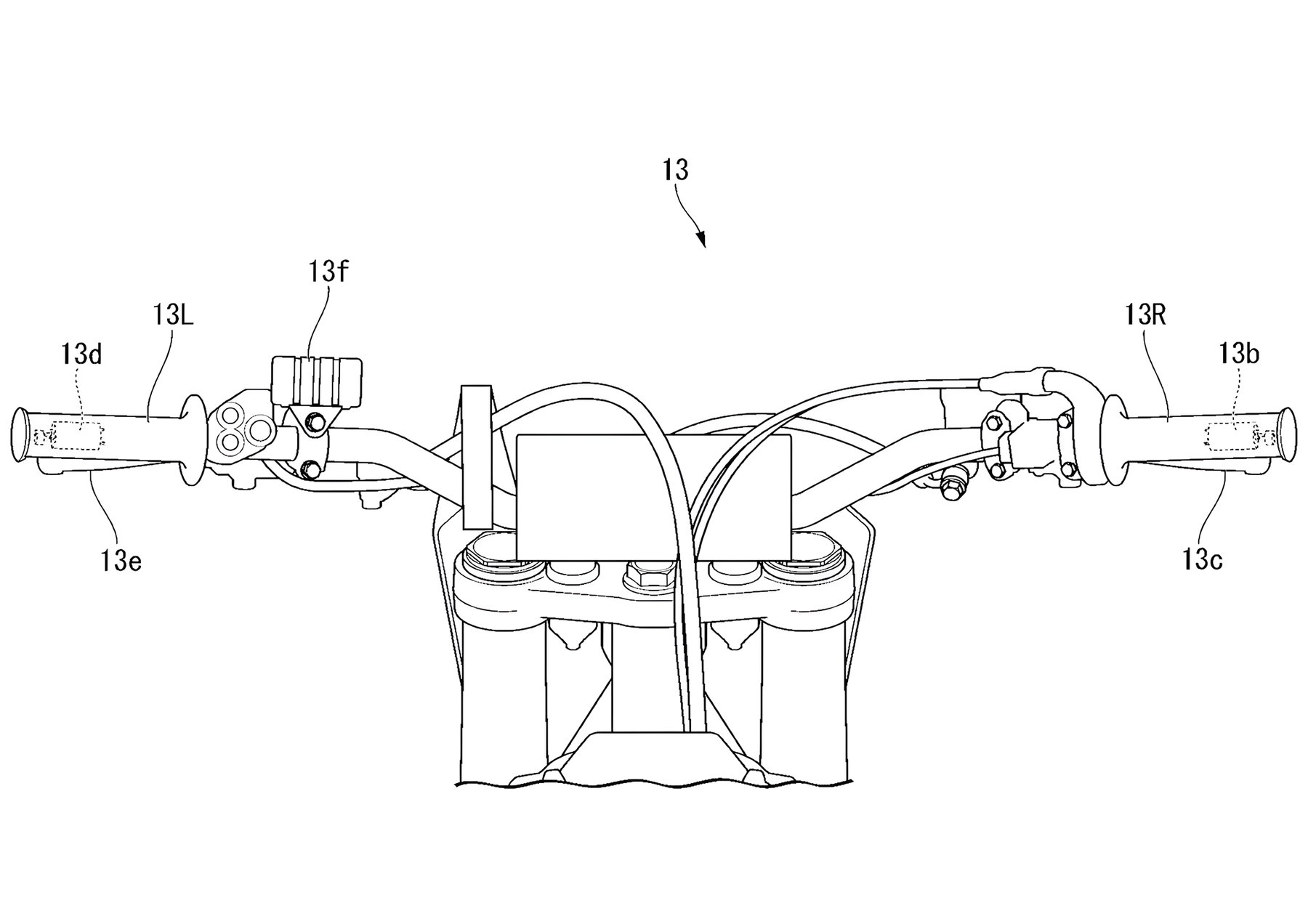
A central aspect of the patent is the feedback system. Honda envisions a total of three haptic vibration motors: one in each of the two handlebar ends and a third in the immediate vicinity of the clutch lever on the left handlebar side. These vibration motors respond to throttle and clutch movements and are intended to simulate the vibrations that occur in a combustion engine when revving up. The feel of the clutch engagement point is also to be replicated — that point at which a conventional clutch begins to bite.
Honda goes significantly beyond what other manufacturers have patented so far with this approach. Zero Motorcycles had filed a patent in early 2024 for a so-called “Vehicle Control System” that also provides a clutch lever for controlling motor power on electric motorcycles. With Zero’s system too, the rider can trigger a torque spike by quickly releasing the lever. However, the Zero patent does not include haptic feedback via vibration motors. Kymco pursued a yet different approach with the RevoNex and SuperNex models, combining a hydraulic clutch with a conventional six-speed transmission. Honda’s clutch, by contrast, is entirely electronically simulated and operates without a gearbox.
What does the Honda RTL Electric have to do with the new patent?
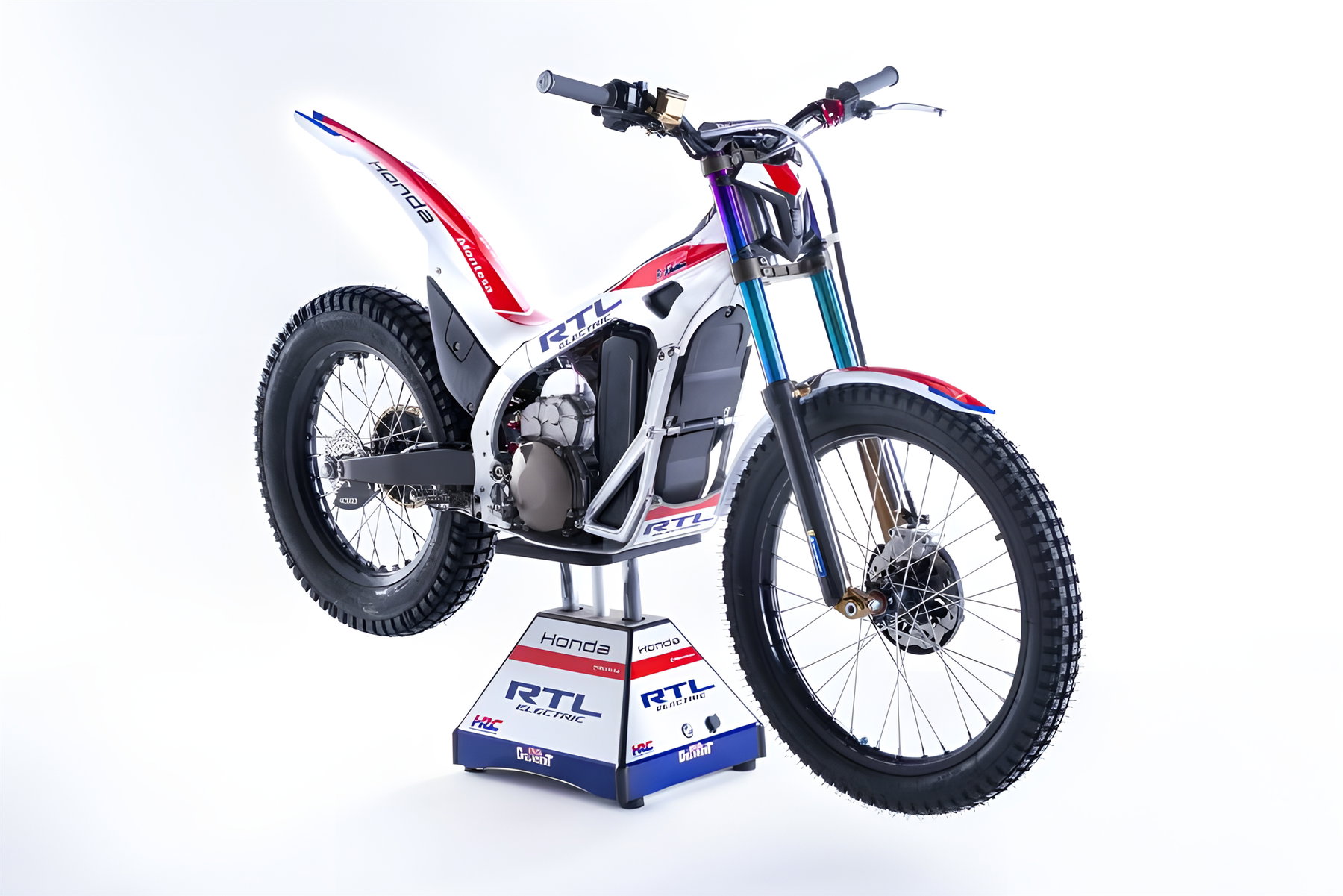
Honda did not develop the simulated clutch out of thin air. The RTL Electric, Honda’s electric trials machine, already uses a real, mechanical clutch with flywheel and gearbox. In trials motorcycles, the clutch and flywheel are indispensable. The rapidly spinning flywheel stores kinetic energy and creates a gyroscopic effect that supports the motorcycle’s balance. Through the clutch, this stored energy can be released in a brief burst when needed.
The RTL Electric was developed, according to Honda, as an electric trials motorcycle intended to surpass the Montesa COTA 4RT — the machine that contributed to Toni Bou’s 18 consecutive Trial World Championship titles. The RTL Electric’s battery is based on technology from the CR Electric Proto and was optimized for trials use. The motor is integrated with an inverter, and the chassis was built on a newly developed aluminum twin-spar frame. The RTL Electric’s dimensions are, according to Honda, 2,010 x 830 x 1,130 mm (length x width x height) with a wheelbase of 1,320 mm and a ground clearance of 335 mm.
The new patent for the CR Electric Proto now takes a different path than the RTL Electric: instead of a real mechanical clutch with flywheel, the entire effect is to be replicated purely electronically. This saves weight and mechanical complexity, which can be decisive in motocross competition.

What is Honda using the CR Electric Proto for?
The CR Electric Proto is not a concept model that merely sits at trade shows. Honda Racing Corporation has been racing the machine since 2023. It started with a wildcard entry at the eighth round of the All Japan Motocross Championship in Saitama in October 2023. At the handlebars was Trey Canard, who won the 2010 AMA Pro Motocross 250 title. The CR Electric Proto is based on the CRF250R frame and uses an electric motor with battery and power electronics in place of the 249 cc single-cylinder engine. It also features Showa suspension, Dunlop tires, and DID DirtStar rims.
At its debut in Saitama, the electric machine entered as a wildcard against 450 cc combustion bikes. Canard took the holeshot — the lead after the start — in two of three motos, impressively demonstrating the advantages of an electric motor’s instantly available torque. A second-place finish in the first moto rounded out the result, although crashes in the second and third motos marred the overall outcome. Since then, Honda has also fielded the CR Electric Proto in the E-Xplorer FIM World Cup, an international racing series for electric off-road motorcycles.
Can the system serve as a training tool for transitioning to combustion engines?
Beyond competition use, the patent envisions another application that could become relevant in the long term. More and more children and young riders are entering racing through electric motocross machines. In the higher performance classes, however, combustion engines still dominate. The switch from an electric motorcycle without a clutch to a combustion machine with manual transmission presents these riders with an additional challenge. The simulated clutch system could serve as a transitional device that trains the basic coordination of throttle and clutch before the switch to a combustion engine takes place.
The patent also sees potential for street motorcycles. The basic idea of giving electric motorcycles a more engaging riding experience through a simulated clutch has been occupying the industry for some time. Beyond Zero and Kymco, Brammo had already worked with a similar concept on its Empulse R, and Electric Motion also uses a clutch on its EPure trials machine. Honda distinguishes itself from these approaches through the combination of purely electronic control and haptic feedback via vibration motors.
How does the patent fit into Honda’s electric strategy?
Honda has set the goal of achieving carbon neutrality across all motorcycle products by the 2040s. The motorsport activities with the CR Electric Proto and RTL Electric are part of this strategy and serve, according to Honda, to further develop technologies under real competitive conditions and build know-how for future production models. The company has also expanded its E-Clutch technology for combustion motorcycles in recent years. Since the 2026 model year, E-Clutch is available for models such as the CB750 Hornet, Transalp, CBR500R, CB500 Hornet, and NX500. This technology, however, operates on a fundamentally different principle: it automates the actuation of a real clutch on combustion motorcycles, while the new patent describes a virtual clutch for electric drivetrains.
Whether and when the patented pseudo-clutch will appear in a production model remains open. Patents initially only indicate technological development directions and do not necessarily have to result in products. Given the concrete depiction on the CR Electric Proto and the advanced level of detail in the patent — including the exact positioning of the vibration motors — a real-world implementation appears at least plausible.
Frequently Asked Questions
-
What is Honda’s pseudo-clutch for electric motorcycles?
It is a patented system in which a clutch lever controls the power output of an electric motor purely electronically. There is no mechanical connection to the drivetrain. Three haptic vibration motors simulate the feel of a combustion engine, including the clutch engagement point and engine vibrations.
-
Which motorcycle features Honda’s pseudo-clutch?
The patent is illustrated on the Honda CR Electric Proto, the electric motocross prototype from Honda Racing Corporation. The CR Electric Proto is based on the CRF250R frame and has been used in official races since 2023, including the All Japan Motocross Championship and the E-Xplorer FIM World Cup.
-
How does Honda’s pseudo-clutch differ from Zero’s simulated clutch?
Both systems use a clutch lever for electronic control of motor power and enable a torque spike when the lever is released quickly. However, Honda goes significantly further with haptic feedback through three vibration motors. Zero, on the other hand, relies on pure torque modulation without haptic feedback.
-
Can Honda’s pseudo-clutch also be used on street motorcycles?
According to the patent, there is also potential for street motorcycles. The system could help give electric motorcycles a more engaging and familiar riding experience. When or whether Honda will implement the technology in a production model is not yet known.
-
What does the Honda RTL Electric have to do with the patent?
The RTL Electric is Honda’s electric trials machine, which already uses a real mechanical clutch with flywheel and gearbox. The new patent for the CR Electric Proto replaces these mechanical components with a fully electronic simulation, saving weight and reducing complexity.
➜ This article is part of our comprehensive overview: Motorcycle Patents and Future Technology: What Manufacturers Are Developing. Find all key information on this topic in one place.