A newly published patent from Ducati shows how the Italian manufacturer wants to make the architecture of an electric motorcycle particularly slim. Instead of placing the rotor sensor directly on the motor shaft, it is moved to a different position, creating room for a more compact drive unit.
- Patent describes an electric motorcycle with a transversely mounted electric motor
- Rotor speed between 17,000 and 20,000 rpm, with 18,500 rpm as the preferred value
- Position sensor sits not on the motor, but on the gearbox
Ducati has filed a new patent for an electric motorcycle that gives a glimpse into the next development steps of the manufacturer from Borgo Panigale. At the heart of the filing is a problem that affects practically all electric motorcycles: battery and drivetrain build wide, and that has a negative impact on lean angle clearance, ergonomics and the typical motorcycle silhouette. Ducati tackles this challenge with a technical trick that, above all, rethinks the electronic control of the electric motor.
Who is behind the patent and what it covers
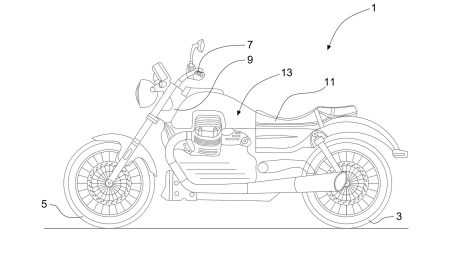
The document was filed as an international patent application on September 8, 2025 and published on March 19, 2026. Ducati Motor Holding S.p.A. is listed as the applicant, and Giovanni Puccetti, Roberto Canè, Marco Bertoldi, Dario Cusati and Simone Di Piazza are named as inventors. In terms of content, the filing describes an electrically powered motor vehicle with a focus on motorcycles in classic configuration with a front wheel, a rear wheel and a straddle-style seating position.
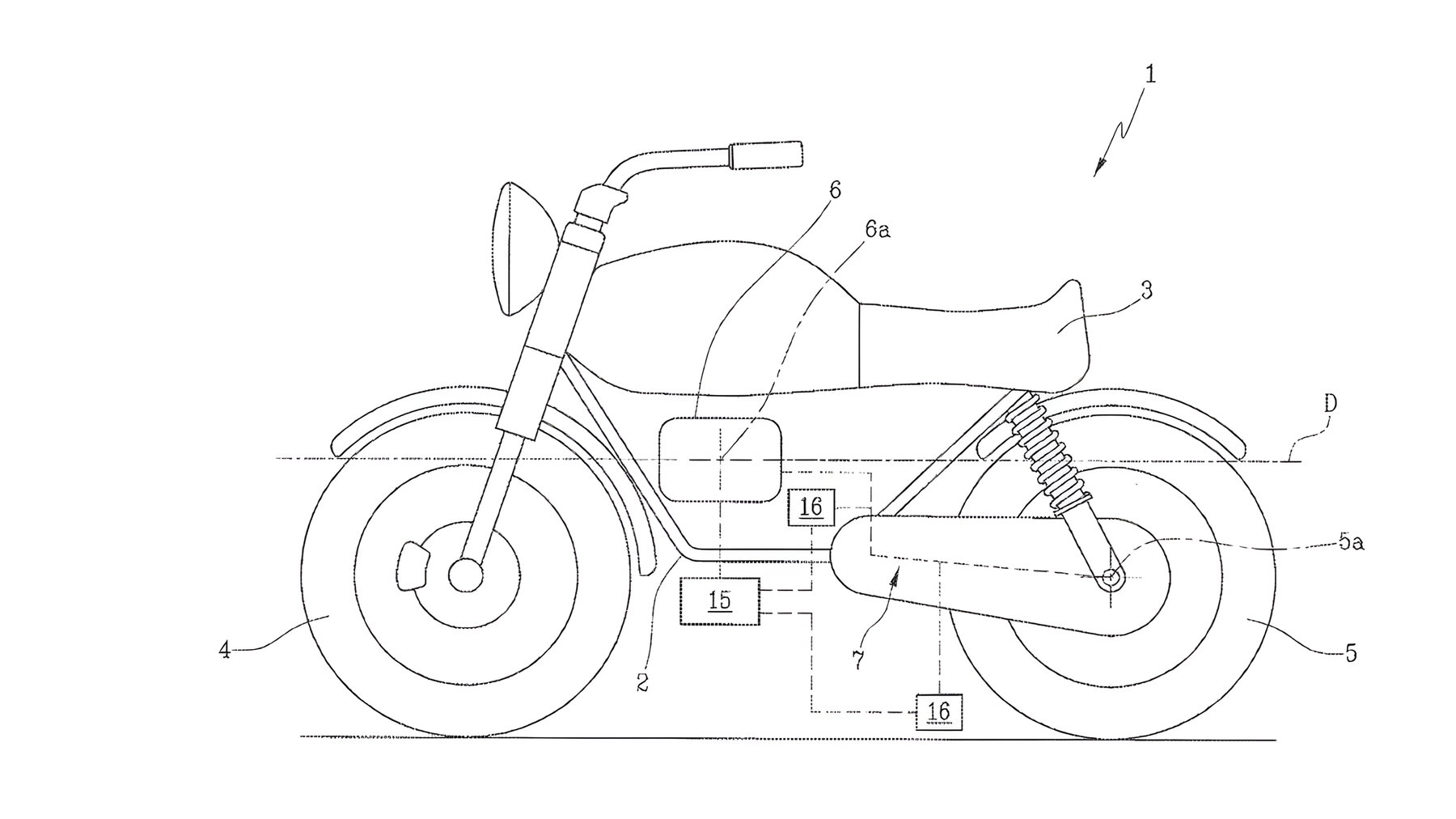
The basic architecture described in the patent follows a layout typical of Ducati. The electric motor is mounted transversely to the longitudinal axis of the vehicle, so the rotor axis lies parallel to the rotation axis of the rear wheel. Between the motor and the rear wheel sits a gearbox that provides a reduction via a cascade of gears. The final drive is handled by a classic chain running from the last sprocket of the gearbox to a sprocket on the rear wheel hub. With this, Ducati deliberately pursues a layout for its electric drive that is similar to that of combustion engines.
High revs, intentionally geared down
A central point of the patent specification is the design of the electric motor for a high maximum speed. The manufacturer states a speed range between 17,000 and 20,000 revolutions per minute, with 18,500 rpm given as the preferred value. So that the power at the rear wheel remains rideable, the gearbox is designed as a reduction. The gears reduce the speed and, in return, increase the torque that is ultimately applied to the chain.
This approach differs significantly from electric motorcycles that rely on a single-stage direct drive concept. The high speed range suits Ducati because high-revving electric motors can be built more compactly at the same output. This plays directly into the central goal of the patent filing: a drive unit that is built as narrowly as possible.
Why the sensor is actually the core topic
For precise control, electric motors need continuous feedback about the current angular position of the rotor. Without this information, the inverter cannot correctly energize the stator currents, which is essential for control methods such as Field Oriented Control (FOC). Typically a position sensor is used for this, meaning an encoder or a resolver mounted directly on the motor shaft. That is mechanically simple and delivers an exact signal, but has one drawback: it adds width.
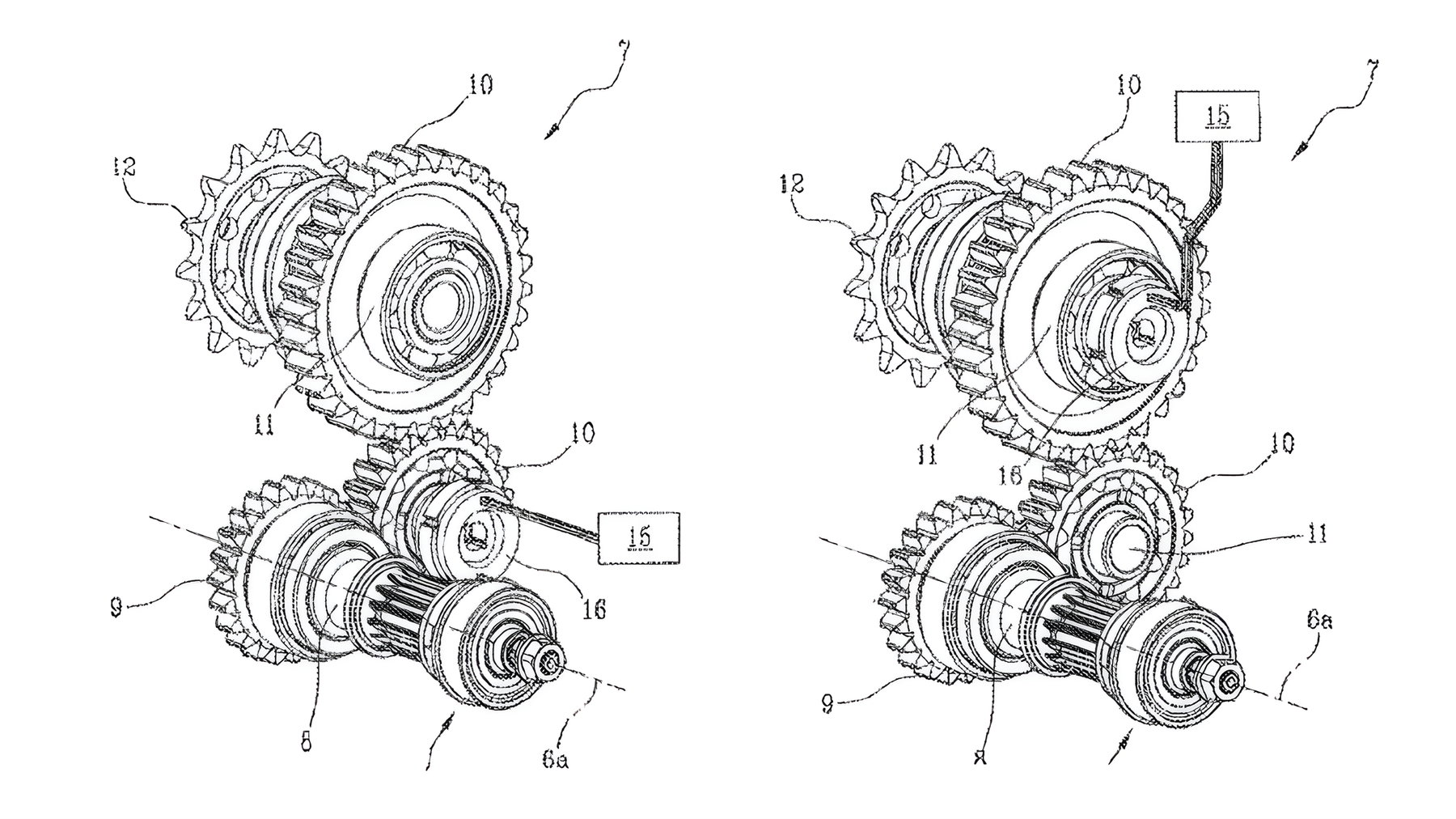
This is precisely where the Ducati patent comes in. Instead of mounting the position sensor on the motor itself, it is placed at a different point in the drivetrain. The patent specification describes mounting the sensor on the gearbox, downstream of the actual drive wheel of the electric motor. Specifically, the position sensor sits on one of the reduced shafts of the gearbox and captures the angular position of a gear. The controller then calculates the actual angular position of the rotor from the known gear ratio. The patent specification expressly notes that the sensor can be implemented both analog as a resolver and digital as an encoder.
The advantage of this indirect measurement lies in the design. Because the sensor no longer protrudes next to the motor, the motor housing can be built more slender. This keeps the motorcycle as a whole narrower, which affects lean angle clearance and chassis layout. The patent specification repeatedly emphasizes that the solution is expressly intended to prevent the electronic control technology from increasing the lateral dimensions of the motorcycle.
Gearbox on multiple planes
Ducati goes one step further when it comes to compactness. The gearbox is not built as a single row of gears, but is split across two or more parallel planes. Some of the gears lie in one plane, the rest in a parallel one. This essentially builds the gearbox upwards instead of outwards. The patent specification notes that more than two planes are possible if the gearbox includes correspondingly more gears.
This opens up a further mounting option for the position sensor. It is ideally placed close to the respective gear, with the patent specification describing an inward-facing mounting position. This further reduces the width and keeps the sensor within the protected gearbox area.
Six patent claims, one clear focus
The patent application itself comprises six claims. Claim 1 describes the vehicle with frame, seat, front and rear wheels, a transversely mounted electric motor including an inverter and a gearbox, as well as the decisive feature: a position sensor mounted on the gearbox downstream of the motor drive gear, which sends its signal to the inverter. Claims 2 to 5 describe the sensor position in more detail, including the mounting on a reduced shaft, the proximity to a gear, the division into a rotating and a stationary sensor part, and the signal processing by the inverter. Claim 6 covers the distribution of the gears across at least two parallel planes.
The patent specification also names the weaknesses of a pure direct drive concept for electric motorcycles. The components for the electronic control of the motor, in particular those required for precise rotor position detection, would typically add additional width. It is precisely this problem that the new arrangement aims to solve.
The connection to the V21L project
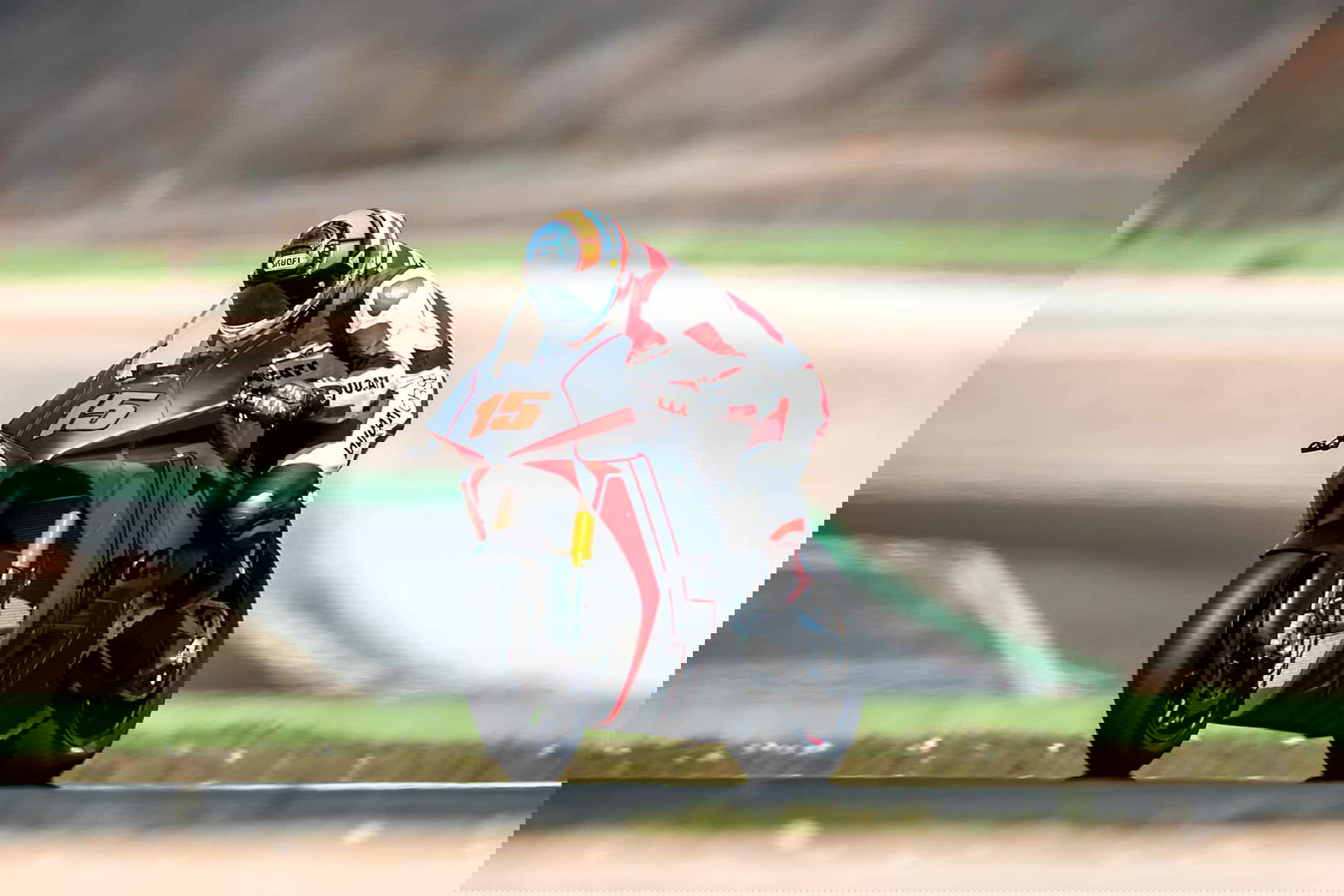
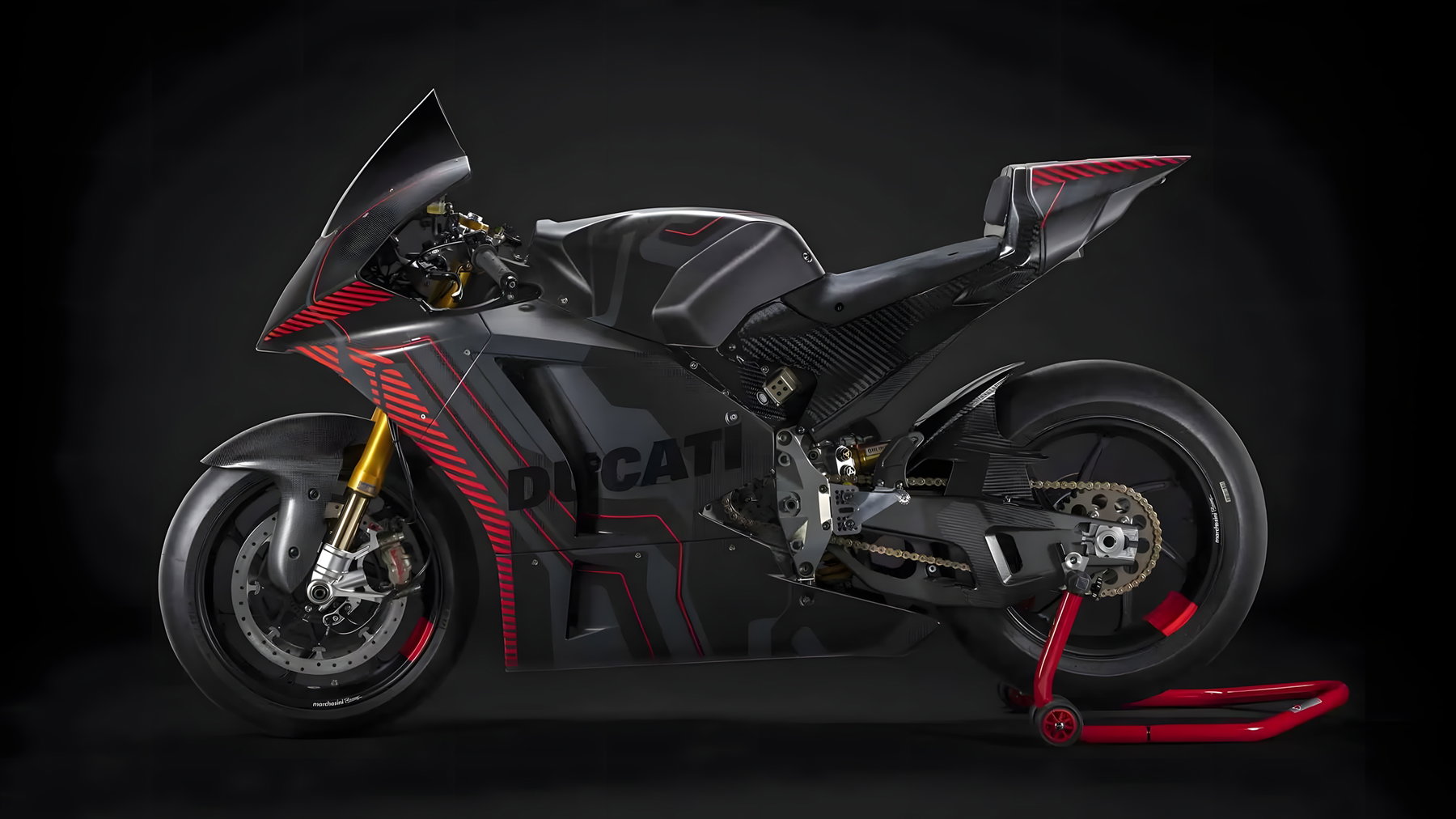
Ducati is no newcomer to the electric motorcycle field. For several seasons, the manufacturer supplied the motorcycles for the MotoE World Cup before the series was ultimately discontinued. The prototype motorcycle used there is designated V21L and serves Ducati as a rolling development lab for electrification. The basic principles described in the current patent, namely a high-revving electric motor, chain final drive and compact build, align with the direction Ducati has already taken with its racing programme. However, the patent specification itself names no specific production model and contains no timeline for a possible market launch.
Whether and when Ducati will bring a street-legal electric motorcycle to market remains open. A patent describes a technical solution for a particular problem, but it is not a product promise. What can nevertheless be read from the filing is the direction of internal development. Ducati is not pursuing unusual drive layouts, but sticks with the familiar principle of a central motor, gear reduction and chain drive, and is looking for ways to transfer this scheme into the electric world without the motorcycle visually and dynamically drifting off course.
Frequently Asked Questions
-
What does the new Ducati patent cover exactly?
The patent describes the arrangement of the electric motor, gearbox and position sensor in an electric motorcycle. The goal is to build the drive unit more slender by mounting the rotor position sensor on the gearbox rather than on the motor itself.
-
Why does the sensor sit on the gearbox and not on the motor?
A classic position sensor on the motor shaft increases the width of the motor. By moving it to a reduced gearbox shaft, Ducati saves installation space. The controller then calculates the rotor position from the known gear ratio.
-
What speed is the planned Ducati electric motor designed for?
The patent specification states a rev range of 17,000 to 20,000 rpm, with 18,500 rpm given as the preferred value. A gearbox with reduction brings this high speed down to a rideable level at the rear wheel.
-
Does the Ducati patent announce a new electric motorcycle for the road?
The patent describes only technical solutions and contains no timeline and no reference to a specific production model. It merely shows that Ducati is working on layouts that would be suitable for a street motorcycle.
➜ This article is part of our comprehensive overview: Motorcycle Patents and Future Technology: What Manufacturers Are Developing. Find all key information on this topic in one place.