- Over 60 percent efficiency demonstrated on the test bench
- Closed cycle of hydrogen, oxygen, and argon
- Initially designed for marine propulsion, trucks, construction and agricultural machinery
- Research funded by the German Federal Ministry for Economic Affairs and Energy
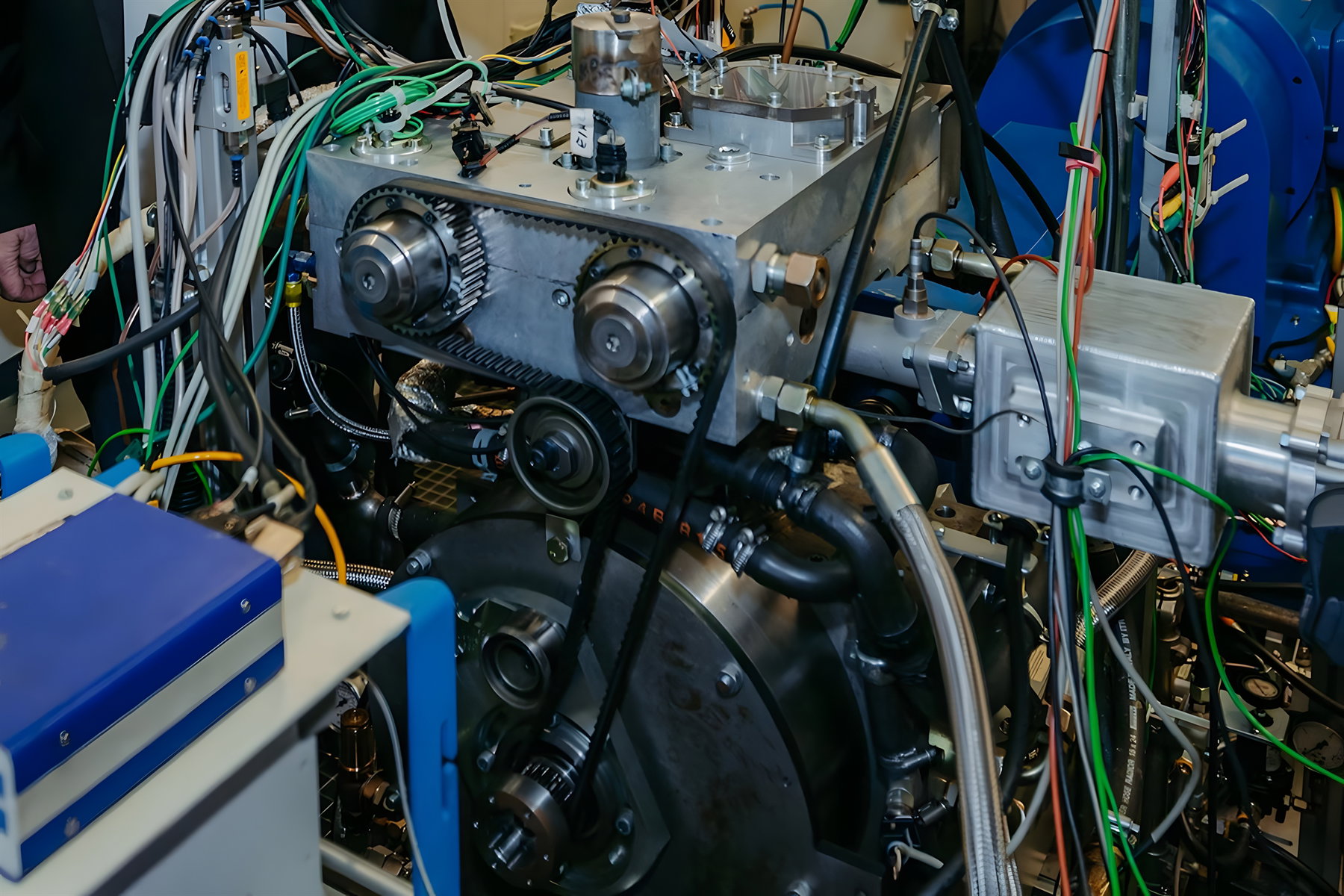
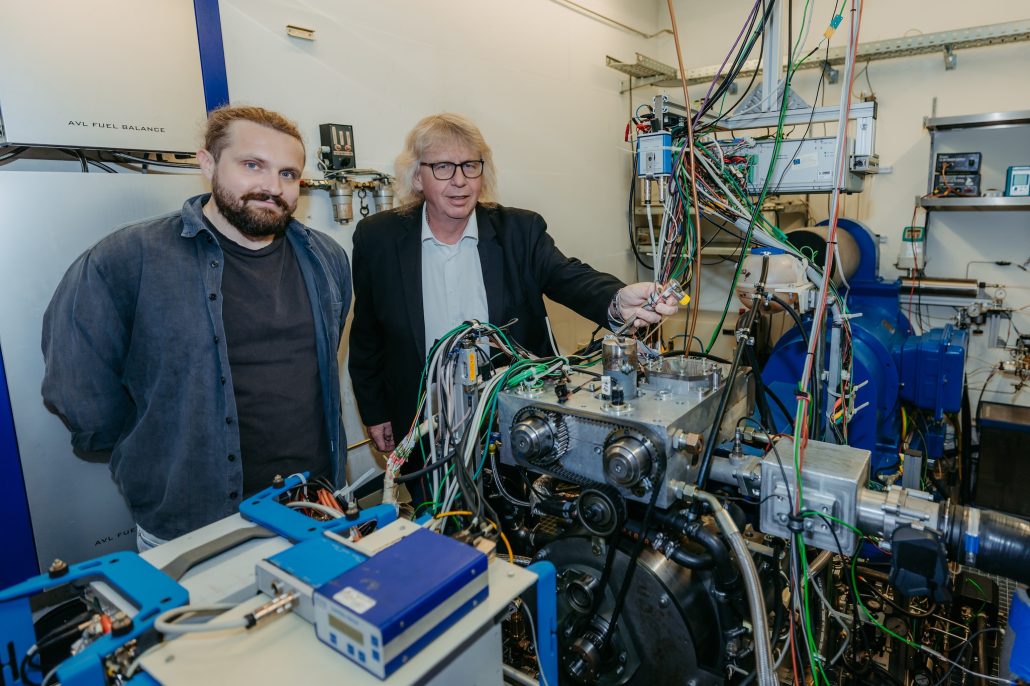
At Otto von Guericke University Magdeburg, a team led by Prof. Dr.-Ing. Hermann Rottengruber from the Institute of Engineering of Products and Systems (IEPS) is working on an engine concept that could fundamentally change hydrogen propulsion. Together with research partner WTZ Roßlau gGmbH, the engineers have developed a so-called hydrogen closed-cycle engine and tested it on the engine test bench. The result: the single-cylinder test engine achieved efficiencies of more than 60 percent while operating completely emission-free. The project was funded by the German Federal Ministry for Economic Affairs and Energy (BMWE).
What Distinguishes the Closed-Cycle Engine from a Conventional Hydrogen Engine?
The crucial difference lies in the closed system. While a conventional combustion engine continuously draws in air and expels exhaust gases, the Magdeburg closed-cycle engine retains most of the gas mixture in the system after each power stroke. The gases are cooled, reconditioned, and fed back into the engine. The water produced during the reaction is removed from the cycle and liquefied. As a result, the working gas circulates through the engine repeatedly without any conventional exhaust gases reaching the environment.
At the heart of the concept is a carefully balanced mixture of three gases: hydrogen provides the energy, oxygen enables the combustion reaction, and argon serves as a stable carrier gas. The colorless and odorless noble gas does not burn itself and does not react with oxygen under the intended conditions. It thereby creates favorable thermodynamic conditions for controlled and efficient combustion. In technical circles, this principle is known as the Argon Power Cycle.
How Does the Efficiency Compare to Diesel and Gasoline Engines?
The Magdeburg closed-cycle engine achieved efficiencies of over 60 percent on the test bench. For comparison: modern gasoline engines typically operate with a thermal efficiency of 30 to 40 percent. Diesel engines in commercial vehicles reach approximately 45 percent at best. Conventional hydrogen combustion engines with open designs are expected to fall in the range of 40 to 45 percent.
This means the closed-cycle engine enters territory that was previously reserved for hydrogen fuel cells. These can convert up to 60 percent of the energy stored in hydrogen into usable electricity, albeit through an entirely different technical pathway. The fact that a combustion engine achieves similar values represents, according to the researchers, a significant technological advancement.
What Applications Is the Engine Designed For?
The Magdeburg researchers do not envision the closed-cycle engine in passenger cars or on motorcycles, but rather in applications where battery-electric drives reach their limits. Prof. Rottengruber specifically mentions marine propulsion, power generators, tractors, large construction and harvesting machines, wheel loaders, and long-haul trucks. In these areas, battery-electric concepts frequently encounter limitations in terms of weight, range, charging times, and charging infrastructure.
According to Rottengruber, particular interest is already coming from the maritime industry. Leading manufacturers of marine propulsion systems have already signaled strong interest, as the pressure to develop climate-neutral solutions by 2050 is growing especially in that sector.
What Economic Advantages Does the Closed System Offer?
The propulsion researcher also considers the concept promising from an economic perspective. According to Rottengruber, the closed system can be more cost-effective over realistic operating periods than an open hydrogen combustion engine. One reason is the elimination of costly exhaust aftertreatment systems. Since the engine produces no conventional exhaust emissions, expensive catalytic converters and filter systems that would still be necessary for open hydrogen engines are not required. The high efficiency of the process could compensate for the greater technical complexity of the closed design over the operating lifetime.
What Technical Problems Remain Unsolved?
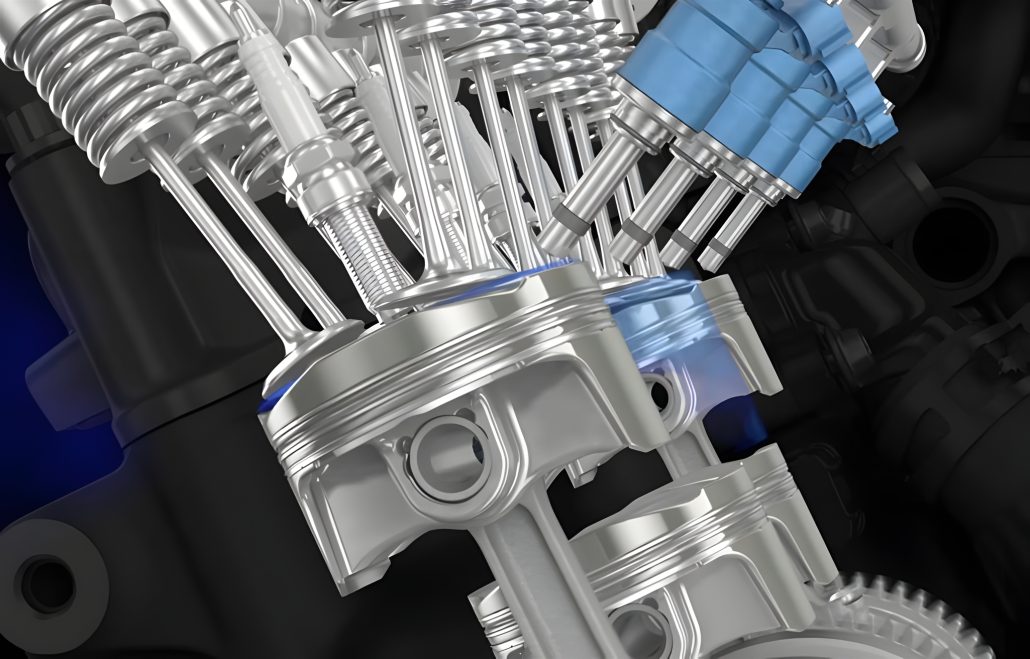
Despite the promising results, the research team openly acknowledges that significant challenges remain. The power density of the current concept is limited because only a certain amount of hydrogen can be injected into the combustion chamber during the injection phase. Additionally, carbon dioxide can accumulate in the closed cycle, produced by the combustion of lubricating oil. Both factors significantly influence efficiency and engine performance and must be addressed in further development, according to Rottengruber.
Both factors are likely to be decisive in determining whether the closed-cycle engine makes the leap from laboratory prototype to series production. The researchers have tested the engine in several variants on the test bench and validated the results in parallel through computer simulations. A concrete timeline for a vehicle application does not yet exist.
What Does This Mean for Motorcycles?
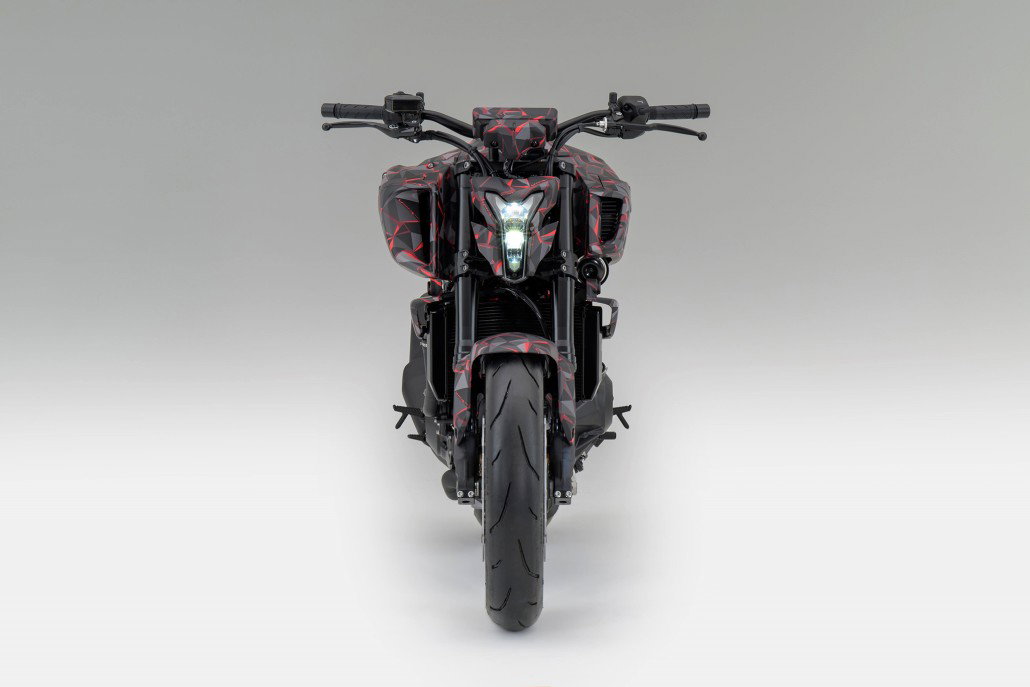
In the motorcycle industry, the closed-cycle engine currently has no direct application. However, the question of whether hydrogen combustion engines have a future on two wheels has been intensively pursued for years. The four major Japanese manufacturers Honda, Kawasaki, Suzuki and Yamaha founded the research association HySE (Hydrogen Small Mobility & Engine Technology) in 2023 to jointly develop hydrogen combustion engines for small vehicles and motorcycles.
Kawasaki has advanced the topic the furthest. In April 2025, the Ninja H2 HySE prototype completed a demonstration ride on the Circuit de la Sarthe during the 24 Hours of Le Mans. The prototype is based on the supercharged 998 cc inline four-cylinder of the Ninja H2 and was converted for direct hydrogen injection. Kawasaki has set the goal of bringing a production-ready hydrogen motorcycle to market by the early 2030s, although the timeline and availability are said to depend on hydrogen refueling infrastructure and regulatory frameworks.
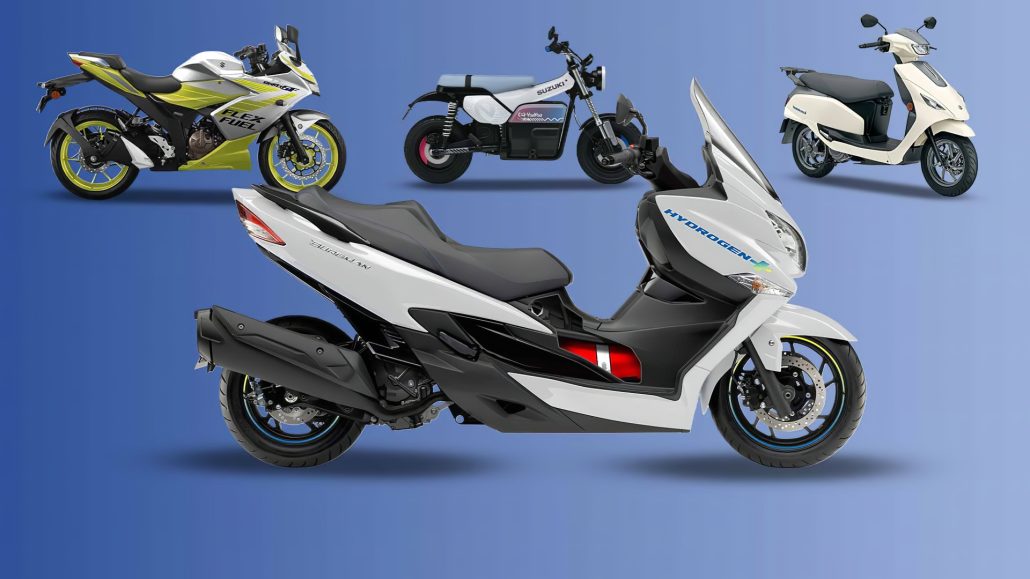
Suzuki is also independently researching the technology and has developed a hydrogen prototype based on the Burgman scooter. Both concepts, however, use open combustion systems, not closed cycles like the Magdeburg approach.
Why Is Hydrogen Storage the Biggest Obstacle for Motorcycles?
Even if the efficiency of a hydrogen engine exceeds the 60 percent mark, hydrogen storage remains the central problem for two-wheelers. Hydrogen has a high energy density relative to weight, but requires extremely high pressures or cryogenic temperatures to be stored in usable quantities. The energy content of a typical 15-liter gasoline tank corresponds to approximately 50,000 liters of gaseous hydrogen at atmospheric pressure or about 58 liters in liquid form.
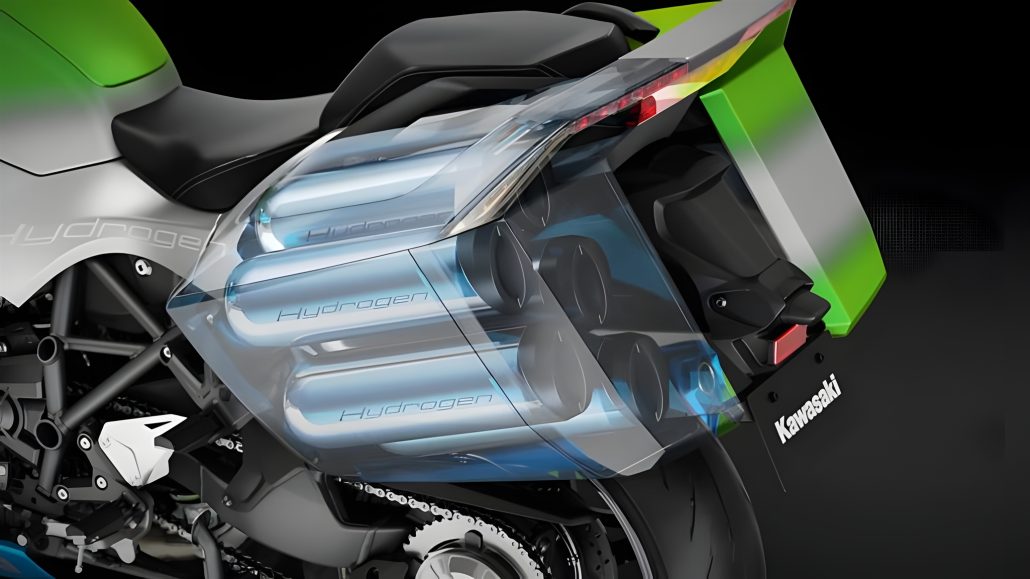
Kawasaki’s current prototypes use large, suitcase-like pressure vessels mounted on the sides of the motorcycle, clearly illustrating the packaging compromises involved. Higher engine efficiency does not eliminate these physical challenges but can reduce the amount of hydrogen needed for a given range. If more fuel energy is actually converted into propulsive power, smaller tanks or lower storage pressures could enable comparable real-world range. This would at least mitigate some of the packaging and cost barriers for motorcycles.
Kawasaki Heavy Industries Invests in the Entire Hydrogen Supply Chain
Alongside motorcycle development, Kawasaki Heavy Industries (KHI) is investing heavily in what the corporation describes as a complete “Hydrogen Road” strategy. This encompasses the entire chain from production through liquefaction and transport to storage and end use of hydrogen. KHI is developing, among other things, transport ships for liquefied hydrogen at cryogenic temperatures as well as import terminals and storage facilities. Liquefied hydrogen is significantly denser than compressed gas and can be transported and stored more efficiently in large quantities.
For motorcycles, a widespread refueling infrastructure is crucial. Without accessible hydrogen refueling stations, even the most efficient combustion engine would remain impractical in everyday use. The Magdeburg closed-cycle engine significantly improves efficiency on the engine side, but without parallel advances in hydrogen production and distribution, series deployment in motorcycles is likely still far off.
Assessment: Where Does Hydrogen Combustion Stand in the Technology Mix?
The Magdeburg closed-cycle engine is a laboratory prototype, and there is no concrete timeline for deployment in vehicles. Nevertheless, the research demonstrates that the limits of the hydrogen combustion engine have not yet been exhausted. While public debate frequently polarizes between battery-electric drives and fuel cells, the Magdeburg team demonstrates that combustion engines running on hydrogen can also achieve efficiencies previously attributed only to fuel cells.
For the motorcycle industry, this does not mean an immediate change. But with HySE, Kawasaki’s hydrogen program, and the now-demonstrated efficiency of closed-cycle systems, development is moving forward on multiple levels simultaneously. The question is no longer just whether hydrogen combustion engines can be efficient enough, but whether storage and infrastructure can keep pace.
Frequently Asked Questions
-
How does the hydrogen closed-cycle engine from Magdeburg work?
The engine operates with a closed cycle of hydrogen, oxygen, and the noble gas argon. Unlike conventional combustion engines that draw in air and expel exhaust, the gas mixture remains in the system after each power stroke. The gases are cooled, reconditioned, and fed back into the engine. Water produced during the reaction is removed and liquefied. This principle, known as the Argon Power Cycle, achieved over 60 percent efficiency on the test bench.
-
Can the hydrogen closed-cycle engine be used in motorcycles?
The researchers at Otto von Guericke University Magdeburg envision the engine primarily in marine propulsion, power generators, trucks, and large construction and agricultural machinery. A direct application in motorcycles is not currently planned. However, higher engine efficiency could reduce hydrogen storage requirements, which would benefit two-wheelers if the technology is eventually adapted for smaller platforms.
-
Which motorcycle manufacturers are working on hydrogen combustion engines?
Honda, Kawasaki, Suzuki, and Yamaha founded the research association HySE (Hydrogen Small Mobility & Engine Technology) in 2023 to jointly develop hydrogen combustion engines for small vehicles and motorcycles. Kawasaki has advanced the furthest, with its Ninja H2 HySE prototype completing a demonstration ride at Le Mans in April 2025. Suzuki has also developed a hydrogen prototype based on the Burgman scooter.
-
How much hydrogen does a motorcycle need for the same range as gasoline?
The energy content of a typical 15-liter gasoline tank corresponds to approximately 50,000 liters of gaseous hydrogen at atmospheric pressure or about 58 liters in liquid form. This illustrates the enormous storage challenge for two-wheelers. Higher engine efficiency can reduce the required hydrogen quantity, but the fundamental packaging and storage challenges remain significant for motorcycle applications.
-
What is the difference between hydrogen combustion and fuel cells?
A hydrogen combustion engine burns hydrogen directly in a combustion chamber, similar to a conventional engine but using hydrogen instead of gasoline or diesel. A fuel cell converts hydrogen into electricity through an electrochemical reaction, which then powers an electric motor. Both can achieve around 60 percent efficiency, but they use fundamentally different technical pathways. The Magdeburg closed-cycle engine is notable because it matches fuel cell efficiency levels with a combustion-based approach.
➜ This article is part of our comprehensive overview: Motorcycle Patents and Future Technology: What Manufacturers Are Developing. Find all key information on this topic in one place.