- New Kawasaki patent with revised hybrid architecture
- Battery moved in front of cylinder head for better cooling
- Concept points to a hybrid vehicle in the maxi scooter segment
Kawasaki continues to drive forward the development of its hybrid technology. Even though the Ninja 7 Hybrid and Z7 Hybrid have not been big sellers so far, the manufacturer has attracted attention in the industry with its approach. Competitors such as Yamaha are said to be working on similar concepts. A recently published patent shows that Kawasaki is exploring further applications for hybrid drive, with a particular focus on rethinking battery cooling.
The challenge of hybrid packaging
Fitting two complete drive systems into a motorcycle poses considerable problems for developers. In addition to the combustion engine, an electric motor, battery, control units, cooling systems, and a power transmission solution must also be integrated. Kawasaki relies on an automated clutch and an automated transmission to switch seamlessly between the two drive types.
Despite a smaller combustion engine, a reduced fuel tank, and the electrical components, the space requirements remain high. The longer wheelbase and higher weight of previous hybrid models are understandable in this context.
Current solution for Ninja 7 and Z7 Hybrid
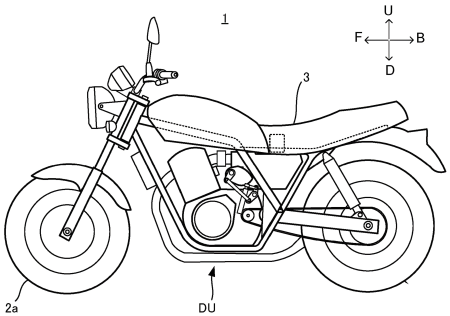
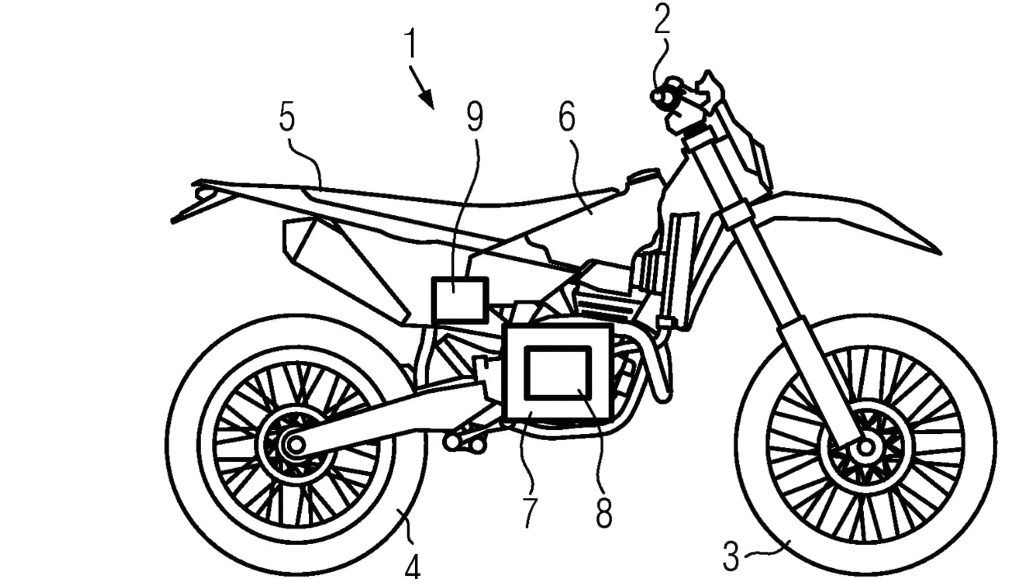
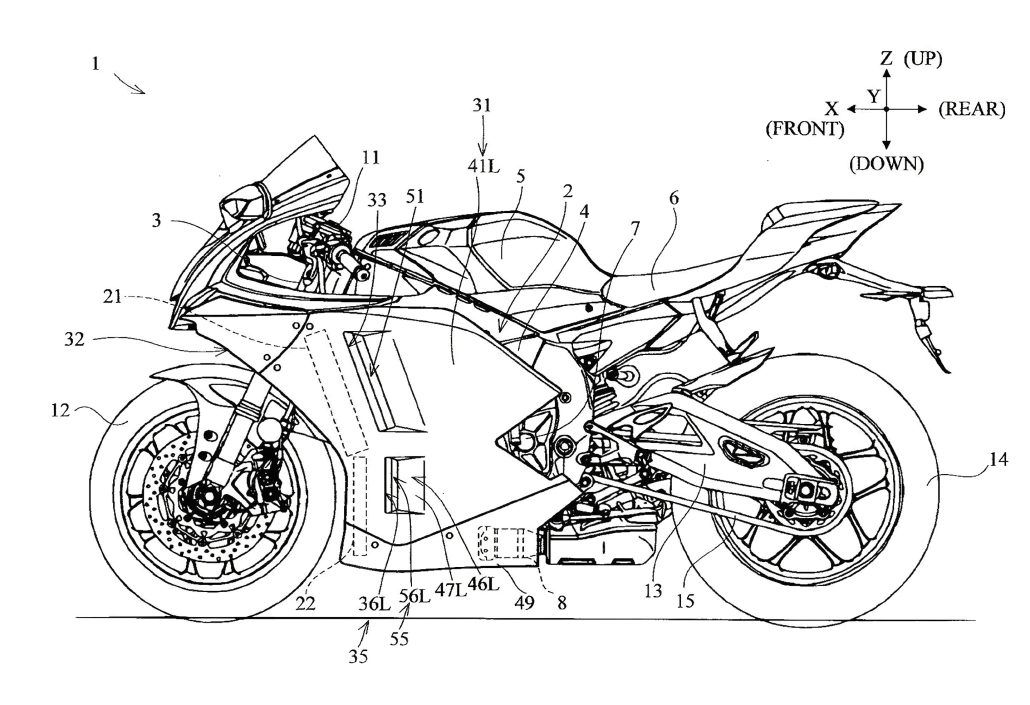
In previous hybrid models, the fuel tank is located in the classic position. The electric motor, battery, and control unit are compactly arranged above the transmission and under the seat. However, this design is not suitable for all vehicle concepts. Kawasaki has therefore already shown alternative layouts for models such as an Eliminator Hybrid or a Versys Hybrid in earlier patents.
In these models, the battery was moved to the area where the fuel tank is usually located, while the fuel tank used the available space around the engine. In the Versys concept, the tank even extended forward under the handlebars into the front fairing.
New patent with a focus on battery cooling
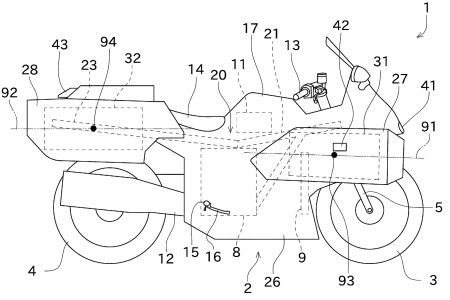
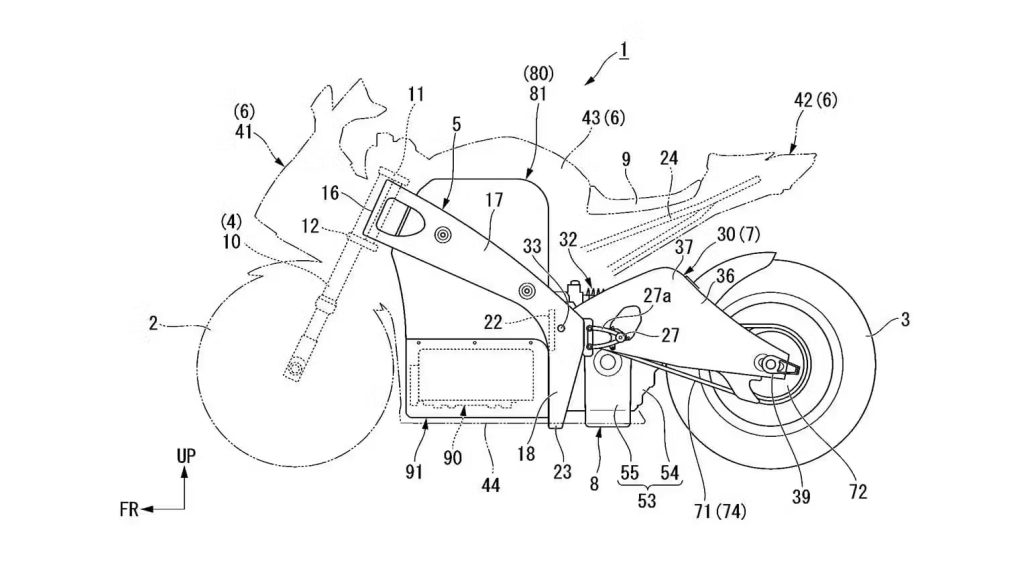
The current patent goes one step further. The aim is to significantly improve battery cooling. The vehicle concept shown has proportions reminiscent of large scooters such as the Honda Integra or X ADV.
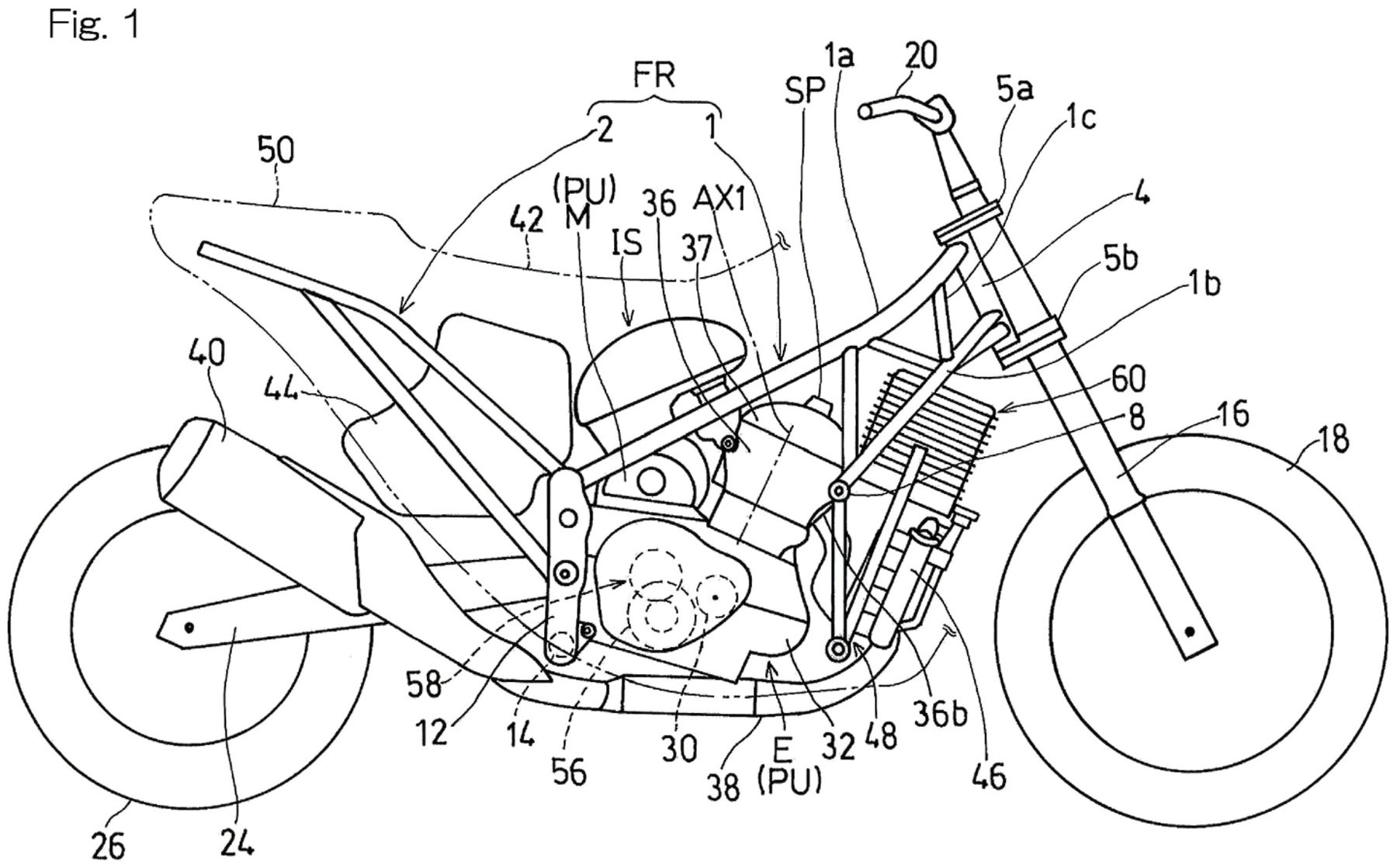
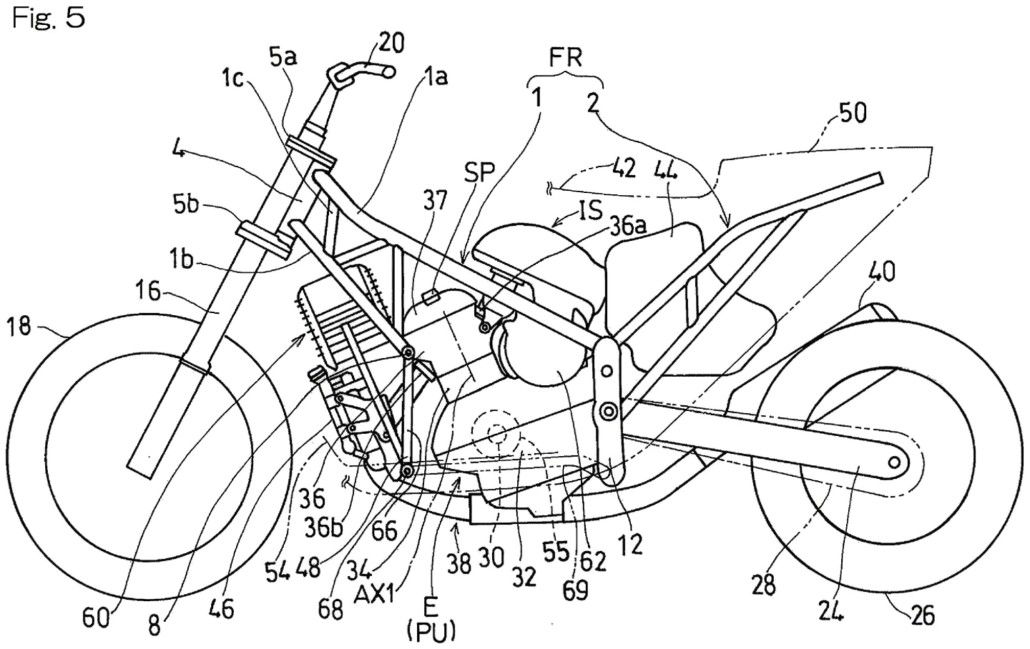
The front section of the trellis frame is extended, moving the steering head further forward. At the same time, the radiator of the familiar 451 cm³ parallel twin engine is moved downwards. This creates space in front of the cylinder head to accommodate the battery.
The battery sits there in an enlarged installation space, shares its mounting with the radiator, and is exposed to significantly more airflow. The housing is equipped with cooling fins, which are designed to further support heat dissipation. This measure could make it possible to use the E Boost function of the current hybrids for longer. This function calls up the full battery power for a short time in addition to the combustion engine in order to provide more torque, for example when overtaking. Better cooling is intended to prevent the battery from overheating.
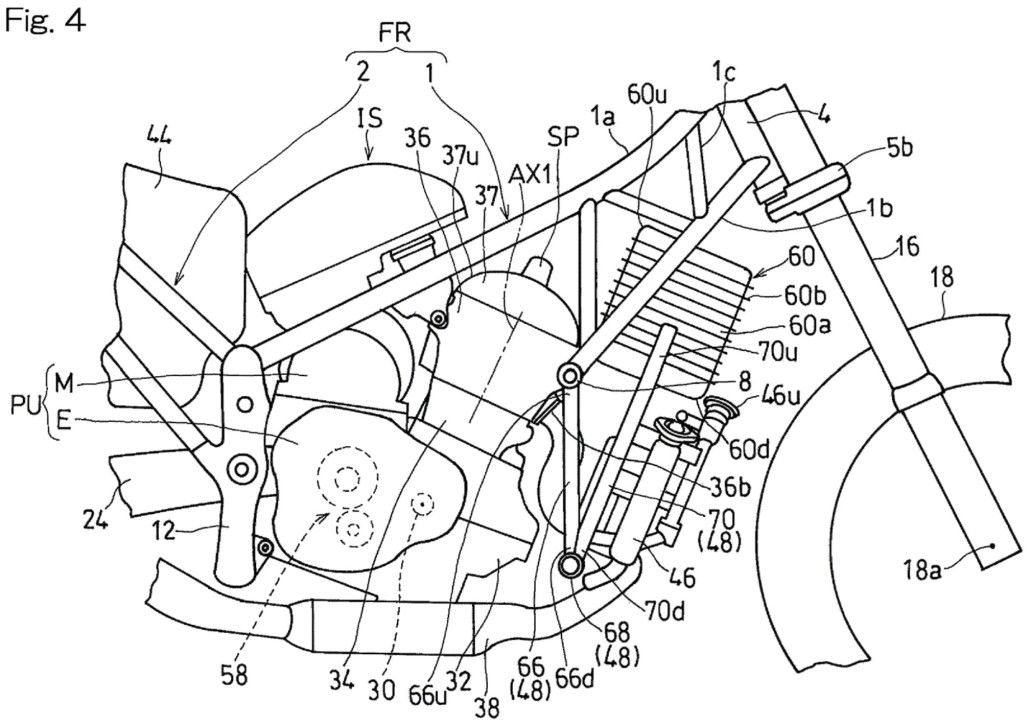
New use of space and scooter layout
Moving the battery to the front frees up space under the seat. The patent now shows the fuel tank being located in this area. The drawings indicate a vehicle concept that is clearly similar to a scooter.
Continuous running boards along the sides of the engine are explicitly mentioned. These are attached at the front to the same structure that also supports the radiator and battery, and extend to below the swing arm bearing. The rear of the tank has a curved shape to create space for a storage compartment under the seat, which, according to the illustration, is designed to hold a helmet. Although the storage volume is said to be smaller than that of classic maxi scooters, a certain degree of everyday practicality is retained.
Why a hybrid drive is a good fit for maxi scooters
A large-volume scooter is considered particularly suitable for a hybrid drive. In many cities, environmental zones are being further tightened, and in the future, only locally emission-free vehicles may be allowed access to city centers. A hybrid can cover short distances purely on electric power, but at the same time offers the range and performance of a combustion engine for longer commutes.
In addition, expectations for driving dynamics and sporty performance are lower for maxi scooters than for classic motorcycles. At the same time, the market shows that customers are willing to pay high prices for this vehicle class. In Europe, a Yamaha TMax Tech Max costs more than models such as an MT 10 or a Tracer 9 GT. Against this backdrop, a hybrid scooter could be more economically attractive for Kawasaki than the previous hybrid motorcycles, which have to compete with cheaper, lighter, and more powerful conventional models.
Whether and when such a vehicle will go into series production remains to be seen. However, the patent clearly shows that Kawasaki is continuing to work intensively on the further development of its hybrid technology.
→ This article is part of our comprehensive overview of patents and future technologies – find all developments in our Patents and Future Motorcycle Technology overview.


- Insta360 19428Insta360 Ace Pro 2 Dual Battery Bundle Nachtschwarz

Redakteur bei Motorrad Nachrichten. Fokus auf Technik, Szene und Motorradpolitik – neutral, sachlich, verständlich.
Verantwortlich für die Seiten www.Motorcycles.News, www.Motorrad.Training und den YouTube-Kanal "Motorrad Nachrichten", sowie deren social Media-Seiten.