- 25,000 motorcyclists at peak according to police, down from 30,000 in the record year 2025
- City of Nuremberg issued its first general ordinance banning commercial stalls, music, and information stands
- Police reported a positive outcome: no noteworthy incidents
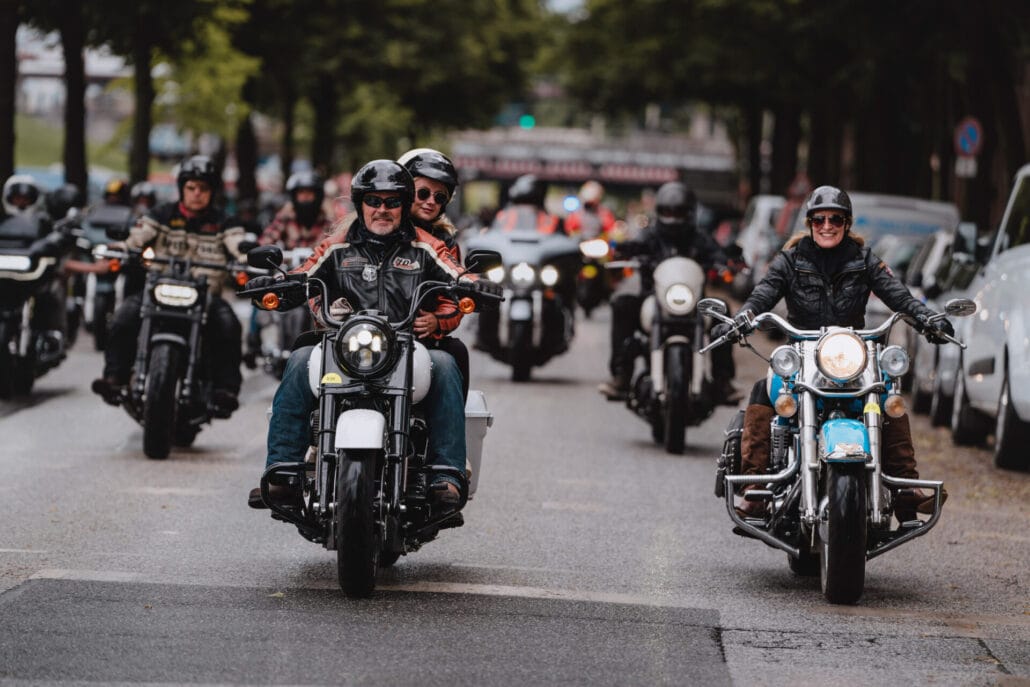
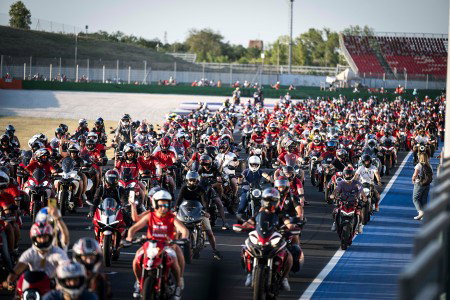
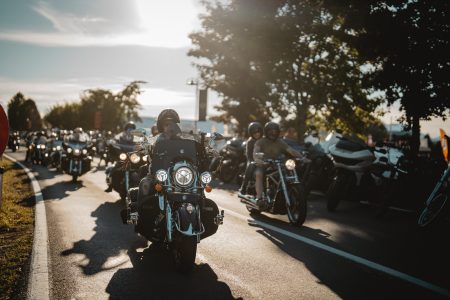
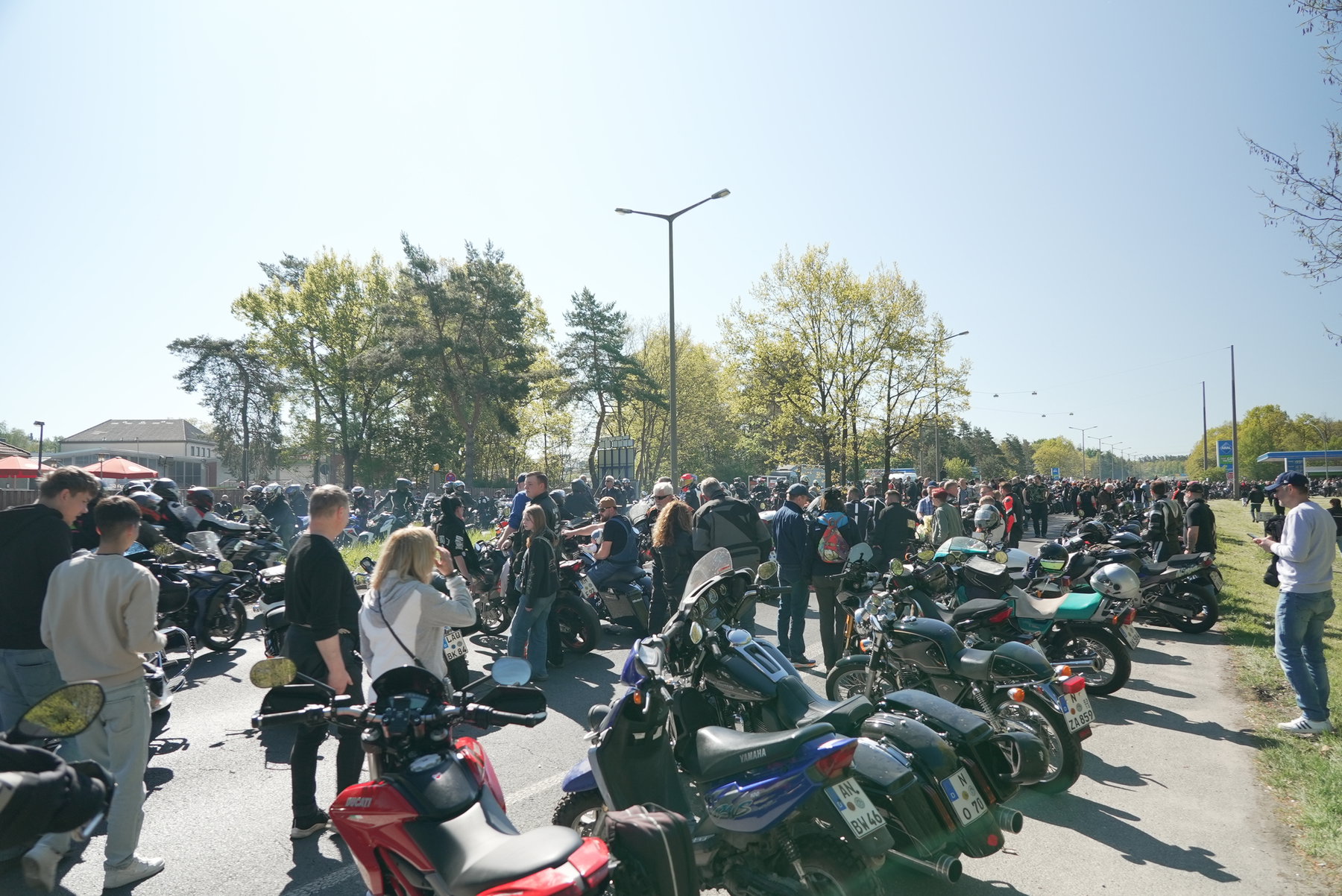
On May 1, 2026, tens of thousands of motorcyclists once again gathered along Münchener Straße in southern Nuremberg from the early morning hours to kick off the new riding season together. According to the Middle Franconia Police Headquarters, officers counted a peak of around 25,000 participants. This put attendance below the previous year’s record, when approximately 30,000 bikers had turned the unofficial gathering into the largest of its kind in Germany. But in 2026, attendance figures were not the only focus. For the first time, the City of Nuremberg had issued a general ordinance ahead of the event that noticeably changed the character of the meet.
How Did the May Day Motorcycle Meet in Nuremberg Originate?
The meet has existed for roughly 50 years, according to various accounts. Originally, a small group of motorcyclists gathered on May 1 at a gas station on the outskirts of Nuremberg to ride together to Weltenburg Abbey and have their machines blessed. There was never an official organizer. Over the decades, the tradition spread through the biker community, and a handful of enthusiasts grew to hundreds, then thousands. The meeting point on Münchener Straße between the Zollhaus-/Trierer Straße intersection and the A73 motorway on- and off-ramps has remained the same throughout.
The routine has followed the same pattern for as long as anyone can remember: from the early morning hours, the first machines roll in, riders swap stories, admire each other’s motorcycles, and around noon the gathering breaks up as participants head out in small groups for their rides. Many head for the Franconian Switzerland region, while others follow the traditional route to Weltenburg, where the beer garden has long since taken precedence over the motorcycle blessing.
What Did the City of Nuremberg Do Differently in 2026?
Ahead of this year’s meet, the City of Nuremberg issued a general ordinance through its official gazette that applied to the area along Münchener Straße on May 1 between 6:00 AM and 6:00 PM. Prohibited activities included the sale of food, beverages, and merchandise, the setting up of information stands and distribution of flyers, music of any kind whether live or amplified, and event attractions such as bouncy castles. The Middle Franconia police drew attention to the regulations on social media the evening before the meet.
Explicitly excluded from the ban were the regular operations of gas stations and established restaurants in the affected area. The ordinance was thus specifically targeting commercial vendors who had operated unauthorized stalls in recent years, some in violation of retail closing laws. As early as 2025, several vendors had already received fines from the regulatory office.
How Did the Ban Affect the Scene on the Ground?
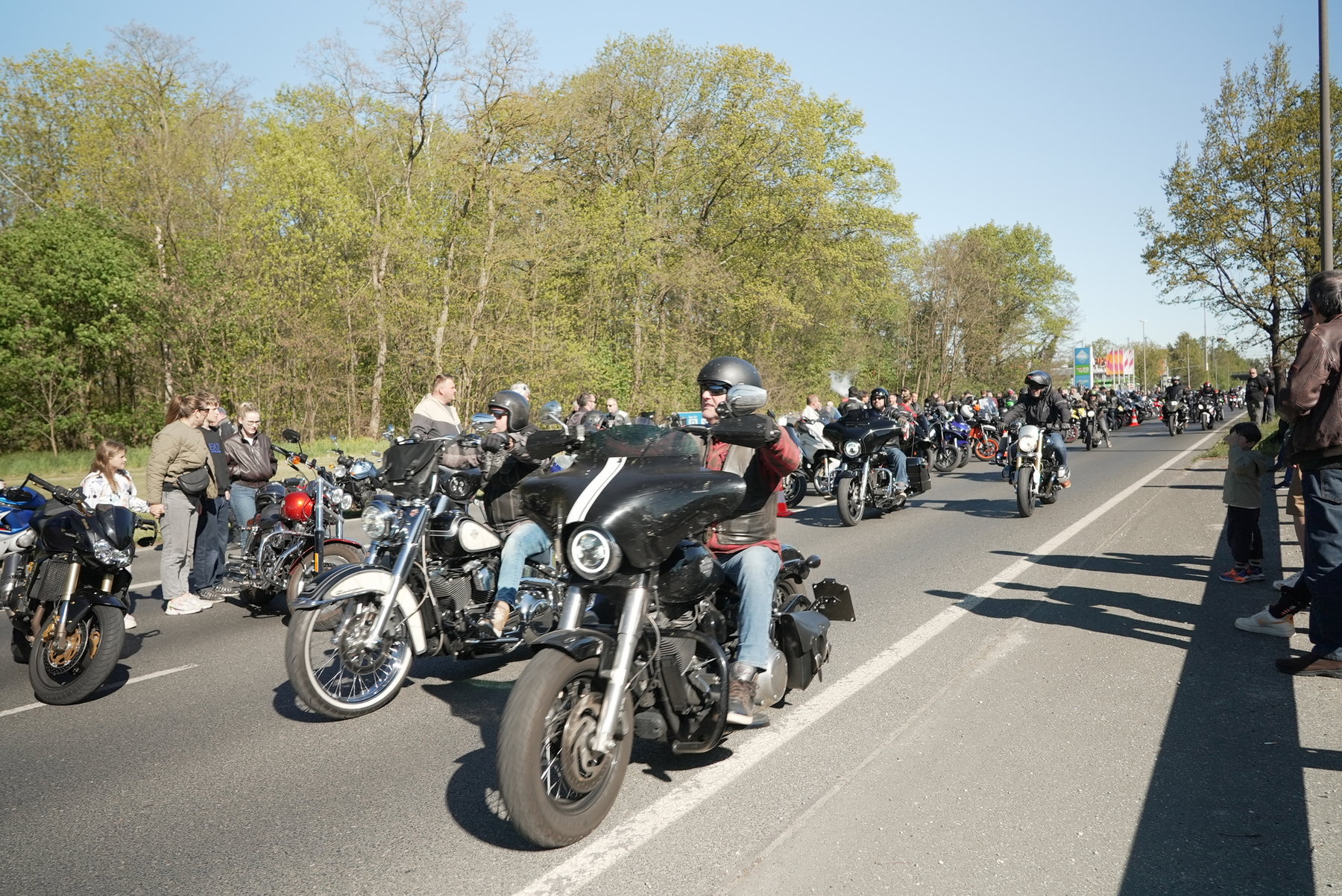
The effects of the general ordinance were clearly visible on May 1, 2026. The small stalls that had sold coffee, bratwurst rolls, and other snacks in previous years were completely absent. Likewise, the service stands that had offered free visor cleaning in past years were gone. The musician who had regularly performed on-site in recent years was also missing. All prohibitions were evidently strictly observed.
The ordinance had sparked debate in the motorcycle community beforehand. Some feared the city wanted to push back against the meet as a whole. The trade magazine Zweirad, however, offered a more sober assessment: this was solely about regulating unauthorized commercial activity. The meet itself was never at risk of being banned. The gas station operators and the local restaurant were clearly exempt as well.
How Did the 2026 Meet Unfold?
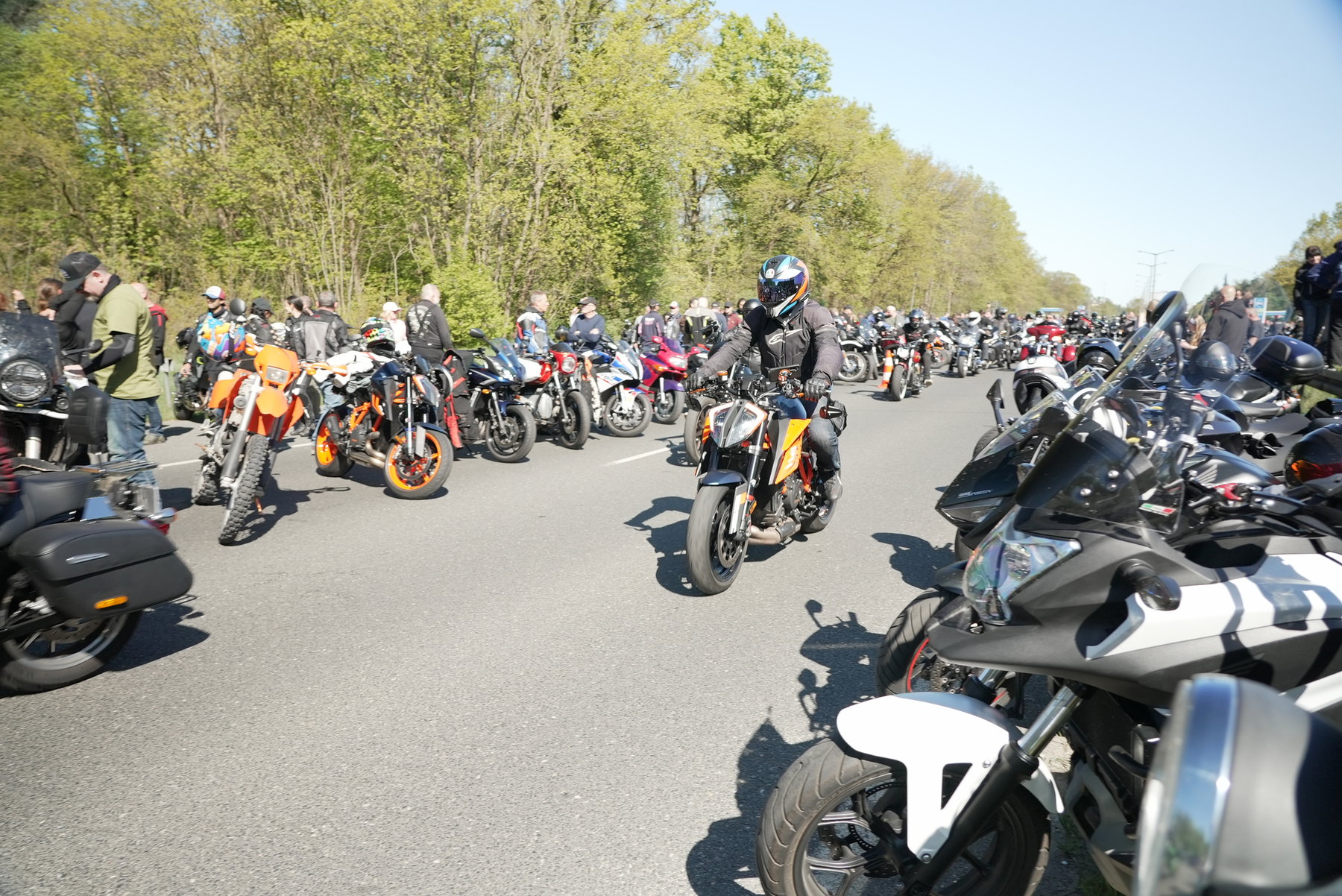
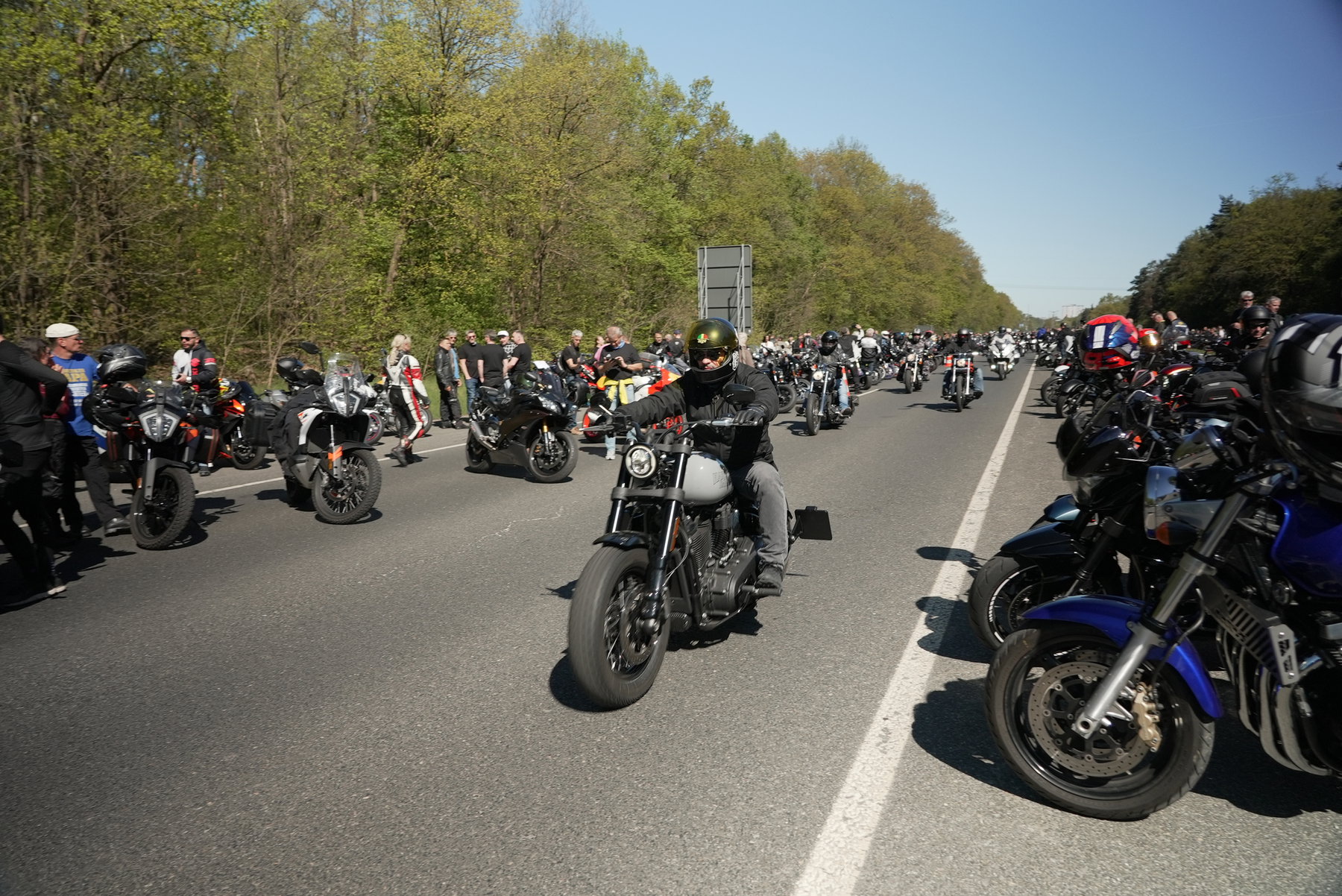
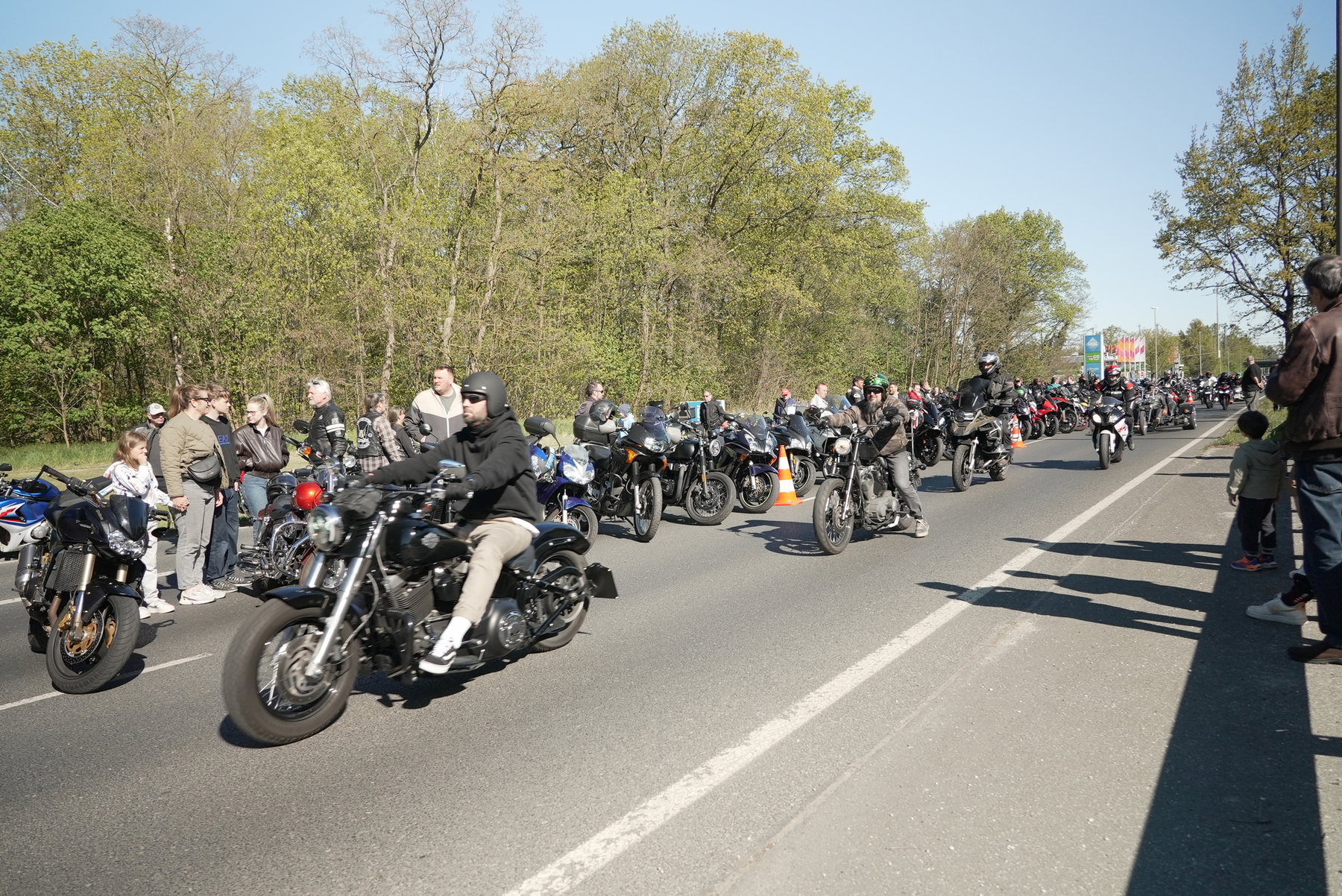
The weather cooperated: sunshine with temperatures above 20 degrees Celsius, not a single cloud in the sky, ideal conditions for the season opener. The first bikers arrived around 8:00 AM according to police. Officers from the Nuremberg traffic police, supported by the Ansbach deployment unit, closed off Münchener Straße from the Karl-Schönleben-Straße intersection to the A73 on-ramp. The mood was upbeat, the atmosphere relaxed. From midday, motorcyclists departed in small groups for their rides, and by around 12:30 PM the gathering gradually dispersed. By early afternoon, the road closure was lifted.
The Middle Franconia Police Headquarters reported a positive outcome in its press release. Spokesperson Michael Petzold confirmed the peak of 25,000 participants. According to police, no noteworthy incidents occurred. As in the vast majority of years, the meet passed peacefully and without any incidents.
What Was the Police Presence Like at the Meet?
In 2026, police focused primarily on securing the perimeter and managing traffic. Within the meet itself, the police presence was minimal. There were no identity checks or vehicle inspections, consistent with previous years. Somewhat greater police visibility occurred only during the arrival and departure of larger groups, including motorcycle club formations that arrived and left in closed convoys. Officers directed traffic flow at these points, as large numbers of machines were in motion simultaneously. Beyond that, police kept a low profile.
How Has Attendance Developed Over the Years?
What reportedly began over 50 years ago with a small group at a gas station has grown into one of Germany’s largest spontaneous motorcycle gatherings. For a long time, the meet remained an insider tip among Franconian motorcyclists. By the 2010s, several thousand bikers were already attending regularly, and toward the end of the decade, the count reportedly exceeded 9,000 machines. After a pandemic-related hiatus in 2020 and 2021, during which the city explicitly prohibited the gathering, the tradition returned in 2022 with over 13,000 motorcyclists showing up immediately. In 2023, an estimated 15,000 attended, followed by around 25,000 in 2024. The current record was set in 2025 with approximately 30,000 bikers. In 2026, the figure of 25,000 was somewhat lower, possibly because May 1 fell on a Friday.
What Role Do Motorcycle Clubs Play at the Meet?
Motorcycle clubs such as the Hells Angels, Bandidos, and Outlaws have been regular attendees for years and are as much a natural part of the gathering as all other motorcyclists. On the day of the May 1 meet, the various clubs stand side by side without any conflicts arising.
The only noteworthy incident in the entire history of the meet occurred in 2024, when a brief verbal altercation took place between members of different clubs on the periphery. The police Special Operations Command (USK) moved in, and the situation immediately calmed down. No criminal offenses were committed. A police spokesperson described the scene at the time as the parties involved having briefly sized each other up before moving on when the USK arrived. In the media, however, the incident was portrayed as far more significant than it actually was. By 2025, Hells Angels and Bandidos even arrived together, with no tensions whatsoever.
Various motorcycle clubs were also present in 2026. The Middle Franconia Police Headquarters emphasized that the event is characterized by the shared hobby and mutual exchange among participants. The post-meet assessment confirmed this view: there were no incidents of any kind.
What Does the Meet Mean for the City of Nuremberg?
The May Day motorcycle meet has long been a fixture of the holiday in Nuremberg and is tolerated by authorities as a tradition, even though it remains an unofficially organized event to this day. Police treat the meet de facto like a major event, managing traffic, closing streets, and keeping response teams on standby. With the 2026 general ordinance, the city has now established a regulatory framework for the first time, though one that targets only the commercial side infrastructure and not the meet itself.
On the same day, two other major events took place in Nuremberg: a DGB rally at Kornmarkt with around 6,000 participants and a march followed by a street festival in Gostenhof with approximately 4,000 participants. In total, Middle Franconia police managed three events with a combined attendance of roughly 35,000 on May 1. The incidents that did occur in Nuremberg that day, including the igniting of pyrotechnics and a provisional arrest, took place exclusively in the vicinity of the other gatherings and not at the motorcycle meet.
Frequently Asked Questions
-
How many motorcyclists attended the May Day meet in Nuremberg in 2026?
According to the Middle Franconia Police Headquarters, officers counted a peak of around 25,000 participants. In 2025, the meet had set a record with approximately 30,000 bikers.
-
What was different about the Nuremberg motorcycle meet in 2026 compared to previous years?
The City of Nuremberg had issued its first general ordinance banning the sale of goods, setting up of stalls, distribution of flyers, and music along Münchener Straße. The prohibitions targeted unauthorized commercial vendors. Gas stations and established restaurants were exempt.
-
Were there any accidents or incidents at the Nuremberg motorcycle meet in 2026?
No. Police reported no noteworthy incidents at the motorcycle meet.
-
When and where does the motorcycle meet in Nuremberg take place?
The meet takes place every year on May 1 on Münchener Straße in southern Nuremberg, between the Zollhaus-/Trierer Straße intersection and the A73 motorway on- and off-ramps. Bikers gather from the early morning hours, and the meet disperses around noon.
-
Does the Nuremberg motorcycle meet have an official organizer?
No. The meet reportedly established itself over 50 years ago as an unofficial tradition without an organizer or registered program. Authorities tolerate it and provide traffic management and police presence.