- Aprilia tests unique wing elements alongside the windscreen – a first in MotoGP
- Three Aprilias finish first, second and third in the Jerez test
- Sensor device on the tail hints at further development steps
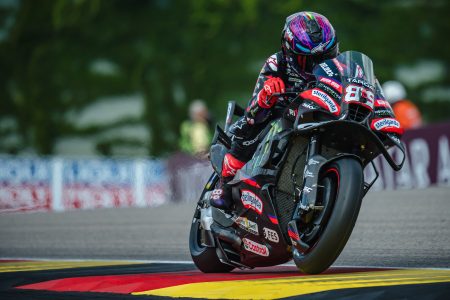
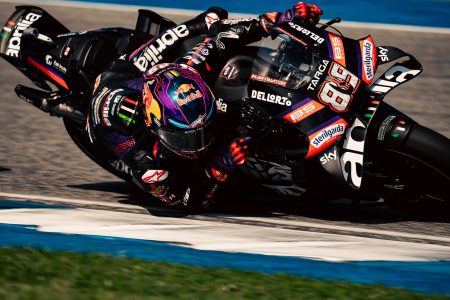
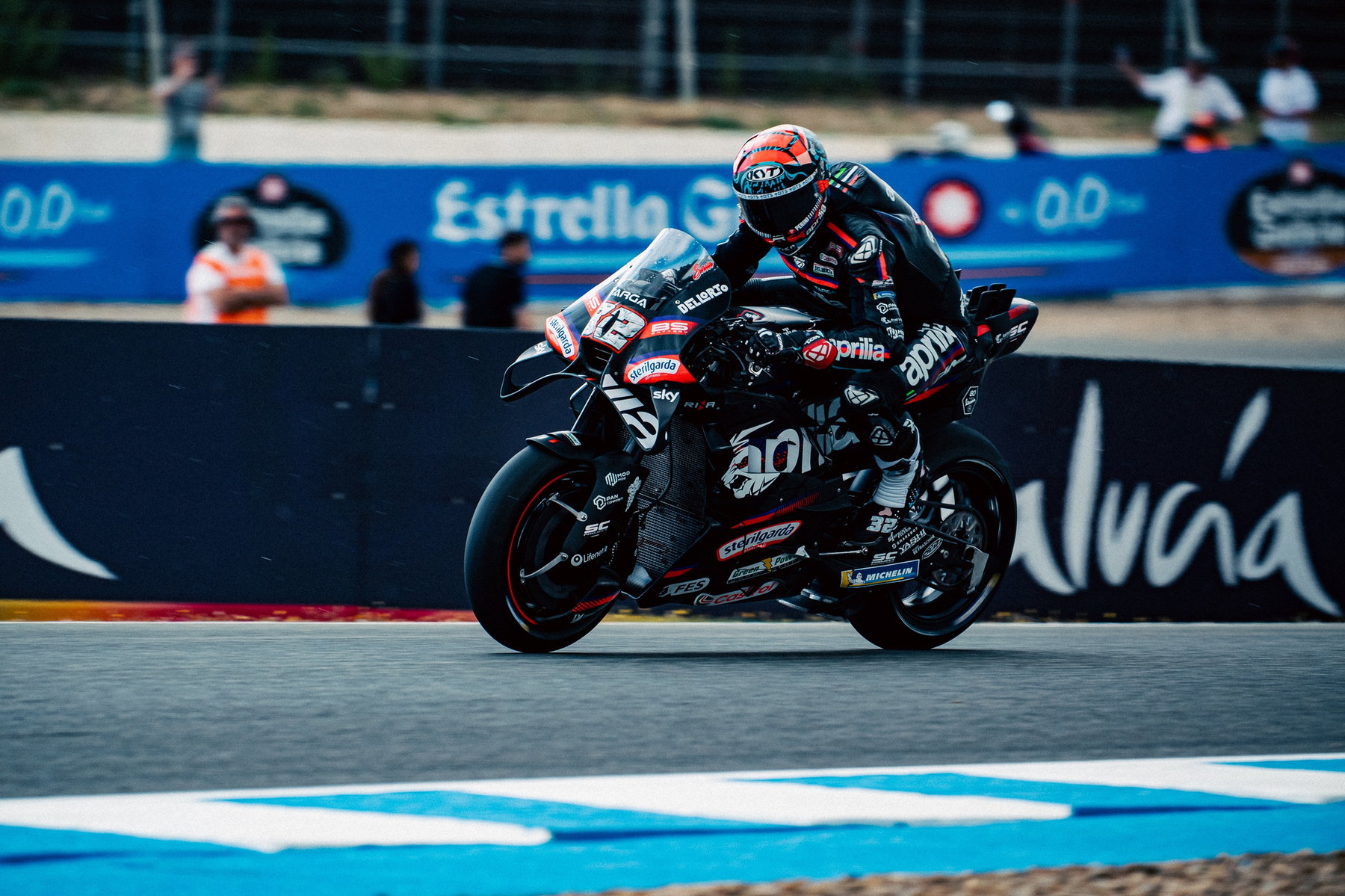
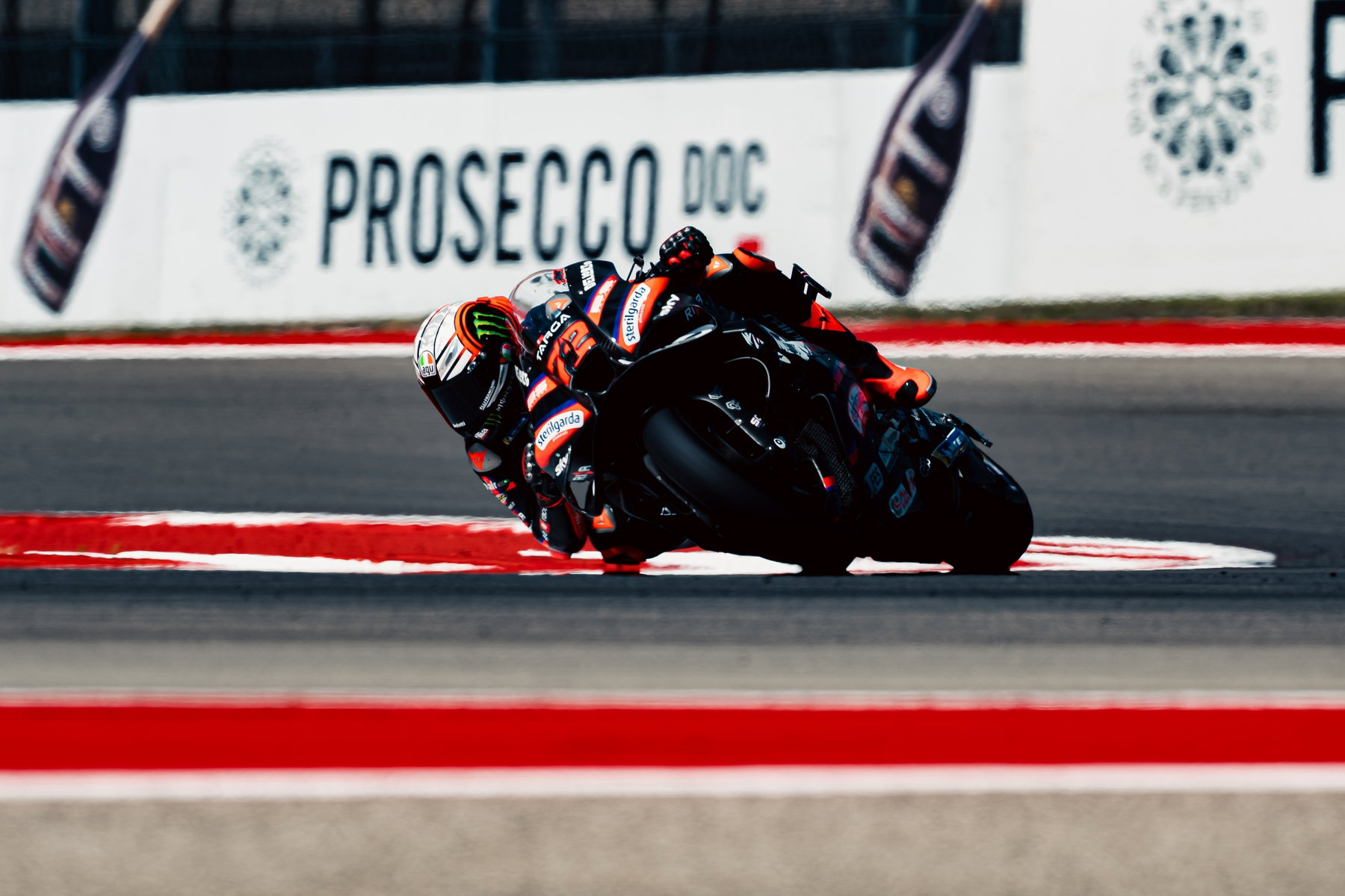
As the 2026 MotoGP season headed to the Circuito de Jerez-Ángel Nieto for its first European round, Aprilia once again demonstrated why the Noale factory is currently regarded as the innovation leader in the paddock. Less than 24 hours after the Spanish GP, won by Ducati’s Alex Marquez, the RS-GP26 machines rolled out of the pit lane sporting a striking new feature: two additional wing elements mounted on both sides of the front fairing next to the windscreen.
The Italian trade press promptly dubbed the components “elephant ears” because they visually resemble protruding ears. From a technical standpoint, they represent a third tier of aerodynamic surfaces on the front section of the motorcycle. In addition to the classic front wing and the upper fairing channel, Aprilia has tapped into a zone where no team had previously attempted to install an airflow guide.
What the “Elephant Ears” Are Meant to Achieve Technically
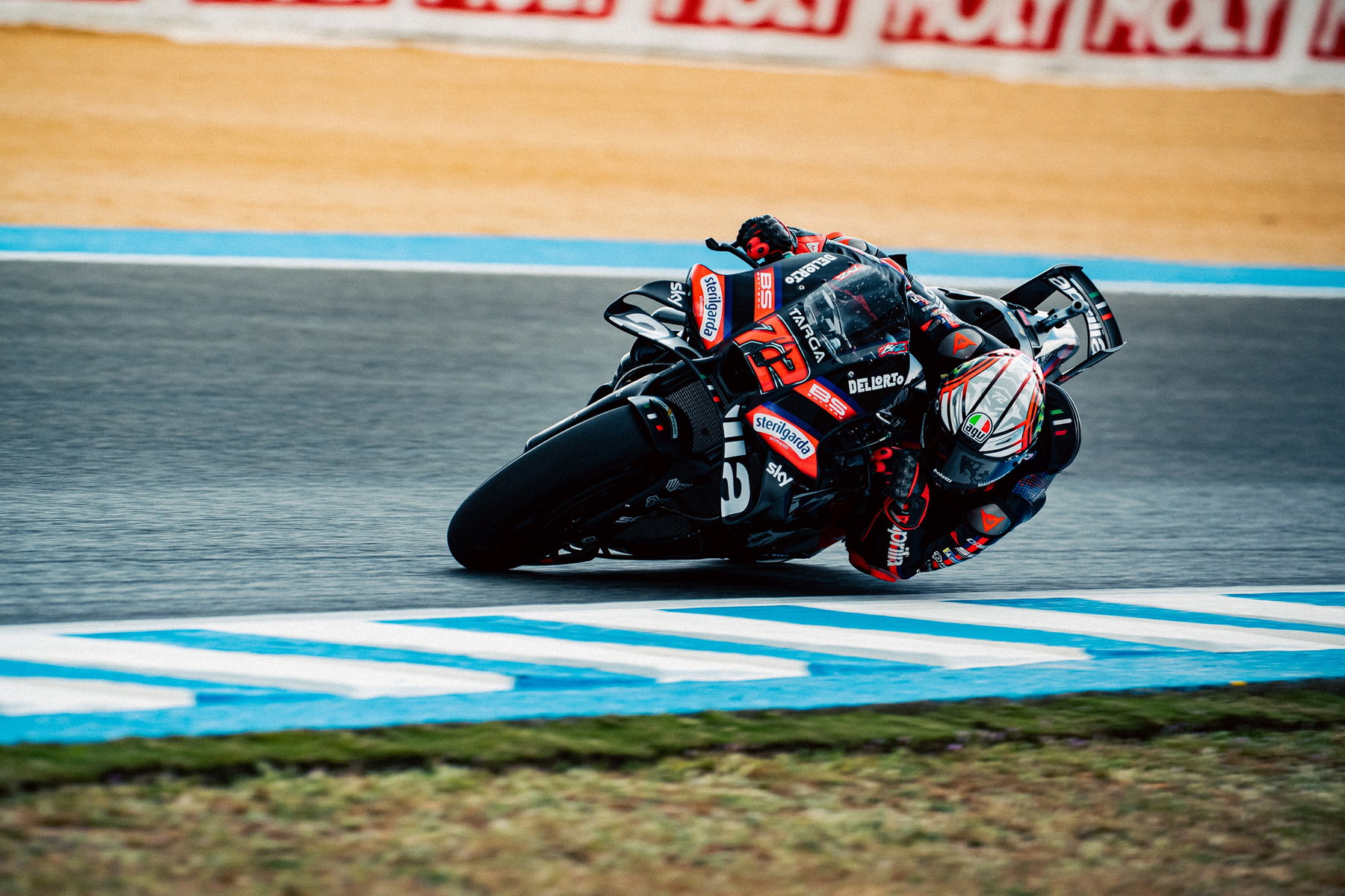
The new wings resemble in shape the dual-plane side wings that Ducati has been using for several seasons. The crucial difference lies in their position: Aprilia has placed the elements significantly higher, alongside the windscreen. In this location, they influence the airflow that passes over the rider’s back when he tucks behind the screen on the straight.
The upper surface of the wings is visibly curved, creating a low-pressure area behind it and thus generating a downforce effect. These are evidently not simple deflectors designed to reduce drag, but active aero elements intended to generate targeted downforce. Under braking, when the rider sits up, the wings are presumably shielded by the pilot’s body and thus aerodynamically neutralized.
The endplates of the wings also appear to be shaped to direct airflow around the rider. This could reduce drag on the straights while simultaneously improving the effectiveness of the so-called leg wings at the rear.
From Imitator to Trendsetter
Aprilia’s transformation in aerodynamic development is remarkable. Until 2024, Ducati was considered the undisputed benchmark in this area. Since then, the picture has completely reversed. Under the leadership of aerodynamics chief Marco De Luca, a former Ferrari engineer, and technical director Fabiano Sterlacchini, Aprilia has introduced a series of innovations that are now being copied by the competition.
As early as 2022, Aprilia became the first manufacturer to bring bulged fairings with ground-effect function to MotoGP. Since the start of the 2026 season, the team has also been using a closeable hole in the fairing to deliberately redirect airflow and increase top speed. The “leg wings” on the sides of the seat unit, which Aprilia introduced as the first manufacturer last season, were already adopted by several competitors at the Jerez test.
Sterlacchini himself took the attention with humor: he joked that the new elements were designed as handles for the mechanics during flag-to-flag races.
Sensor Satellite: Data Collection for the Next Level
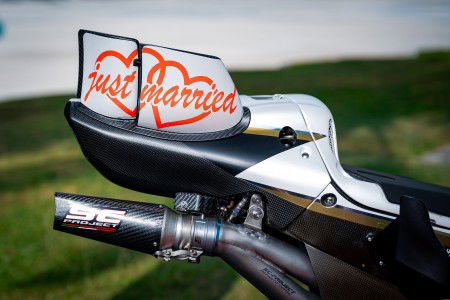
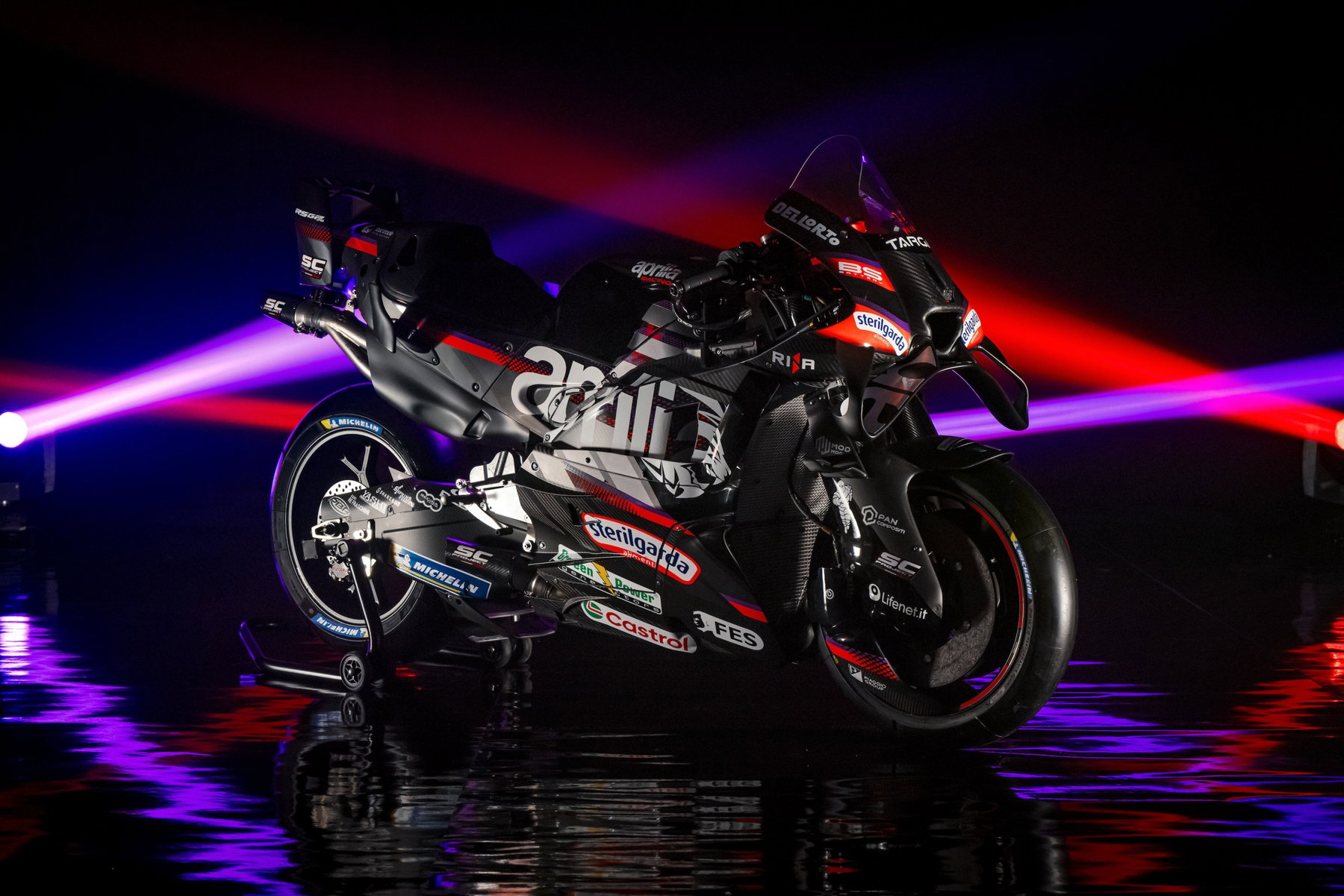
Besides the “elephant ears,” another detail stood out at the Jerez test: a conspicuous sensor device on the tail of Lorenzo Savadori’s RS-GP26 that resembled a drone arm. The precise function was the subject of intense speculation in the paddock. Some journalists suspected a laser ride-height sensor, others a pressure sensor.
The sensor’s positioning provides clues about its purpose: it sits directly above and behind the leg wings, precisely where the interaction between the rider’s body and the leg wings generates turbulence. A photograph of the sensor’s underside suggests a pressure sensor designed to measure variations in air pressure. Aprilia is apparently systematically collecting data on the airflow conditions in the rear section to advance its aerodynamic development on a solid data foundation.
Aprilia Dominates the Jerez Test
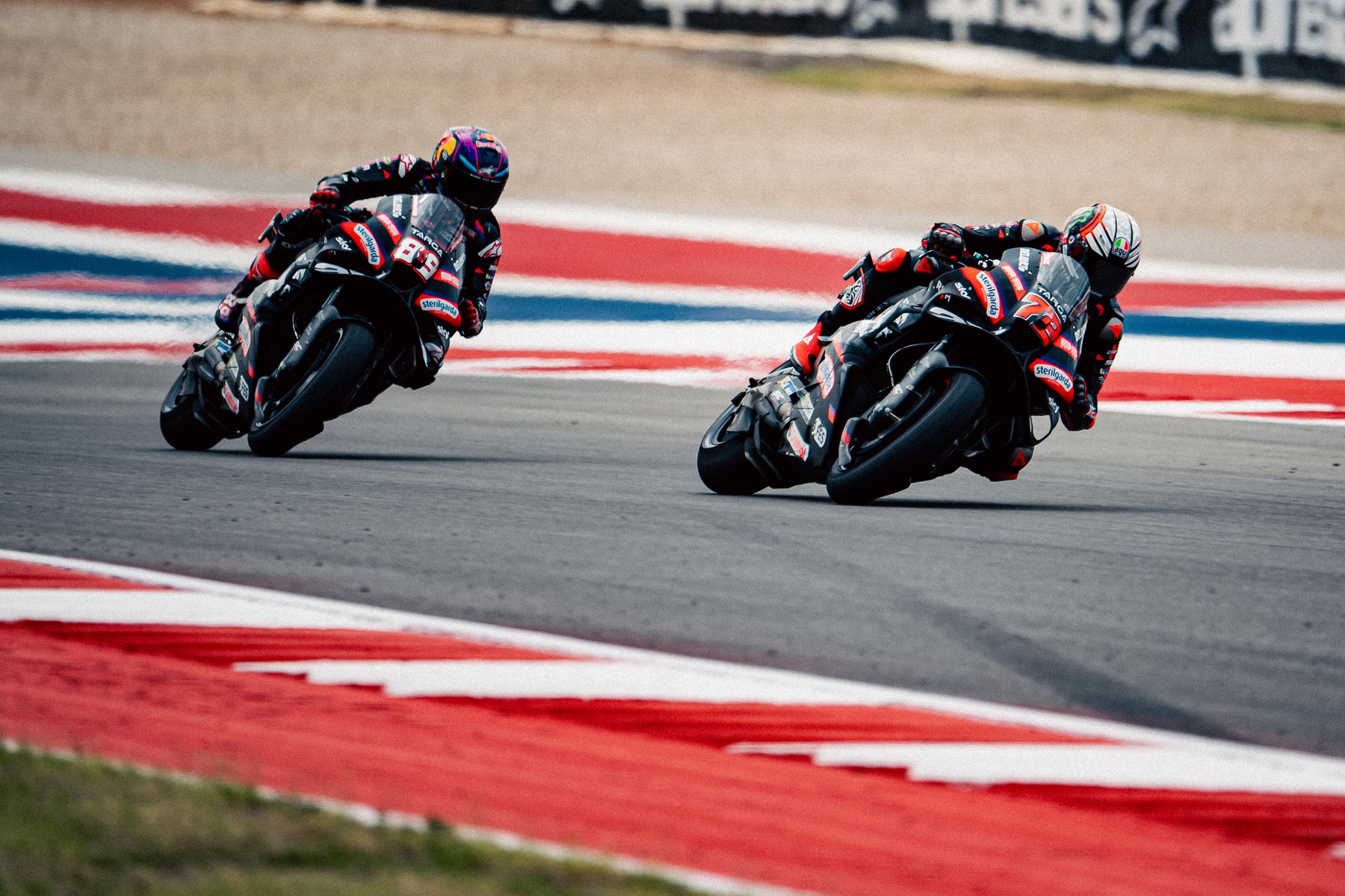
The aerodynamic innovations had a tangible impact on track. Ai Ogura from the Trackhouse team set the fastest time of the day at 1:35.944, just 0.005 seconds quicker than his teammate Raul Fernandez. Championship leader Marco Bezzecchi on the factory Aprilia completed the clean sweep in third place, 0.328 seconds behind. The two Trackhouse riders were the only ones to dip below the 1:36 mark.
Marc Marquez was the fastest Ducati rider in fourth, followed by KTM’s Pedro Acosta in fifth. Sunday race winner Alex Marquez finished sixth, while Fabio Quartararo brought positive signals for Yamaha in seventh after improving his best race weekend time by almost a quarter of a second while testing a new rear aero element and a new front fairing. Johann Zarco was the fastest Honda rider in ninth.
Bezzecchi crashed during testing at Turn 11 but was able to continue the test day. A total of 23 riders participated in the test, including Aprilia test rider Lorenzo Savadori and KTM’s Dani Pedrosa, who was standing in for the injured Maverick Viñales.
What the Riders Say
Jorge Martin, who had finished the Spanish GP in fourth, was finally able to try out parts at the test that he had missed due to his injury at the start of the season. He spoke of making up for lost time from February and described the test day as very important for his personal development.
Raul Fernandez was also satisfied and explained that the aerodynamic innovations as well as a new chassis had been tested. He said he felt significantly faster on the medium tire and had not only focused on the quick lap time during the day but also worked on the motorcycle’s setup and the new parts. Confirmation, however, would have to come at Le Mans.
Ducati Responds with Its Own Updates
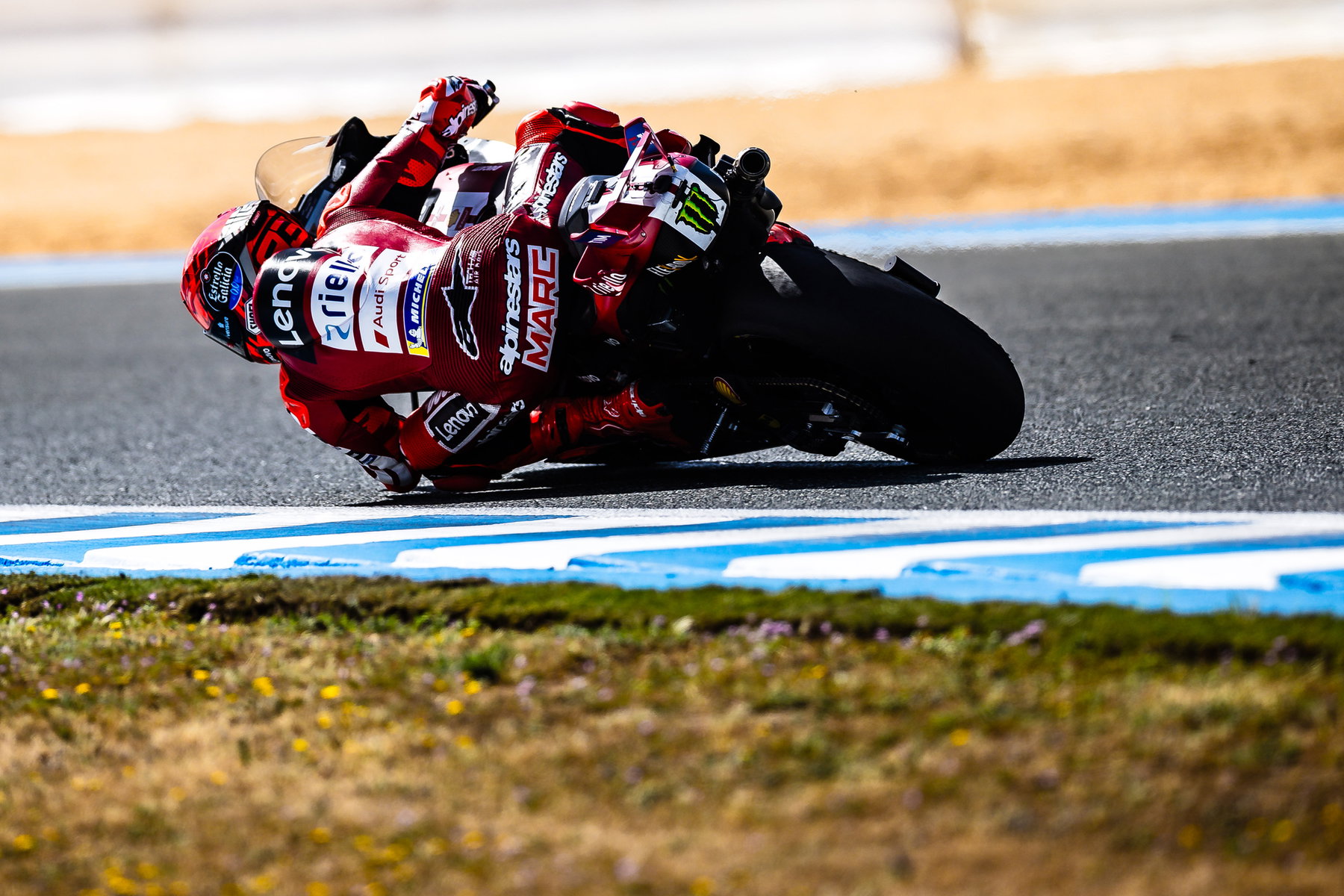
While Aprilia dominated the headlines, Ducati was also working on the development of the Desmosedici GP26 in Jerez. The Borgo Panigale team brought a new front fairing, a side fairing with aero elements that had already been tested in the previous season, a swingarm guard, and a modified chassis. Marc Marquez confirmed that the focus was on the chassis and regaining front-end feeling, the central challenge of the 2026 season. The aerodynamic innovations had helped in some areas.
Overall, however, Ducati brought more evolutionary updates than revolutionary innovations. The impression in the paddock was that the innovations from Noale are currently one step ahead.
Aerodynamics as the Decisive Development Field
The growing importance of aerodynamics is fundamentally changing MotoGP. Riders use the extremely high downforce, brake hard into corners, and rely on the stability that the aerodynamic aids provide. But as Bezzecchi noted, a single gust of wind or a change in airflow is enough to lose the balance, potentially causing sudden crashes.
The MotoGP rules for 2027 are intended to reduce the impact of aerodynamics on the new 850cc motorcycles. The growing feeling in the paddock is that current designs may be reaching their limits. The controversy surrounding Aprilia’s leg wings in the winter, when some called for a ban on safety grounds, underscored how far development has already progressed.
Paradoxically, aerodynamics could become even more important with the less powerful 850cc engines from 2027: when less engine power is available, aerodynamic efficiency becomes the decisive factor in recovering the lost speed.
Another test in the era of the 1000cc machines awaits at the Barcelona-Montmeló test sessions. The next Grand Prix takes place at Le Mans, where the new parts will have to prove themselves under real racing conditions on a circuit that poses completely different demands than the rubber-coated Jerez.
Frequently Asked Questions
-
What are the “elephant ears” on the Aprilia RS-GP26?
The “elephant ears” are two additional wing elements that Aprilia has mounted alongside the windscreen on the front fairing of the RS-GP26. They form a third tier of aerodynamic surfaces and are designed to generate downforce through their curved shape while directing airflow over the rider.
-
How did Aprilia perform in the 2026 MotoGP Jerez test?
Aprilia claimed the top three positions in the Monday test at Jerez. Ai Ogura set the fastest time at 1:35.944, just 0.005 seconds ahead of teammate Raul Fernandez. Championship leader Marco Bezzecchi finished third.
-
What role does aerodynamics play in MotoGP 2026?
Aerodynamics has become the most important area of development. Aprilia has positioned itself at the forefront with innovations such as leg wings, ground-effect fairings, and now the elephant ears. MotoGP plans stricter aero rules for the new 850cc motorcycles in 2027.
-
What is Ducati testing in response to Aprilia’s aero lead?
Ducati brought a new front fairing, side-fairing aero elements, a swingarm guard, and a modified chassis to the Jerez test. The focus was on improving front-end feeling, which is considered the central challenge of the 2026 season.
➜ This article is part of our comprehensive overview: MotoGP 2026 Season: The Complete Overview – Teams, Riders, Calendar & Standings. Find all key information on this topic in one place.