- Official unveiling on June 9, 2026 via Ducati’s YouTube channel
- Pre-orders now available at selected Ducati off-road dealers
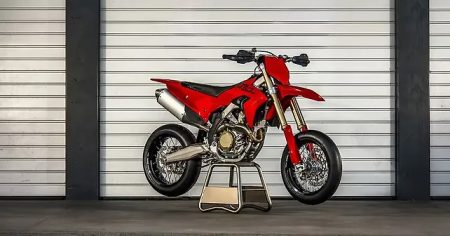
- Street-legal enduro based on the competition platform Desmo450 EDX
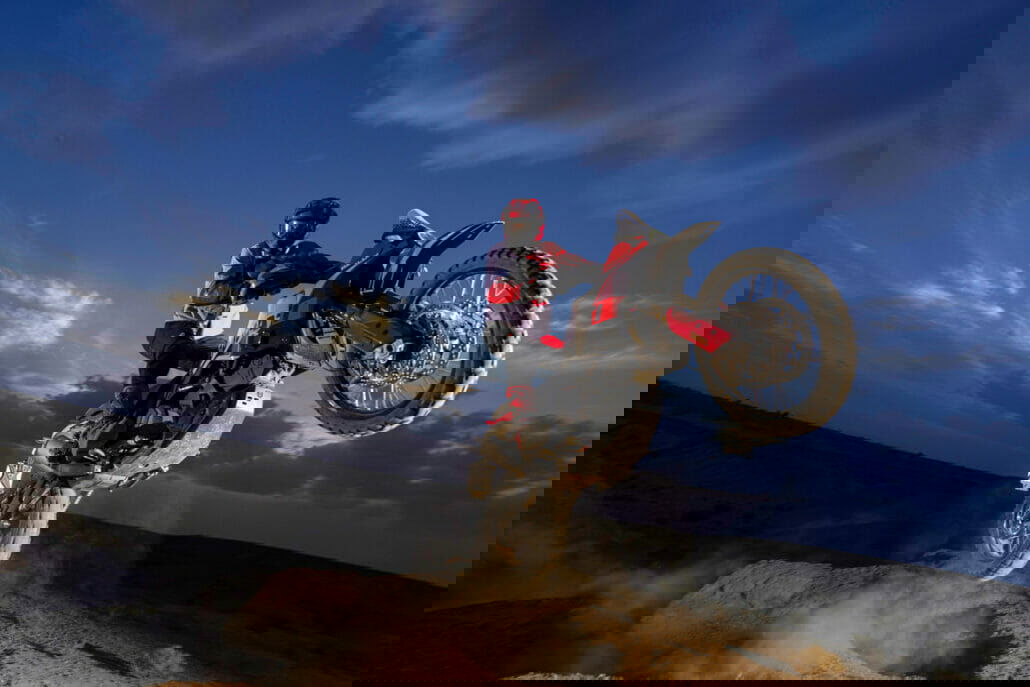
In the anniversary year marking Ducati’s 100th birthday, the Italian manufacturer’s model offensive continues to gain momentum. Following the presentation at EICMA 2025 in Milan as a pre-production model and the publication of European design registrations in early 2026, the exact date for the full unveiling of the Desmo450 EDS has now been confirmed. On June 9, 2026, Ducati plans to reveal all technical specifications, equipment details, and presumably pricing for the street-legal enduro. The presentation will be broadcast via the manufacturer’s official YouTube channel.
What Is the Ducati Desmo450 EDS?
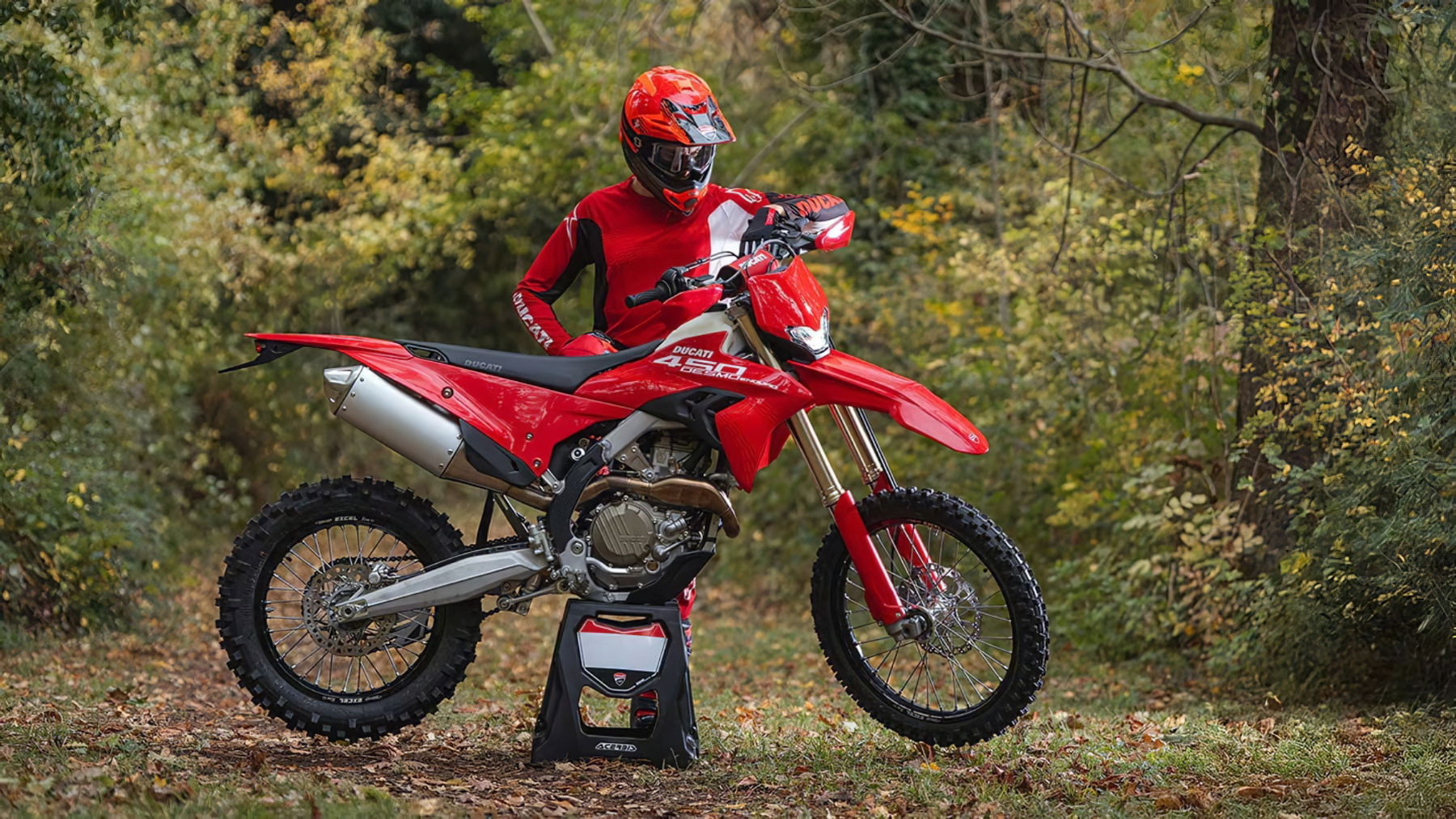
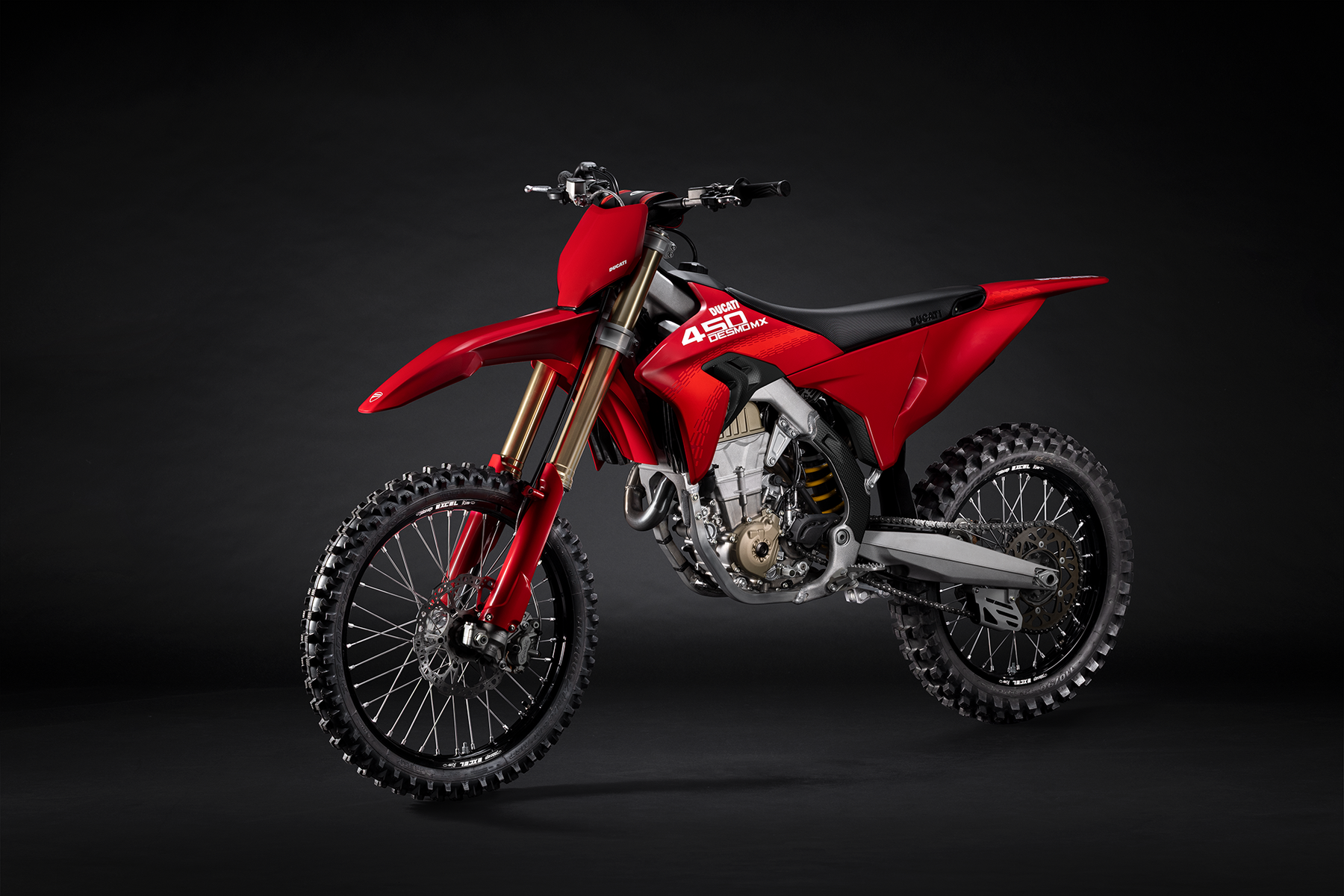
The Desmo450 EDS is the third model in Ducati’s 450 off-road lineup and the first with street homologation. It is based on the two pure competition machines: the Desmo450 MX for motocross use and the Desmo450 EDX as a dedicated competition enduro. Both models share a liquid-cooled single-cylinder engine with 449.6 cc displacement and desmodromic valve actuation, meaning it operates without conventional valve springs. The performance figures of the competition models stand at 64.5 hp (47.4 kW) at 9,400 rpm and 53.6 Nm (39.5 lb-ft) of torque at 7,500 rpm. Whether the street-legal EDS version will retain these figures unchanged or whether output will be adjusted in favor of emissions compliance and longer service intervals has not yet been confirmed by Ducati.
What Are the Technical Differences Between the EDS, EDX, and MX?
Visually, the Desmo450 EDS is much more closely aligned with the competition enduro EDX than with the motocross variant MX. The EDX already features a larger tank with approximately 8.3 liters (2.2 gallons) capacity compared to the MX’s 7.2 liters (1.9 gallons), and uses an 18-inch rear wheel instead of the motocross version’s 19-inch wheel. In terms of weight, the two competition models differ only slightly: the MX weighs around 105 kg (231 lbs) without fuel, while the EDX comes in at approximately 107 kg (240 lbs). The EDS is expected to be somewhat heavier due to the additional street equipment.
The suspension components are largely carried over from the EDX. The setup includes 49 mm USD forks from Showa and a Showa monoshock at the rear, both fully adjustable and featuring Kashima coating. The seat height matches the sister models at 970 mm (38.2 inches). Whether Ducati will adjust the spring rates and damping setup for the higher weight of the street version is not yet known. According to reports, the EDS is also expected to receive a six-speed gearbox with wide-ratio gearing.
What Changes Does Street Homologation Bring?
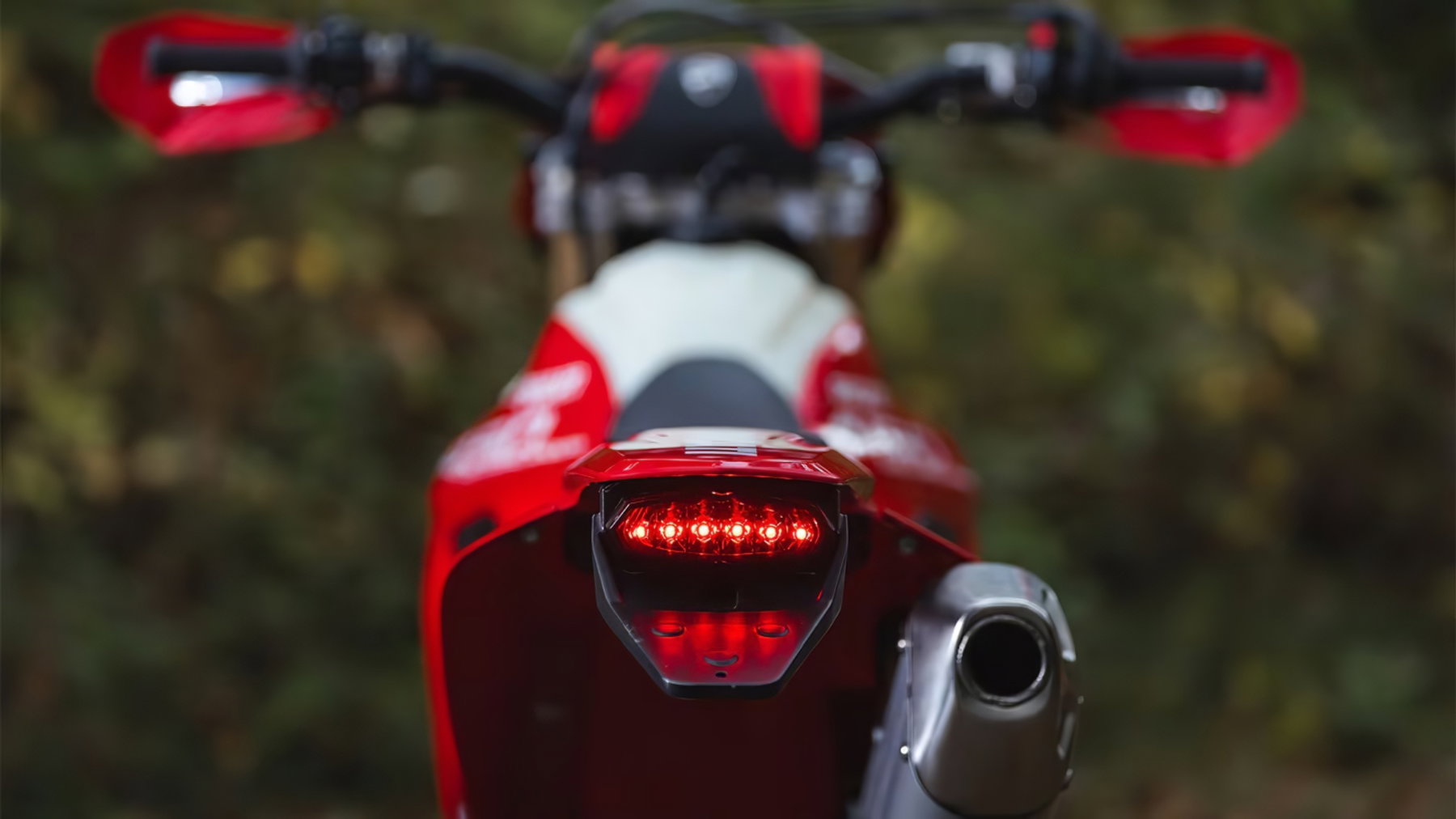
The European design registrations published in early 2026 reveal the specific modifications for road use. Visible are a headlight integrated into the number plate, a taillight beneath the rear fender, bar-end mirrors, front and rear turn signals, and a license plate holder. Additionally, there is a compact cockpit with a digital instrument cluster and an ignition switch behind the fairing. On the right side, a heel guard protects the area above the rear brake cylinder, while the left side features new covers for the sprocket and chain. A side stand is also included as standard equipment.
The most extensive changes concern the exhaust system. Instead of the short competition exhaust of the EDX, the EDS uses a significantly longer header pipe routed further downward in front of the engine. A lambda sensor is positioned in this area. The flat expansion chamber of the off-road models gives way to a round catalytic converter with a heat shield. These modifications are designed to meet emission standards for public road use.
What Does This Mean for Service Intervals?
A central point regarding street homologation is likely the extension of service intervals. The pure competition models MX and EDX have very short service cycles of 15 operating hours until an oil change and 45 operating hours until a piston replacement, which would be hardly practical for everyday road use.
In early May 2026, Ducati already introduced a new predictive maintenance system for the Desmo450 MX. This system, derived from Ducati Corse, calculates a stress index based on operating parameters, usage conditions, and terrain type. Instead of fixed intervals, the maintenance schedule adapts to the actual workload. For the MX, this results in variable intervals: the MID Service with piston replacement and valve clearance check can range between 45 and 60 operating hours depending on usage intensity, while the FULL Service with complete engine overhaul ranges between 90 and 120 hours. According to Ducati, the baseline calculation uses the stress level of factory rider Alessandro Lupino as a reference. Riders whose stress index remains below this value benefit from correspondingly extended intervals. Whether this system will also be used in the EDS has not yet been confirmed, but given the platform commonality, it appears likely.
Also probable, though not yet visible in the existing design drawings, is the use of radiator fans. These are common in street-legal enduros in the segment, as road use at low speeds provides less airflow for cooling than off-road riding.
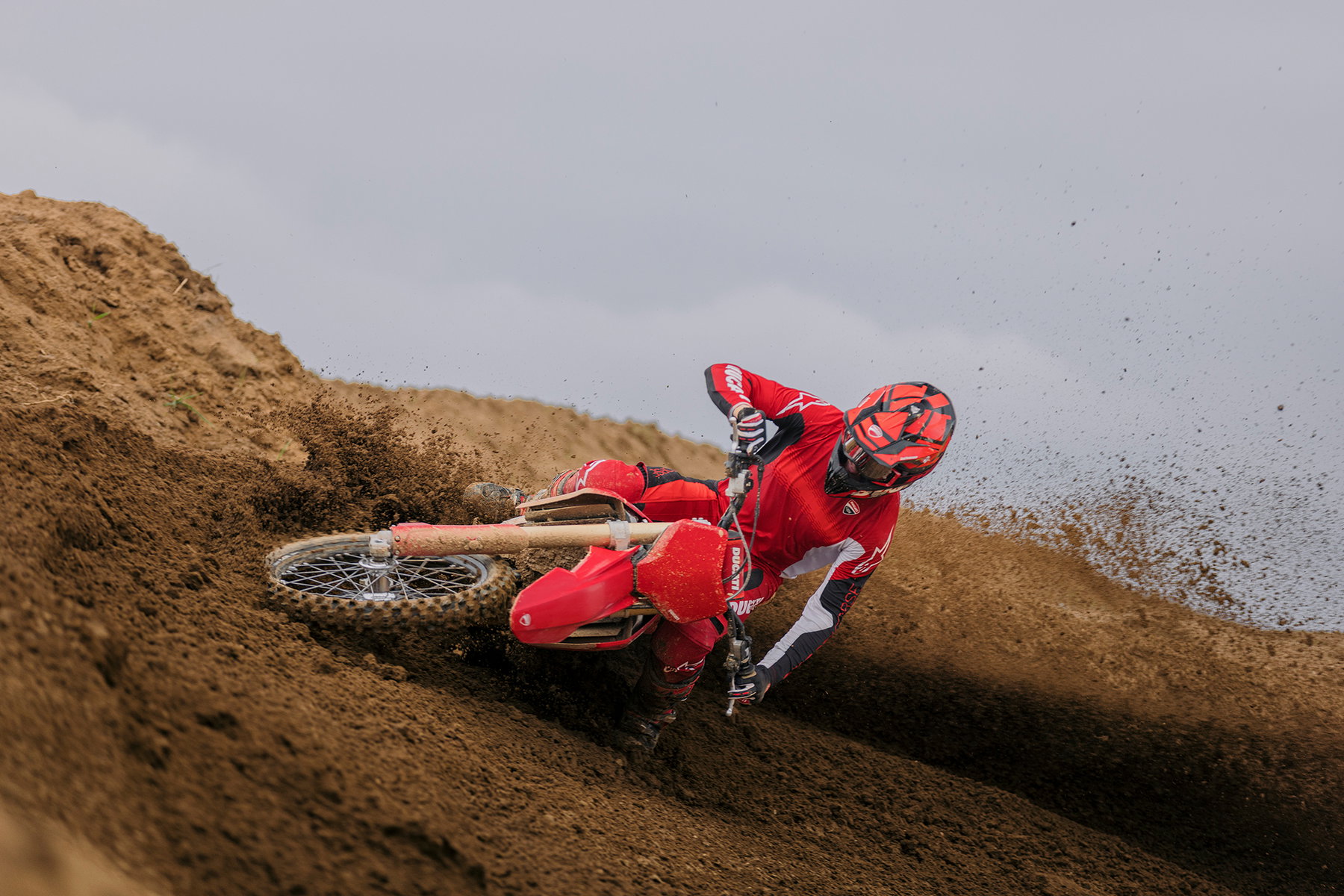
How Does the EDS Fit Into Ducati’s Anniversary Year?
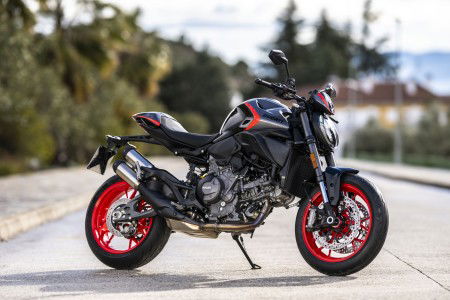
The unveiling of the Desmo450 EDS is part of an extensive model offensive marking Ducati’s 100th anniversary. Back in January 2026, Ducati launched the Desmo450 MX Factory, which is offered in Germany at a list price of 15,490 euros (approximately $17,060) plus 345 euros in delivery charges. Since then, additional models have followed, including the new Monster V2, Hypermotard V2 and V2 SP, the retro-inspired Formula 73 café racer, as well as the limited-edition Superleggera V4 Centenario and Centenario Tricolore. Further model introductions are expected throughout the year.
For Ducati’s off-road division, the EDS marks the transition from a pure competition manufacturer to a provider of a complete model range encompassing motocross, competition enduro, and street-legal enduro. In the segment of high-performance dual-sport enduros with 450 cc, Ducati will face established manufacturers such as KTM with the 450 EXC-F, Honda, and Beta.
When Can the Ducati Desmo450 EDS Be Ordered?
According to Ducati, pre-orders are already being accepted at selected off-road dealers within the Ducati distribution network. Prices have not yet been announced by the manufacturer. With the full unveiling on June 9, 2026 via the official YouTube channel, the final technical specifications as well as pricing and exact availability dates for individual markets are expected to be revealed. The sales launch is announced for summer 2026, with several sources citing July 2026 as the likely delivery date.
➜ Find all specs, images, and prices for the Ducati Desmo450 EDS (2026) in our motorcycle database.
Frequently Asked Questions
-
When will the Ducati Desmo450 EDS be unveiled?
Ducati has confirmed June 9, 2026 as the official unveiling date. The full presentation with all technical specifications will be broadcast via Ducati’s YouTube channel. The sales launch is planned for summer 2026.
-
How much horsepower does the Ducati Desmo450 EDS have?
Ducati has not yet published the final power figures. The related competition models MX and EDX produce 64.5 hp (47.4 kW) at 9,400 rpm from the 449.6 cc single-cylinder engine with desmodromic valve actuation. Whether the EDS will fully adopt these figures remains to be seen until the unveiling.
-
How much does the Ducati Desmo450 EDS cost?
An official price for the Desmo450 EDS has not yet been announced. For reference, the Desmo450 MX Factory is priced at 15,490 euros (approximately $17,060) plus 345 euros in delivery charges in Germany, while the standard Desmo450 MX is listed at 12,490 euros. Pricing for the EDS is expected to be revealed at the June 9, 2026 unveiling.
-
What distinguishes the Desmo450 EDS from the EDX?
The EDS is based on the competition enduro EDX but adds full street equipment including lighting, mirrors, turn signals, a license plate holder, and a revised exhaust system with a catalytic converter and lambda sensor. Service intervals are also expected to be extended compared to the competition models.
➜ This article is part of our comprehensive overview: New Motorcycles 2026: All Models, Releases, and Highlights at a Glance. Find all key information on this topic in one place.