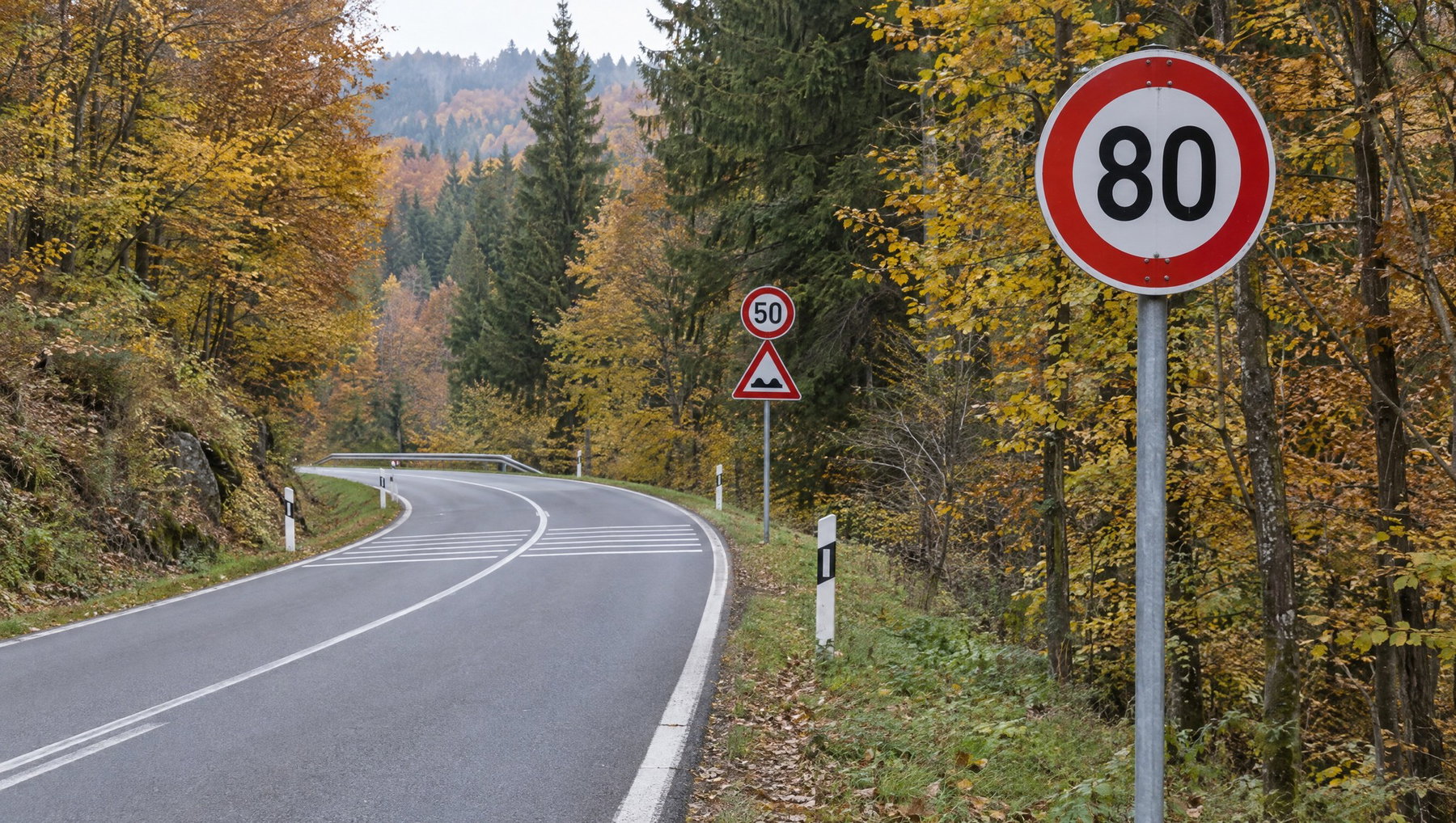
- An 80 km/h limit applies to all vehicles on the section, with 50 km/h in two particularly accident-prone bends
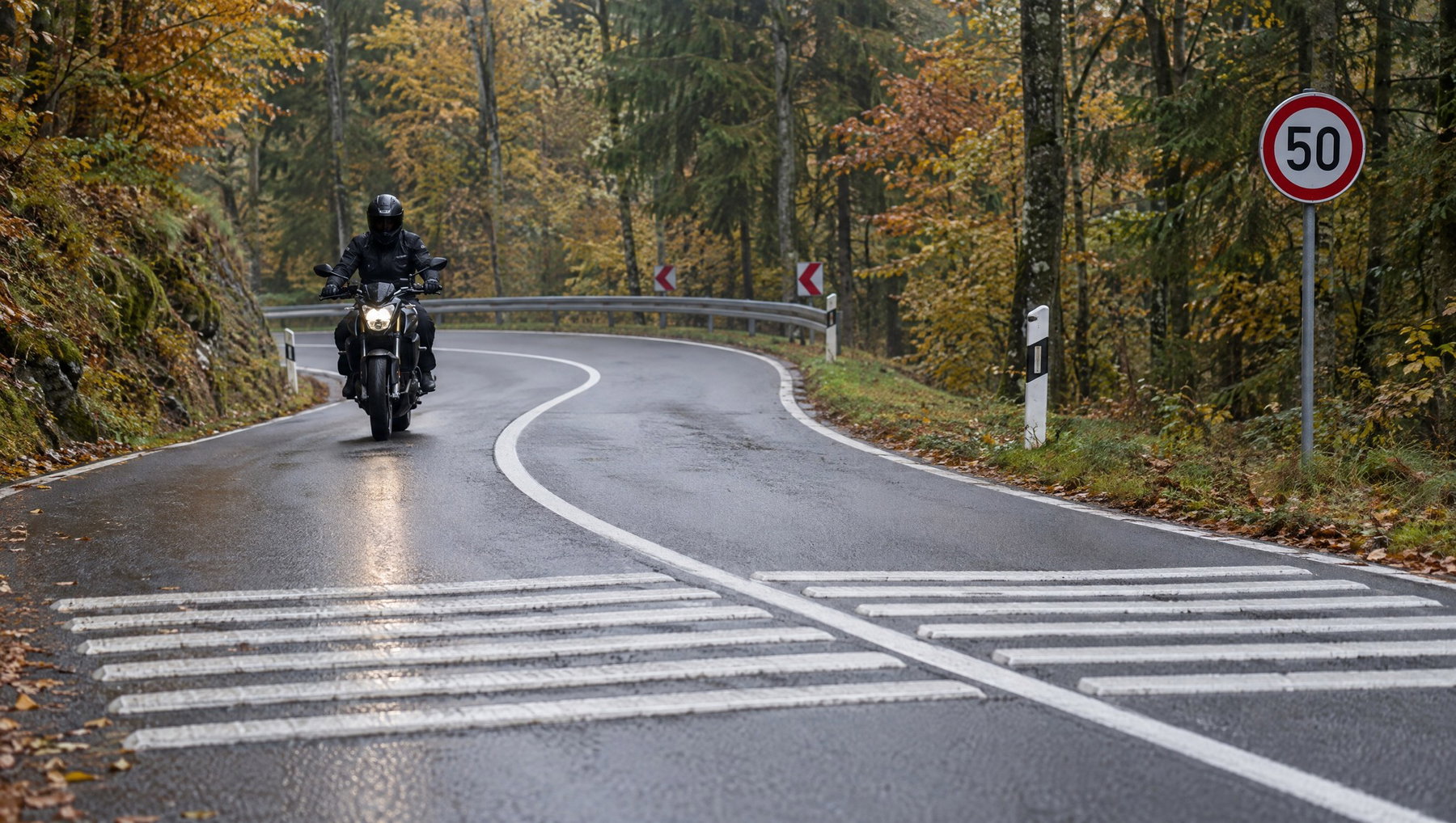
- Rumble strips in exactly these bends are meant to make riders slow down before turning in
- Before the measures were implemented, there were six crashes on the road in 2026, four of them involving motorcycles
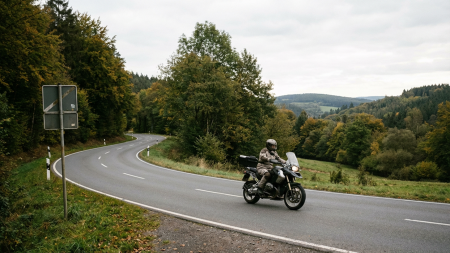
The L3196 state road in the Spessart is one of the best-known motorcycle routes in eastern Hesse. Between Steinau an der Straße and the district of Marjoß, straight stretches give way to tight bends, dense forest lines the road, and there are viewpoints for a break at several spots. Motorcycle traffic is correspondingly heavy. At the same time, the road has been one of the region’s accident black spots for years. After a series of serious crashes in the summer, the accident commission of the Main-Kinzig district has taken further action. Unlike in the past, the new rules apply equally to all road users.

Which speed limits now apply on the L3196 near Steinau?
On the section between Steinau and Marjoß, a uniform limit of 80 km/h applies to all vehicles. In two bends classified as particularly accident-prone, only 50 km/h has been allowed since the end of August.
The 80 km/h limit already applied before, as the police checks in April and August show. What is new are the two 50 km/h zones and the rumble strips that Hessen Mobil installed on the last Monday in August. Several signs along the route show the permitted maximum speed. Dedicated warning signs announce the rumble strips so that nobody is caught off guard by them. In previous years, the district had already revised the signage and had solid lines painted in the centre of the road.
Does the speed limit on the L3196 only apply to motorcycles?
No. The 80 km/h and 50 km/h limits apply equally to cars and motorcycles, and there is no longer a separate rule just for motorcyclists on the L3196.
That was different for a long time. For around 20 years, motorcycles were only allowed to ride at 60 km/h on one stretch of the road, while all other vehicles could travel at up to 100 km/h. Especially during the season from March to October, this repeatedly led to tricky situations between two-wheelers and cars. In August 2022, a traffic trial followed: 25 motorcyclists with different levels of experience and bikes of varying power rode the route, while mobile measuring stations recorded the average speed on the stretches between the bends. Rennleitung#110, a private prevention project run by police officers who ride motorcycles themselves, contributed staff and equipment. The district, police and Hessen Mobil evaluated the rides together and lifted the 60 km/h limit for motorcycles for the 2023 season.
What this looks like in practice today was shown by a check carried out by the Schlüchtern police station in April 2026. All the motorcyclists measured kept to the 80 km/h limit. Only two car drivers were too fast, and only just.
How are the rumble strips in the bends supposed to work?
The rumble strips are designed to alert riders to the danger before the bend and get them to brake. When ridden over, they create clearly noticeable and audible vibrations.
Hessen Mobil installed them specifically in the two bends with the 50 km/h limit. Several bends on the route are hairpins, for example near the Rohrbach stream. According to Hessen Mobil, anyone entering them too fast can easily drift into oncoming traffic or slide off, and that is exactly what often happens there. The strips are meant to ensure that speed drops and the bend is approached with full attention.
Which crashes happened on the L3196 in 2026?
Before the new measures were implemented, the district counted six crashes on the road in 2026, four of which involved motorcycles. On several occasions, a rescue helicopter had to be called.
Some cases from this year show how differently the crashes unfold:
- June: A 20-year-old falls in a bend, slides down an embankment and suffers very serious leg injuries. A first aider also slides down the slope and is injured.
- July: On the way to Marjoß, a 24-year-old collides sideways with an oncoming Porsche. Police consider it possible that he drifted onto the opposite lane in a bend. He is flown to a hospital by helicopter, and the heavily pregnant passenger of the Porsche is examined as a precaution.
- August: A 22-year-old Yamaha rider and a KTM rider of the same age collide head-on in a bend and are slightly injured. Police cite inappropriate speed as a possible cause.
- September: Only a few days after the rumble strips were installed, a 25-year-old from the district of Fulda rides straight on with his Kawasaki Ninja in a gentle right-hander. He ends up around 15 metres further on in the forest between two trees and is slightly injured. The L3196 remains completely closed for at least an hour.
Who decides on the measures on the route?
The responsible body is the accident commission of the Main-Kinzig district. It is made up of experts from the police, Hessen Mobil and the district’s road traffic authority, with the Office for Safety and Order, Migration and Integration taking the lead.
The committee is responsible for more than 1,000 kilometres of federal, state and district roads. This year, it took a closer look at 33 road sections. In 2025, the commission met three times, including a special session dedicated solely to the route near Steinau. Before it decides anything, it examines accident figures and the situation on site, and decisions are taken by consensus. District Administrator Thorsten Stolz describes what matters: “Was it individual misconduct? Is a junction difficult to see? Are there problems especially in bad weather? This results in very different measures.”
On the L3196, the bends are the main danger. According to the district, the time of day, the weather, speed and braking too late played a role to varying degrees in the crashes there. Christopher Unger, head of the district’s traffic authority, says the commission will make adjustments if measures show no effect and similar crashes recur. What such a review looks like can be seen on the L3445 near Neuberg-Ravolzhausen: signs there were replaced and moved, and a good year later significantly fewer vehicles are speeding.
How do the police carry out checks on the L3196?
The police have been present on the route for years and intend to remain so. The biggest operation this year took place on 16 August, with a focus on motorcycles.
From 10 am to 4.30 pm, specialists from the Traffic Safety/Special Services Directorate and the Main-Kinzig and Offenbach police directorates checked 137 vehicles, including 122 motorcycles over 125 cc. Speeds were measured where 80 km/h is permitted. In the end, there were seven speeding offences, just over five percent of the vehicles checked. Only two of these were in the fine range, and both were noticed on the way to or from the checkpoint, one of them at 160 km/h where 100 was allowed. Modifications were also closely examined: the police seized three vehicles, partly because of changes to the exhaust system, and in five cases the vehicle’s operating permit had expired.
On the sidelines of the check, a young man who had himself crashed badly on the route came forward. After weeks in hospital and with operations still to come, he sought conversation with police officers and motorcyclists.
What will the new rules achieve?
Whether the measures will reduce the number of crashes cannot yet be said after just a few weeks. The crash shortly after the rumble strips were installed showed that falls cannot be prevented entirely.
The district itself makes it clear that no measure provides complete safety while still keeping traffic flowing. Hessen Mobil wants the L3196 to keep its appeal for motorcyclists while avoiding serious crashes as far as possible. On this road, that cannot be taken for granted. Until 2023, the L3196 had a clear unequal treatment in place, with motorcycles limited to 60 km/h while cars were allowed to do 100. It was only the traffic trial with motorcyclists that showed equal speed limits for everyone can improve traffic flow and safety, as the district itself stated at the time. Even after the latest series of crashes, the commission has not returned to the old special limit, but has opted for measures that apply equally to all road users. In the end, District Administrator Stolz sees the responsibility with each individual: “The main factor for success is and remains the human being.”
Frequently Asked Questions
-
How fast can you ride on the L3196 near Steinau?
On the section between Steinau and Marjoß, a limit of 80 km/h applies to all vehicles. In two particularly accident-prone bends, only 50 km/h has been allowed since the end of August 2026.
-
Is there still a speed limit only for motorcycles on the L3196?
No. The former 60 km/h limit for motorcycles only was lifted for the 2023 season after a traffic trial in August 2022. Today’s limits apply equally to cars and motorcycles.
-
Where are the rumble strips on the L3196?
The rumble strips are located in the two bends with the 50 km/h limit. Signs announce them in advance so that riders are not caught off guard.
-
Who decided on the measures on the L3196?
They were decided by the accident commission of the Main-Kinzig district, made up of the police, Hessen Mobil and the district’s road traffic authority. Hessen Mobil installed the rumble strips at the end of August 2026.
➜ All info & history of this road (German): L3196 Steinau – Marjoß: Tempo 50, Rüttelstreifen und das Ende des Motorrad-Limits – Überblick & Chronik